[pageLogInLogOut]

#Sustainability

Jeanologia CEO says in 2025 all jeans in the world could be 100% water free

(c) 2018 Jeanologia
Enrique Silla, CEO at Jeanologia, with a view to the World Water Day, highlights that using a combination of their technologies “in 2025 all jeans in the world could be 100% water free”. For Silla “with Jeanologia as the expert technology partner, it is possible, within a few years, for production to use zero water and create zero waste; increasing productivity and accelerating time to market”.
  • Jeanologia’s objective is to reduce environmental impact in its entirety, not partially mitigate it
  • With Jeanologia as the expert technology partner the textile market is more competitive and respectful of the environment
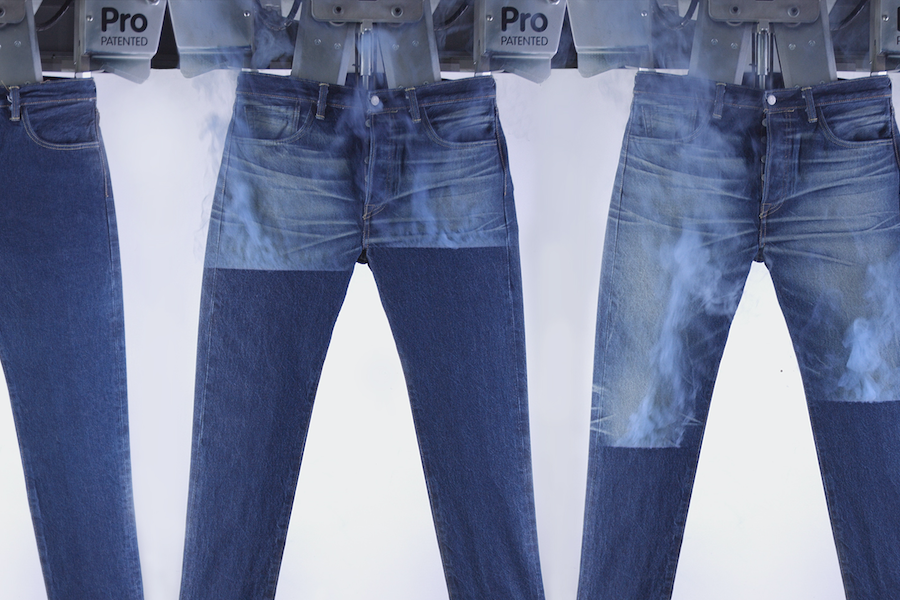
  • Through their technology, the company also eliminates the use of potassium permanganate, pumice Stone, manual bleaching and traditional laundering 

35% of the 5 billion jeans produced every year are made with Jeanologia technology. As such, the company CEO explains “if we develop products in an eco-efficient way, we will produce an eco-sustainable product and bring a sustainable product to the market, achieving one of our company’s objectives: to reduce environmental impact in its entirety, not partially mitigate it”.

Water generates life and prosperity, and its care is essential for sustainable development.  Furthermore, it plays an important role in the reduction of poverty and economic growth.  With this in mind, the CEO at Jeanologia has pointed out that “we continuously work to increaseawareness and involve everyone while reducing the water footprint, and without losing competitiveness or compromising on design and quality”.

During the past month, Jeanologia technology has led to a saving of 800,000 cubic meters of water, the equivalent of water used to fill 283 Olympic swimming pools. “This saving has been possible thanks to the laser, ozone, and eflow technology being used in the 60 countries Jeanologia works in”, explains Silla.


It is worth remembering that the combination of the company’s technology has contributed to a saving of around 8 million cubic meters of water in 2017; equivalent to the quantity of water needed for human consumption in the city of Miami for a whole year.

(c) 2018 Jeanologia
(c) 2018 Jeanologia

Furthermore, the company’s technology has allowed the elimination of potassium permanganate, pumice stone, manual scraping and traditional washing at the same time as considerably reducing chemical use.  Leading to, as the CEO highlights “the detoxification of jeans”. 

More News from JEANOLOGIA S.L.

#Textile processing

Jeanologia showcases the future of product development

Jeanologia is showcasing how software is transforming product development in the fashion industry at PI Apparel Europe: The Fashion Technology Show, taking place on March 30–31 in London.

#Denim

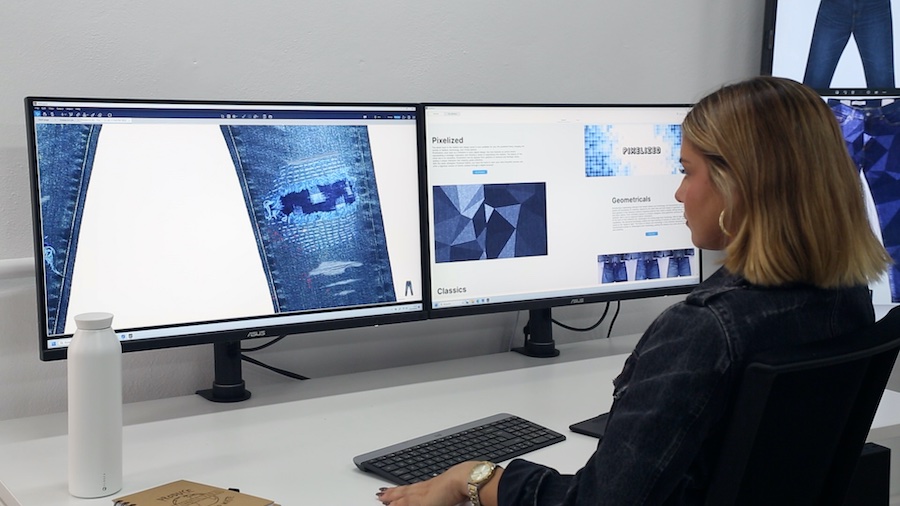
Jeanologia launches Billy

The new AI extracts precise laser designs from a garment image in minutes, transforming how vintage denim is recreated for production. If Jeanologia’s laser changed the way jeans were made at the end of the last century, its AI now takes the next step: moving from reproducing wear to designing it. / archive photo © 2026 Jeanologia

#Textile chemistry

Jeanologia urges industry to accelerate PP Spray phase-out following ZDHC Watchlist update

Potassium permanganate has officially entered the Chemical Watchlist of the ZDHC Foundation, signaling increased scrutiny and potential phase-out of one of the most hazardous chemicals still used in denim finishing. The inclusion confirms an industry shift that Jeanologia anticipated more than a decade ago.

#Denim

Jeanologia celebrates its 30th anniversary transforming how jeans are produced worldwide

Jeanologia celebrates its 30th anniversary reaffirming the mission it was born with in 1994, to transform the textile industry into a more sustainable, efficient, and human-centered sector. Three decades later, that vision has become a global reality. Today, more than 40 percent of all jeans produced worldwide are made using technologies developed by the Valencia-based company.

More News on Sustainability

#Natural Fibers

Global Standard gGmbH launches second public consultation for GRTS Draft 2 for the textile industry (1–30 April 2026)

Global Standard gGmbH is pleased to announce the release of Draft 2 of the Global Responsible Textile Standard (GRTS) for its second public consultation. The consultation will be open from 1 April 2026 to 30 April 2026, inviting stakeholders across the textile and apparel value chain to provide input and contribute to the further development of this new Standard.

#Sustainability

Practical toolkit to drive coordinated climate action launched

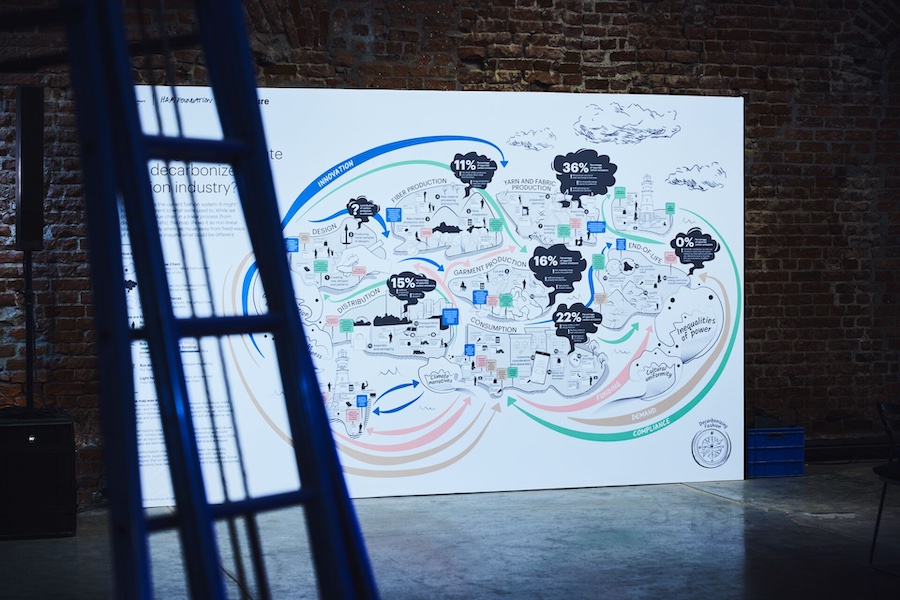
An open-access workshop toolkit enables brands, suppliers, policymakers and investors across the textile industry to apply the System Map in their own work, identifying leverage points to halve emissions and enable a just transition.

#Raw Materials

Textile Exchange publishes cotton Life Cycle Assessment study to strengthen impact data

Textile Exchange has published the first in a series of seven Life Cycle Assessment (LCA) studies designed to improve the quality and robustness of environmental impact data for raw material production across the fashion, textile, and apparel industry. The first LCA study focuses on cotton and addresses critical data gaps and methodology variability through new high-quality data across key producing countries. The study includes organic, regenerative, recycled, and country averages for conventional cotton production systems, providing a clearer picture of the associated environmental impact.

#Sustainability

Experts publish APAC policy priorities

Cascale today announced the publication of its APAC Policy Priorities Paper, developed by the Asia-Pacific (APAC) Policy Member Expert Team (MET) to identify key regional sustainability challenges and provide practical, aligned recommendations for policymakers and industry stakeholders across Asia-Pacific.

Latest News

#Raw Materials

New study shows low environmental impact by Cotton made in Africa Organic Cotton from Tanzania

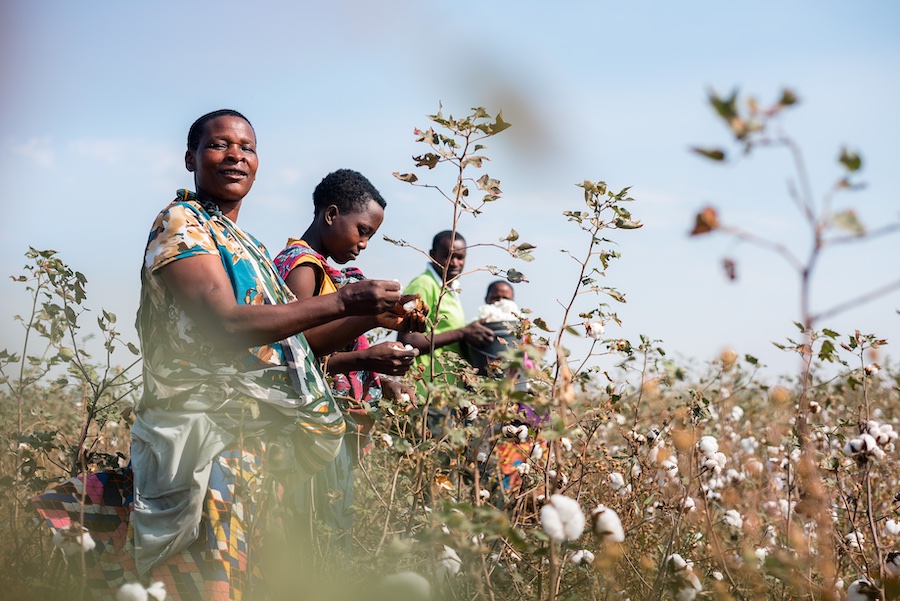
Today, the Aid by Trade Foundation (AbTF) is announcing the results of a comprehensive life-cycle analysis (LCA) for cotton produced in Tanzania under the Cotton made in Africa Organic (CmiA Organic) standard. The study emphasises the small ecological footprint of CmiA Organic verified cotton. This can largely be traced back to the absence of synthetic pesticides, artificial fertilisers, and artificial irrigation. Consequently, CmiA Organic cotton can help the textile industry meet regulatory requirements as well as science-based targets. The results also show that the consequences of climate change threaten the livelihoods of these cotton farmers, even though the type of agriculture they practise barely contributes to climate change.

#Raw Materials

Better Cotton Initiative strengthens regenerative focus in standard update

The Better Cotton Initiative (BCI) has strengthened the regenerative focus of its field-level standard with the launch of a new version of its Principles & Criteria (P&C), which marks the next step in the organisation’s journey to becoming a regenerative standards system.

#Man-Made Fibers

Selenis and Kintra Fibers partner to scale 100% bio-based synthetic fiber technology

Selenis, a leading global specialty polyester manufacturer, today announced a strategic manufacturing partnership with materials science company Kintra Fibers to scale Kintra’s patented fiber-grade PBS resin - a 100% bio-based and biodegradable material designed for textile applications.

#Functional Fabrics

PERFORMANCE DAYS proves its relevance as the industry’s key meeting point

Held on March 18–19, 2026, PERFORMANCE DAYS once again confirmed its position as a leading international platform for functional textiles. A total of 3.366 trade visitors and around 560 exhibitors gathered in Munich, with the event already kicking off successfully on DAY 0, which received highly positive feedback for its interactive format. Despite challenging conditions caused by the public transport strike in Munich, the event saw strong attendance and a consistently high level of activity across both exhibition days.

TOP