[pageLogInLogOut]

#Raw Materials

New study shows low environmental impact by Cotton made in Africa Organic Cotton from Tanzania
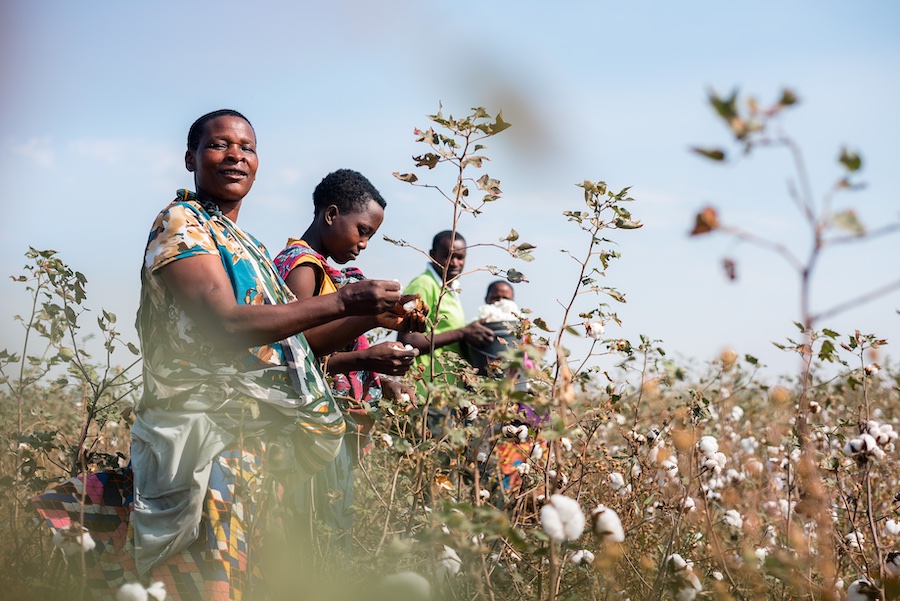
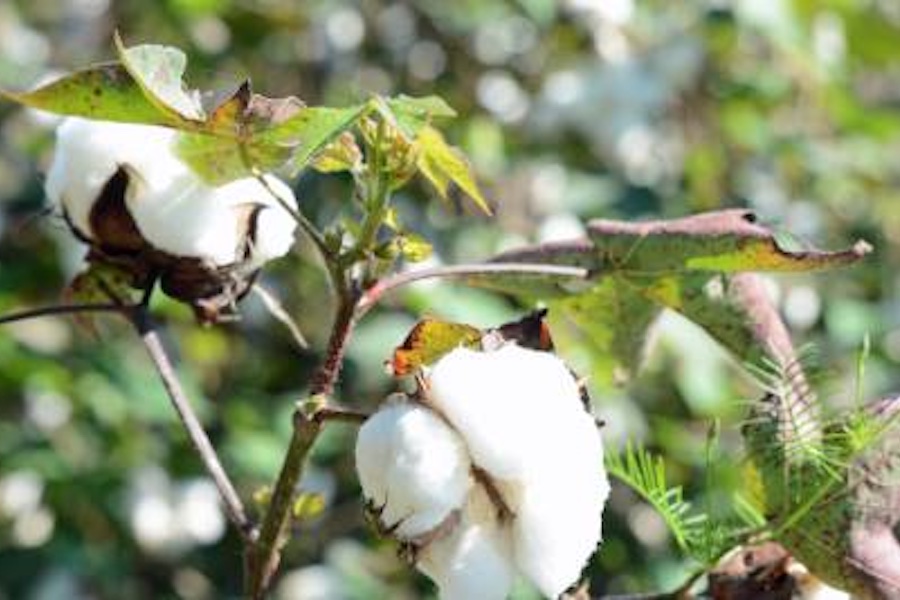
Cotton harvest in Tanzania; Credit_Malicky Stanley Boaz for CmiA
Today, the Aid by Trade Foundation (AbTF) is announcing the results of a comprehensive life-cycle analysis (LCA) for cotton produced in Tanzania under the Cotton made in Africa Organic (CmiA Organic) standard. The study emphasises the small ecological footprint of CmiA Organic verified cotton. This can largely be traced back to the absence of synthetic pesticides, artificial fertilisers, and artificial irrigation. Consequently, CmiA Organic cotton can help the textile industry meet regulatory requirements as well as science-based targets. The results also show that the consequences of climate change threaten the livelihoods of these cotton farmers, even though the type of agriculture they practise barely contributes to climate change.


Part of a larger, critically reviewed LCA from Textile Exchange, the study quantifies the environmental impact of CmiA cotton from Tanzania at all stages from cultivation to ginning, showing that the cotton is produced following an environmentally friendly, rainfed model. This approach is characterised by smallholders completely avoiding the use of mineral fertilisers and synthetic pesticides, only limited mechanisation, and no genetically modified seeds. As a result, ecological threats posed by industrial cotton-production systems—such as fertiliser production or the consumption of what is termed “blue water”[1]—are negligible for CmiA Organic cotton from Tanzania. For example, less than one kilogram of CO2 equivalents is emitted per kilogram of ginned cotton fibres. Biodiversity-promoting measures and natural methods, such as the use of biochar or bokashi, increase soil fertility while protecting groundwater.

CmiA Organic helps the textile industry meet regulatory requirements and science-based targets

Alexandra Perschau, the head of Standards & Outreach at the Aid by Trade Foundation, states, “The LCA provides valuable insights into the environmental performance of CmiA Organic cotton, reaffirming our commitment to transparency and to continuous improvement in environmental protection. Its results underline the inherent sustainability benefits of practising organic farming in accordance with the CmiA Organic standard, which prioritises ecological balance and the well-being of farmers. Fashion brands and textile companies that use CmiA Organic cotton have an opportunity to meet their science-based targets as well as the increasing regulatory requirements for transparency.” “Sourcing Cotton made in Africa Organic supports our transition from conventional cotton to organic cotton production with increased transparency. Collaborations like the one we have with Aid by Trade Foundation are essential in order for us to reach our organic cotton targets,” states Danique Lodewijks, Sustainable Raw Materials Manager at Bestseller.

Climate justice for African smallholders

The result of the LCA study also underlines the issue of climate justice for smallholders in cotton-growing areas. They suffer immensely from the effects of climate change, as droughts, unpredictable precipitation patterns, and torrential rainfall make it difficult to sow, grow, and harvest the cotton plants. The cotton plants are weakened and increasingly affected by pests. Consequently, cotton farmers are finding their livelihoods under existential threat—even though the type of agriculture they practise barely contributes to climate change, as the study now shows. This makes Cotton made in Africa’s holistic approach all the more important. It focusses on preserving biodiversity, maintaining soil health, and protecting natural resources. It also provides comprehensive training, which enables cotton producers to make their farms resilient to climate change, thereby creating a future for themselves, their families, and cotton cultivation as a whole.
More News from Cotton made in Africa (CmiA)

#Raw Materials

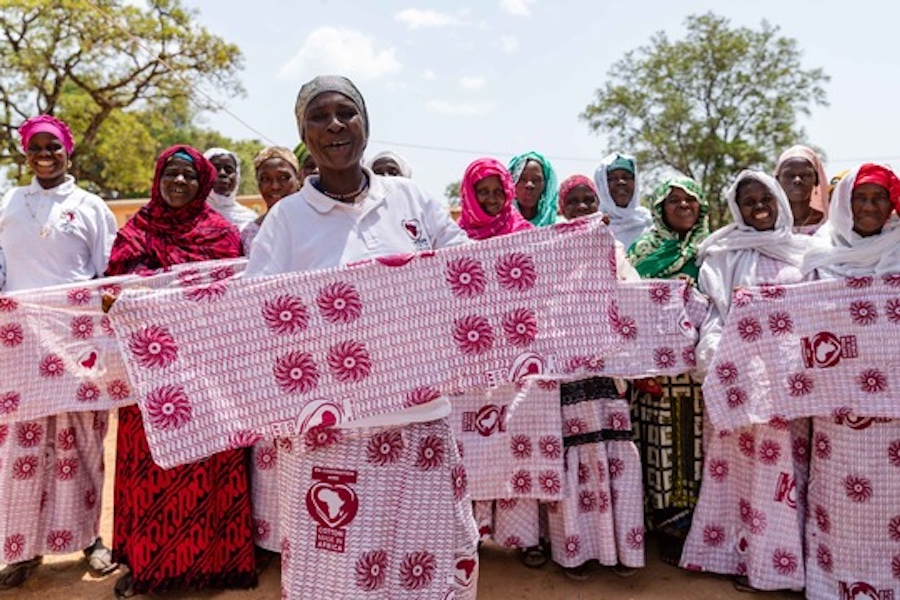
International Women’s Day: Cotton made in Africa strengthens equality for women through targeted investments

On the occasion of International Women’s Day—which will be observed on 8 March under the motto “Rights. Justice. Action. For ALL Women and Girls”—the Aid by Trade Foundation (AbTF), which is responsible for Cotton made in Africa® (CmiA), underlines its long-standing and ongoing commitment to the equality of women in African cotton production areas.

#Natural Fibers

Human Rights Day: Cotton made in Africa reinforces its commitment to ensuring respect for human rights in cotton production

The sustainable cotton standard Cotton made in Africa (CmiA) has always focussed on respect for human rights, including by prohibiting child labour and discrimination. With the new version of the CmiA standard coming into force, AbTF raises requirements for due diligence in the areas of human rights and risk management.

#Natural Fibers

Cotton made in Africa launches public consultation for standard revision

The Aid by Trade Foundation (AbTF) is opening public consultation on its Cotton made in Africa standard today. Interested parties will have 60 days to provide feedback, helping shape the future of one of the world’s largest standards for sustainable cotton. The latest update to the standard, Version 5.0, focusses on increasing Cotton made in Africa’s effectiveness and adapting its criteria and indicators to external factors, which currently include biodiversity loss and a growing set of reporting requirements for companies.

#Raw Materials

EUR 2.8 million project for climate-resilient agriculture in Africa

Healthy soils, responsible water use, and biodiversity conservation are central to the efforts of the Aid by Trade Foundation (AbTF) to make African cotton production more resilient to climate change. AbTF has opened new doors for small-scale farming families in Africa through a EUR 2.8 million project for climate-resilient cotton cultivation. Over the last three years, more than 100,000 farmers in Africa were involved in testing various soil improvement measures, with encouraging results: yields on demonstration sites increased significantly, despite the effects of climate change.

More News on Raw Materials

#Raw Materials

CSITC adds ABRAPA as a round trial sample provider

Beginning with the Q2 2026 Round Trials, the ICAC's Committee on the Commercial Standardization of Instrument Testing of Cotton has expanded its sample provision framework by adding the Brazilian Cotton Growers Association (ABRAPA) as an official sample provider.

#Raw Materials

Dr N Vigneshwaran is named 2026 ICAC Researcher of the Year

The International Cotton Advisory Committee (ICAC) is pleased to announce the selection of Dr N Vigneshwaran, Principal Scientist and Head of the Chemical and Biochemical Processing Division at the ICAR–Central Institute for Research on Cotton Technology (ICAR-CIRCOT), Mumbai, India, as the ICAC Researcher of the Year 2026.

#Raw Materials

Global Cotton area and production are projected to decline in the 2026/27 Season

The June 2026 issue of Cotton This Month projects a modest contraction in global cotton area, production, and trade during the 2026/27 season, reflecting weaker demand sentiment, rising production costs, and shifting environmental factors across major producing nations.

#Raw Materials

New U.S. cotton study uses real-world grower data to reveal where fiber impacts occur

Cotton Incorporated has released a critically reviewed life cycle assessment (LCA) of U.S. cotton fiber production that examines how cotton’s environmental impacts are measured and where meaningful improvements can be made across the value chain. The new data, grounded in real‑world grower inputs, measures what drives U.S. cotton’s environmental footprint from field to gin.

Latest News

#Associations

Keeping products moving with Swedish automation at FILTECH 2026

At FILTECH 2026, taking place in Cologne from June 30th to July 2nd, members of TMAS – the Swedish textile machinery association – will highlight how the country’s engineering expertise is enabling filtration manufacturers to increase productivity, improve traceability and reduce dependence on labour-intensive manual processes.

#ITM 2026

Global Mmeeting of textile technologies, ITM 2026, attracts great interest

ITM 2026, one of the world's most prestigious organizations in the field of textile technologies, opened its doors with the participation of over 1,000 companies and company representatives from 59 countries, as well as thousands of professional visitors from nearly 100 country. Attracting thousands of international visitors on its first day, ITM 2026 once again demonstrated its status as a global meeting point for the textile industry with its advanced technologies on display, newly established business connections, and record-breaking international participation.

#Recycling / Circular Economy

Countdown to Textiles Recycling Expo 2026: Brussels prepares for Europe’s textile recycling gathering

With only two weeks remaining until the start of the second edition of the Textiles Recycling Expo 2026, preparations are entering the final phase. The exhibition and conference, dedicated exclusively to textile recycling and circularity, will take place on 24–25 June 2026 at Brussels Expo and is expected to attract stakeholders from across the textile recycling value chain.

#Recycled Fibers

Indorama Ventures enables brands to scale circular textiles through proven, traceable supply chains

Indorama Ventures, a global leader in recycled polyester staple fibers and filament yarns, will exhibit at Textiles Recycling Expo in Brussels on June 24–25. At the event, the company will show how brands and textile manufacturers can build traceable, circular textile supply chains by working with proven partners who deliver recycled materials on an industrial scale.

TOP