[pageLogInLogOut]

#Software

Gerber Technology empowers AFM distribution to expand workwear business

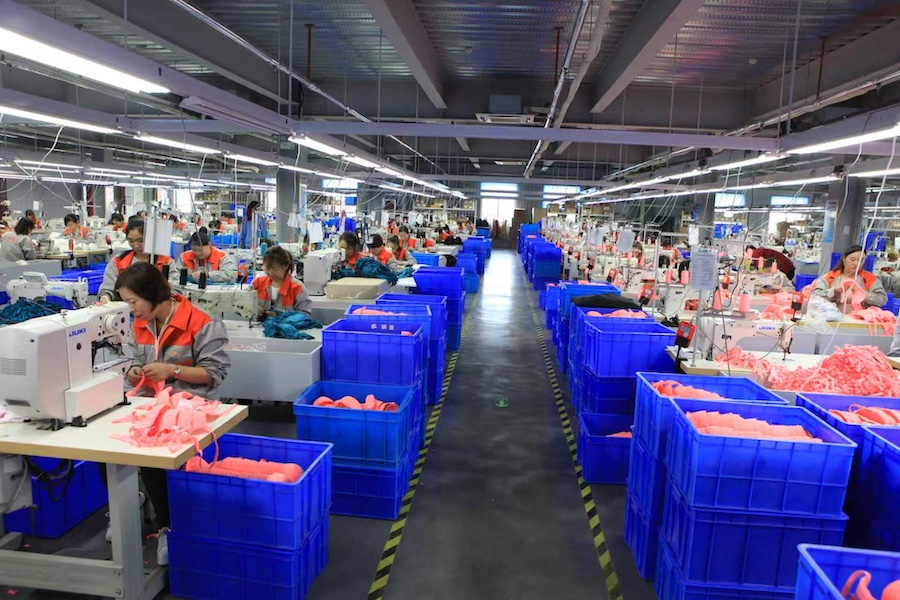
AFM Distribution, a successful, Albanian workwear company, is leveraging Gerber Technology’s integrated solution to reduce costs, labor and material waste so they can expand their business. As a company who prides themselves on quality manufacturing, their ability to meet deadlines and their commitment to treating people as an asset, AFM knew the only choice to help them was Gerber Technology. Since implementing Gerber’s solutions, AFM has improved their profitability by approximately 25% which has enabled them to invest in more staff training and specialization. 

AFM leveraged Gerber’s integrated solution to enter the competitive exports market.

“Many people believe that technology is going to replace their employees, but as we’ve seen with AFM, that’s not the case at all,” said Richard Jessup of Gerber Technology. “By correctly leveraging technology, AFM was actually able to improve the livelihood of their employees by adding to their skillset and giving them opportunities to grow. We are proud to help AFM not only streamline their production but also empower them to create jobs.”

Over the last several years, AFM Distribution has experienced tremendous growth and is looking to enter the competitive export market. In order for AFM to successfully expand their company and ensure they are offering the best quality and price for each of the 60,000 garments they develop per month, they needed a solution that was able to increase efficiency, reduce time to market and cut costs. 

AFM’s manufacturing site in Vora is equipped with the GERBERspreader™ XLs50, the Gerber Paragon® HX, and Gerber’s industry-leading software solutions: AccuMark®, AccuNest™ and AccuPlan™. Since AFM uses expensive fabrics and materials, it’s critical they maximize material usage and cut with absolute precision.

With the powerful combination of AccuPlan and AccuNest, AFM is able to digitally send Cut Plan solutions, which include multiple markers, fabrics, colors and corresponding spreads and ply count, to quickly produce and track down the cutting efficiency of thousands of garments.


Since implementing Gerber’s powerful design and production tools, AFM has been able to deliver as many as 1,800 parts per shift, assuring quality from the first layer of fabric to the last while saving money and improving material utilization.

© 2020 Gerber Technology


“The GERBERcutter® provides maximum precision, especially when cutting notches and holes,” said Ardiana Karakashi, AFM’s finance director. “This is particularly critical as the company manufactures workwear which can have as many as 200 notches. By leveraging Gerber, the cutting quality is assured from the first layer of fabric to the last. Moreover, we can rely on the first-rate technical support provided by Gerber Italia.”

More News from Gerber Technology

More News on Software

#Industry 4.0 / Digitalization

Coats Digital wins SaaS award for AI in apparel manufacturing

Coats Digital has been named Best Company in AI-Powered Fashion Technology at the 2026 Best in SaaS Awards. The company’s AI applications cover garment costing, the analysis of operational data and the use of computer vision to study how tasks are performed on the factory floor.

#Industry 4.0 / Digitalization

White House reduces production planning time by up to 80% with Coats Digital’s FastReactPlan

Indian garment manufacturer White House has reduced its production planning cycle by 60–80% following the implementation of Coats Digital’s FastReactPlan software. The integrated planning solution provides greater visibility across production, capacity and material requirements while supporting faster decision-making and improved delivery performance.

#Software

UNIFEQ Europe adopts Coats Digital’s GSDCost and AI-powered GSDQuest to support rapid growth

Coats Digital is pleased to announce that rapidly growing Polish defence and uniform manufacturer UNIFEQ Europe Sp. z o.o. has invested in its award-winning GSDCost solution together with its AI-powered GSDQuest platform to establish a consistent approach to garment costing, improve sewing-floor productivity and accelerate labour costing for tenders and new products.

#Industry 4.0 / Digitalization

Orient Rongheng connects production planning across China and Bangladesh with FastReactPlan

Chinese apparel manufacturer Orient Rongheng is implementing Coats Digital’s FastReactPlan to digitalize production planning across its manufacturing operations in China and Bangladesh. The project aims to connect capacity, materials and order planning across multiple factories while integrating these processes with the company’s existing ERP and Manufacturing Execution System (MES).

Latest News

#Textile processing

Jeanologia combines digitalisation, laser and ozone technology to strengthen China’s textile competitiveness

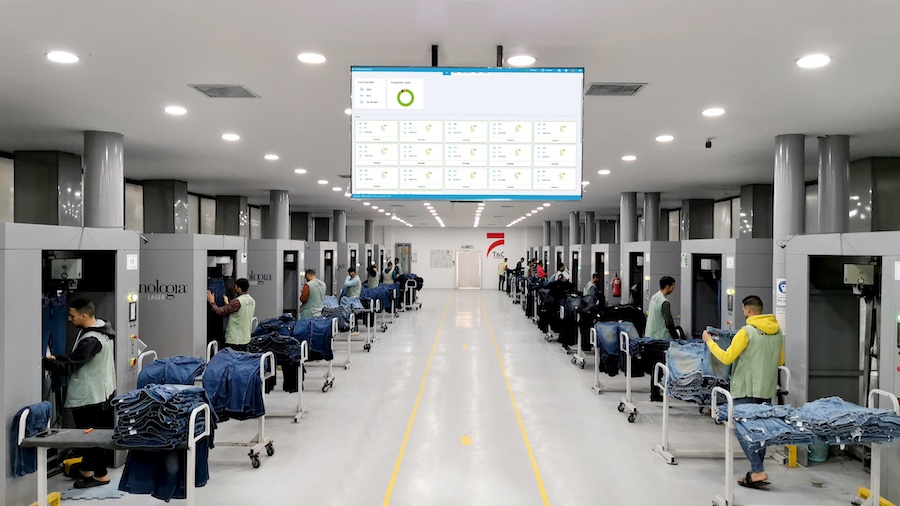
At ITMA Asia + CITME 2026 in Shanghai, Jeanologia showcased how the combination of digitalisation, laser technology and G2 Ozone can help China’s textile industry improve productivity, speed, quality and efficiency. With its Compact Super Flash laser system and integrated production concepts, the Spanish technology specialist demonstrated how connecting product development and industrial production can enable faster, more automated and sustainable manufacturing processes.

#Textile chemistry

Flame protection and OEKO-TEX® certification: Gulec Chemicals clears an important hurdle

Three halogen-free flame retardants from German specialist Gulec Chemicals have been included in the OEKO-TEX® list of accepted Active Chemical Products (ACP). The listing opens up additional opportunities for textile finishers, coaters and manufacturers of technical textiles seeking to combine demanding fire protection requirements with certification according to OEKO-TEX® STANDARD 100.

#Dyeing, Drying, Finishing

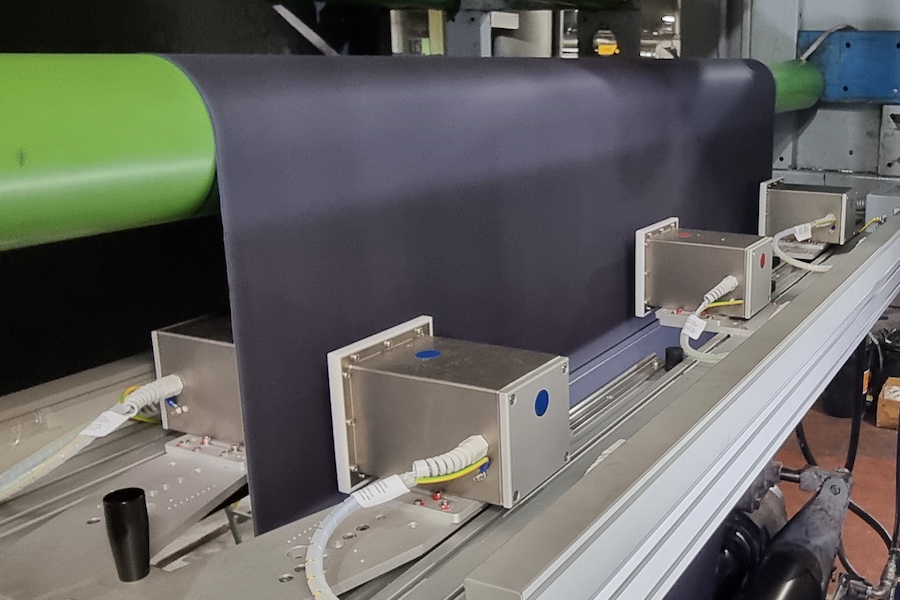
PLEVA improves dyeing consistency with inline microwave measurement of liquor pick-up

Consistent shades are essential in continuous textile dyeing. Yet variations in fabric absorbency or uneven padder pressure can go unnoticed until the end of the line. By then, hundreds of metres of fabric may already be affected and may become second-choice or rejected.

#Recycling / Circular Economy

DITF establishes CYCLOTEXUM recycling center to advance mechanical and solvent-based textile recycling

As part of the CYCLOTEXUM research project, the German Institutes of Textile and Fiber Research Denkendorf (DITF) established the CYCLOTEXUM recycling center. There, in collaboration with industry partners, the center develops application-oriented solutions for mechanical and solvent-based recycling processes. The technologies developed make a significant contribution along the textile value chain toward the efficient use of textile resources in the future and the transition of production in the German textile sector to a circular economy. The project was funded by the Ministry for the Environment, Climate and Energy Sector of the State of Baden-Württemberg.

TOP