[pageLogInLogOut]

#Software

Gerber Technology empowers cost reduction as global prices continue to rise

As material and product prices in the industrial markets continue to rise, Gerber Technology is proud to announce major enhancements to their software offerings that will empower cost reduction and optimize the manufacturing process. Over the last year, Gerber has heavily invested in their AccuMark® Product Family and CutWorks® software to ensure furniture, transportation, composites, and technical textile manufacturers have the technology they need to improve margins, optimize production and reduce expenses so they can combat the rising price of materials and transportation.

Gerber has invested heavily in their development, nesting and planning solutions to help companies optimize their internal costs.

Gerber’s latest software releases will empower manufacturers to handle the rise in costs by providing better transparency and more traceability. Manufacturers will reduce errors, improve sustainability, increase material utilizations via a unique nesting algorithm and reduce costs. 

“Right now manufacturers, especially those in industrial markets, are struggling to combat the rise in prices, which means they’re either having to decrease their margins or increase the price of their final product,” said Ron Ellis of Gerber Technology. “With the latest enhancements to AccuMark and CutWorks, manufacturers will be able to design to cost and optimize their processes. They’ll also be able to achieve additional fabric savings to further reduce costs while improving the quality so they can maintain their current margins without increasing prices for their end customers.”

Gerber has heavily invested in CutWorks and put forth a roadmap to offer more enhancements, more frequently. The development, piece nesting and tool-path programming software is a modular software designed to be customized based on your business needs. CutWorks accepts pattern data in a variety of formats and turns it into a cut job for a cutter.  

The V13 release of the software focuses heavily on improving nesting engines, maximizing precision with enhancements to ManualNest and offering more visibility into the supply chain. CutWorks will allow companies to easily design to cost faster than ever and without error. Gerber will continue to update and optimize nesting algorithms and make them easily accessible to all customers on contract. Additionally, Gerber is offering enhanced training to ensure all operators are able to get up to speed quickly.   

From home and leisure to boating to recreational vehicles, manufacturers are experiencing a major increase in demand while also facing an increase in cost of materials and shipping. According to an article in the Washington Post, “ocean freight shipping fees from Asia to the United States have quadrupled in some cases, from about $1,500 per container to $6,000.” Raw materials are also expected to increase 2.9% through 2021, which means manufacturers cannot afford costly mistakes in cutting or unoptimized nesting. 


“We’re absolutely enjoying CutWorks. I will recommend we put Industrial Nest on all of our cutters,” said Osagie Agboh, Senior Continuous Improvement Engineer of ILC Dover, who has an 18.5% yield improvement by switching from manual nesting to CutWorks.

Gerber has also focused heavily on enhancing their AccuMark Product Family, which includes AccuMark, AccuPlan™ and AccuNest™, The newest release focuses heavily on adding more integration and automation for a streamlined, CAD to cut room workflow that seamlessly connects with your ERP system and other tools you’re already using. With the latest version of the AccuMark Product Family, manufacturers will not only accelerate time to market but also improve quality, reduce errors and provide better control over their final product. The latest version of Gerber’s cut planning software, AccuPlan, and automated nesting software, AccuNest, boost productivity by as much as 80% and offer an average fabric saving cost of 1.5%.

“I sent Gerber 30 of the best laid markers that we created manually, not expecting AccuNest to beat the efficiency,” said Roger Leonhardt of Bassett Furniture. “To my surprise, AccuNest beat our layouts every time! We saved about a half yard on average. Most railroad fabric nests are breaking 93-95 percent yield.”
More News from Gerber Technology

More News on Software

#Industry 4.0 / Digitalization

White House reduces production planning time by up to 80% with Coats Digital’s FastReactPlan

Indian garment manufacturer White House has reduced its production planning cycle by 60–80% following the implementation of Coats Digital’s FastReactPlan software. The integrated planning solution provides greater visibility across production, capacity and material requirements while supporting faster decision-making and improved delivery performance.

#Software

UNIFEQ Europe adopts Coats Digital’s GSDCost and AI-powered GSDQuest to support rapid growth

Coats Digital is pleased to announce that rapidly growing Polish defence and uniform manufacturer UNIFEQ Europe Sp. z o.o. has invested in its award-winning GSDCost solution together with its AI-powered GSDQuest platform to establish a consistent approach to garment costing, improve sewing-floor productivity and accelerate labour costing for tenders and new products.

#Industry 4.0 / Digitalization

Orient Rongheng connects production planning across China and Bangladesh with FastReactPlan

Chinese apparel manufacturer Orient Rongheng is implementing Coats Digital’s FastReactPlan to digitalize production planning across its manufacturing operations in China and Bangladesh. The project aims to connect capacity, materials and order planning across multiple factories while integrating these processes with the company’s existing ERP and Manufacturing Execution System (MES).

#Industry 4.0 / Digitalization

Lectra launches Apogy with agentic AI for fashion product development

Lectra has launched Apogy, a new cloud-based solution for fashion product development that combines product data, collaborative workflows and agentic artificial intelligence. The platform is designed to connect the different stakeholders and processes between initial design and production while using AI agents to automate tasks and support decision-making throughout the development cycle.

Latest News

#India ITME 2026

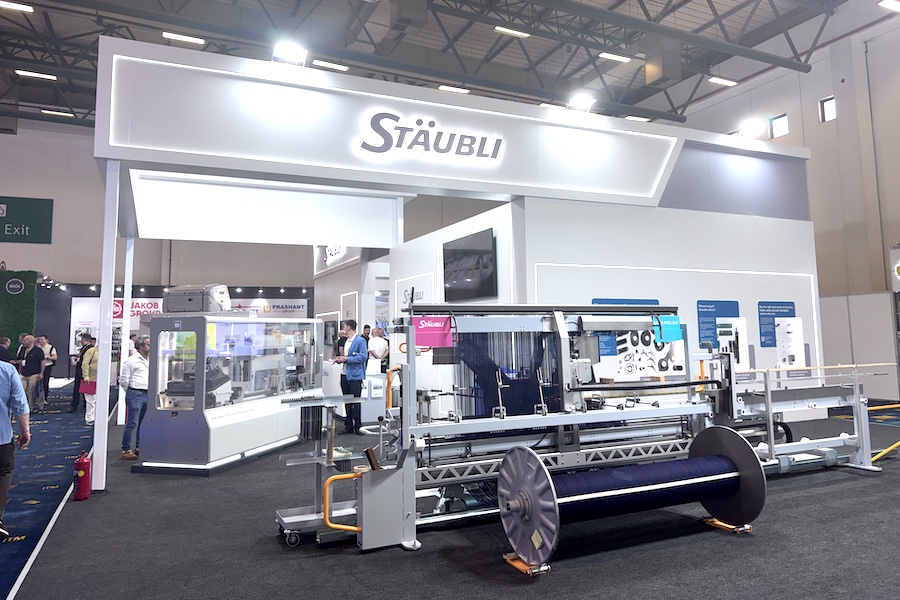
Stäubli to introduce new S3292 dobby for high-speed weaving at ITME India 2026

Stäubli will introduce its new S3292 dobby at ITME India 2026, taking place from December 4 to 9 at the India Expo Centre & Mart in Greater Noida, Uttar Pradesh. Designed for high-speed air-jet weaving, the new machine will be among the highlights of the company's presentation, which also includes warp preparation systems, cam motions, Jacquard technologies and digital services.

#Research & Development

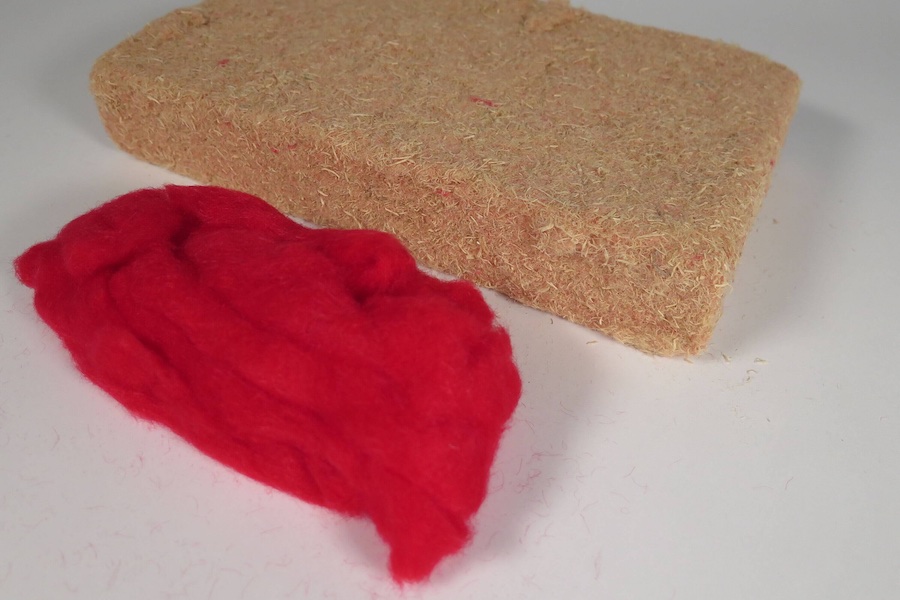
DITF develops bio-based binding fibers for wood-fiber insulation materials

As part of the CelluWoodFlex project, the German Institutes of Textile- and Fiber-Research in Denkendorf (DITF) are developing bio-based cellulose ester fibers as alternative binding fibers for flexible wood fiber insulation materials. In addition to the spinning process and the production of suitable staple fibers, the institute is also investigating how wood and cellulose fibers can be separated and recycled at the end of their useful life.

#Recycled Fibers

Reju expands textile-to-textile recycling network with six international fabric manufacturers

Reju, a textile-to-textile regeneration company, is expanding its industrial network through collaborations with six fabric manufacturers in Europe and the Americas. The initiative aims to accelerate the integration of regenerated polyester into textile manufacturing and support the development of finished fabrics for commercial applications.

#Nonwovens

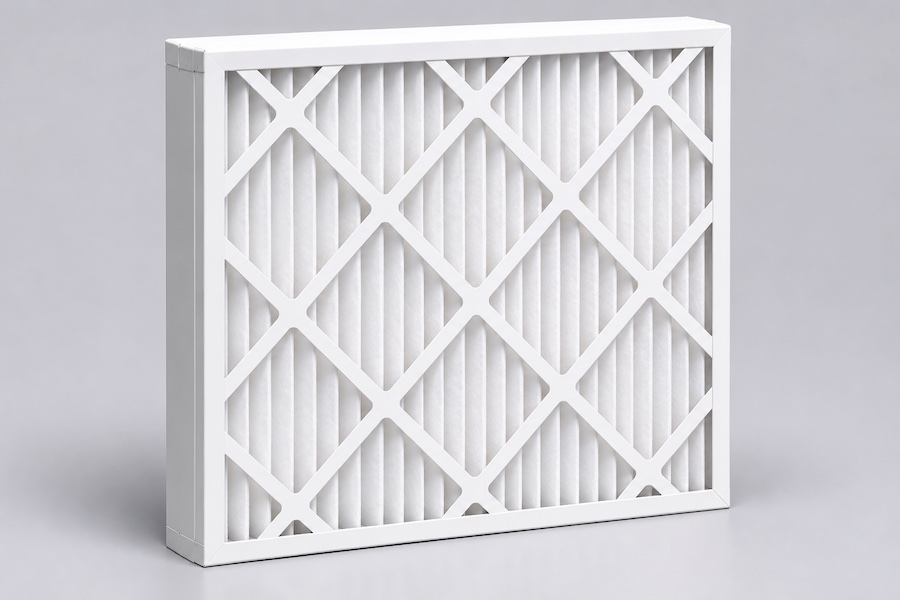
Magnera highlights HighPleat™ filtration media technology at FiltXPO 2026

At FiltXPO 2026, held on October 28–29 at the Minneapolis Convention Center in Minneapolis, Minnesota, Magnera highlighted advances in air filtration media architecture, with a particular focus on its HighPleat™ platform for MERV 8–10 applications. The technology combines a lofted fiber structure with optimized pore architecture to address the challenge of balancing filtration efficiency, airflow resistance and contaminant-holding capacity.

TOP