[pageLogInLogOut]

#Europe

EEA Scientific Committee elects new chair and vice-chairs
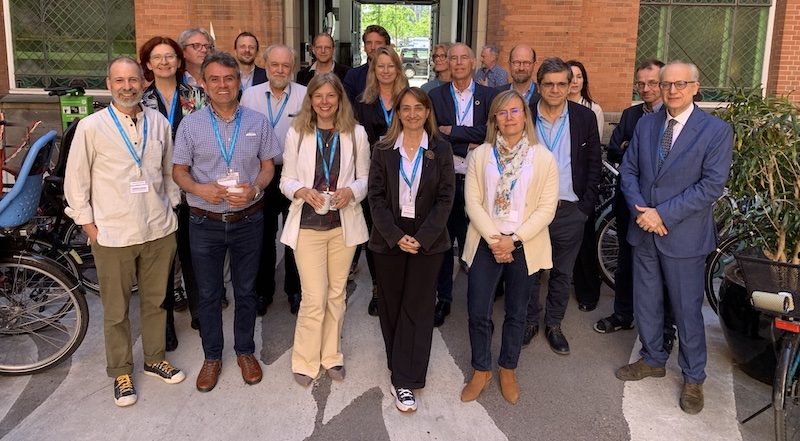
The European Environment Agency’s (EEA) Scientific Committee has elected a new chair and two vice-chairs at its spring meeting held over two days at the EEA headquarters in Copenhagen.
© 2025 EEA
© 2025 EEA


Dr. Louis Meuleman, Special Visiting Professor in Public Governance at Leuven University, Belgium, was elected as the new chair. A member of the committee since 2020, Dr. Meuleman has previously served as both vice-chair and acting chair. He will lead the committee’s efforts to ensure strategic guidance and compliance with the EEA Regulation and Scientific Committee Rules of Procedure. 

Professor Adina Dumitru and Professor Teis Hansen, both newly appointed members in 2025, were elected as vice-chairs. They bring broad expertise in environmental psychology and innovation studies, respectively. 

Professor Dumitru is Professor of Psychology at the University of A Coruña, Spain, and President of the International Association of People-Environment Studies (IAPS). Professor Hansen is Professor of Innovation and Entrepreneurship at the University of Copenhagen’s Department of Food and Resource Economics. 

Leena Ylä-Mononen, EEA Executive Director, commented: "The EEA Scientific Committee has been busy, starting the year by welcoming nine new members and this week electing a new chair and two new vice-chairs. The committee gives invaluable ‘hands-on’ input to EEA knowledge and contributes to the scientific quality of our work. I look forward to working closely with the newly-elected chair and vice-chairs as well as the other committee members over the coming years."

"I am very pleased and honored that the members have elected me to lead the committee in the coming years, in a leadership team with the two vice-chairs. In these very turbulent times, scientifically sound environmental evidence will be crucial to maintain and improve the EU’s environmental sustainability. The committee is well-placed and equipped to support the EEA with advice. We kick-started this week with discussions on future environmental knowledge needs and the challenges posed by widespread mis- and disinformation, among others", said Dr. Louis Meuleman, Chair of the EEA Scientific Committee.
More News from European Environment Agency

#Sustainability

Renewables lower energy prices and play key role to reduce vulnerability to fossil fuel supply shocks

Renewables lower energy prices and play key role to reduce vulnerability to fossil fuel supply shocks Boosting the use of homegrown renewable electricity is Europe’s best way to reduce its vulnerability to volatile international energy supplies and rising energy prices according to a European Environment Agency (EEA) assessment published today.

#Europe

Circular economy offers the EU win-win on environment and economy

Stepping up a circular economy offers the European Union the potential for significant positive impacts on Europe’s environment and poses an untapped and strategic economic opportunity in terms of better access to materials and the creation of new businesses. Three new assessments on circularity, published today by the European Environment Agency (EEA), also stress the need to accelerate investment in circularity efforts to meet EU climate and environment policy targets.

#Europe

State of Europe’s environment not good: threats to nature and impacts of climate change top challenges

State of Europe’s environment not good: threats to nature and impacts of climate change top challenges Significant progress has been made in reducing greenhouse gas emissions and air pollution, but the overall state of Europe’s environment is not good, especially its nature which continues to face degradation, overexploitation and biodiversity loss. The impacts of accelerating climate change are also an urgent challenge, according to the European Environment Agency’s (EEA) most comprehensive, ‘state of environment’ report, published today. The outlook for most environmental trends is concerning and poses major risks to Europe’s economic prosperity, security and quality of life.

#Sustainability

What are the impacts of PFAS polymers on our health and the environment?

The widespread use of PFAS polymers in everything from consumer products to green technologies can lead to contamination of water, air, soil, food and people. A European Environment Agency (EEA) assessment, published today, says that these chemicals can also contribute to global warming and ozone depletion.

More News on Europe

#Europe

EU and Australia strengthen relations with Security and Defence Partnership and Trade Agreement

The EU and Australia have today announced the adoption of a groundbreaking Security and Defence Partnership. They have also concluded negotiations for an ambitious and balanced free trade agreement (FTA) and agreed to launch formal negotiations for the association of Australia to Horizon Europe, the world's largest funding programme for research and innovation. With these steps, the EU and Australia are delivering mutually beneficial outcomes and further reinforcing their already close relations in a time of geopolitical uncertainty.

#Europe

Commission presents proposal for EU Inc. - unlocking the full potential of the Single Market for Europe's entrepreneurs

Today, the European Commission presented its proposal for EU Inc., a new single set of corporate rules, building the cornerstone and starting point for the EU's 28th regime. EU Inc. is an optional, digital-by-default European corporate framework. It will make it easier for businesses to start, operate and grow across the EU – incentivising them to stay in Europe, and encourage those who once looked elsewhere to return.

#Associations

European Business Coalition welcomes provisional application of EU–Mercosur Agreement and calls for Swift and full implementation

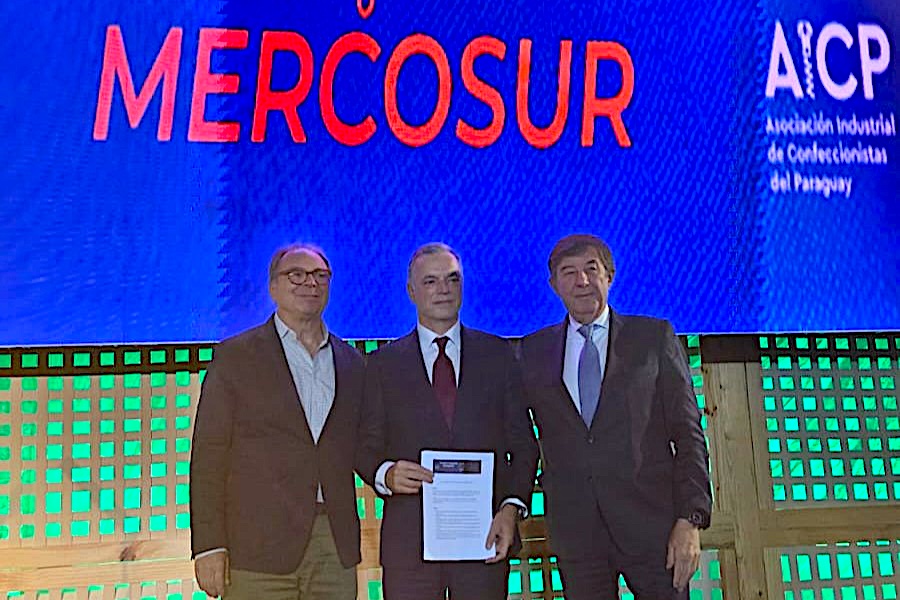
With the European Commission’s decision to provisionally apply the EU–Mercosur Interim Trade Agreement, a process spanning more than 25 years now moves decisively into its implementation phase.

#Europe

Antwerp Declaration community urges EU leaders to deliver emergency measures as Europe’s competitiveness crisis deepens

EURATEX, representing the European textile and fashion industry, joins the Antwerp Declaration Community’s call on EU Heads of State and Government to adopt emergency measures that restore industrial competitiveness and deliver tangible results for Europe’s manufacturing base in 2026.

Latest News

#Spinning

Ibrahim Fibres and Trützschler: A strong partnership enters its next phase with the TC 30Si

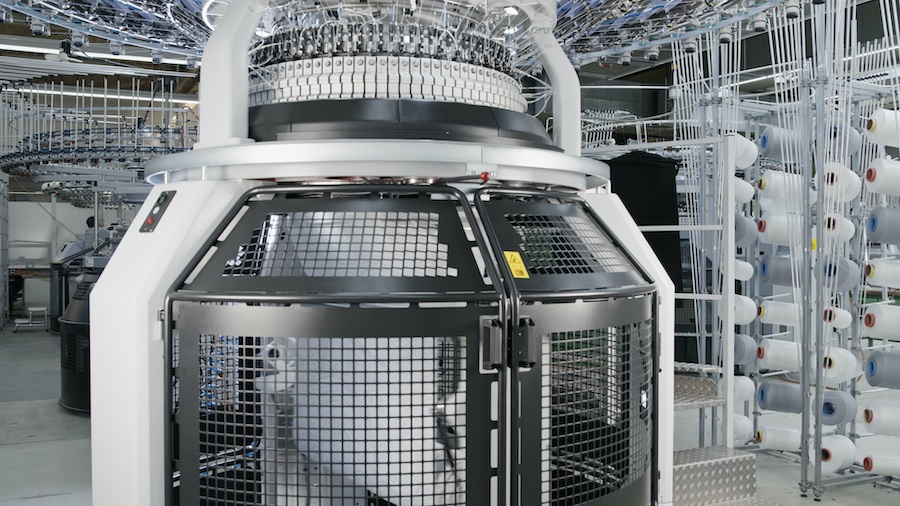
For more than two decades, Ibrahim Fibres and Trützschler have grown side by side, driven by a shared ambition to continuously improve spinning performance, strengthen technology leadership and set new benchmarks in the textile industry. Today, Ibrahim Fibres is a leading yarn and polyester staple fiber manufacturer in Pakistan. The company operates the largest number of Trützschler cards in the country, with more than 200 machines running across its mills in Faisalabad, and plays an important role in one of Asia’s largest textile industries.

#Digital Printing

USColorworks expands digital platform with Kornit Atlas MATRIX and Atlas MAX PLUS solutions

Kornit Digital Ltd. (NASDAQ: KRNT), a global pioneer in sustainable, on-demand digital fashion and textile production, today announced that USColorworks, a North Carolina-based apparel decoration and fulfillment company specializing in custom and on-demand printing for retail and promotional markets, has expanded its Kornit digital production platform with the addition of Atlas MATRIX and Atlas MAX PLUS systems to deliver high-quality, on-demand apparel across cotton, blended fabrics and polyester.

#Functional Fabrics

CovationBio introduces two new bio-based innovations at Functional Fabric Fair New York

Covation Biomaterials LLC (“CovationBio®”) is showcasing its two new bio-based innovations, Xatryx® and Sorona® elasterell-p fiber, at this year’s Functional Fabric Fair in New York City, July 7–9, 2026. Attendees can visit CovationBio at Booth #404 to explore this next generation of bio-based performance materials.

#Research & Development

Geotextiles made from recycled materials: GREEN leads the way into the industry

For the industry, recycled materials are creating new opportunities in geotextile production. In the GREEN project, the Fraunhofer Cluster of Excellence Circular Plastics Economy CCPE demonstrates that recycled polypro-pylene (PP), polyethylene terephthalate (PET), and high-density polyeth-ylene (HDPE) can be processed into nonwovens, fibers, and membranes that meet industrial requirements. This creates opportunities for use in existing production lines and new value chains in the geotextile market.

TOP