[pageLogInLogOut]

#Europe

European textile industry calls for €10 handling fee on ultra-fast-fashion imports
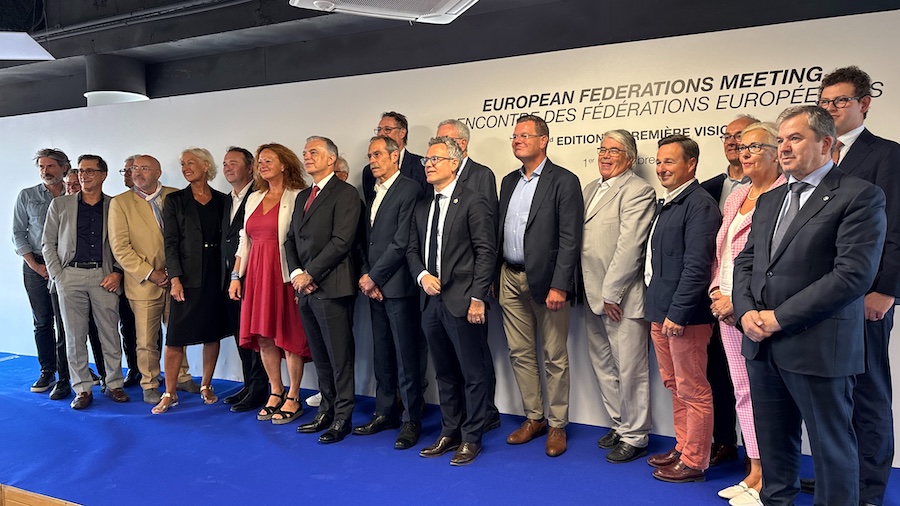
© 2026 EURATEX
The introduction of the €3 customs duty on low-value imports marks an important milestone in Europe’s efforts to address the challenges created by the rapid growth of ultra-fast-fashion imports. Together with the abolition of the €150 customs duty exemption, it demonstrates that policymakers are willing to act when market distortions become impossible to ignore. However, the European textile and clothing industry considers this a first step rather than the final destination.

Today, at Première Vision in Paris, the European textile and clothing industry called on the European Union to introduce a meaningful handling fee that reflects the real costs generated by billions of direct-to-consumer parcels entering the Single Market every year. A fee in the region of €10 per parcel, the industry argues, would provide a more realistic indication of the scale required to support effective enforcement.

Every parcel entering the EU generates costs. Customs authorities must process declarations, conduct risk assessments and verify compliance. Market surveillance authorities need resources to identify unsafe and non-compliant goods. Product safety checks, logistics handling and enforcement activities all carry a price. Today, a significant portion of these costs is borne by taxpayers and by European companies that already comply with the rules.

The industry therefore argues that the debate should not focus solely on trade or taxation, but also on enforcement. A handling fee should ensure that those generating these costs contribute to covering them. Revenues should therefore be directly linked to strengthening customs controls, market surveillance, product safety enforcement and risk-analysis capabilities across the European Union.

The levels currently being discussed, generally between €2 and €4 per parcel, are unlikely to make a meaningful contribution to the actual costs of managing these flows, according to the industry. A €10 benchmark would better reflect the scale of the challenge while remaining proportionate and connected to genuine enforcement needs. The precise amount should ultimately be based on a robust assessment of the costs incurred by public authorities.

At the same time, the European textile and apparel industry is calling for online platforms to take greater responsibility for the products they place on the European market. It supports the accelerated implementation of the Deemed Importer approach and greater coherence between customs, product safety, market surveillance and digital legislation.

The industry also warns against creating new loopholes. Stronger controls on individual parcels should not simply encourage operators to switch to bulk imports, European warehouses or fulfilment centres. Effective oversight must apply regardless of the logistics model used. Customs authorities need access to equivalent and detailed data for both B2C and B2B flows if they are to enforce EU rules effectively.

Europe’s textile and apparel industry represents 1.3 million jobs and 200,000 companies, most of them SMEs. These businesses operate under some of the world’s most demanding social, environmental and product-safety standards. According to the industry, they need a level playing field in which all companies selling to European consumers are identifiable, accountable and subject to effective controls.
JOINT STATEMENT


More News from European Apparel and Textile Confederation (EURATEX)

#Associations

EURATEX calls for urgent action on industrial competitiveness

EURATEX, the European Apparel and Textile Confederation, welcomes today’s State of the Union Address by European Commission President, Ursula von der Leyen, and in particular her recognition of Europe’s need to rebalance unfair trade, cut red tape, and strengthen its industrial and strategic autonomy.

#Associations

Towards pragmatic and harmonised labelling in the EU

EDANA, alongside 14 European associations, urges the European Commission and Member States to adopt a pragmatic approach for the future harmonised packaging labels, in line with the EU’s agenda for the EU Single Market, simplification and competitiveness. The system should rely on text-free pictograms, available in achromatic or monochromatic versions matching the packaging palette, with the possibility of using digital labelling as a core element. Our associations represent manufacturers of consumer goods across Europe.

#Associations

Textile PRO Forum calls for greater harmonisation of textile EPR systems across Europe

The Textile PRO Forum has published a new analysis highlighting the need for greater harmonisation of textile Extended Producer Responsibility systems across Europe. The document, Toward harmonised Textile EPR Systems in Europe: analysis and recommendations, presents the results of work carried out by Workstream 1 of the Textile PRO Forum, led by Dr. Eng. Viola Corbellini, Strategic Development and Innovation Expert at Erion Textiles, and Eng. Luca Campadello, General Director at Erion Textiles. The workstream focused on reducing administrative burden for textile producers by identifying areas where procedures could be better aligned across countries.

#Associations

Mario Jorge Machado re-elected President of EURATEX

The EURATEX General Assembly has re-elected Mario Jorge Machado as President of EURATEX, renewing its confidence in his leadership at a crucial moment for the European textile and clothing industry. The sector is facing rising costs, global competitive pressure and an increasingly challenging transition towards sustainability and digitalisation.

More News on Europe

Latest News

#Functional Fabrics

ROICA™ presents stretch textile innovations from nine partners at PERFORMANCE DAYS 2026

ROICA™ by Asahi Kasei will return to PERFORMANCE DAYS Munich on October 13–14, 2026, presenting textile developments from seven European partners and two Japanese specialists under its global brand message, “STRETCH YOUR FUTURE.” Visitors can discover the developments at Booth P10 in Hall A4.

#IGATEX 2026

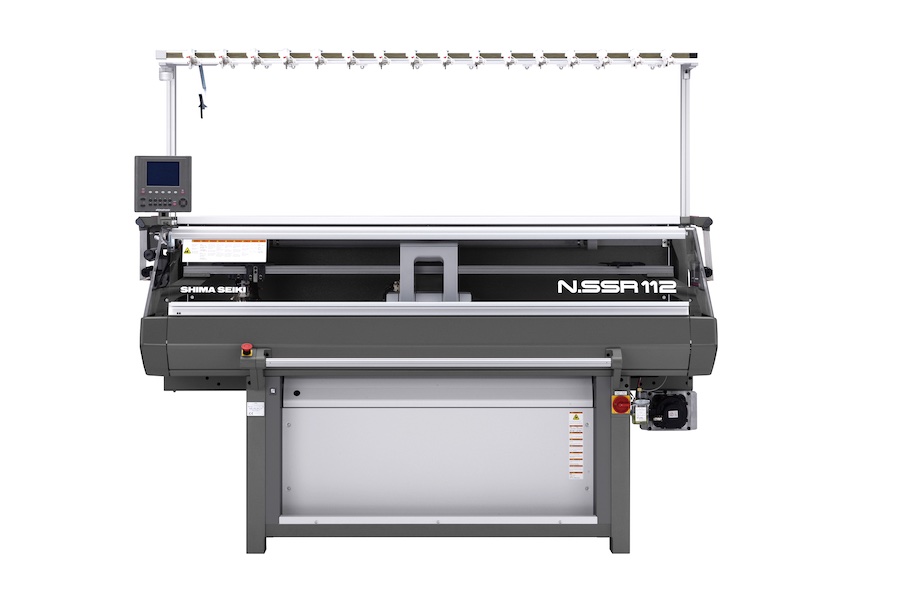
SHIMA SEIKI to showcase flat knitting and digital design solutions at IGATEX Pakistan 2026

Leading computerized flat knitting technology provider SHIMA SEIKI MFG., LTD. of Wakayama, Japan, together with its Pakistani representative ALMURTAZA MACHINERY CO., (PVT) Ltd., will exhibit at the upcoming International Exhibition for Garment, Textile Machinery and Accessories (IGATEX Pakistan 2026) in Lahore, Pakistan, from October 15–18. SHIMA SEIKI will introduce computerized flat knitting machines, 3D design software and various web platforms as proposals for sustainable production through innovative shaping technology and the latest digital solutions.

#Dyeing, Drying, Finishing

Brazilian market leader Cedro Têxtil focuses on greater efficiency, sustainability, and product quality with Brückner

After more than 150 years of company history, Cedro Têxtil is once again embracing the challenges of a changing industry. Widely recognized as the largest manufacturer of workwear fabrics in Latin America, the Brazilian textile company continues to invest in the modernization of its production facilities. A key milestone in this process was the decision to install a state-of-the-art Brückner stenter frame just over a year ago.

#Recycling / Circular Economy

The Or Foundation, adidas, BESTSELLER, H&M Group, and Inditex launch Apparel Recovery Coalition, responding to impacts of post-consumer textile exports

adidas, BESTSELLER, H&M Group, Inditex and The Or Foundation, with support from Circle Economy, unveiled the Apparel Recovery Coalition (ARC). The coalition will explore how producer responsibility systems can support circular pathways such as reuse, upcycling, recycling, and responsible waste management in countries that receive large volumes of exported secondhand apparel.

TOP