#Europe
Commission announces actions for safe and sustainable e-commerce imports

Last year, around 4.6 billion low-value consignments, i.e. goods with a value not exceeding €150, entered the EU market equalling to 12 million parcels per day. This is twice as many as in 2023 and three times as many as in 2022, and many of these goods have found to be non-compliant with European legislation. This exponential growth is raising numerous concerns. Mainly, there are more and more harmful products entering the EU. More so, European sellers, who respect our high product standards, are at risk of being harmed by unfair practices and the sale of counterfeit goods through online marketplaces. Finally, the large number of packages being shipped and transported has a negative environmental and climate footprint.
In Europe, consumers should enjoy the full potential of e-commerce and have access to convenient, affordable, safe and high-quality products online. Equally so, European businesses should benefit from a level playing field in the Single Market.
Henna Virkkunen, Executive Vice-President for Tech Sovereignty, Security and Democracy, says:" The rise in e-commerce imports to the EU market has brought with it many challenges. The EU is ready to address these challenges, coming together as Team Europe to make sure citizens and businesses can continue to enjoy the many benefits of online shopping, while minimising the risks of dangerous products that threaten the health and safety of consumers. We want to see a competitive e-commerce sector that keeps consumers safe, offers convenient products, and is respectful of the environment. "
In the Communication, the Commission sets out all the tools the EU already has at its disposal and highlights initiatives that are currently discussed by the co-legislators. In addition, it proposes new joint actions to address concerns arising from the surge of unsafe, counterfeit and otherwise non-compliant or illicit products entering the market:
+ Customs reform, including calling for co-legislators to swiftly adopt the proposed Customs Union Reform Package, allowing rapid implementation of new rules to level the playing field in the area of e-commerce. These include removal of the duty exemption for low-value parcels worth less than €150 and reinforcing capabilities for controls such as better data-sharing and risk assessment. The Commission also invites the co-legislators to consider further measures, such as a non-discriminatory handling fee, on e-commerce items imported in the EU directly to consumers, to address the scaling costs of supervising compliance of billions of such consignments with EU rules.
+ Targeted measures for imported goods, including launching coordinated controls between customs and market surveillance authorities, as well as coordinated actions on product safety, such as the first-ever product safety sweep. This should lead to removing non-compliant goods from the market and contribute to evidence collection to feed risk analysis and complementary actions. Future controls will be intensified for certain operators, goods or trade flows, on a rolling basis, in the light of the risk analysis. The higher the rate of non-compliance, the greater should be the level of vigilance in subsequent stages, while penalties should reflect cases of systematic non-compliance.
+ Protecting consumers on online marketplaces, highlighting e-commerce practices as a clear enforcement priority under the Digital Services Act, as well as tools such as the Digital Markets Act, and those that apply to all traders: the General Product Safety Regulation, the Consumer Protection Cooperation Regulation, and the Consumer Protection Network.
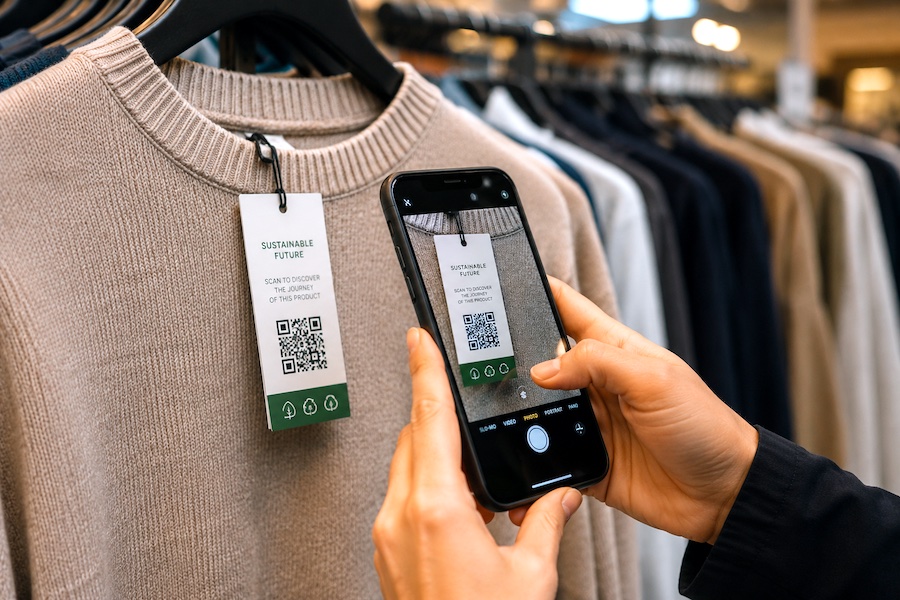
+ Using digital tools, which can help to facilitate the supervision of the e-commerce landscape through the Digital Product Passport and new AI tools for the detection of potentially non-compliant products.
+ Environmental protection, including adopting the first action plan on the Ecodesign for Sustainable Products Regulation, and calling for the swift adoption of the targeted amendment for the Waste Framework Directive.
+ Empowering consumers and traders through awareness-raising campaigns concerning consumer rights, risks and redress mechanisms.
+ International cooperation and trade, including providing training activities on EU product safety rules and assessing any evidence that may emerge relating to dumping and subsidisation.
The Commission calls on Member States to come together to play a strong role as Team Europe to improve the effectiveness of actions taken by national authorities and the Commission.
The Consumer Protection Cooperation (CPC) Network of national consumer authorities and the Commission also informed Shein about the launch of a coordinated action.
Michael McGrath, Commissioner for Democracy, Justice, the Rule of Law and Consumer Protection, says: " E-commerce has revolutionised shopping. Three out of four Europeans shop online regularly. Yet the surge of imported goods can pose threats to the rights of European consumers and their safety. Now is the time for Team Europe to come together to address these threats and protect European consumers. We have a duty to ensure that goods entering our market are safe and that all traders respect consumers’ rights. The Commission will use all the tools in its power to fully support and coordinate the enforcement of our laws. "
Next Steps
The Commission calls on the cooperation with Member States, the co-legislators and all stakeholders, to put in place the measures outlined in the Communication.
Within a year, the Commission will assess the effect of the announced actions and publish a report on the findings of the increased controls.
In light of the results and in consultation with the relevant authorities of the Member States and stakeholders, the Commission will consider whether existing frameworks and enforcement activities are sufficient and adequate. If not, further actions and proposals will be considered to strengthen the implementation and enforcement of EU rules.
Background
E-commerce brings many benefits to consumers, businesses – including SMEs – and the EU economy as a whole, with around 70% of Europeans regularly buying products online. However, it also poses certain challenges. This is particularly true when it comes to the import of e-commerce goods that are sold and delivered directly to EU consumers via online retailers and marketplaces.
Customs authorities are facing an increasing workload, and risks are emerging relating to product safety and compliance, illicit goods, sustainability, and unfair competition for responsible businesses. For example, around half of the fake products seized at EU borders that infringed the intellectual property rights of SMEs were purchased online.
Maroš Šefcovic, Commissioner for Trade and Economic Security; Interinstitutional Relations and Transparency, concludes:" As e-commerce is booming, we must step up efforts to prevent non-compliant products from entering the EU market and to ensure fair competition for both European and third-country operators. Our customs authorities are the first set of eyes at the border so we must equip them with the appropriate instruments to strengthen our enforcement capacities, in close cooperation with other authorities instrumental to checking goods entering the EU market. The ambitious Customs Union Reform tabled by the Commission in May 2023 is foreseen to remove duty relief for low value parcels as well as enhance control through a proposed EU Customs Authority and an EU Customs Data Hub. This would be a true game-changer to level the playing field for e-commerce players. "