[pageLogInLogOut]

#Europe

FITA, ABIT and EURATEX underline strategic importance of Mercosur – EU Partnership Agreement for the textile and apparel industry

© 2026 EURATEX
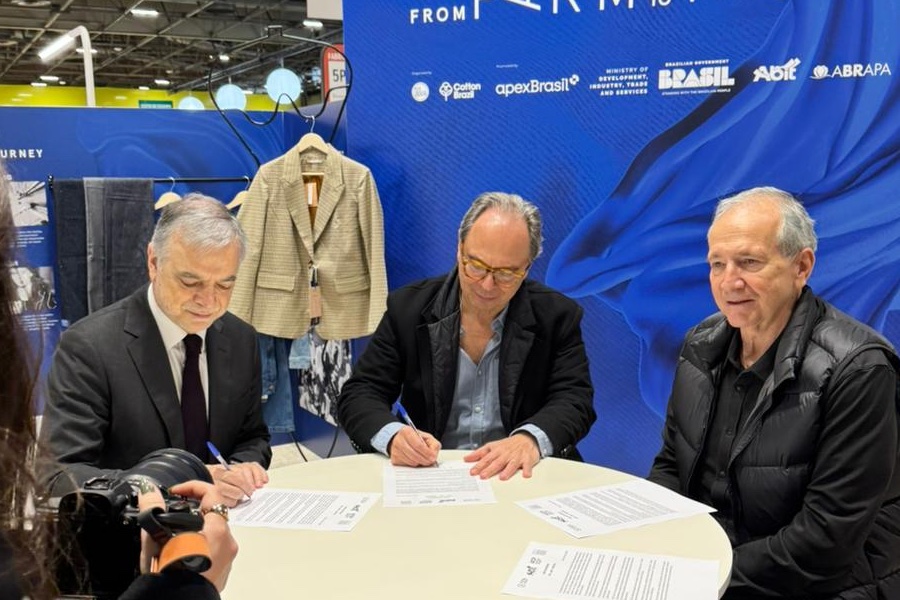
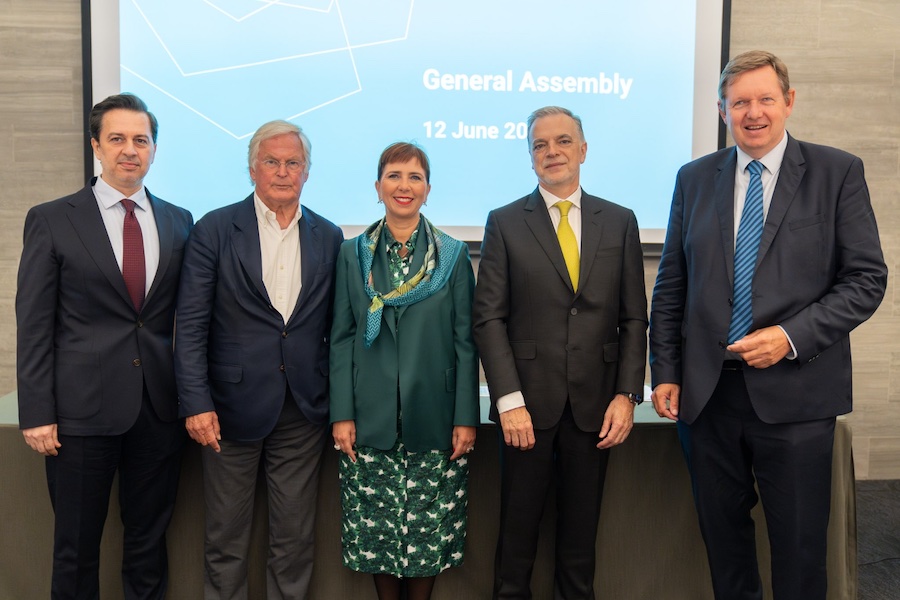
The Argentine Textile Industry Federation (FITA), the Brazilian Textile and Apparel Industry Association (ABIT), and the European Apparel and Textile Confederation (EURATEX) continue to monitor the process of internalizing the Mercosur-European Union Partnership Agreement. This agreement is essential for the competitiveness of our industries, on both sides of the Atlantic.

The entities remain confident that, despite the submission of the agreement to the Court of Justice of the European Union, the vision of the agreement's strategic role for both sides of the Atlantic will prevail.

For the textile industry, the agreement confirms the commitment to economic integration and predictable rules, as well as signalling support for multilateralism in a challenging global scenario.

FITA, ABIT, and EURATEX reaffirm their commitment to actively contribute to this implementation process of the agreement, as well as to undertake other inter-regional and international projection actions that consolidate both blocs as relevant actors in the global economy.

The EU textiles and apparel industry includes ca. 200,000 companies and 1.2 million dedicated workers, generating a turnover of nearly €170 billion.

The Mercosur countries also have a significant textile and clothing industry. In Brazil, this industry has 25,700 companies with 1.3 million employees and a turnover of USD 40.9 billion. In Argentina, the textile and clothing industry comprises 4,000 companies and employs 540,000 workers along the value chain.

The Mercosur-European Union Partnership Agreement offers the textile and apparel industry opportunities related to market access, technological cooperation, investment, strengthening of environmental standards for countries in both economic blocs.
© 2026 EURATEX
© 2026 EURATEX


More News from European Apparel and Textile Confederation (EURATEX)

#Associations

European Business Coalition welcomes provisional application of EU–Mercosur Agreement and calls for Swift and full implementation

With the European Commission’s decision to provisionally apply the EU–Mercosur Interim Trade Agreement, a process spanning more than 25 years now moves decisively into its implementation phase.

#Europe

Antwerp Declaration community urges EU leaders to deliver emergency measures as Europe’s competitiveness crisis deepens

EURATEX, representing the European textile and fashion industry, joins the Antwerp Declaration Community’s call on EU Heads of State and Government to adopt emergency measures that restore industrial competitiveness and deliver tangible results for Europe’s manufacturing base in 2026.

#Associations

Industry associations warn against state-run EPR models in the EU

European industry associations, led by Euratex, have raised concerns over a growing trend in several EU Member States to introduce state-run Producer Responsibility Organisations (PROs) within Extended Producer Responsibility (EPR) schemes.

#Associations

European business associations celebrate the signature of the EU-Mercosur FTA

The 17th January marks a historic milestone with the signing of the EU-Mercosur Trade Agreement, creating the biggest trading block in the world. European business – represented by more than 28 associations across a wide range of sectors – warmly welcomes this signature. It sends a strong and timely signal that the EU remains open and is committed to rules-based global trade. In a time of global uncertainty, this agreement is a key growth booster.

More News on Europe

#Europe

New EU rules to stop the destruction of unsold clothes and shoes

The European Commission today (Feb 9) adopted new measures under the Ecodesign for Sustainable Products Regulation (ESPR) to prevent the destruction of unsold apparel, clothing, accessories and footwear.

#Europe

Commission adopts a first-ever EU Visa Strategy

Today, the European Commission is adopting its first-ever EU Visa Strategy. It sets out a framework for a visa policy that is more strategic and that advances the EU's long-term interests, allowing it to be better equipped for growing mobility as well as the consequences of regional instability and geopolitical competition.

#Europe

ICAC to support European Commission on pending PEF legislation

The International Cotton Advisory Committee (ICAC) is proud to announce that it has been included as a member of the European Commission’s Technical Advisory Board (TAB) on the Product Environmental Footprint methodology. The Commission developed the Product Environmental Footprint (PEF) to assess and communicate the life cycle environmental performance of products and organizations.

#Europe

EU and India conclude landmark Free Trade Agreement

The EU and India concluded negotiations today for a historic, ambitious and commercially significant free trade agreement (FTA), the largest such deal ever concluded by either side. It will strengthen economic and political ties between the world's second and fourth largest economies, at a time of rising geopolitical tensions and global economic challenges, highlighting their joint commitment to economic openness and rules-based trade.

Latest News

#Raw Materials

Lenzing Group positions bio‑based materials as a strategic asset for Europe’s economic security

The Lenzing Group, a leading supplier of regenerated cellulose fibers for the textile and nonwovens industries, hosted a high‑level roundtable in Brussels to discuss how bio‑based materials can strengthen Europe’s economic security and support the shift toward a fossil‑free future. Organized in cooperation with Euractiv, the event brought together representatives of the European Commission, the UK Mission to the EU, academia, civil society, and industry.

#Natural Fibers

Beyond Cotton: Natural Fibres in the Spotlight at the Bremen Cotton Conference - Branded by DNFI

Climate targets, fragile supply chains, and rising regulatory requirements are fundamentally changing the perspective of the textile industry - the focus is increasingly shifting toward the base material. Not only cotton, but natural fibres are gaining significant importance: they stand out not only because of their outstanding functional properties, but also because they make a valuable contribution to the bioeconomy and responsible product development.

#Textiles & Apparel / Garment

Coats to showcase innovative reinforcement and filler materials for leather goods and accessories at APLF 2026

Coats, a world-class Tier 2 manufacturer and trusted partner for the apparel and footwear industries, will be promoting four advanced materials from its ‘Lifestyle Solutions’ portfolio at APLF 2026 in Hong Kong in March. Each innovation has been specifically engineered to help luxury and premium brands elevate the craft, durability, sustainability and creative expression required in the manufacturing of handbags, purses, and other high-end designer accessories.

#Textiles & Apparel / Garment

Design, innovation and sustainability propel VIATT 2026’s expanding role in ASEAN textile sourcing

At its third edition, the Vietnam International Trade Fair for Apparel, Textiles, and Textile Technologies (VIATT) further reinforced its role as a key sourcing and business platform for ASEAN’s textile industry. The three-day fair welcomed over 17,000 visits from 54 countries and regions, and featured over 460 exhibitors from 21 countries and regions across 18,000 sqm. The 2026 edition was marked by the introduction of new international pavilions and zones, broadening the fair’s sourcing scope across new geographies and product categories. The fringe programme, headlined by the debut Trend Forum, further distinguished VIATT as the region’s most integrated textile trade platform – uniquely spanning the entire value chain.

TOP