[pageLogInLogOut]

#Europe

Antwerp Declaration community urges EU leaders to deliver emergency measures as Europe’s competitiveness crisis deepens
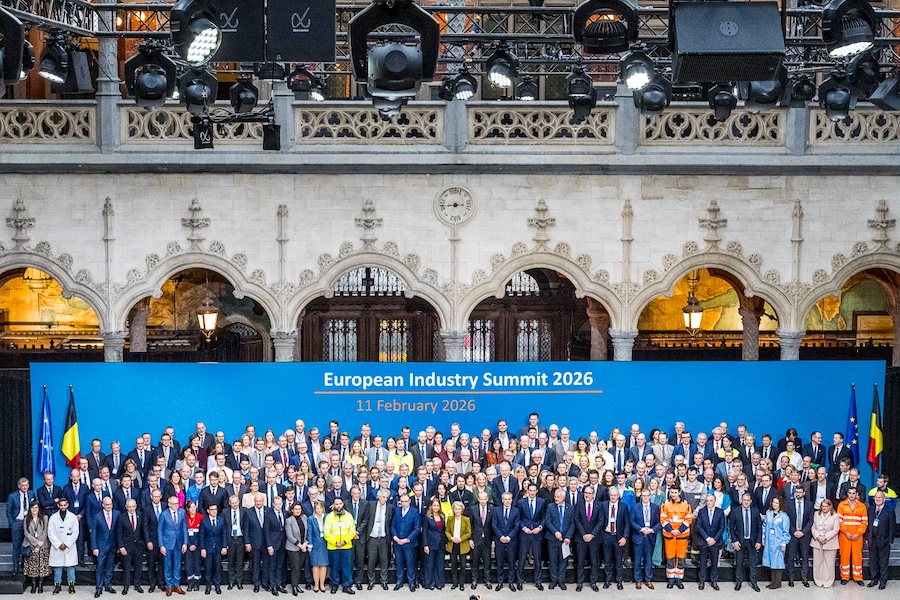
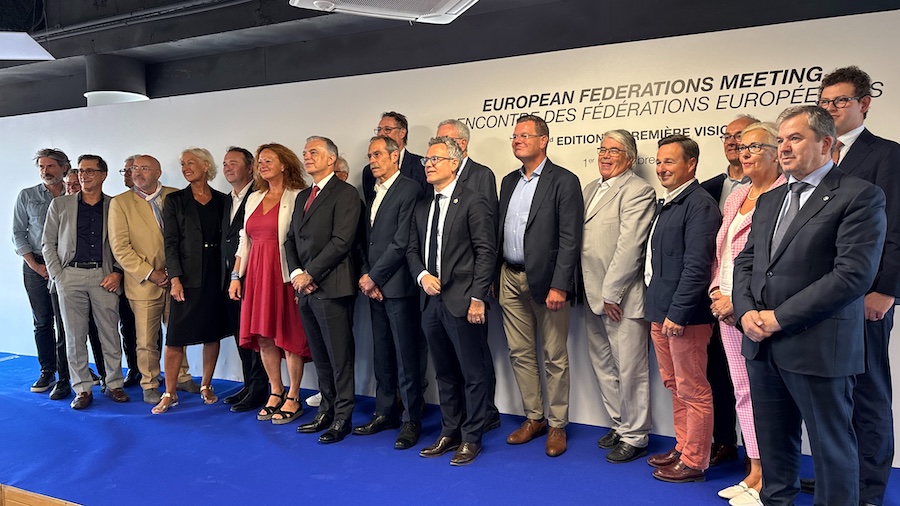
European Industry Summit 2026 © 2026 EURATEX
EURATEX, representing the European textile and fashion industry, joins the Antwerp Declaration Community’s call on EU Heads of State and Government to adopt emergency measures that restore industrial competitiveness and deliver tangible results for Europe’s manufacturing base in 2026.


The call was made at the European Industry Summit, which brought together over 500 business leaders, 30 factory workers, and European Commission President Ursula von der Leyen, under the auspices of Belgian Prime Minister Bart De Wever. Senior EU leaders including German Chancellor Friedrich Merz, French President Emmanuel Macron, Dutch Prime Minister Dick Schoof, Austrian Chancellor Christian Stocker, as well as Executive Vice-Presidents Teresa Ribera and Stéphane Séjourné, and Commissioner Wopke Hoekstra, also joined the discussions — underscoring the growing political urgency of Europe’s industrial competitiveness crisis.

The European Industry Summit urged a coordinated package focused on:

  • Reducing energy and carbon costs to restore competitiveness;
  • Ensuring fair competition through strong trade instruments and enforcement;
  • Boosting demand for EU-made products, including via public procurement and transparency tools that empower buyers. 

With 200,000 companies and 1.3 million workers, Europe’s textile and fashion ecosystem produces not only apparel, but also technical textiles for medical, automotive and defence applications. Yet the sector is facing mounting pressure from high energy costs and millions of non-compliant, low-quality products entering the EU market via online platforms, undermining responsible manufacturers and accelerating closures across Member States. 

During his speech, EURATEX President Mario Jorge Machado underlined that Europe must move from announcements to delivery — with measures that directly strengthen demand for sustainable, high-quality products made in Europe, while ensuring imported products comply with EU rules. 

“Europe must regain confidence and pride in what it produces, and stimulate demand for high-quality and sustainable textiles made in Europe. This requires three concrete actions: public procurement that goes beyond price and reflects origin, sustainability and security for strategic textiles; increased transparency, feasible for SMEs; and effective market surveillance to stop non-compliant imports from dominating the market” affirmed the President.
More News from European Apparel and Textile Confederation (EURATEX)

#Associations

Europe is losing its textile industry

EURATEX has released its latest Economic Update on the performance of the European textile and apparel industry in 2025. For the third consecutive year, the sector recorded negative results across all key indicators — production, turnover and employment — confirming a continued erosion of competitiveness across Europe.

#Associations

European Business Coalition welcomes provisional application of EU–Mercosur Agreement and calls for Swift and full implementation

With the European Commission’s decision to provisionally apply the EU–Mercosur Interim Trade Agreement, a process spanning more than 25 years now moves decisively into its implementation phase.

#Europe

FITA, ABIT and EURATEX underline strategic importance of Mercosur – EU Partnership Agreement for the textile and apparel industry

The Argentine Textile Industry Federation (FITA), the Brazilian Textile and Apparel Industry Association (ABIT), and the European Apparel and Textile Confederation (EURATEX) continue to monitor the process of internalizing the Mercosur-European Union Partnership Agreement. This agreement is essential for the competitiveness of our industries, on both sides of the Atlantic.

#Associations

Industry associations warn against state-run EPR models in the EU

European industry associations, led by Euratex, have raised concerns over a growing trend in several EU Member States to introduce state-run Producer Responsibility Organisations (PROs) within Extended Producer Responsibility (EPR) schemes.

More News on Europe

#Europe

EU and Australia strengthen relations with Security and Defence Partnership and Trade Agreement

The EU and Australia have today announced the adoption of a groundbreaking Security and Defence Partnership. They have also concluded negotiations for an ambitious and balanced free trade agreement (FTA) and agreed to launch formal negotiations for the association of Australia to Horizon Europe, the world's largest funding programme for research and innovation. With these steps, the EU and Australia are delivering mutually beneficial outcomes and further reinforcing their already close relations in a time of geopolitical uncertainty.

#Europe

Commission presents proposal for EU Inc. - unlocking the full potential of the Single Market for Europe's entrepreneurs

Today, the European Commission presented its proposal for EU Inc., a new single set of corporate rules, building the cornerstone and starting point for the EU's 28th regime. EU Inc. is an optional, digital-by-default European corporate framework. It will make it easier for businesses to start, operate and grow across the EU – incentivising them to stay in Europe, and encourage those who once looked elsewhere to return.

#Europe

New EU rules to stop the destruction of unsold clothes and shoes

The European Commission today (Feb 9) adopted new measures under the Ecodesign for Sustainable Products Regulation (ESPR) to prevent the destruction of unsold apparel, clothing, accessories and footwear.

#Europe

Commission adopts a first-ever EU Visa Strategy

Today, the European Commission is adopting its first-ever EU Visa Strategy. It sets out a framework for a visa policy that is more strategic and that advances the EU's long-term interests, allowing it to be better equipped for growing mobility as well as the consequences of regional instability and geopolitical competition.

Latest News

#Associations

BTMA backs global growth while investing in future UK leaders

As one of a number of new initiatives launched this year, the British Textile Machinery Association (BTMA) is launching the UK-India Textile Machinery Coalition. The UK-India Free Trade Agreement, signed in July 2025, has implications that extend across sourcing, competitiveness and long-term trade dynamics, believes BTMA CEO Jason Kent.

#Raw Materials

China projected to increase cotton production, yields, and imports in 2026/27

World cotton production in the 2026/27 season is projected at 25.9 million tonnes, exceeding global consumption of 25.2 million tonnes, according to the May 2026 issue of Cotton This Month. That means both production and consumption are expected to remain close to current season levels, while global cotton trade is projected to decline by 2.7% to approximately 9.6-9.7 million tonnes.

#Raw Materials

ICAC launches Carbon Credits Initiative to deliver new income streams to cotton farmers

The International Cotton Advisory Committee (ICAC) has announced a new initiative designed to unlock additional income streams for cotton farmers through participation in carbon credit markets, linking sustainable production practices directly to financial returns.

#Sustainability

Number of GOTS-certified facilities grow 15% globally as demand for credible sustainability standards continues to strengthen

Global Organic Textile Standard (GOTS) certification continued to grow in 2025, with nearly 18,000 certified facilities worldwide, despite ongoing geopolitical uncertainty and rapidly evolving regulatory requirements across global textile supply chains.

TOP