[pageLogInLogOut]

#Europe

EU and India conclude landmark Free Trade Agreement
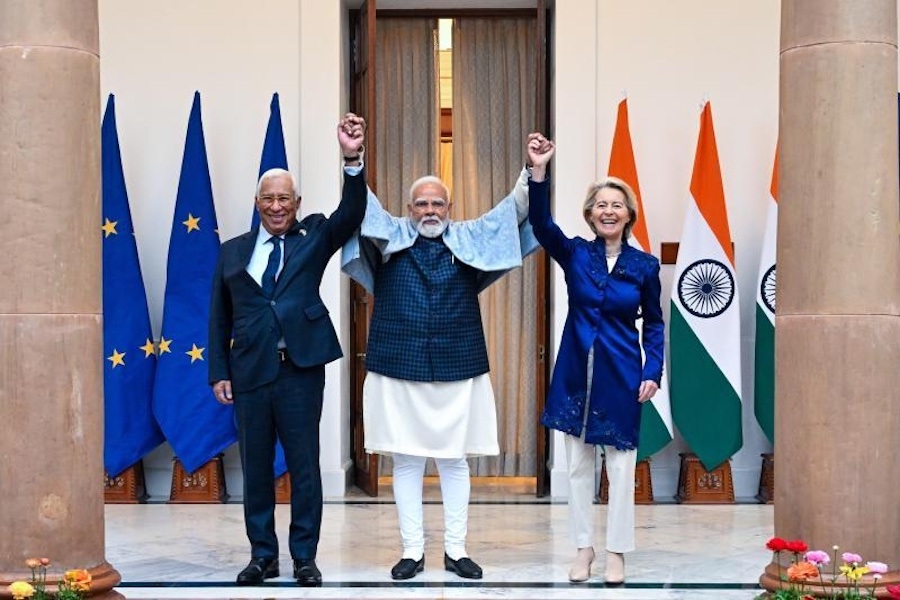
© 2026 European Commission
The EU and India concluded negotiations today for a historic, ambitious and commercially significant free trade agreement (FTA), the largest such deal ever concluded by either side. It will strengthen economic and political ties between the world's second and fourth largest economies, at a time of rising geopolitical tensions and global economic challenges, highlighting their joint commitment to economic openness and rules-based trade.


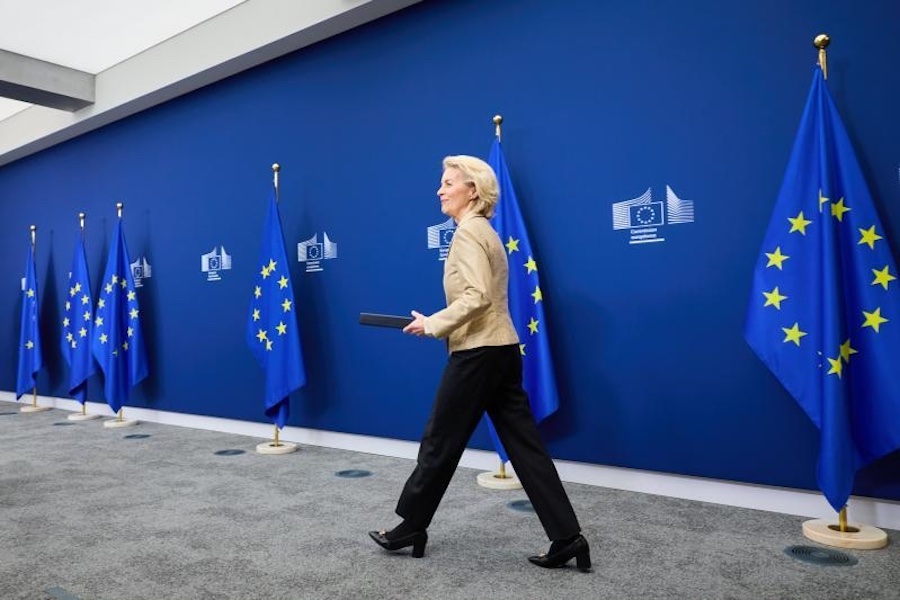
European Commission President, Ursula von der Leyen, said: “The EU and India make history today, deepening the partnership between the world's biggest democracies. We have created a free trade zone of 2 billion people, with both sides set to gain economically. We have sent a signal to the world that rules-based cooperation still delivers great outcomes. And, best of all, this is only the start - we will build on this success, and grow our relationship to be even stronger.”

The EU and India already trade over €180 billion worth of goods and services per year, supporting close to 800,000 EU jobs. This deal is expected to double EU goods exports to India by 2032 by eliminating or reducing tariffs in value of 96.6% of EU goods exports to India. Overall, the tariff reductions will save around €4 billion per year in duties on European products.

This is the most ambitious trade opening that India has ever granted to a trade partner. It will give a significant competitive advantage for key EU industrial and agri-food sectors, granting companies privileged access to the world's most populous country of 1.45 billion people and fastest growing large economy, with an annual GDP of €3.4 trillion.

Opportunities for European businesses of all sizes

India will grant the EU tariff reductions that none of its other trading partners have received. For example, tariffs on cars are gradually going down from 110% to as low as 10%, while they will be fully abolished for car parts after five to ten years. Tariffs ranging up to 44% on machinery, 22% on chemicals and 11% on pharmaceuticals will also be mostly eliminated.

A dedicated chapter will also help small EU businesses take full advantage of the new export opportunities. For instance, both sides will put in place dedicated contact points to provide SMEs with relevant information on the FTA and help them with any specific issue they would face when trying to use the FTA's provisions. In addition to this, SMEs will particularly benefit from the tariff reductions, removal of regulatory barriers, transparency, stability and predictability provided by the Agreement.

Reducing agri-food tariffs

The agreement removes or reduces often prohibitive tariffs (over 36% on average) on EU exports of agri-food products, opening a massive market to European farmers. For example, Indian tariffs on wines will be cut from 150% to 75% at entry into force and eventually to levels as low as 20%, tariffs on olive oil will go down from 45% to 0% over five years, while processed agricultural products such as bread and confectionary will see tariffs of up to 50% eliminated.

Sensitive European agricultural sectors will be fully protected, as products such as beef, chicken meat, rice and sugar are excluded from liberalisation in the agreement. All Indian imports will continue to have to respect the EU's strict health and food safety rules.

In parallel, the EU and India are currently negotiating a separate agreement on Geographical Indications (GIs), which will help traditional iconic EU farming products sell more in India, by removing unfair competition in the form of imitations.

Privileged access to services markets and protected Intellectual Property

The agreement will grant EU companies privileged access to the Indian services market, including key sectors such as financial services and maritime transport. It has the most ambitious commitments on financial services by India in any trade agreement, going beyond what they have given to other partners.

The agreement provides a high level of protection and enforcement of Intellectual Property (IP) rights, including copyright, trademarks, designs, trade secrets and plant variety rights. It builds upon existing international IP treaties and brings Indian and EU intellectual property laws closer. This will make it easier for EU and Indian businesses that rely on IP to trade and invest in each other's markets.

Enhancing sustainability commitments

The agreement has a dedicated trade and sustainable development chapter, which enhances environmental protection and addresses climate change, protects workers' rights, supports women's empowerment, provides for a platform for dialogue and cooperation on trade related environmental and climate issues and ensures effective implementation.

The EU and India will also sign a Memorandum of Understanding that intends to establish an EU-India platform for cooperation and support on climate action. The platform will be launched in the first half of 2026. Furthermore, subject to the EU's budgetary and financial rules and procedures, €500 million in EU support over the next two years is envisaged to help India's efforts to reduce greenhouse gas emissions and accelerate its long-term sustainable industrial transformation.

Next steps

On the EU side, the negotiated draft texts will be published shortly. The texts will go through legal revision and translation into all official EU languages. The Commission will then put forward its proposal to the Council for the signature and conclusion of the agreement. Once adopted by the Council, the EU and India can sign the agreements. Following the signature, the agreement requires the European Parliament's consent, and the Council's decision on conclusion for it to enter into force. Once India also ratifies the Agreement, it can enter into force.

Background

The EU and India had first launched negotiations for a free trade agreement in 2007. The talks were suspended in 2013 and then relaunched in 2022. The 14th and last formal negotiating round took place in October 2025, followed by intersessional discussions at technical and political level.

At the same time as FTA negotiations were relaunched, the EU and India also launched negotiations for a Geographical Indications Agreement and an Investment Protection Agreement. Negotiations for these agreements are still ongoing.
More News from European Commission

#Europe

Commission adopts a first-ever EU Visa Strategy

Today, the European Commission is adopting its first-ever EU Visa Strategy. It sets out a framework for a visa policy that is more strategic and that advances the EU's long-term interests, allowing it to be better equipped for growing mobility as well as the consequences of regional instability and geopolitical competition.

#Europe

EU and Mercosur sign historic and ambitious partnership

Today, the European Union and Mercosur signed a Partnership Agreement (EMPA) and an Interim Trade Agreement (iTA), representing a historic milestone between the two regions, and an ambitious platform for strengthening their economic, diplomatic and geopolitical relations.

#Europe

EU aims to advance global clean transition and implementation of the Paris Agreement at UN's COP30

At the COP30 UN Climate Change Conference in Belém, Brazil, from 10-21 November, the European Union will reaffirm its strong commitment to climate action. The EU is dedicated to paving the way toward a global transition that is clean, fair, and resilient. This transition aims to provide clean and affordable energy, create business opportunities, stimulate growth, enhance industrial competitiveness, and leave no one behind.

#Recycling / Circular Economy

EU to make textile producers pay for collection and recycling

On Tuesday, Parliament gave its final green light to new measures to prevent and reduce waste from food and textiles across the EU.

More News on Europe

#Europe

FITA, ABIT and EURATEX underline strategic importance of Mercosur – EU Partnership Agreement for the textile and apparel industry

The Argentine Textile Industry Federation (FITA), the Brazilian Textile and Apparel Industry Association (ABIT), and the European Apparel and Textile Confederation (EURATEX) continue to monitor the process of internalizing the Mercosur-European Union Partnership Agreement. This agreement is essential for the competitiveness of our industries, on both sides of the Atlantic.

#Europe

ICAC to support European Commission on pending PEF legislation

The International Cotton Advisory Committee (ICAC) is proud to announce that it has been included as a member of the European Commission’s Technical Advisory Board (TAB) on the Product Environmental Footprint methodology. The Commission developed the Product Environmental Footprint (PEF) to assess and communicate the life cycle environmental performance of products and organizations.

#Associations

Industry associations warn against state-run EPR models in the EU

European industry associations, led by Euratex, have raised concerns over a growing trend in several EU Member States to introduce state-run Producer Responsibility Organisations (PROs) within Extended Producer Responsibility (EPR) schemes.

#Associations

European business associations celebrate the signature of the EU-Mercosur FTA

The 17th January marks a historic milestone with the signing of the EU-Mercosur Trade Agreement, creating the biggest trading block in the world. European business – represented by more than 28 associations across a wide range of sectors – warmly welcomes this signature. It sends a strong and timely signal that the EU remains open and is committed to rules-based global trade. In a time of global uncertainty, this agreement is a key growth booster.

Latest News

#Functional Fabrics

“Action helps us change what we do!”

DAY 0 takes place deliberately before PERFORMANCE DAYS begins. It is conceived as a space for reflection, dialogue and active engagement — a moment to pause before the fair, rethink established systems and address sustainability not as a trend, but as a fundamental transformation challenge. Under the guiding metaphor “Turn the Tap Off”, DAY 0 focuses on root causes rather than symptoms, systemic change rather than isolated solutions, and collective responsibility rather than individual silos.

#Textiles & Apparel / Garment

Pets in fashion: functional and sustainable textiles find new market at Intertextile Apparel

China’s pet economy is booming, especially amongst younger generations, and pet apparel – from designer outfits to functional garments – was a RMB 3.5 billion (over USD 500 million) market in 2024, growing more than 20% annually¹. To help exhibitors harness this trend, Intertextile Shanghai Apparel Fabrics – Spring Edition 2026 will launch the Pet Boutique, presenting a range of innovative, sustainable materials that prioritise both functionality and comfort for pets.

#Sustainability

VAUDE eliminates PFAS from all products

PFAS (per- and polyfluoroalkyl substances) are now detectable worldwide – in drinking water, soil and the human body. These so-called “forever chemicals” are considered hazardous to health and potentially carcinogenic, as they do not break down and remain in the environment permanently. Despite these risks, PFAS are still used in a wide range of products. More than 15 years ago, VAUDE made a strategic decision to gradually eliminate PFAS from all product categories.

#Man-Made Fibers

Lenzing AG to become majority owner of TreeToTextile AB and accelerates industrialization of new fibers

The Lenzing Group is taking another strategic milestone by acquiring a controlling majority in the Swedish innovation company TreeToTextile AB. This step strengthens Lenzing’s position as a leading provider of sustainable, wood‑based specialty fibers and expands its innovation pipeline with a highly scalable, patent‑protected technology platform. The transaction is executed through the issuance of new shares.

TOP