[pageLogInLogOut]

#Europe

Commission adopts a first-ever EU Visa Strategy

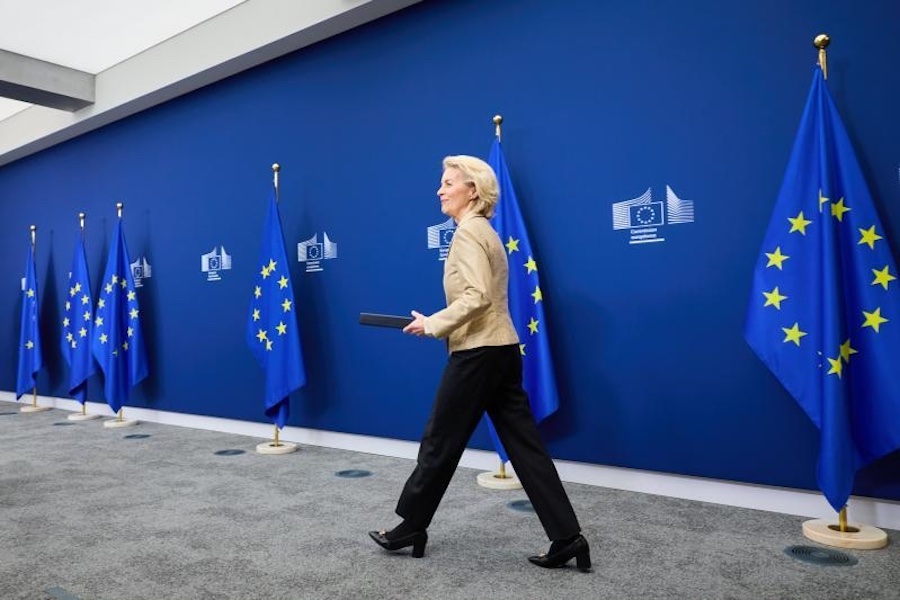
Today, the European Commission is adopting its first-ever EU Visa Strategy. It sets out a framework for a visa policy that is more strategic and that advances the EU's long-term interests, allowing it to be better equipped for growing mobility as well as the consequences of regional instability and geopolitical competition.

The Strategy aims to make Europe (1) safer, by strengthening the first line of security screening; (2) more prosperous and competitive, by facilitating access for those who contribute to our economies and societies; (3) more influential globally, by advancing the EU's strategic interests, values, and global standing; and (4) more efficient, through a smarter, modern and coherent visa policy.

Alongside the Strategy, the Commission is adopting a Recommendation on attracting talent for innovation, to make the EU more attractive to highly qualified and skilled professionals, students, researchers and innovative entrepreneurs and to support the EU's competitiveness in a global context.

The Visa Strategy is built on three key pillars:

1.) Strengthening the EU's security

The Strategy puts forward concrete measures to leverage visa policy to advance the EU's strategic interest and strengthen the EU's security framework. This includes:

  • A modern system for granting visa-free status to partner countries, including a new assessment framework with clear criteria to evaluate potential candidates (in 2026).
  • Stronger monitoring of existing visa-free regimes under the reformed Visa Suspension Mechanism to ensure continued compliance and prevent misuses of visa-free travel.
  • Stronger visa leverages by upgrading the existing Article 25a mechanism, which allows the EU to take targeted visa measures in cases of lack of cooperation on return and readmission and introducing ad hoc measures to incentivise cooperation on security and against illegal migration. This will be done through a revision of the Visa Code in 2026.
  • Possible targeted restrictive visa measures to suspend, refuse or restrict visa applications in response to hostile actions by third countries that undermine EU security, as part of the Visa Code revision, in consultation with Member States.
  • New measures to strengthen travel document security to counter fraud, with new harmonised definitions and sanctions at EU level for document fraud.

2.) Boosting prosperity and competitiveness

Travel and mobility are a major driver of Europe's economy, with the Schengen area remaining the world's most visited destination. The Strategy puts forward new measures to support the EU's global competitiveness, attract and retain talent, and make legitimate travel easier, faster and more predictable for tourists and business travellers, including:

  • New digital procedures for both visa-free and visa required travellers: ETIAS will simplify and partly automate pre-departure checks for visa-free travellers, as of Q4 2026. Digital visa procedures will allow visa-required applicants to complete the entire visa application process online.
  • Multiple entry visas with a longer validity for trusted travellers, to stimulate economic activity and reward visitors with a proven travel history and a common list of verified companies, to facilitate visa processes for business travellers invited by trusted sponsors.
  • Better conditions for talent: exploring possible amendments to EU rules on students and researchers and highly qualified and skilled workers and exploring a targeted EU legal framework for start-up and scale-up founders and innovative entrepreneurs.
  • Additional support to non-EU nationals and employers to address challenges related to the visa process through European Legal Gateway Offices.
  • Additional EU funding to support visa processing for highly qualified and skilled non-EU nationals.

3.) Modern visa tools

Every year millions of travellers arrive at the external borders of the Schengen area, either on short-stay visas or from visa-exempt countries. Managing this efficiently requires modern systems that strengthen security while facilitating legitimate travel.

To this end, the EU is deploying advanced digital tools to modernise visa and border management. The EU's IT systems will be interoperable by 2028, making it possible to query multiple databases at once and through a single, central search, improving information-sharing and preventing visa abuse.

Recommendation on attracting talent for innovation

The Recommendation sets out concrete ways in which Member States can better use their processes to attract and retain students, researchers and highly qualified and skilled workers, startup founders and innovative entrepreneurs in key sectors for the EU's competitiveness and strategic autonomy.

The recommendations encourage Member States to have simpler and faster procedures for long-stay visa and residence permits through more digitised processes, fewer documents and shorter processing times, easier transitions to work or entrepreneurship from study or research in the EU, improved intra-EU mobility as well as better access to information and stronger coordination between Member States' authorities, universities, and research organisations.

The Recommendation contributes to the objectives of the Choose Europe initiative focusing on attracting and retaining global research and innovation talent, the Union of Skills, as well as the EU Startup and Scaleup strategy.
More News from European Commission

#Europe

EU and Australia strengthen relations with Security and Defence Partnership and Trade Agreement

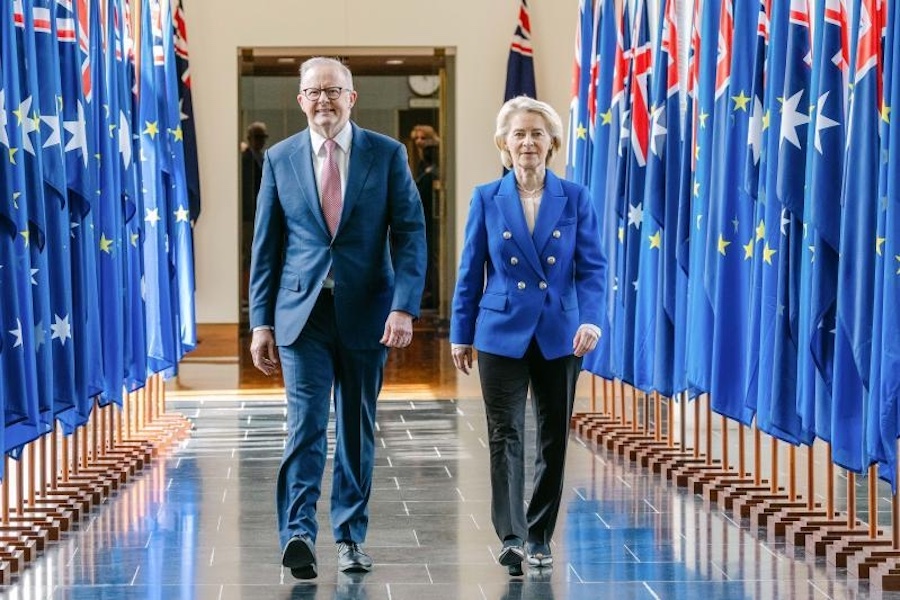
The EU and Australia have today announced the adoption of a groundbreaking Security and Defence Partnership. They have also concluded negotiations for an ambitious and balanced free trade agreement (FTA) and agreed to launch formal negotiations for the association of Australia to Horizon Europe, the world's largest funding programme for research and innovation. With these steps, the EU and Australia are delivering mutually beneficial outcomes and further reinforcing their already close relations in a time of geopolitical uncertainty.

#Europe

Commission presents proposal for EU Inc. - unlocking the full potential of the Single Market for Europe's entrepreneurs

Today, the European Commission presented its proposal for EU Inc., a new single set of corporate rules, building the cornerstone and starting point for the EU's 28th regime. EU Inc. is an optional, digital-by-default European corporate framework. It will make it easier for businesses to start, operate and grow across the EU – incentivising them to stay in Europe, and encourage those who once looked elsewhere to return.

#Europe

New EU rules to stop the destruction of unsold clothes and shoes

The European Commission today (Feb 9) adopted new measures under the Ecodesign for Sustainable Products Regulation (ESPR) to prevent the destruction of unsold apparel, clothing, accessories and footwear.

#Europe

EU and India conclude landmark Free Trade Agreement

The EU and India concluded negotiations today for a historic, ambitious and commercially significant free trade agreement (FTA), the largest such deal ever concluded by either side. It will strengthen economic and political ties between the world's second and fourth largest economies, at a time of rising geopolitical tensions and global economic challenges, highlighting their joint commitment to economic openness and rules-based trade.

More News on Europe

#Europe

Circular economy offers the EU win-win on environment and economy

Stepping up a circular economy offers the European Union the potential for significant positive impacts on Europe’s environment and poses an untapped and strategic economic opportunity in terms of better access to materials and the creation of new businesses. Three new assessments on circularity, published today by the European Environment Agency (EEA), also stress the need to accelerate investment in circularity efforts to meet EU climate and environment policy targets.

#Associations

European Business Coalition welcomes provisional application of EU–Mercosur Agreement and calls for Swift and full implementation

With the European Commission’s decision to provisionally apply the EU–Mercosur Interim Trade Agreement, a process spanning more than 25 years now moves decisively into its implementation phase.

#Europe

Antwerp Declaration community urges EU leaders to deliver emergency measures as Europe’s competitiveness crisis deepens

EURATEX, representing the European textile and fashion industry, joins the Antwerp Declaration Community’s call on EU Heads of State and Government to adopt emergency measures that restore industrial competitiveness and deliver tangible results for Europe’s manufacturing base in 2026.

#Europe

FITA, ABIT and EURATEX underline strategic importance of Mercosur – EU Partnership Agreement for the textile and apparel industry

The Argentine Textile Industry Federation (FITA), the Brazilian Textile and Apparel Industry Association (ABIT), and the European Apparel and Textile Confederation (EURATEX) continue to monitor the process of internalizing the Mercosur-European Union Partnership Agreement. This agreement is essential for the competitiveness of our industries, on both sides of the Atlantic.

Latest News

#Associations

Mario Jorge Machado re-elected President of EURATEX

The EURATEX General Assembly has re-elected Mario Jorge Machado as President of EURATEX, renewing its confidence in his leadership at a crucial moment for the European textile and clothing industry. The sector is facing rising costs, global competitive pressure and an increasingly challenging transition towards sustainability and digitalisation.

#ITM 2026

ITM 2026 makes happy participants with its international and qualified visitor profile

ITM 2026 International Textile Machinery Exhibition, one of the most prestigious meeting points of the textile machinery sector, attracted attention in its first three days, particularly with its diverse international visitor numbers. Industry professionals from all over the world had the opportunity to closely examine the latest technology machines and solutions displayed in operation. Thousands of visitors from approximately 100 countries, primarily Egypt, Pakistan, India, Uzbekistan, Syria, Turkmenistan, Tajikistan, Morocco, Algeria, and Tunisia, met at the Tüyap Fair and Congress Center for new investment and cooperation opportunities.

#ITM 2026

KARL MAYER presents a textile TEXTRONIC® innovation at ITM 2026

With highly efficient machines and continuous textile innovations, KARL MAYER underscores its role as a reliable partner for discerning top-tier customers. Just in time for ITM 2026 in Istanbul, the industry leader is introducing a true innovation: an eyelash lace with its characteristic fringed look – combined with a previously unattainable 4-way stretch. While the established fabric could until now only be produced as rigid version or with one-dimensional stretch, the new elasticity in both dimensions expands the possibilities for cross-band panel fabrics.

#Raw Materials

Better Cotton Initiative welcomes new and returning Council members

The Better Cotton Initiative (BCI) has confirmed a series of appointments and reappointments to its Council, the multistakeholder board responsible for BCI’s strategic direction.

TOP