#Associations
European Business Coalition welcomes provisional application of EU–Mercosur Agreement and calls for Swift and full implementation
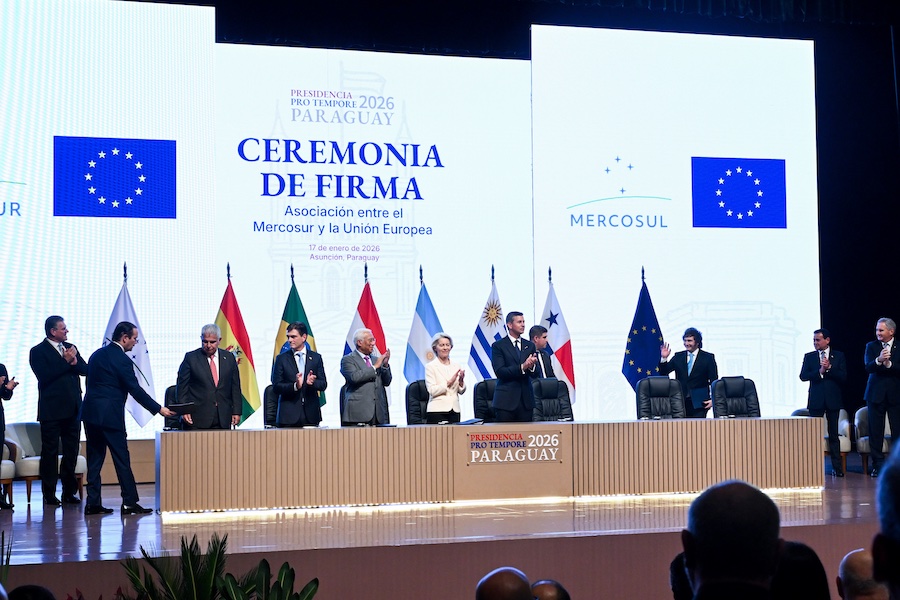
25 European business associations, representing a broad range of industries across the European Union, fully support this critical and long-anticipated step. The recent ratifications by Argentina and Uruguay further confirm the shared commitment to bringing this strategic partnership fully into force.
A turning point for European competitiveness
The economic case for the EU–Mercosur Free Trade Agreement is clear and compelling. According to the European Commission’s own estimates, once fully implemented, the Agreement will:
- Increase EU exports to Mercosur by nearly 40%
- Generate €48.7 billion in additional annual exports
- Deliver €77.6 billion in annual EU GDP gains by 2040
These gains translate into expanded market access for European companies, strengthened transatlantic value chains, and new growth opportunities in a market of more than 270 million consumers. After years of delay, provisional application now allows European businesses to compete on more equal footing and to secure a first-mover advantage in a key strategic region.
From political agreement to practical delivery
While the provisional application marks a decisive breakthrough, effective and swift operationalisation is now essential. European companies require clarity, predictability and timely implementation of tariff reductions, customs facilitation, and regulatory cooperation provisions.
In recent years, the cost of postponement has been significant. European businesses were estimated to lose €3 billion in exports for every month the Agreement remained stalled. Since the Agreement was initially expected to enter into force in 2021, the cumulative missed GDP gains have reached approximately €291 billion.
In an increasingly fragmented and competitive global landscape, the EU cannot afford further delays in turning trade agreements into tangible economic results.
A strategic partnership for growth, diversification and sustainability
The EU–Mercosur Agreement strengthens Europe’s trade diversification at a time of geopolitical uncertainty. It improves access to essential inputs and raw materials, enhances supply chain resilience, and reinforces the EU’s position as a global standard-setter.
The Agreement is modern, balanced and rules-based. It eliminates the vast majority of tariffs, reduces non-tariff barriers, and includes binding commitments on sustainability, labour rights and environmental protection.
European businesses stand ready to invest, expand and deepen cooperation with Mercosur partners.
With provisional application now underway, it is essential to maintain momentum and ensure full ratification and smooth implementation across all parties.
After 25 years of negotiations, Europe must now ensure that this partnership delivers in practice.