[pageLogInLogOut]

#Sustainability

Forward-looking biomass balance approach raises the renewables share in construction products

More and more companies are committed to greater sustainability and efficient resource use in production. A manufacturer of sandwich panels, BASF customer Falk Bouwsystemen B.V., Netherlands, also endeavors to supply its customers with products contributing to the use of renewable resources. To promote sustainable production throughout the value chain, BASF has developed the biomass balance approach and thus supports customers’ innovation and performance efforts.
  • BASF customer Falk presents innovative sandwich panels produced with BASF’s new biomass balance approach
  • Cooperation to cut fossil resources in the construction sector
At the International BouwBeurs construction show in Utrecht, Netherlands, Under the trade name FIBON Falk is now unveiling a continuously produced sandwich element manufactured with the biomass balance approach. Peter Hoekman, Managing Director at Falk, is convinced of the benefits of the innovative method: “I’m delighted that we have succeeded in cooperation with BASF in developing a new product that makes a real contribution to greater sustainability. We therefore show that we’re taking the subject seriously and are able to offer our customers modern, efficient products.”

How it works: The biomass balance in practice

The principle is comparable to that of green electricity. The basic idea involves using renewable resources, such as biogas or bio-naphtha, together with fossil resources in production. The bio share is then arithmetically assigned to certain products using a method certified by the TÜV SÜD technical control board. The share can range from 25 to 100 percent, depending on customer wishes. And with product characteristics absolutely identical to those of the fossil equivalent. “There are no differences in quality or properties. The chemical components derived from renewable and fossil resources are indistinguishable. This means that the construction elements containing our Elastopir® systems always meet the same superlative standards,” says Roel Gunnink, Segment Manager Commercial, BASF Performance Materials.

Joint show of strength

Sustainable action is growing increasingly into a competitive factor that can tip the balance when the customer takes his or her purchase decision. “Each purchase of biomass-balanced products drives the substitution of the relevant quantities of fossil resources with their renewable equivalents at BASF,” explains Jesper Bjerregaard, Head of Marketing at BASF Performance Materials. Ecological responsibility, the conservation of fossil resources, and cutting greenhouse gas emissions go hand in glove with commercial success. BASF helps its customers to adopt innovative methods and exploit new business openings.

Falk is an exhibitor at the International BouwBeurs show in Utrecht, Netherlands, Hall 11, Stand F080, from February 6-10, 2017
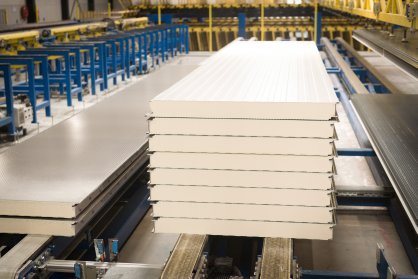
Pic: Sandwich panels for the construction industry produced with biomass balance approach

More News from BASF Aktiengesellschaft
Performance Chemicals for Textiles Europe

#Recycling / Circular Economy

trinamiX with new management

BASF is examining strategic options for its subsidiary trinamiX GmbH. trinamiX specializes in biometric imaging and mobile material analysis. These activities are not part of BASF’s core business, on which the company is focusing as part of the implementation of its new strategy.

#Research & Development

How innovations drive BASF’s success

“Innovation has always been part of BASF’s DNA. Especially in these volatile times, it is crucial to leverage our innovative strength to develop competitive solutions that differentiate us as a company in our markets and give us a competitive edge,” said Dr. Stephan Kothrade, Member of the Board of Executive Directors of BASF and Chief Technology Officer, at the company’s Research Press Briefing held today. To achieve this, BASF implemented its “Winning Ways” strategy about a year ago with the clear goal of becoming the preferred chemical company to enable its customers’ green transformation.

#Nonwovens

Turning diaper waste into new value: BASF, Essity and TU Wien pioneer circular solutions

BASF, one of the world’s leading chemical companies and manufacturer of superabsorbent polymers (SAP), and Essity, a global leading hygiene and health company, joined forces together with the Technical University of Wien to revolutionize recycling of absorbent hygiene products (AHP).

#Textiles & Apparel / Garment

BASF at SIMAC 2025: Recycling meets Performance – PU solutions for the future of footwear

BASF is presenting new materials, concepts and recycling methods for polyurethanes in footwear at SIMAC Tanning Tech. The leading international trade fair will take place from September 23-25 in Milan, Italy. We will showcase our unique and integrated toolbox of Elastopan® (PU) and thermoplastic polyurethanes Elastollan® and Infinergy®. Together with our partners and customers we bring innovative products to the market offering utmost lightness paired with mechanical performance and automated processing.

More News on Sustainability

#Sustainability

GOTS version 8.0 released: advanced supply chain accountability, from fibre to finished product

Global Standard is pleased to announce the release of GOTS Version 8.0, the latest update to the world's leading processing standard for organic textiles. The updated Standard strengthens requirements for air emissions and waste management, as well as criteria for product safety. It introduces new provisions on circularity, microfibre management and updates in residue testing. Version 8.0 also elevates due diligence obligations and formalises governance requirements, including ESG disclosure, anti-corruption policies and conflict-of-interest safeguards, to support credible, responsible business conduct.

#Sustainability

The nova-Institute establishes new Renewable Feedstock Department to lay the groundwork for industrial defossilisation

The transition from fossil-based to renewable carbon – sourced from biomass, CO₂ utilisation and recycling – is the cornerstone of a climate-neutral chemical industry. The nova-Institute’s new department is dedicated to providing the essential data, analyses and strategic roadmaps required to secure a reliable future feedstock supply and make this transition a commercial and ecological reality.

#Sustainability

Textile Exchange unveils commitment-based pathway for members to accelerate responsible raw material production

Textile Exchange has unveiled further details about its new membership structure, designed to guide the fashion, textile, and apparel industry in a collective course of action toward preferred production systems for raw materials and fibers.

#Textile chemistry

Jeanologia urges industry to accelerate PP Spray phase-out following ZDHC Watchlist update

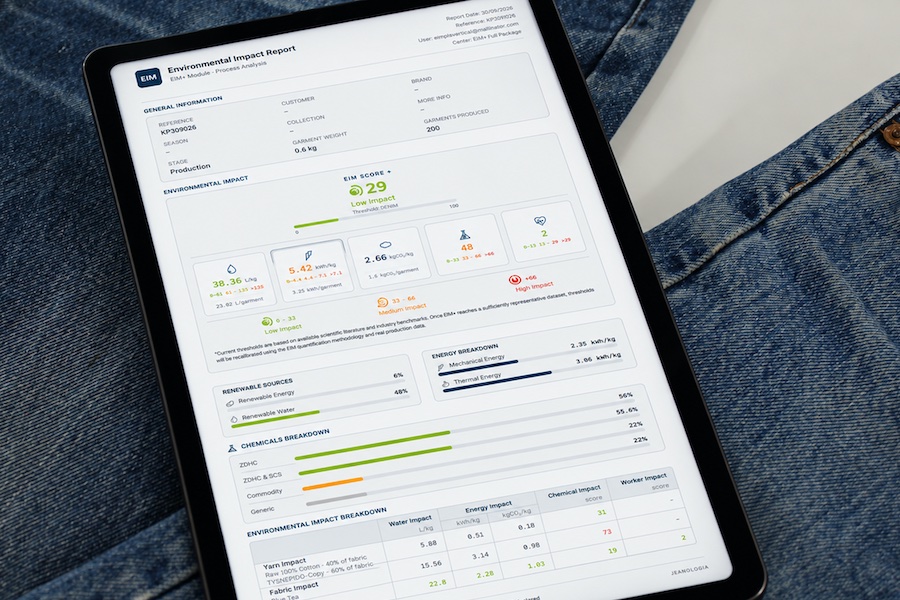
Potassium permanganate has officially entered the Chemical Watchlist of the ZDHC Foundation, signaling increased scrutiny and potential phase-out of one of the most hazardous chemicals still used in denim finishing. The inclusion confirms an industry shift that Jeanologia anticipated more than a decade ago.

Latest News

#INDEX 2026

EDANA unveils nominees for INDEX™26 Awards: Highlighting the next generation of nonwoven excellence

EDANA is proud to unveil the highly anticipated nominees for the INDEX™26 Awards, the nonwoven industry’s highest accolade for technical and sustainable excellence. Out of a record-breaking field of entries, these finalists represent the cutting edge of material science—from bio-based hygiene fibers and PFAS-free protective textiles to revolutionary water-filtration machinery. Each nominee has been selected by a jury of industry experts for their ability to solve critical global challenges, including the transition to a circular economy and the pursuit of enhanced consumer performance.

#Raw Materials

Lenzing Group positions bio‑based materials as a strategic asset for Europe’s economic security

The Lenzing Group, a leading supplier of regenerated cellulose fibers for the textile and nonwovens industries, hosted a high‑level roundtable in Brussels to discuss how bio‑based materials can strengthen Europe’s economic security and support the shift toward a fossil‑free future. Organized in cooperation with Euractiv, the event brought together representatives of the European Commission, the UK Mission to the EU, academia, civil society, and industry.

#Natural Fibers

Beyond Cotton: Natural Fibres in the Spotlight at the Bremen Cotton Conference - Branded by DNFI

Climate targets, fragile supply chains, and rising regulatory requirements are fundamentally changing the perspective of the textile industry - the focus is increasingly shifting toward the base material. Not only cotton, but natural fibres are gaining significant importance: they stand out not only because of their outstanding functional properties, but also because they make a valuable contribution to the bioeconomy and responsible product development.

#Textiles & Apparel / Garment

Coats to showcase innovative reinforcement and filler materials for leather goods and accessories at APLF 2026

Coats, a world-class Tier 2 manufacturer and trusted partner for the apparel and footwear industries, will be promoting four advanced materials from its ‘Lifestyle Solutions’ portfolio at APLF 2026 in Hong Kong in March. Each innovation has been specifically engineered to help luxury and premium brands elevate the craft, durability, sustainability and creative expression required in the manufacturing of handbags, purses, and other high-end designer accessories.

TOP