[pageLogInLogOut]

#Recycling / Circular Economy

loopamid now commercially available: BASF starts up its first plant for recycled polyamide 6

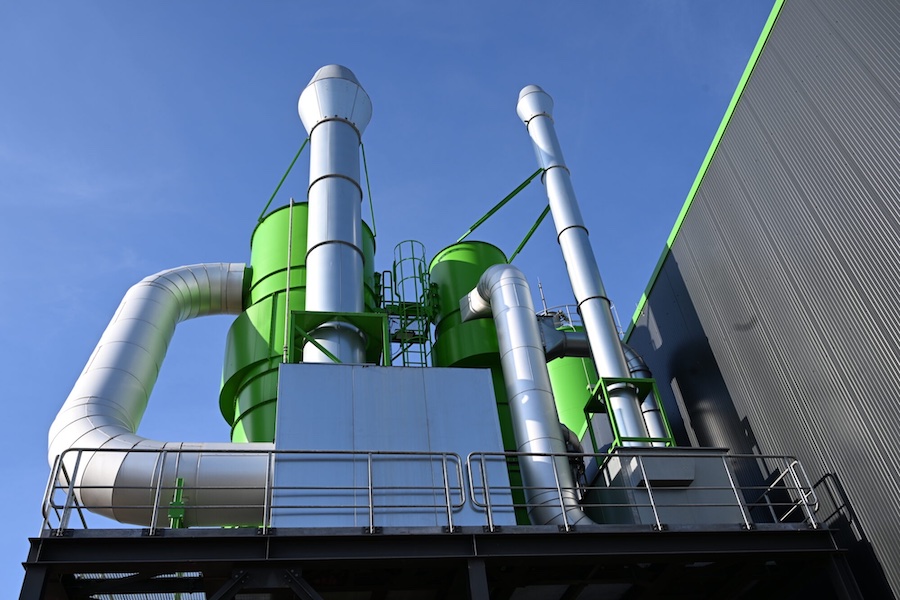
BASF announced the start-up of the world’s first commercial loopamid® plant. The production facility at the Caojing site in Shanghai, China, has an annual capacity of 500 metric tons and marks an important step in the supply of sustainable products for the textile industry. “The startup of this plant once again demonstrates BASF’s innovative strength,” said Stephan Kothrade, member of the Board of Executive Directors and Chief Technology Officer (CTO) of BASF SE.

Plant and products certified according to the Global Recycled Standard (GRS)

Production plant opens in Shanghai, China, with a capacity of 500 metric tons of loopamid per year

“As an integral part of our Winning Ways strategy, we utilize our chemistry to develop solutions for the biggest challenges of our time. loopamid transforms textile waste into a valuable resource, helps save raw materials and closes the textile loop.”

loopamid is a recycled polyamide 6 that is entirely based on textile waste. The new production facility supports the growing demand for sustainable polyamide 6 fibers in the textile industry. “I am proud of our team, which has worked with great passion and dedication to achieve the commercialization of loopamid,” said Ramkumar Dhruva, President of BASF’s Monomers division. “The technology behind loopamid allows textile-to-textile recycling for polyamide 6 in a wide variety of fabric blends, including those with elastane. I am convinced that loopamid not only makes a significant contribution to the textile circular economy, but also helps our customers achieve their sustainability goals.”

GRS certification for plant and loopamid products

The plant as well as the quantities of loopamid produced are certified according to the Global Recycled Standard (GRS). This certification guarantees to consumers and textile manufacturers that loopamid is made from recycled materials and that the production processes comply with specific environmental and social criteria. In addition, first yarn manufacturers are successfully using loopamid.

Post-industrial and post-consumer textile waste as basis for loopamid

To produce loopamid in its new plant, BASF currently utilizes industrial textile waste from textile manufacturing and will gradually increase the share of post-consumer waste. This feedstock includes cutting scraps, defective cuts, offcuts and other production textile waste from the textile industry. These materials are collected and provided to BASF by customers and partners. End-of-life garments made from polyamide 6 and other textile products can also be utilized for the production of loopamid. All these waste materials are challenging to recycle because they typically consist of a mixture of different fibers and materials as well as dyes and additives. Additionally, for post-consumer waste recycling, buttons, zippers and accessories must be removed in advance. BASF works closely with partners and customers to accelerate the development of collection and sorting systems.


More News from BASF Aktiengesellschaft
Performance Chemicals for Textiles Europe

#Nonwovens

BASF opens global diaper and superabsorbents performance lab in Mumbai

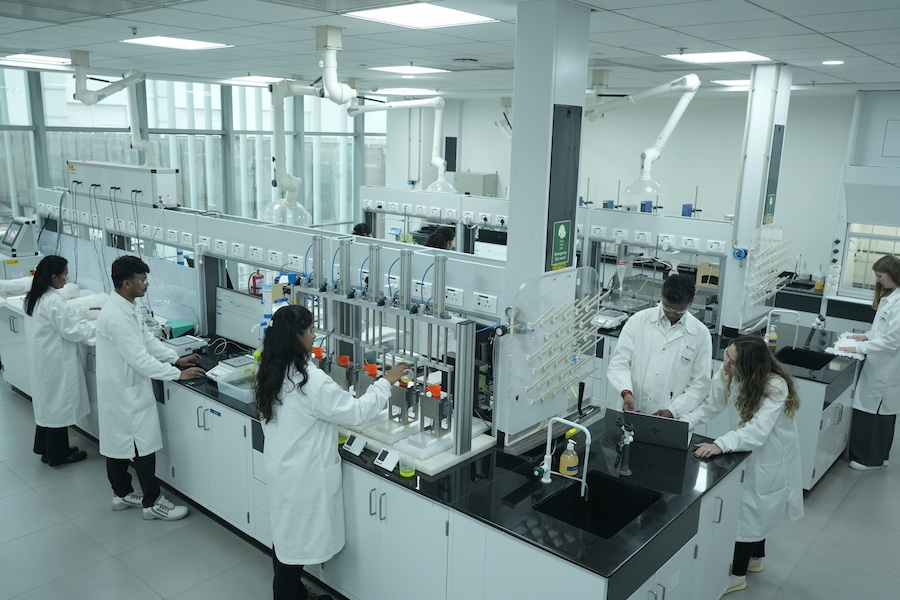
BASF has officially inaugurated its new Performance Lab for diapers and superabsorbents (SAP) in Mumbai on August 18, 2026, which will provide technical and application services to superabsorbent customers globally. The new lab of BASF’s Hygiene Solutions business has been established in less than a year and is part of BASF’s Innovation Campus Asia Pacific in Mumbai, BASF’s second largest R&D site in Asia Pacific established in 2017 under BASF Chemicals India Private Limited.

#Recycling / Circular Economy

Pirelli, Pyrum, Synthos and BASF partner to transform end‑of‑life and scrap tyres into recycled materials for new products

Pirelli, Pyrum, Synthos and BASF are jointly advancing a tyre-to-tyre circular economy initiative in Europe, driving the development of an industrial ecosystem designed to increase the use of recycled materials derived from end-of-life and scrap tyres.

#Recycled Fibers

Lindex and BASF partner to bring textile-­to­-textile recycled polyamide to lingerie sector

Lindex has partnered with BASF’s loopamid® to accelerate textile-­to-­textile recycling and advance the shift towards more circular material solutions in the fashion industry. Together they introduce loopamid to the lingerie sector.

#Textile processing

trinamiX mobile NIR spectroscopy: New applications for the footwear and textile industry

trinamiX GmbH expands its solution portfolio for the circular economy, now enabling the identification of materials used in the footwear and textile industries. With its mobile near-infrared (NIR) spectroscopy solutions, trinamiX supports manufacturers, sorters, recyclers, and brand owners in reliably identifying materials and improving transparency across increasingly complex value chains.

More News on Recycling / Circular Economy

#Recycling / Circular Economy

Canopy shifts focus towards recycling and traceability in updated Hot Button criteria

Environmental non-profit organisation Canopy has introduced revised criteria for its annual Hot Button Report, which evaluates producers of man-made cellulosic fibres (MMCFs), including viscose, lyocell and acetate. The updated framework places greater emphasis on scaling alternative fibre sources, improving supply chain traceability and supporting forest conservation, while maintaining responsible sourcing as a central requirement.

#Recycling / Circular Economy

The Or Foundation, adidas, BESTSELLER, H&M Group, and Inditex launch Apparel Recovery Coalition, responding to impacts of post-consumer textile exports

adidas, BESTSELLER, H&M Group, Inditex and The Or Foundation, with support from Circle Economy, unveiled the Apparel Recovery Coalition (ARC). The coalition will explore how producer responsibility systems can support circular pathways such as reuse, upcycling, recycling, and responsible waste management in countries that receive large volumes of exported secondhand apparel.

#Recycling / Circular Economy

Syre appoints Tim King as CEO

Syre has appointed Tim King as its new Chief Executive Officer, succeeding Dennis Nobelius, who has decided to leave the company after more than three years as CEO to pursue new opportunities in another industry. King, who has been with Syre since its early days, has been responsible for the company's industrial development and the execution of its strategy.

#Recycled Fibers

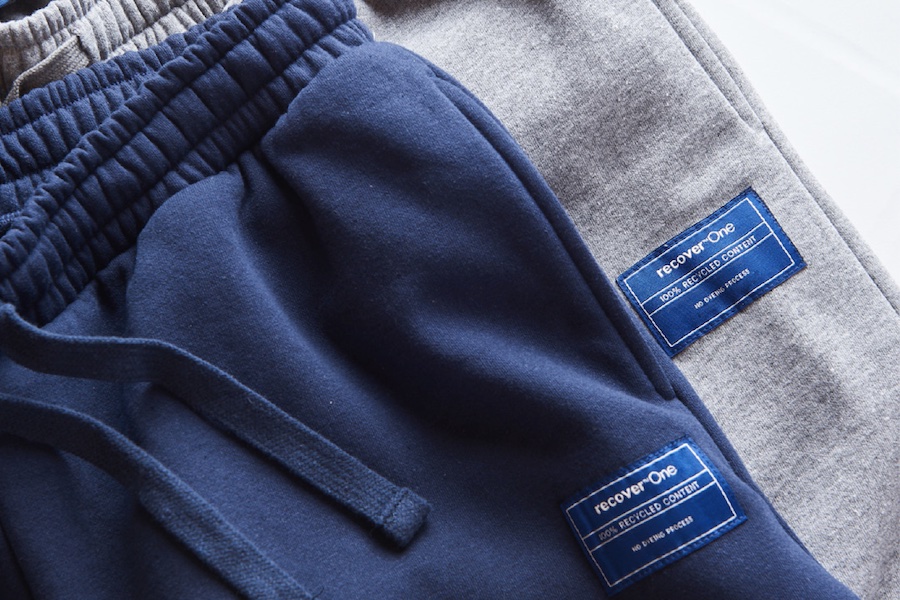
Recover™ launches Recover™One, a 100% recycled fiber blend range that eliminates downstream overdyeing

Recover™, a leading materials science company and global producer of recycled cotton at scale, today announces the launch of Recover™One, a new range of fiber blends made entirely from recycled materials. Developed to support the textile industry’s transition toward greater circularity, Recover™One combines recycled polyester and Recover recycled cotton to create soft, smooth, high-performance fabrics for a wide range of applications.

Latest News

#Associations

EU and Mercosur textile industries launch new Textile and Apparel Dialogue

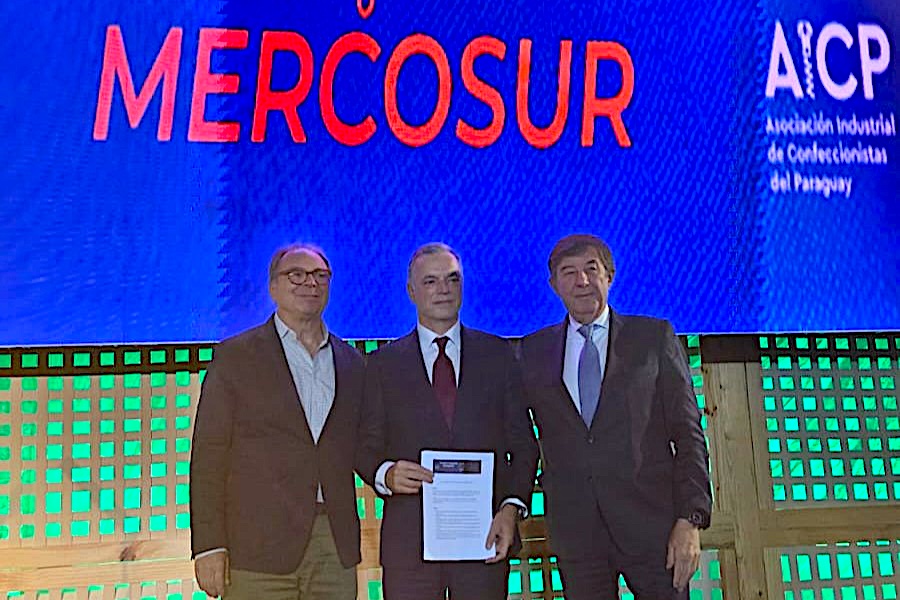
EURATEX, ABIT and FITA have launched the EU–Mercosur Textile and Apparel Dialogue (TAD), a new industry platform aimed at strengthening cooperation between the European and Mercosur textile and apparel sectors.

#Spinning

FET highlights advances in fibre spinning technology at Dornbirn Global Fiber Congress

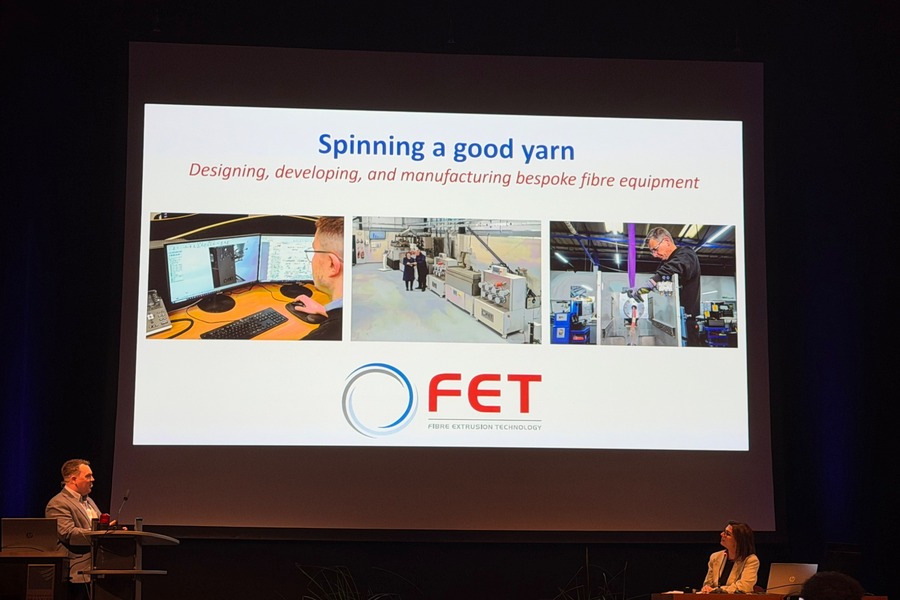
Fibre Extrusion Technology Limited (FET) presented its latest developments in fibre spinning technology at the Dornbirn Global Fiber Congress in Austria in September 2026. In a presentation entitled “Spinning a good yarn”, Dr Jonny Hunter examined recent technological developments and challenges facing the fibre industry, highlighting the company's expanding range of specialised fibre extrusion and spinning systems.

#Textiles & Apparel / Garment

Vietnam’s market evolution creates new sourcing opportunities at VIATT 2027

As Vietnam’s textile industry continues to upgrade and scale, new opportunities are emerging for suppliers of advanced raw materials, design-led fabrics, production technologies, and sustainability solutions. The Vietnam International Trade Fair for Apparel, Textiles and Textile Technologies (VIATT) will return 24 – 26 February 2027, presenting a cross-sector platform – spanning apparel, home and technical categories – for overseas companies to connect with manufacturers, brands, sourcing offices, retailers, and industry buyers from Vietnam, ASEAN, and beyond.

#Heimtextil 2027

Textile performance for the global market: Heimtextil 2027 connects interior design, quality and global sourcing

With the new premium segment Carpets & Rugs Excellence, the Comfort & Connect area and the Heimtextil Trends 27/28, Heimtextil 2027 is sharpening its offering for a market under pressure. Today, textile products need to prove their quality, functionality and long-term value. From 12 to 15 January 2027, the leading trade fair for home and contract textiles and textile design showcases relevant innovations across the entire value chain: from fibres and yarns to designs by international studios and emerging talent, through to finished collections, functional contract textiles and complete interior solutions.

TOP