[pageLogInLogOut]

#Sustainability

Veolia announces a major technological breakthrough, effective to achieve up to 99.9999% destruction of targeted PFAS
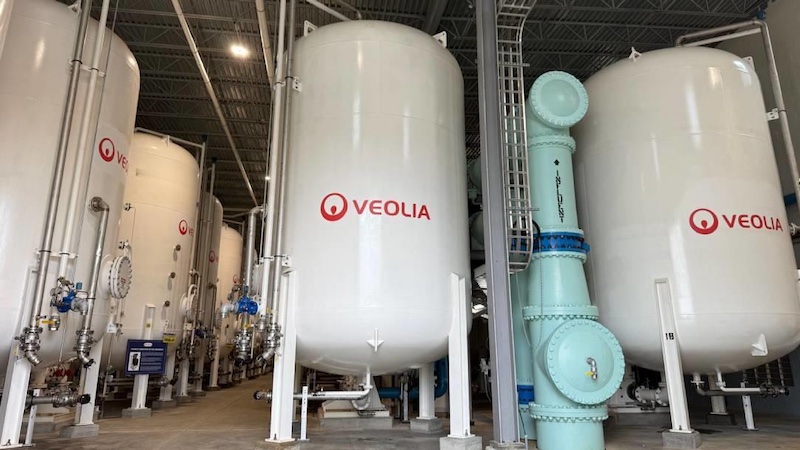
Veolia announces an unprecedented technological breakthrough in Europe in the fight against per- and polyfluoroalkyl substances (PFAS), commonly known as "forever chemicals." Developed in the Group’s global research centers, the patented Drop® technology enables the removal of these persistent pollutants with an efficiency rate of up to 99.9999%1 on several targeted PFAS. Veolia is currently deploying the patent across its 20 incineration lines dedicated to hazardous waste in France, Germany, Spain, Poland, United Kingdom, Switzerland, and Hungary.
Veolia’s largest PFAS treatment plant sets global standard for protecting drinking water by removing regulated PFAS from up to 30 million gallons of water per day © 2025 Veolia


This major innovation addresses one of the most complex environmental challenges of our time: the treatment and disposal of PFAS and waste that may contain PFAS. These substances, used in many industrial and domestic applications since the 1940s, are particularly difficult to treat and degrade due to their carbon-fluorine bonds, which are among the strongest in organic chemistry. Their persistence in the environment and their potential effects on human health make them a concern from both a health and industrial perspective.

To develop this unique solution, Veolia drew on its 50 years of experience in hazardous waste management in more than 40 countries. The Group, which currently holds and files the largest number of patents in the world in the field of hazardous waste treatment, innovates at every stage of the waste treatment process: analysis tailored to the specific characteristics of facilities and their operation, treatment of industrial effluents, thermal treatment, soil and groundwater remediation, and final storage.

“At a time when health expectations are rising in Europe and regulations are becoming stricter, Veolia is now able to offer a wide range of tailor-made treatments, aligned with the principles of resource regeneration and the environmental challenges faced by the industry. Thanks to our patented Drop® technology, we are proud to set a European benchmark by eliminating up to 99.9999% of targeted PFAS. As a European and global leader in hazardous waste treatment, we are fully committed to continuing, as we always have, to innovate in this field, which is as complex as it is crucial for industry and health,” says Catherine Ricou, CEO, Veolia Hazardous Waste Europe

A disruptive innovation capable of eliminating targeted PFAS while preserving the integrity of industrial facilities

The Drop® technology, thanks to a catalyst added during thermal treatments, accelerates the degradation of PFAS with the aim of mineralizing them, and eliminates the acidic gases formed during the process to transform everything into simple, non-toxic mineral substances. It also drastically reduces problems of corrosion and fouling in boilers to ensure long-term reliability of installations. Its implementation is part of the BeyondPFAS offer launched by Veolia in 2024.

Based on standardized waste containing known concentrations of several target PFAS, which are also considered Persistent Organic Pollutants (POP), introduced into the furnace at over 900°C, Veolia achieved destruction efficiencies of up to 99.9999%, whether the relevant target PFAS were non-polymeric PFAS(notably PFOA, PFOS, and PFHxS) or polymeric PFAS.

Through several testing campaigns conducted since 2022, and based on the sampling standards validated by the U.S. Environmental Protection Agency (EPA), OTM-45 and OTM-50, which allow for the analysis of semi-volatile and volatile PFAS in air at the outlet of stacks, Veolia has been able to demonstrate the performance of targeted PFAS destruction in dedicated hazardous waste incineration.

1 Destruction and Removal Efficiency (DRE) (up to 6 log) and not Destruction Efficiency (DE) (up to 4 log), notably in application of the March 2025 guidance communication



More News from Veolia

More News on Sustainability

#Sustainability

YKK recognized with Top ‘A’ rating by CDP for climate change leadership for third consecutive year

YKK Corporation announced its achievement of the highest “A List” rating in the 2025 Climate Change survey conducted by the global environmental disclosure nonprofit, CDP . This marks the third consecutive year YKK has received this prestigious recognition.

#Weaving

Itema announces strategic partnership with Ivy Decarb to accelerate decarbonization in weaving process

Itema is pleased to announce the strategic partnership with Ivy Decarb, the digital platform helping textile companies measure and reduce their carbon footprint.

#Man-Made Fibers

Teijin Carbon Europe receives EcoVadis Silver status – ranked among the top 15% of evaluated companies

Teijin Carbon Europe (TCE) has been recognized for its sustainability performance and has been awarded the EcoVadis Silver Medal in the latest assessment. In its first-ever EcoVadis evaluation, the company achieved a notable 72 out of 100 points, ranking among the top 15% of all companies evaluated worldwide, within the “Manufacture of Man-Made Fibres” category.

#Research & Development

The region of renewable raw materials: Central German Alliance for Bioplastics

The development of sustainable plastic solutions is rapidly gaining importance in light of global environ- mental pollution, dwindling fossil resources and ambitious climate protection targets. As part of the re- gional alliance RUBIO, which brings together 18 partners from central Germany and the Berlin-Branden- burg area, the bio-based and biodegradable plastic polybutylene succinate (PBS) was comprehensively investigated, starting with the raw material, through the manufacturing process, to industrial application.

Latest News

#Research & Development

More safety and comfort for protective clothing thanks to auxetic fabrics

When everyday materials are pulled, they stretch or elongate in the direction of the pull and become narrower in cross-section. We can also observe this property in two-dimensional textiles. Auxetic structures behave differently here. They have the striking property of not changing under tensile stress or even increasing their width or thickness. These properties are advantageous, for example, in protective textiles or textile filter media. The DITF are researching auxetic fabrics for various applications.

#Recycled_Fibers

Recycling mixed-fibre garments becomes a reality: RadiciGroup, The LYCRA Company and Triumph take circular fashion a step forward

The process, which is both economically and environmentally sustainable, has enabled the production of an underwear set made from 100% recycled nylon and LYCRA® fibre in a closed-loop system.

#Spinning

First PA66 spinning plant with EvoQuench successfully commissioned

With the successful commissioning of a multi-digit PA66 spinning line for microfiber yarns, Chinese textile company Shandong Nanshan Fashion Technology Co., Ltd. has added yarn production to its textile value chain.

#Knitting & Hosiery

SHIMA SEIKI returns to ShanghaiTex

Leading flat knitting solutions provider SHIMA SEIKI MFG., LTD. of Wakayama, Japan, together with its Hong Kong and Chinese market subsidiary SHIMA SEIKI (HONG KONG) LTD., will exhibit at the ShanghaiTex 2025 exhibition (Booth No.: Hall N3, Booth A20) held in Shanghai, China this month. This marks the return of SHIMA SEIKI to ShanghaiTex after a 14-year hiatus, its last exhibit at the show having been in 2011.

TOP