#Texprocess 2024
Texprocess 2024: Technology shapes the future of textile processing
- AI plays a major role in the future of textile processing
- Incoming orders fall by 17 percent
- Sales increase by 10 percent
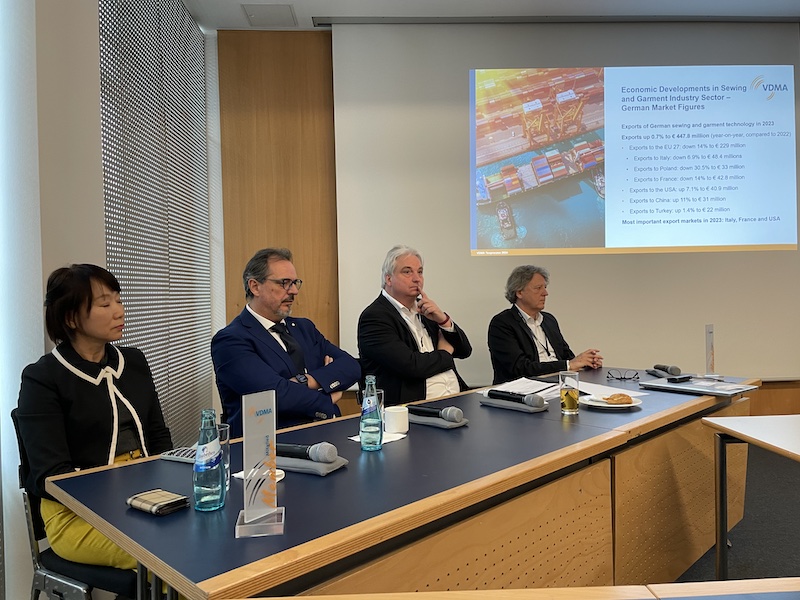
“The entire industry is facing enormous challenges, be it the manufacturers of sewing and garment technology and machines for processing technical textiles, or the customer sectors. The entire industry is not only affected by the shortage of labor, but must also face the constantly changing demands of consumers and legislators, for example with regard to sustainability,” said Elgar Straub, Managing Director of VDMA Textile Care, Fabric and Leather Technologies at the VDMA TFL press conference at Texprocess. Accordingly, the industry has high hopes for the solutions that will be presented and discussed at Texprocess, with a particular focus on flexible digitalization and automation solutions.
Decline in orders in the entire Textile Care, Fabric and Leather Technologies sector
Incoming orders for German manufacturers of textile care, fabric and leather technologies are still on the decline: in the period from March 2023 to February 2024, incoming orders fell by 17 percent in real terms compared to the previous year. However, sales are in positive territory with an increase of 10% in the same period. Exports in the narrower sewing and clothing technology sector are stagnating. German machine manufacturers were only able to increase their exports by 0.7%. The most important customer markets here were Italy, France and the USA. Overall, the outlook is therefore mixed.
At the VDMA TFL press conference, member companies Assyst, Morgan Tecnica and Pfaff/KSL gave an overview of their latest innovations that will shape the future of textile processing. Assyst presented the power of artificial intelligence in a fully digital fashion workflow. Brands and manufacturers can benefit from fast, high-quality designs, reliable fit across all products and accurate cost calculations and savings. Morgan Tecnica gave an overview of the cutting room of the future, where the latest technology can reduce energy consumption by up to 50%. Pfaff /KSL showed a new era of controlled sewing with its AI-based ONLINE VISION SYSTEM and also how textile welding has created a sustainable joining technology without threads and consumables. JASMA, the Japanese sister association of VDMA TFL, also provided an outlook on the next technology trade fair for the Asian region, JIAM. JIAM will take place in Osaka from November 27 to 30, 2024.