[pageLogInLogOut]

#Techtextil 2022

Controlling contamination: it starts at the beginning…

Contaminated fiber © 2022 Uster
In medical, hygienic and cosmetic applications flawless end-products are essential. And that means contamination in the fiber raw material is not allowed. Uster Jossi Vision Shield N is the solution. It works right at the start, within the process line, eliminating even the tiniest unwanted particles and protecting nonwovens manufacturers from damaging claims.

Uster solution for flawless fibers and quality webs in drylaid nonwovens

Three big upcoming events are ideal platforms for Uster to present its quality assurance solutions for nonwovens, as well as spinners: Techtextil Germany and ITM in Turkey in June.

Optimization in fiber processes

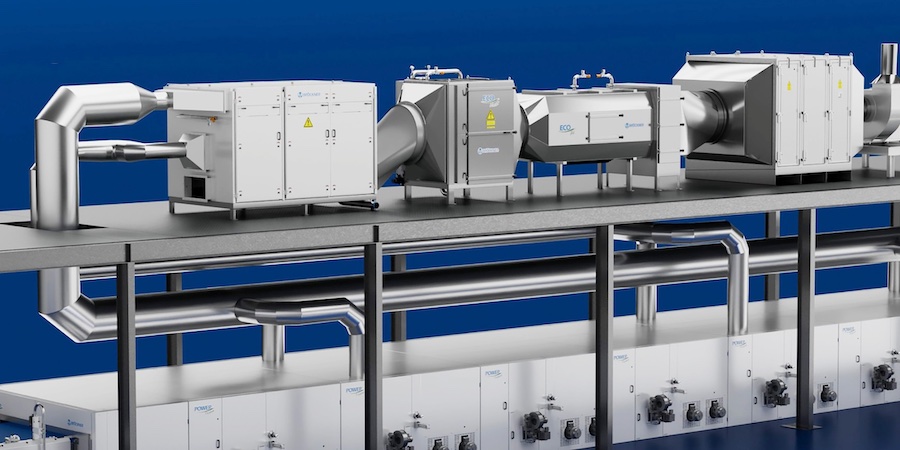
Raw fibers from bales are opened and blended in the blowroom before carding, and this stage can significantly influence the quality of the end-product in drylaid nonwovens. Installing an Uster fiber cleaner in the line ensures highest level of control over contamination in the carded fleece – and consequently the end product.

The risk of contamination, such as small pieces of plastic, reaching the card is that it will be shredded into minute particles and then be incorporated into the material at web bonding. This kind of contamination would be disastrous in a hygiene or cosmetic application which comes into contact with sensitive human skin. With Uster Jossi Vision Shield N integrated in their fiber processing line, nonwovens producers can avoid that risk.

Uster Jossi Vision Shield N uses imaging spectroscope technology to identify contamination in a fraction of a second, instantly removing it from the mass of good fiber material. Detection works across a much greater wavelength than conventional camera systems, so that contamination as small as a single hair and in the lightest colors is pinpointed.

Proven contamination control for bleached cotton

Uster Technologies has built experience and technological know-how over nearly three decades of fiber cleaning in spinning. Contamination is unwelcome in yarn, just as it is in fleece! Worldwide, 5,000 installations of Jossi Vision Shield fiber cleaning systems in spinning mills underline Uster’s success in ensuring contamination-free spun yarn.

The same expertise also works for bleached cotton. Producers of items for cosmetic, medical and baby care can meet the required zero-tolerance demand for any contamination fragments larger than 1 mm.

For best results in contamination detection, Uster Jossi Vision Shield N is integrated right after the opener in the blowroom. At this stage in fiber preparation, detection is enhanced, since the fiber tufts are open, preventing any small contaminants being hidden inside them.

Once identified, the contaminations are automatically ejected by the system, preventing contamination of the web. Some waste here is inevitable, but Uster Jossi Vision Shield N controls this by continuously measuring the speed at which the fiber tufts pass through. It then uses precision valves to time each ejection perfectly, so that only the unwanted contaminant is removed, with an absolute minimum of ‘good’ fiber being lost.


Fitting every line

Uster Jossi Vision Shield N is the result of surveys, close collaboration with international nonwovens companies and countless hours of field tests. Installation is easy, since the fiber cleaner’s slim design fits perfectly into existing lines. The system readily copes with the pace of standard production environments – up to a capacity of 2,000 kg per hour.

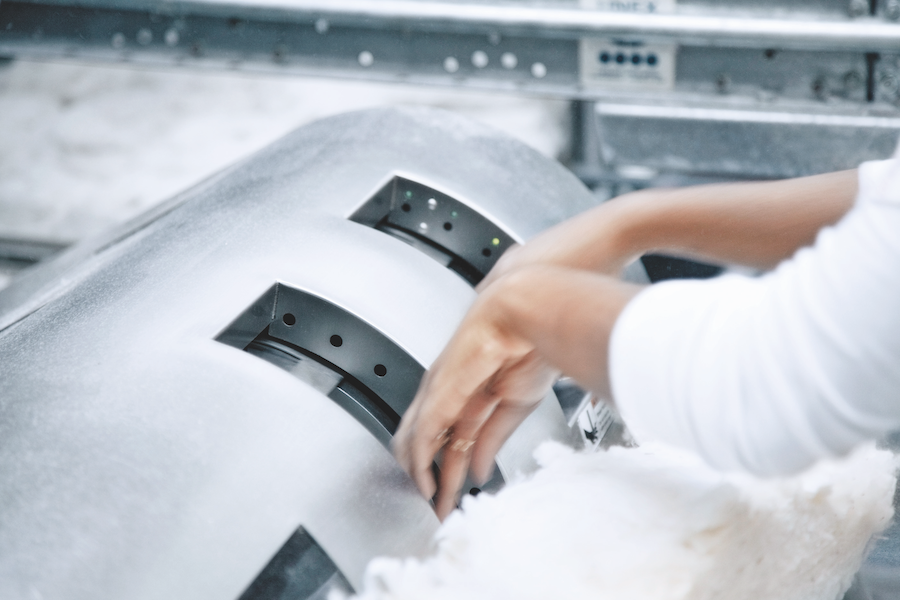
UJVSN installation in nonwovens production © 2022 Uster


Uster ensures that the system is seamlessly integrated into production lines, adapting the position of the fiber feed and the main components with the imaging spectroscopes, for optimum results. Customers can choose between widths of 1,600 and 1,200 mm, with specific solutions available for challenging environments and with any type of material. Stainless steel inserts, in areas which come into contact with the fibers, guarantee unmatched durability.

The future-oriented graphical user interface gives a quick overview of running performance in real-time, on a large high-resolution touchscreen, showing the most relevant data at a glance. User-friendly, quick and intuitive navigation makes data handling easy.

Challenge the experts

Managing quality with Uster Jossi Vision Shield N at the fiber preparation stage gives manufacturers the total confidence that only contamination-controlled products are delivered. Uster is ready to meet this challenge for the nonwoven community. Expert first-hand information will be available at Techtextil Frankfurt, on the Uster booth B55 in Hall 12.0. The invitation also extends to ITM in Istanbul.
More News from Uster Technologies AG

#Recycled Fibers

Driving circularity with Uster Recycled Fiber Matrix

The textile industry’s commitment to circularity continues to accelerate, and mechanical recycling is viewed as a targeted approach to cutting textile waste and its environmental impact. At the forefront of this drive, Uster has developed the Recycled Fiber Matrix, a two-dimensional assessment of mechanically recycled fibers to guide optimum processing and end-uses.

#ITM 2026

Uster’s new Recycling Opening Index guides spinners to the perfect blend

Uster AFIS 6 now offers the key data for better decisions when blending recycled fibers. Process control is decisive in determining the quality and economic outcome. The new R Recycling Module of AFIS 6 introduces the Recycling Opening Index (ROI), so spinners can optimize their circularity credentials. It was officially launched at ITM 2026 in Istanbul, Türkiye.

#Spinning

Measure and control the fiber – optimize yarn quality

Producing consistent yarn quality is an everyday challenge – and a very difficult one. Detailed knowledge and understanding of the fiber raw material is absolutely critical to achieving the best possible quality in the yarn. To help spinners, Uster experts have put together guidelines for avoiding yarn irregularity claims, in a special edition of the Uster News Bulletin.

#ITMA Asia + CITME Singapore 2025

Uster presents novelties at ITMA Asia + CITME 2025

There’s news from Uster Technologies to be announced for the industry’s upcoming event in Singapore. The Uster 360Q universe is growing with new products, solutions and services. Innovation developments can also be recorded in the fields of man-made fiber testing and fabric inspection. Uster innovations address the industry’s trending topics as mill management and process control, optimization of delivered fabric quality and yield.

More News on Techtextil 2022

Latest News

#ITMA Asia + CITME 2026

Brückner showcases sustainable technologies for the future of textile finishing at ITMA ASIA 2026

With rising energy costs, increasing environmental requirements, and growing competitive pressure, textile manufacturers worldwide are facing the challenge of making their production processes both more sustainable and more cost-effective. As one of the world's leading specialists in textile finishing machinery, Brückner will present innovative solutions and advanced production technologies at ITMA ASIA 2026 in Shanghai. These technologies can play a key role in significantly reducing both energy consumption and emissions.

#India ITME 2026

Stäubli to introduce new S3292 dobby for high-speed weaving at ITME India 2026

Stäubli will introduce its new S3292 dobby at ITME India 2026, taking place from December 4 to 9 at the India Expo Centre & Mart in Greater Noida, Uttar Pradesh. Designed for high-speed air-jet weaving, the new machine will be among the highlights of the company's presentation, which also includes warp preparation systems, cam motions, Jacquard technologies and digital services.

#Research & Development

DITF develops bio-based binding fibers for wood-fiber insulation materials

As part of the CelluWoodFlex project, the German Institutes of Textile- and Fiber-Research in Denkendorf (DITF) are developing bio-based cellulose ester fibers as alternative binding fibers for flexible wood fiber insulation materials. In addition to the spinning process and the production of suitable staple fibers, the institute is also investigating how wood and cellulose fibers can be separated and recycled at the end of their useful life.

#Recycled Fibers

Reju expands textile-to-textile recycling network with six international fabric manufacturers

Reju, a textile-to-textile regeneration company, is expanding its industrial network through collaborations with six fabric manufacturers in Europe and the Americas. The initiative aims to accelerate the integration of regenerated polyester into textile manufacturing and support the development of finished fabrics for commercial applications.

TOP