[pageLogInLogOut]

#Spinning

Measure and control the fiber – optimize yarn quality

Uster shares insights to avoid claims, from the start of the process
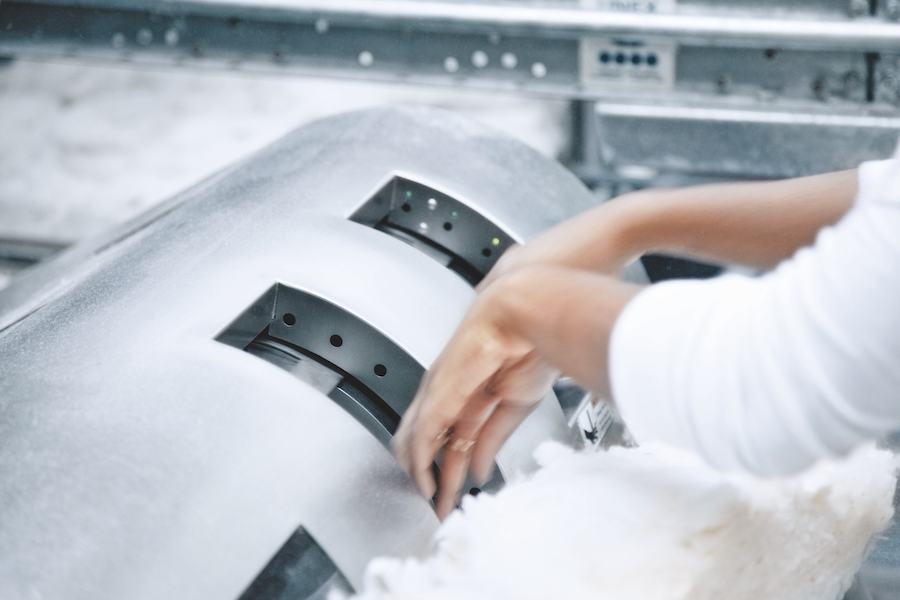
Measuring fiber quality parameters with Uster HVI © 2026 Uster Technologies
Producing consistent yarn quality is an everyday challenge – and a very difficult one. Detailed knowledge and understanding of the fiber raw material is absolutely critical to achieving the best possible quality in the yarn. To help spinners, Uster experts have put together guidelines for avoiding yarn irregularity claims, in a special edition of the Uster News Bulletin.


Uster can say with greater certainty that the reasons for claims received by spinners have remained quite similar, at least in the past 20 to 30 years. Although the severity and distribution of the reasons may vary depending on the final use of the yarn, the most common factors can be identified. Analyzing these factors and providing insights into the quest for operational excellence in spinning mills, the latest Uster News Bulletin No. 52 becomes a valuable tool to reduce yarn quality claims.

Laydown consistency – use data correctly 

One factor which greatly impacts on the spinnability of cotton fibers, as well as the yarn quality, is fiber fineness. Cotton has inherent natural variations, so fiber fineness (micronaire) is therefore the most important parameter to be controlled within required limits. 

Optimal bale mixing aims at a consistently narrow micronaire range. Minimizing variation in micronaire values, both across and within laydowns, is critical. Fluctuating micronaire values can lead to barré or inconsistencies in yarn strength, causing quality claims. To reduce the risk, spinners use data from Uster HVI for laydown management. Taking it further, many mills have integrated automated solutions such as Uster FiberQ, with algorithms that control not only micronaire but also multiple other fiber characteristics. This reduces manual work, but more importantly improves long-term quality from fiber to yarn by refining raw material selection. 

Fiber process control – look closely at the blowroom

Uster’s experience shows that the reduction of neps is another of the most frequent challenges for spinning mills. Here, it’s better to avoid creating neps at the beginning of the process, instead of trying to reduce them in spinning. Many spinners take steps in the blowroom and carding processes to tackle this issue.

In the blowroom it’s about managing trash reduction, and preventing the increase of short fiber content and neps. During cotton processing, the material is opened into tufts, with several stages of opening and cleaning aimed at removing impurities. But a side effect of these processes can be an increase in neps and short fiber content, due to the mechanical stresses. Some spinning mills adjust card settings or try to remove broken fibers during combing, but a more effective and economical solution is thorough testing and blowroom optimization. 
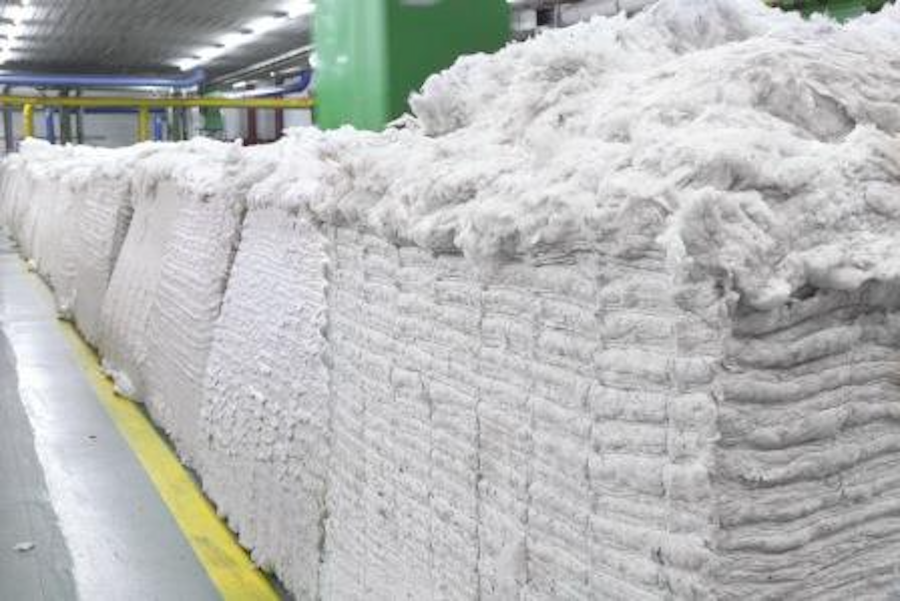
Bale mixing – laydown © 2026 Uster Technologies


To control blowroom and carding performance, measurements with Uster AFIS are part of the routine test plan, as well as also being applied after machine maintenance or changes in cotton laydown recipes. These tests ensure optimal opening and cleaning at an appropriate waste level. Close monitoring of potential fiber damage is essential. 

Processing statistics – track fiber characteristics

The processing charts in Uster Statistics track the fiber quality characteristics. Key parameters for neps, short fibers, and impurities are plotted through each processing stage. The accompanying graphic shows the typical increase in neps in the blowroom from bale to card mat, followed by a decrease after carding as neps are removed. Spinning mills can compare their own levels against the global standard. This allows a quick assessment of the situation, identifying areas of overperformance or potential improvements. 
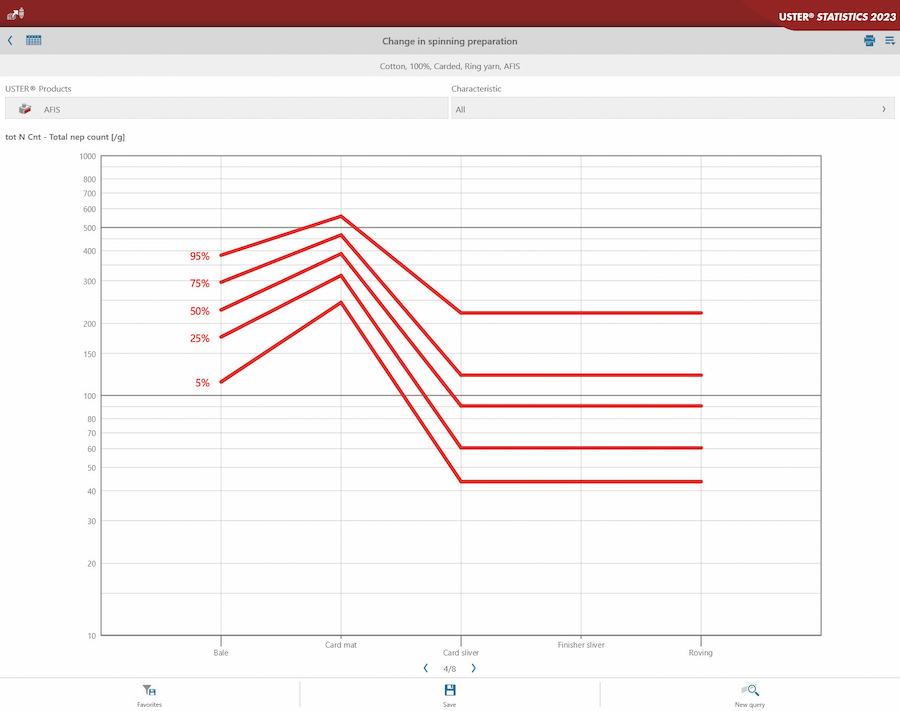
Fiber processing Uster Statistics – Total nep count (/g)  © 2026 Uster Technologies
Fiber processing Uster Statistics – Total nep count (/g) © 2026 Uster Technologies


Various raw materials – one common goal

Process control is also important, and even more so when processing mechanically recycled cotton. Depending on the source of the recycled material and its opening method, the short fiber content might already be at a naturally higher level when entering the blowroom. 

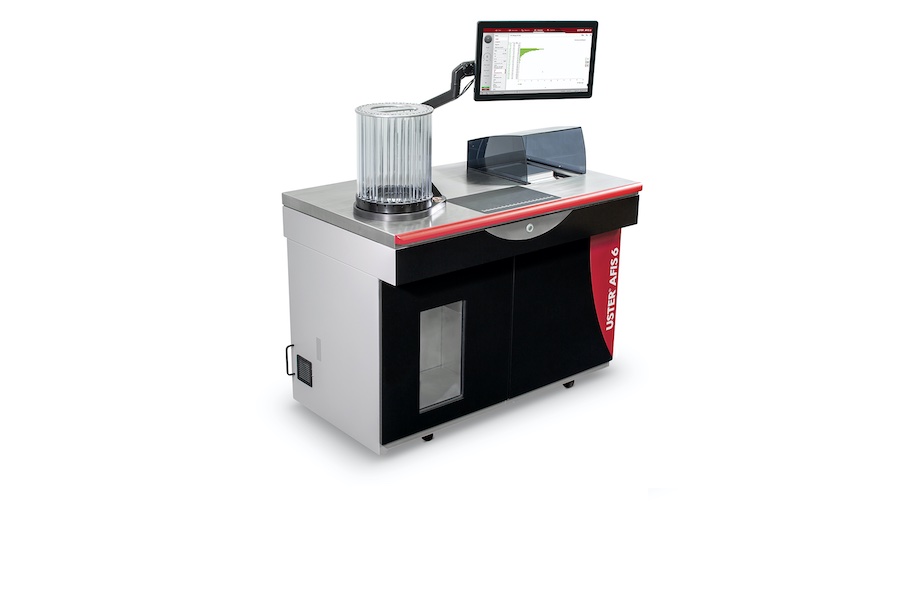
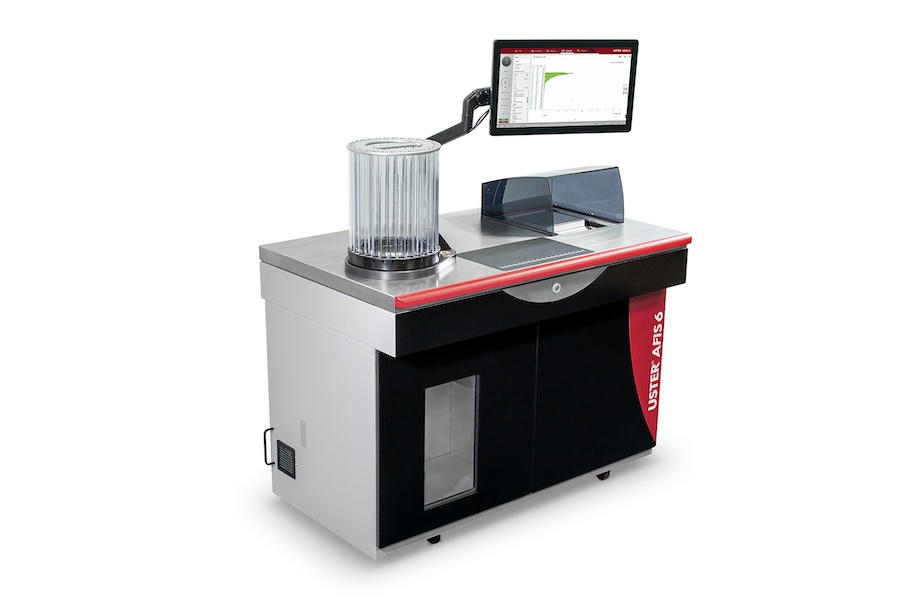
Similarly, fiber damage can apply to man-made fibers which initially have uniform cut lengths. Uster AFIS 6 is able to measure cotton as well as synthetic materials. With thorough quality management, spinners can identify fiber deterioration at source, before it results in yarn irregularity.

It’s clear that fiber characteristics significantly affect both spinnability and yarn quality consistency. Therefore, understanding fiber quality and how fibers are treated during the spinning process is essential right from the start. What is not measured, cannot be controlled! However, this is only one element to be managed to avoid quality claims. 

Uster has the technology, the experience and the knowledge to foster a new level of consistency in yarn production. The company’s know-how is freely shared in Uster News Bulletin No. 52, which includes more chapters offering ‘best practice’ advice – from spinners for spinners – on how to take control of quality claims. Also free of charge is a wide range of application literature on https://360q.uster.com as well as the new Uster Statistics.

More News from Uster Technologies AG

#ITMA Asia + CITME Singapore 2025

Uster presents novelties at ITMA Asia + CITME 2025

There’s news from Uster Technologies to be announced for the industry’s upcoming event in Singapore. The Uster 360Q universe is growing with new products, solutions and services. Innovation developments can also be recorded in the fields of man-made fiber testing and fabric inspection. Uster innovations address the industry’s trending topics as mill management and process control, optimization of delivered fabric quality and yield.

#Spinning

Uster Technologies marks 150 years of empowering quality excellence

Uster Technologies marks 150 years of excellence – a milestone that reflects continuous adaptation to customer needs and industry change. Over the decades, Uster has evolved from manufacturing quality testing instruments into a trusted partner shaping the future of textile production.

#Recycling / Circular Economy

Challenges of making yarn from recycled fibers

What does it take to spin quality yarn from recycled fibers? Uster Technologies brought textile industry leaders together to discuss the role of technology, data and automation – as well as the current challenges in using recycled raw material. Experts from Rieter, Säntis Textiles, Otto Yarns, and TVU commented on the current situation and looked into the future of spinning in a panel discussion organized at Uster headquarters.

#Spinning

Uster Technologies wins another infringement lawsuit

In a ‘victory for innovation in China’ Uster Technologies has secured a decisive judgment in a patent infringement lawsuit against a competitor. The final ruling by the Supreme People’s Court of PR China confirms that the competitor’s actions in copying the patented yarn feeder of the Uster Tester 6 constitute unlawful infringement.

More News on Spinning

#Spinning

A breakthrough innovation for diaper manufacturers

Developed and manufactured by Mesdan, Italy, the Loop knotter type 093E is a special version of the well-known Loop knotter, specifically designed to join hygiene-grade spandex yarns used in the personal care industry.

#Spinning

Rieter responds to higher raw material prices

Global political and economic developments have been leading to rising raw material and energy costs for some time. The textile machinery industry is also affected by this trend. Rieter machines and components consist to a large extent of steel, copper, aluminum and electronics. These materials in particular have seen higher demand and higher prices in recent months.

#ITM 2026

The hub of smart and sustainable transformation in yarn technologies: ITM 2026

With global fiber production projected to reach 169 million tons by 2030, yarn manufacturing is becoming one of the most strategic fields within the textile machinery industry. Located in Halls 6, 7, and 10, the Yarn Hall at ITM 2026 is set to bring together industry professionals with innovative solutions developed around automation, energy efficiency, digitalization, and circular production.

#Spinning

Barmag: DTY efficiency for the future of fancy yarns

Fancy yarns continue to gain importance in the textile market: Whether in fashion, home textiles or the automotive industry - the trend towards individuality is fueling the demand for textured, haptically differentiated and at the same time comfortable yarns.”

Latest News

#Research & Development

Fabolose: Fabricating vegan and circular leather alternatives from bio-tech-derived cellulose

Fabulose is an EU funded project coordinated by the German Institutes of Textile and Fiber Research (DITF). Its consortium consists of leading research institutes, biotech innovators, and industry stakeholders who aim to create high-performance, biobased and recyclable leather-like fabrics, using efficient biotech production routes for bacterial cellulose, cyanophycin and bacterial pigments

#Textiles & Apparel / Garment

Connecting the ASEAN textile sector: sustainability, trends, and technology take centre stage at this week’s VIATT 2026

Opening this week Thursday, the Vietnam International Trade Fair for Apparel, Textiles, and Textile Technologies (VIATT) is set to welcome visitors from ASEAN’s dynamic textile market and beyond. From 26 to 28 February, VIATT 2026 – the fair’s third editions – will reinforce its strategic proposition with an integrated showcase of the three core sectors of the entire textile value chain. Beyond new sourcing opportunities in Apparel Fabrics & Fashion, Home & Contract Textiles, and Technical Textiles & Technologies, the fair will present an expanded fringe programme.

#Software

Coats Digital appoints Himanshu Mehrotra as Managing Director to lead next phase of cloud and AI-driven innovation

Coats Digital is delighted to announce the appointment of Himanshu Mehrotra as Managing Director to lead the company’s strategic direction, innovation agenda, and global growth as it accelerates the development of its cloud-native, AI-powered software solutions for the global apparel and footwear supply chain.

#Techtextil 2026

Over 1,500 exhibitors: Techtextil 2026 grows in key future sectors

Techtextil 2026 continues to grow: more than 1,500 exhibitors from 49 countries present their products and innovations in Frankfurt am Main from 21 to 24 April 2026. Over 120 of them are first-time exhibitors. Texprocess is taking place at the same time, remaining stable with around 200 exhibitors – despite challenging market conditions. Together, the two events bring more than 1,700 exhibitors to the Frankfurt exhibition grounds.

TOP