[pageLogInLogOut]

#Man-Made Fibers

Lenzing reports improved half-year results and advances strategic transformation
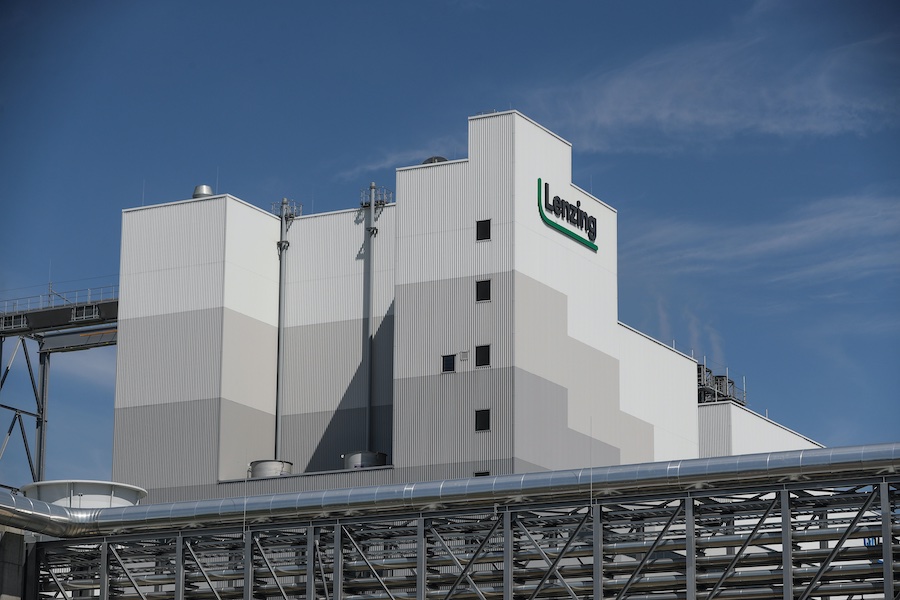
Despite a persistently challenging market environment in the first half of 2026, characterized by volatile energy and raw material prices, subdued global consumer demand and intensified competition from Asia, the Lenzing Group significantly improved its financial performance. Net result after tax more than doubled to EUR 35.6 million, compared with EUR 15.2 million in the first half of 2025. Free cash flow increased to EUR 45.8 million, while EBITDA amounted to EUR 239.2 million. Revenue totaled EUR 1.27 billion, compared with EUR 1.34 billion in the previous year.


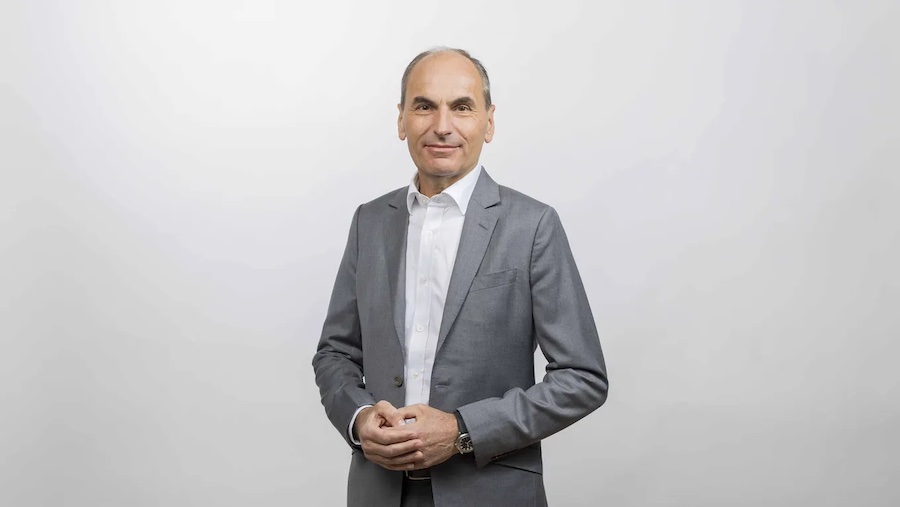
“The results for the first half of 2026 demonstrate that our sales initiatives and disciplined cost management are delivering results. At the same time, they confirm both the necessity and the potential of our strategic realignment. With ‘Grow Nonwovens, Reset Textiles’, we are laying the foundation for a structurally more profitable and resilient Lenzing Group,” said Mathias Breuer, CFO of the Lenzing Group.

The decline in revenue compared with the first half of 2025 was primarily attributable to the deliberate reduction of low-margin fiber volumes and the resulting lower fiber production, as well as lower revenues from the external pulp business. Compared with the first quarter of 2026, revenue increased from EUR 615.7 million to EUR 651.7 million in the second quarter, supported by targeted sales initiatives and pricing measures.

EBITDA declined from EUR 268.6 million in the first half of 2025 to EUR 239.2 million, while increasing from EUR 116.3 million in the first quarter of 2026 to EUR 123 million in the second quarter. EBIT amounted to EUR 83.7 million, compared with EUR 109 million a year earlier. Earnings before tax rose to EUR 42.6 million from EUR 22.1 million, while the net result benefited mainly from positive foreign currency valuation effects.

Cash flow from operating activities increased to EUR 160.4 million, supported by working capital management and inventory reductions. Free cash flow improved to EUR 45.8 million, while capital expenditure remained broadly stable at EUR 62.3 million.

Focus on nonwovens and premium fibers

Lenzing is continuing the implementation of its new "Grow Nonwovens, Reset Textiles" strategy, which focuses on profitable growth, greater resilience and a stronger concentration on selected market segments. The company intends to expand its nonwovens business, sharpen the positioning of its textiles business in premium market segments and strategic customer partnerships, and further strengthen its pulp and biorefinery activities.

Following the decision announced in late July to consolidate its fiber production footprint, Lenzing is accelerating the transformation of its manufacturing network. The company plans to transfer premium fiber production to its core manufacturing sites while streamlining its production structure to improve long-term competitiveness.

Lenzing is also continuing its performance program with additional efficiency measures following substantial cost reductions achieved in 2025.

The company remains focused on specialty fibers marketed under the TENCEL™, LENZING™ ECOVERO™ and VEOCEL™ brands, with innovation, sustainability, transparency and strong customer partnerships identified as key differentiating factors.

Effective June 1, 2026, Georg Kasperkovitz assumed the role of Chief Executive Officer of Lenzing AG. Together with CFO Mathias Breuer and CPO/CTO Christian Skilich, he is leading the implementation of the company's strategic transformation.

Outlook

Lenzing will continue to implement its "Grow Nonwovens, Reset Textiles" strategy by further expanding its nonwovens business, broadening its portfolio for hygiene and other high-value applications, and developing next-generation fiber technologies. In the textiles business, the company will continue to focus on premium specialty fibers and strategic customer partnerships while gradually reducing its exposure to lower-margin standard textile fibers.

As part of the transformation, Lenzing is consolidating its global fiber production footprint alongside the ongoing sale process for its Indonesian viscose site, PT South Pacific Viscose. The company plans to phase out fiber production at its Heiligenkreuz, Austria, site by the end of 2026 and at its Grimsby, UK, facility by the end of 2027. Production of premium fibers is expected to be transferred to Lenzing's core manufacturing sites to ensure reliable customer supply.

The consolidation is expected to result in non-cash impairment losses on non-current assets of up to EUR 150 million in 2026. These impairment charges are expected to affect EBIT and net income but will have no impact on EBITDA. In addition, restructuring provisions related to workforce reductions of up to EUR 40 million are expected to impact EBITDA in 2026.

Lenzing said its strategic ambition is to return to profitable growth, targeting an EBITDA improvement of around EUR 150 million. In the medium term, the company aims to achieve an EBITDA margin of 20–25% while reducing leverage to below 2.5x.

To support the transformation, Lenzing is preparing a comprehensive refinancing package aimed at strengthening its financial structure. The company expects to provide further details following the extraordinary general meeting scheduled for late August.

More News from Lenzing

#Nonwovens

Lenzing Group highlights scalable, bio-based nonwovens solutions at leading global industry fairs

From CIDPEX in China to Techtextil in Frankfurt and INDEX in Geneva, the Lenzing Group showcases ready-for-market, bio-based nonwoven solutions and receives industry recognition for LENZING™ Nonwoven Technology.

#Yarn & Fiber

Lenzing AG appoints Georg Kasperkovitz as Chief Executive Officer

The Supervisory Board of Lenzing AG has appointed Georg Kasperkovitz, Member of the Management Board and Chief Operations Officer, as Chief Executive Officer (CEO) of Lenzing AG with effect from June 1, 2026.

#Denim

TENCEL™ Lyocell - HV100 achieves global denim availability in six months; Vol. 2 debuts at Kingpins Amsterdam

When TENCEL™ Lyocell - HV100 debuted at last year’s Kingpins Amsterdam in October, 17 mill partners across five countries presented fabrics featuring the new fiber. Just six months on, participation has more than doubled, evolving into a global network that spans nine countries and four continents, signaling both strong industry momentum and growing demand.

#Techtextil 2026

Lenzing unveils three-tier cellulosic fiber portfolio for next generation protective wear

The Lenzing Group, a leading supplier of regenerated cellulosic fibers for the textile and nonwovens industries, today introduces Lenzing Solutions for Protective Wear. This integrated three-tier portfolio is anchored by LENZING™ FR fibers at the highest protection tier for inherent flame resistance and brings together complementary solutions including TENCEL™ Lyocell fibers, both EU Ecolabel-certified² and derived from certified or controlled wood sources³, within a unified protective wear architecture for the first time. The launch marks the most significant expansion of Lenzing’s protective wear business since the company pioneered inherently flame-resistant cellulosic fiber in 1977, and comes as the global personal protective equipment (PPE) market accelerates toward an estimated USD 130 billion by 2033⁴.

More News on Man-Made Fibers

#Man-Made Fibers

Capturing malodor rather than masking it: Indorama Ventures presents innovative odor capturing technology at Dornbirn Global Fiber Congress

Indorama Ventures, a global leader in fibers and nonwovens serving customers in hygiene and technical markets, will present its latest technological innovation in odor management at the Dornbirn Global Fiber Congress.

#Yarn & Fiber

Expansive innovations converge in Shanghai as Yarn Expo Autumn 2026 opens doors next week

With just days to go, industry enthusiasm is building for the opening of Yarn Expo Autumn, Asia’s premier yarn and fibre trade fair, running from 25 – 27 August at the National Exhibition and Convention Center (Shanghai). Across 27,000 sqm in Hall 8.2, buyers will find nearly 600 exhibitors from 14 countries and regions, spread across seven specialised zones that range from cutting-edge man-made and regenerated fibres to time-honoured cashmere and silk. Beyond the extensive sourcing options, a fringe programme of trend showcases, presentations and product launches rounds out the three¬day event with design, innovation and market intelligence.

#Man-Made Fibers

Dornbirn GFC 2026 expands conference program with new thematic sessions

For 65 years, Dornbirn GFC has stood for innovation and is one of the world’s leading conferences in the fiber industry. From September 16 to 18, 2026, the international fiber community will meet in Dornbirn, Austria, to discuss current trends, technological developments, and forward-looking solutions. More than 600 experts from industry and academia from over 30 countries are expected to attend. With around 100 presentations by renowned speakers, a 2,5-day conference program, and three parallel presentation rooms with moderated sessions, Dornbirn GFC provides a first-class platform for knowledge exchange, networking, and international collaboration. Together, participants will generate ideas and impulses that will sustainably shape the future of the global fiber industry.

#Raw Materials

Kimberly-Clark develops alternative natural fiber platform for hygiene products

Kimberly-Clark has introduced a proprietary innovation program aimed at developing alternative natural fibers for future hygiene products. The company has created a patented materials platform based on fibers derived from hesperaloe, a drought-tolerant succulent native to the southwestern United States.

Latest News

#Weaving

"Dynamic markets do not only create uncertainty – they also create opportunities."

Volatile markets, increasingly complex materials and growing demands for flexibility are changing the weaving industry. At the same time, new opportunities are emerging in technical textiles, filtration, composites and many other specialised applications. Since taking over as Head of DORNIER's Weaving Machines Product Line at the beginning of 2026, Yvonne Schuberth has been helping to shape this development. In this interview with TexData, she explains why process stability and customer proximity remain the foundation of innovation, how digitalisation is transforming weaving mills, and why she believes the future belongs to technologically demanding applications.

#Dyeing, Drying, Finishing

Ready for the future: PI Cottex chooses Brückner again for reliable quality and efficiency

PI Cottex, based in Ludhiana in the Indian state of Punjab, has developed into a leading manufacturer of high-quality knitted fabrics in recent years. Thanks to consistent vertical integration, modern pro-duction technologies and a clear focus on quality, the company supplies renowned national and inter-national clothing brands. In this interview, the team at PI Cottex talks to Brückner about its market strategy, future growth plans and its long-standing partnership with the German premium machinery manufacturer.

#Textiles & Apparel / Garment

Hong Kong strengthens position as Asia's leading sustainable fashion hub

Hong Kong's position as one of Asia's most prominent sustainable fashion hubs has been further strengthened, with the HKTDC ESG Index 2026 released by the Hong Kong Trade Development Council (HKTDC) for the fashion industry rising to 65.5 in 2026, up 2.3 percentage points from 2025. The increase reflects growing industry confidence in Hong Kong as a premier platform for sustainable fashion development and ESG-related business opportunities.

#Textiles & Apparel / Garment

Première Vision Paris expands innovation focus across fashion and beauty

From September 1–3, 2026, Première Vision Paris will bring together more than 900 exhibitors from across the global fashion value chain. This year's edition places a strong emphasis on Innovation-Tech, highlighting technologies and materials that are reshaping product development, manufacturing and sustainability.

TOP