[pageLogInLogOut]

#Recycling / Circular Economy

German 'ZOLL' turns end-of-life uniforms into valuable raw materials
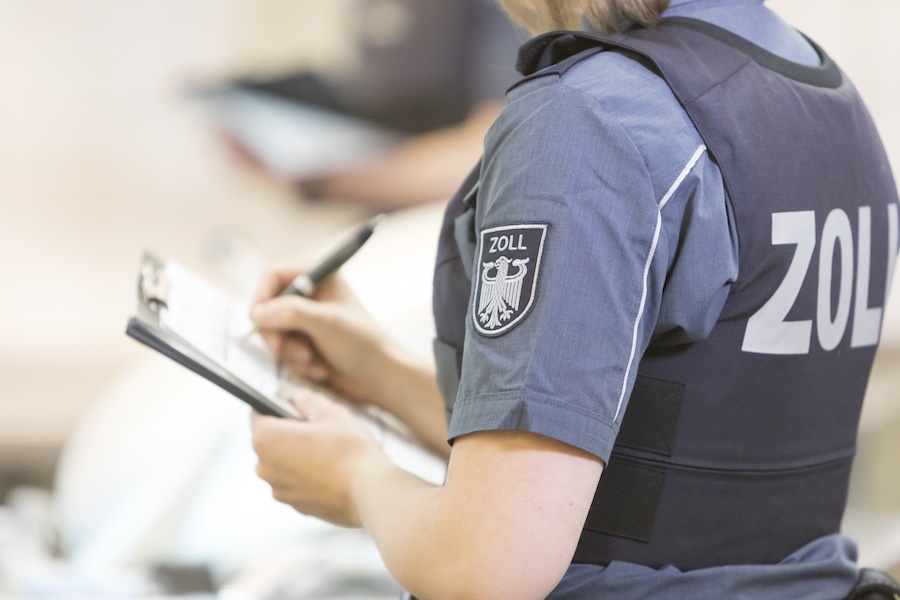
Photo caption: Since 2022, CWS Workwear and the German Customs Administration have collected around 40,000 kilograms of end-of-life service uniforms through the return2you programme, returning them to further use or material recovery. (© German Customs Administration)
Together with CWS Workwear, the German Customs Administration is extending the life cycle of service uniforms through reuse, recycling and material recovery, demonstrating how circular economy principles can be successfully implemented in the public sector while delivering significant savings.

Around 25,000 employees of the German Customs Administration wear official service uniforms. When these garments reach the end of their service life, they do not automatically become waste. Since 2022, approximately 40,000 kilograms of end-of-life uniforms have been collected and returned to the textile value chain through CWS Workwear's return2you programme. The initiative demonstrates how resource conservation and economic efficiency can go hand in hand.

By reusing, recycling and repurposing worn-out uniforms, the German Customs Administration can achieve considerable annual cost savings while extending the use of valuable raw materials and reducing textile waste.

Together with its textile service provider CWS Workwear, Customs has therefore adopted a circularity concept that extends the life cycle of service garments well beyond their initial use. The objective is to keep materials in circulation for as long as possible while creating new recovery pathways for end-of-life textiles.

Circularity instead of disposal

Through the return2you programme, which has returned around 40,000 kilograms of workwear to the textile value chain since 2022, the German Customs Administration is embracing reuse, recycling and material recovery for end-of-life uniforms.

The garments are designed with sustainability in mind from the outset. After use, they are returned via internal collection points, creating transparent pathways for reuse and recycling while contributing to resource conservation.

Depending on their condition, the garments follow different recovery routes:

Refurbishment and repair: Suitable garments are cleaned, repaired and returned to service.

Fibre-to-fibre recycling: Recyclable materials are processed into fibres and used to manufacture new textile products.

Alternative material recovery: Textiles that cannot be reused or recycled into high-value textile applications are directed to other material recovery processes, for example for the production of insulation materials.

A model for a more sustainable textile economy

Particularly in the field of workwear, where garments are used in large volumes, circular economy concepts offer considerable potential for reducing resource consumption and preventing waste.

The German Customs Administration's initiative serves as an example of responsible textile management in the public sector. Through return2you, the authority demonstrates how end-of-life service uniforms can become valuable raw materials for new applications instead of being discarded as waste.

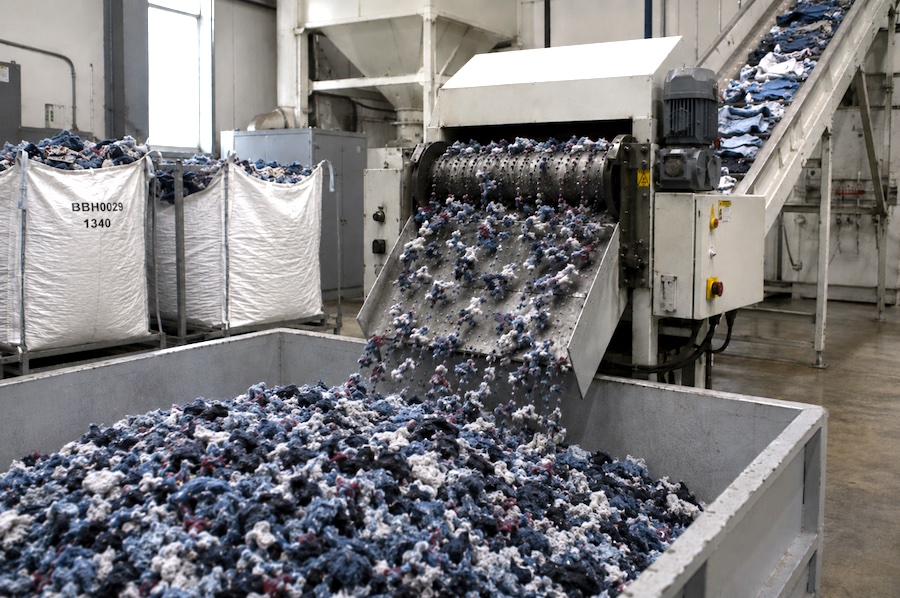
Photo caption: Together with its textile service provider CWS Workwear, the German Customs Administration has implemented a circularity concept that extends the life cycle of service uniforms beyond their initial use. The goal is to keep materials in circulation for as long as possible while creating new recovery pathways for end-of-life textiles. (© German Customs Administration)


More News from D & S International, Inc.

More News on Recycling / Circular Economy

#Recycling / Circular Economy

Recover™ names Enes Adak and Fehmi Yüksel as Co-CEOs to accelerate its next growth phase

Recover™, a leading materials science company and global producer of consistent high-quality, recycled cotton fibers and circular material solutions at scale, today announced the appointment of Enes Adak and Fehmi Yüksel as Co-Chief Executive Officers. This leadership transition marks an important step in Recover’s evolution as the company enters its next stage of development.

#Recycling / Circular Economy

Arc'teryx introduces System 0™, a new framework for the future of product design and circularity

Arc'teryx Equipment, the global design company specializing in technical high-performance apparel and equipment, today introduced System 0™, a new framework that reimagines how products can be designed, manufactured, used, repaired, and ultimately regenerated. System 0 represents the next evolution for sustainability in the outdoor industry, as it embeds circular thinking across an entire product lifecycle while maintaining the uncompromising performance standards that define the Arc’teryx brand.

#Recycling / Circular Economy

2. RETRAKT EU Conference - „Join the Circle“: Turning challenges of the textile sector into chances

On 19 November 2026, the second RETRAKT EU Conference – “Join the Circle” will take place in Brussels. The event, which focuses on the transformation of the textile sector towards a circular economy, will be held under the motto: “Turning Challenges in the Textile Sector into Chances.”

#Recycled Fibers

Indorama Ventures supports KH Editions in building on its RECO experience Taking Thai circular fashion to New York Fashion Week

Indorama Ventures Public Company Limited, a global sustainable chemical company, is supporting KH Editions, a Thai fashion brand that has grown through the RECO program, by providing fabrics woven with deja™ recycled polyester yarn. The fabrics have been used to create two fashion looks and accessories from the brand’s ten-look Spring/Summer 2027 collection, which will be presented in New York City, United States, on 15 September 2026 during New York Fashion Week.

Latest News

#Associations

Automation, digitalization and new business models are shaping the future of footwear and leather technology

The European footwear and leather machinery industry is facing profound transformations. Global competitive dynamics, technological innovation, automation and digitalization are fundamentally reshaping markets, production processes and business models. This is one of the key findings of the new study “Threads of the Future – Footwear and Leather Technology Edition”, which was presented today by VDMA Textile Care, Fabric and Leather Technologies (VDMA TFL) during a press conference at SIMAC Tanning Tech in Milan.

#Knitting & Hosiery

SHIMA SEIKI to showcase flat knitting and digital design solutions at Egypt Stitch & Tex

Leading Japanese computerized flat knitting technologist SHIMA SEIKI MFG., LTD. of Wakayama, Japan, together with its sales representative in Egypt, TTS (EL MASRIA FOR TRADE & TECHNICAL SERVICES), will participate in the upcoming 24th International Exhibition for Textile & Carpet Machineries, Printing Technologies and Accessories (Egypt Stitch & Tex) to be held in Cairo, Egypt this month.

#Associations

EURATEX calls for urgent action on industrial competitiveness

EURATEX, the European Apparel and Textile Confederation, welcomes today’s State of the Union Address by European Commission President, Ursula von der Leyen, and in particular her recognition of Europe’s need to rebalance unfair trade, cut red tape, and strengthen its industrial and strategic autonomy.

#Raw Materials

Cotton made in Africa puts farmer dialogue at the heart of agricultural training

A new manual created by the Aid by Trade Foundation and African People & Wildlife shows how Cotton made in Africa aims to transform cotton cultivation through dialogue rather than directives.

TOP