[pageLogInLogOut]

#Spinning

TRUECYCLED yarn is driving sustainability in Lotus cars
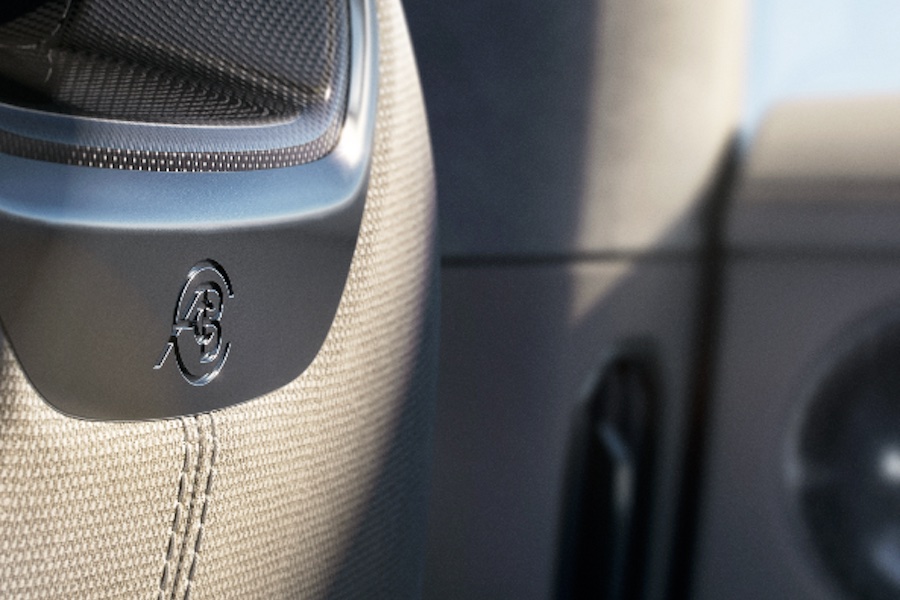
Thanks to Trützschler’s advanced TRUECYCLED process, high-quality recycling yarn has now entered Lotus electric cars. Together with the German company Brain of Materials, Trützschler played a crucial role in ensuring that the so-called WYRON truecycled® yarn meets the strict requirements of the automotive sector. Featured in the Lotus Eletre and Emeya models, this innovative material proves that sustainability and top performance can go hand in hand.
The WYRON truecycled® yarn is used for the back parts of the Lotus’ Eletre and Emeya car seats. The yarn’s premium haptics, lightweight properties, and sustainability attributes perfectly suit the spirit of Lotus’ Emeya and Eletre models. Copyright © 2025 Lotus Cars


Brain of Materials, located in Mönchengladbach, Germany, produces the WYRON truecycled® yarn for Lotus, using state-of-the-art Trützschler technology. The open-end yarn consists of 50% post-consumer textile waste and 50% recycled polyester, Nm 15. It is used for the back sections of car seats, providing a sustainable solution without compromising the standards expected by Lotus, a prestigious car brand known for its high-performance sports cars and electric vehicles. According to Lotus, the yarn’s premium haptics, lightweight properties, and sustainability attributes perfectly suit the spirit of its Emeya and Eletre models. Adding to its sustainability credentials, the production process – from collecting post-consumer waste to spinning the yarn – takes place entirely in Western Europe.

“At Lotus, we take a holistic design approach, with a commitment to true innovation and sustainability, whilst maintaining a luxury look and feel. WYRON truecycled® yarn demonstrates that dedication, and we’re thrilled to be the first automotive brand to bring the material to life in our cars” said Marie-Camille Lecoq, Head of CMF Sustainability at Lotus.

The heart of this success: Trützschler’s recycling expertise

Achieving such a breakthrough requires cutting-edge recycling technology and deep expertise.

“At Trützschler, we are proud to contribute our decades of know-how in textile recycling and innovative machinery solutions to this pioneering project,” says Christian Franke, Head of the Project Department at Trützschler. “By working closely with Brain of Materials for many years, we’ve ensured that the WYRON truecycled® yarn meets the demanding standards of the automotive industry, while offering high quality and durability.”
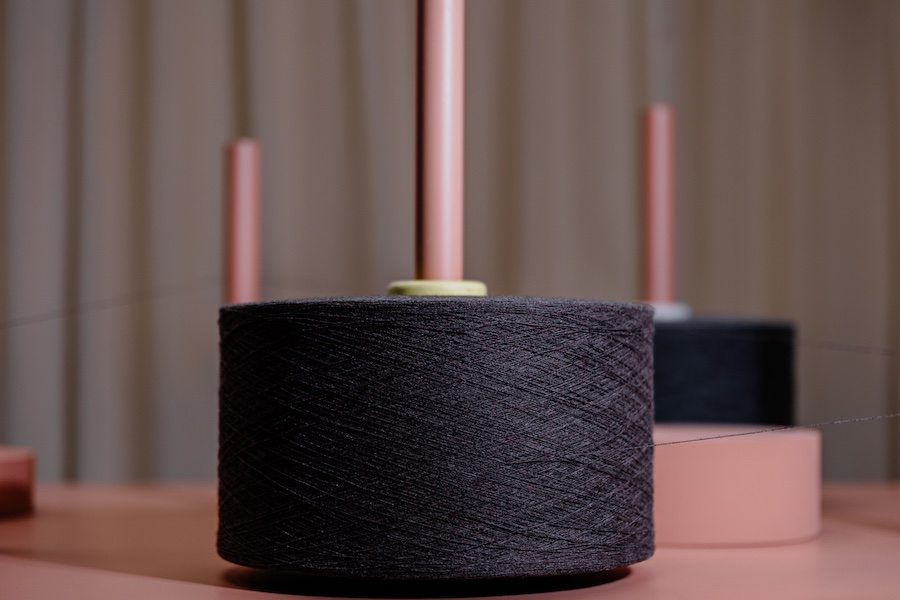
The WYRON truecycled® yarn consists of 50% post-consumer textile waste and 50% recycled polyester. Copyright © 2025 Brain of Materials


This is made possible by the comprehensive TRUECYCLED process, which provides a system solution for textile recycling. Covering every step from cutting and tearing textile waste to carding and drawing secondary fibers, TRUECYCLED enables the efficient production of sustainable, reliable yarns that serve as a premium alternative to conventional materials.

Driving sustainability forward

The integration of WYRON truecycled® yarn into Lotus vehicles marks a milestone in both the textile and automotive sectors. It proves that (textile) recycling can produce high-quality materials suited for the most demanding applications – showcasing its potential to shape the future of mobility and beyond.
More News from Truetzschler GmbH & Co. KG

#Spinning

Trützschler’s latest spinning and card clothing innovations at CAITME 2026

From September 8 to 10, 2026, Trützschler will present its latest innovations in spinning and card clothing for state-of-the-art fiber processing at CAITME in Tashkent, Uzbekistan. Visitors are invited to meet the experts at Pavilion 2, Booth D50 and explore solutions designed to increase productivity, streamline processes, and ensure consistently high yarn quality. Key topics include the next-generation card TC 30i, the integrated draw frame IDF 3, the high-performance comber TCO 21XL as well as Trützschler Card Clothing’s new flat top series STEELTOP®.

#Spinning

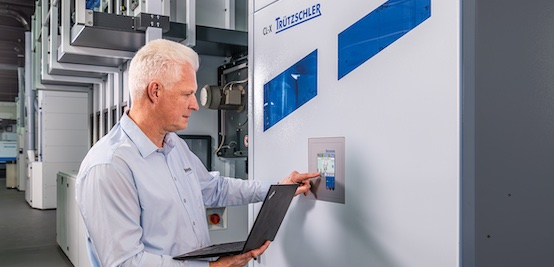
Pre-Cleaner CL-X: Proven in cotton cleaning – creating value beyond the spinning mill

Since its market launch, the CL-X has firmly established itself in blowroom lines worldwide. Hundreds of installations confirm its ability to deliver superior cleaning efficiency, lower waste, higher productivity and significant energy savings. Now, new customer applications show that the CL-X not only continues to excel in spinning preparation – it is also entering a completely new field of application: ginning.

#Spinning

STEELTOP®: A new benchmark in flat tops for spinning preparation

Modern carding generations achieve higher production performance, placing significantly greater stress on flat tops. Higher cylinder speeds and increased fiber density, combined with tighter carding gaps, create more demanding operating conditions. At the same time, poorer raw material quality and the increased use of recycled materials further intensify these challenges. With STEELTOP®, Trützschler introduces a new full steel flat top series developed for these demanding modern carding processes.

#Spinning

Ibrahim Fibres and Trützschler: A strong partnership enters its next phase with the TC 30Si

For more than two decades, Ibrahim Fibres and Trützschler have grown side by side, driven by a shared ambition to continuously improve spinning performance, strengthen technology leadership and set new benchmarks in the textile industry. Today, Ibrahim Fibres is a leading yarn and polyester staple fiber manufacturer in Pakistan. The company operates the largest number of Trützschler cards in the country, with more than 200 machines running across its mills in Faisalabad, and plays an important role in one of Asia’s largest textile industries.

More News on Spinning

#Spinning

BICO BCF yarn delivers impressive performance in field testing

In a joint development project with other partners, Barmag and Object Carpet have successfully tested BICO BCF yarn in the carpet manufacturing process. The results show that this innovative yarn technology offers significant performance advantages and opens up new possibilities for recycling-oriented carpet constructions.

#Spinning

Barmag expands its portfolio for PA6/PA6.6 applications — also available as a retrofit solution

With the new type 6020 ceramic oiler, Barmag is introducing a powerful addition to its product portfolio for processing PA6 and PA6.6 yarns. The solution is specifically designed for low-titer applications in the range of 5 to 100 denier.

#Recycling / Circular Economy

Rieter and partners launch Recycling Powerhouse for industrial-scale textile recycling

Recycling Powerhouse Ltd. was established in July 2026 to industrialize, standardize and scale textile recycling. Based in Switzerland, the venture will operate a franchise-driven business model that enables the production of high-quality, certified recycled yarns. The project is supported by the following partners: Rieter Group, the world’s leading system supplier for natural and man-made fibers, Säntis Textiles, a Swiss textile engineering company, and Valvan, a Belgian sorting technology company. The first blueprint franchise operation is scheduled to launch early 2027 in partnership with Suhail Industrial Holding Group in Qatar.

#Spinning

Rieter sees Barmag integration on track as orders and sales rise

The first half of 2026 was shaped by the successful completion of the largest acquisition in Rieter’s history. The Man-Made Fiber Division enables entry into the growth segment of man-made fibers and sustainably strengthens Rieter’s market position in the Asia region. The expanded Group is now the world’s leading system supplier for the processing of natural and man-made fibers. In the first half of the year, initial cost savings in material costs and operating expenses have already been realized. The targeted synergies are expected to amount to at least CHF 20 million by the end of the 2028 financial year. Due to the completion of the acquisition on February 2, 2026, the first half of the year for the Man-Made Fiber Division only amounts to five months.

Latest News

#Nonwovens

BASF opens global diaper and superabsorbents performance lab in Mumbai

BASF has officially inaugurated its new Performance Lab for diapers and superabsorbents (SAP) in Mumbai on August 18, 2026, which will provide technical and application services to superabsorbent customers globally. The new lab of BASF’s Hygiene Solutions business has been established in less than a year and is part of BASF’s Innovation Campus Asia Pacific in Mumbai, BASF’s second largest R&D site in Asia Pacific established in 2017 under BASF Chemicals India Private Limited.

#Recycled Fibers

Naia™ from Eastman strengthens western hemisphere textile connections at Apparel Sourcing Show Guatemala

As brands and retailers explore more diversified and responsive sourcing networks, the Naia™ brand from Eastman is strengthening its engagement with the textile and apparel value chain across the western hemisphere. From August 18–20, the company will participate for the first time in Apparel Sourcing Show Guatemala, a regional meeting point for apparel sourcing, manufacturing and nearshoring.

#Man-Made Fibers

Dornbirn GFC 2026 expands conference program with new thematic sessions

For 65 years, Dornbirn GFC has stood for innovation and is one of the world’s leading conferences in the fiber industry. From September 16 to 18, 2026, the international fiber community will meet in Dornbirn, Austria, to discuss current trends, technological developments, and forward-looking solutions. More than 600 experts from industry and academia from over 30 countries are expected to attend. With around 100 presentations by renowned speakers, a 2,5-day conference program, and three parallel presentation rooms with moderated sessions, Dornbirn GFC provides a first-class platform for knowledge exchange, networking, and international collaboration. Together, participants will generate ideas and impulses that will sustainably shape the future of the global fiber industry.

#Research & Development

Europe is committed to recycling end-of-life wind turbine blades

Starting in 2026, Europe’s wind energy industry has committed itself to ensuring that wind turbine blades do not end up in landfills once they reach the end of their service life. The EU-funded research project REWIND is exploring ways to reuse this composite waste. The German Institutes of Textile and Fiber Research Denkendorf (DITF) are one of 13 project partners from seven countries.

TOP