[pageLogInLogOut]

#Digital Printing

Keeping print inclusive: Empowering women in the print industry
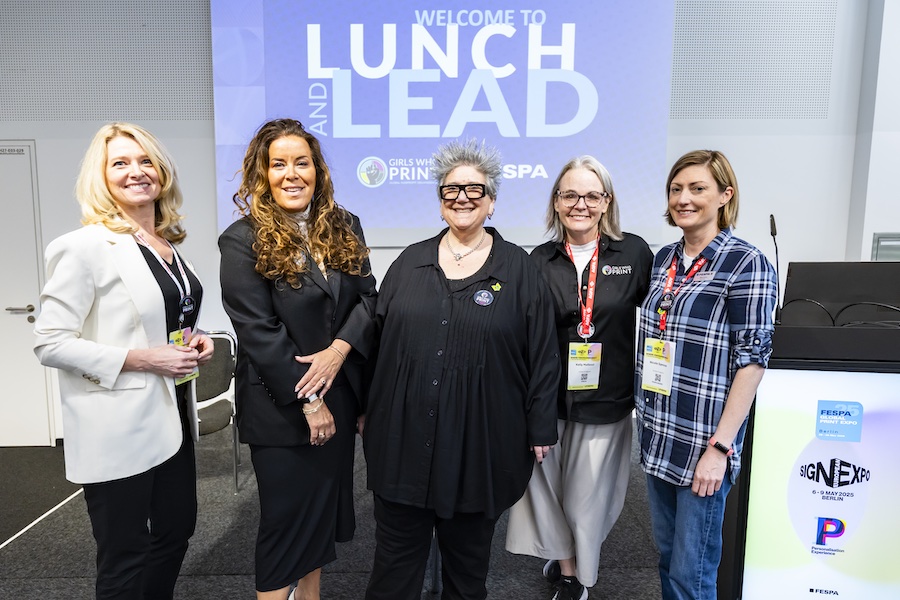
Danna Drion (second from left) hosting the FESPA Lunch & Lead session at FESPA 2025, alongside the Board members of Girls Who Print Europe
Across all industries, cultivating a diverse and inclusive workplace is increasingly recognised as valuable and essential to long-term success. However, despite the print industry’s significant advancements in technology and innovation, visible representation of women remains limited. As the sector grapples with low recruitment, it’s important to challenge outdated perceptions. Creating real change, however, requires collective effort - no single company can do it alone.

By Danna Drion, General Manager Marketing and Product Management at Mimaki Europe

As we mark International Women’s Day on 8th March, it is an important moment not only to celebrate the achievements of women across industries, but also to reflect on the tangible actions we can take to build a more inclusive and representative future for print.

The importance of empowering women in the print industry

So, how can we empower the women already working within the industry, and provide them with the visibility and support they need to succeed?

Studies have identified that the lack of female representation can leave female employees feeling isolated. According to the KPMG Women’s Leadership Study, over 80% of women felt encouraged to pursue leadership positions when they saw women already in those positions. Ensuring that both women and men are equally recognised is essential in transforming the face of what the print industry is. This can take many forms – from hosting seminars and talks to simply showcasing female talent on company social media platforms. In light of that, women-led organisations like Girls Who Print are also crucial in bridging these gaps. They offer mentorship, provide advice, and a sense of community that helps women navigate the unique challenges of the industry with confidence. Mentorship programmes are especially valuable, offering aspiring female professionals the chance to learn from seasoned print leaders and further their own career and skillset.

Creating change also means looking beyond the companies themselves – to customers and collaborators. Supporting women-led initiatives and creatives is key. Mimaki, for example, has collaborated with several inspiring female artists and designers, such as Tessa Koops, Claire Vos and Sigrid Calon. Furthermore, supporting non-profits like Tiny Miracles, which employs women from marginalised backgrounds in India by providing a steady income, helps create more opportunities for women globally.

Attracting women to the industry: Changing perceptions

Another challenge arises in how to encourage a more diverse workplace in the first place. Print is often overlooked as a career path, unless you know of someone working within the industry, and this poses a problem in hiring diversely across the board. This is especially true for women, as print is frequently perceived as a traditional manufacturing sector, which has historically been male dominated. Such misconceptions can discourage women from seeing print as a viable or inspiring career option.

In reality, the print industry is incredibly diverse and creative, spanning interior décor, signage, medical 3D printing prototypes and more. It’s not just about production, it’s about technology, innovation, and design. With the growing use of cutting-edge technologies like robotics and artificial intelligence, the industry now requires highly skilled employees who can operate and manage complex machinery.

To attract more women – and more diverse talent in general—it’s crucial to shift the narrative. Print is no longer just about machines and manufacturing – it’s a forward-looking, technology-driven industry where people with diverse skillsets can thrive. Rebranding the print industry as a dynamic and creative career path is essential to attracting a more diverse workforce for a more inclusive future.

At Mimaki, we believe in leading by example. Personally, I’ve been mentoring students for many years at the University of Amsterdam, with a particular focus on empowering young women as they take their first steps into the job market. This experience has given me the opportunity to highlight the diversity, creativity, and technological innovation that define today’s print industry – and to inspire more women to see themselves as part of its future. Over the years, we have also developed an internship programme that continues to grow and deliver excellent results, helping young talent gain hands-on experience and contribute new perspectives to our teams.

A step in the right direction

While the print industry still faces challenges when it comes to female representation, the developments made in recent years are encouraging. More women are entering the field, taking on high-level positions and in general helping to shape the industry’s future. However, achieving true inclusivity and diversity will require continued effort from companies, organisations, and individuals. By supporting female talent, offering mentorship opportunities, and breaking down outdated perceptions about the industry, we can ensure that the print sector becomes a place where all employees, regardless of gender, feel valued and empowered.

To continue this conversation, check out Mimaki’s Women in Print episode, part of Mimaki’s Print Different podcast series: https://www.youtube.com/watch?v=Bt5XHbo-8Wk


More News from Mimaki Europe B.V.

#Digital Printing

DTF vs DTG Printing - The technologies shaping today’s custom merchandise market

From sportswear to branded tote bags, custom merchandise continues to grow in popularity across sectors, driving print shops to cater to short runs, personalisation, and rapid turnaround. As print providers look to this market, two printing technologies often stand out: Direct‑to‑Film (DTF) and Direct‑to‑Garment (DTG). Each offers its own benefits, and understanding these differences helps determine the most suitable production method for print service providers.

#Digital Printing

Mimaki celebrates Triple EDP Award win at FESPA 2026

Mimaki Europe, a leading manufacturer of industrial inkjet printers and cutting plotters, was presented with 3 EDP Awards at the association’s 2026 ceremony, held at FESPA Global Print Expo. These highly acclaimed awards celebrate best-in-class innovation across the print industry, and Mimaki was honoured in three different categories.

#Digital Printing

Mimaki ‘Powers Possibilities’ with a market-diverse application and printer line-up at FESPA 2026

Mimaki Europe, a leading manufacturer of industrial inkjet printers and cutting plotters, is bringing its “Print Different - Powering Possibilities” theme to life at FESPA Global Print Expo 2026 (Fira de Barcelona, 19-22 May 2026), demonstrating how digital printing technology can turn ideas into high-value applications and new business opportunities.

#Digital Printing

Mimaki takes DTF performance to the next level with TxF300-75Plus

Mimaki Europe, a leading manufacturer of industrial inkjet printers and cutting plotters, announces the TxF300-75Plus, an upgraded model within its high-productivity direct-to-film (DTF) printing portfolio. Following on from the success of the original TxF300-75, this enhanced version reflects Mimaki’s commitment to continuously evolving its solutions to meet the changing demands of the market.

More News on Digital Printing

#Digital Printing

USColorworks expands digital platform with Kornit Atlas MATRIX and Atlas MAX PLUS solutions

Kornit Digital Ltd. (NASDAQ: KRNT), a global pioneer in sustainable, on-demand digital fashion and textile production, today announced that USColorworks, a North Carolina-based apparel decoration and fulfillment company specializing in custom and on-demand printing for retail and promotional markets, has expanded its Kornit digital production platform with the addition of Atlas MATRIX and Atlas MAX PLUS systems to deliver high-quality, on-demand apparel across cotton, blended fabrics and polyester.

#Digital Printing

EFI brings high-performance display graphics, packaging, and textile printing innovations to FESPA 2026

Electronics For Imaging, Inc. (EFI™) is bringing a broad range of new hybrid, roll-to-roll, and textile inkjet innovations to FESPA Global Print Expo 2026, taking place 19-22 May at Fira Barcelona Gran Via. Visitors to the EFI stand (Hall 3, #C85) will see the new EFI VUTEk M3h X hybrid LED printer, new EFI VUTEk® FabriVU® 340 i8 eight-colour dye sublimation printer, the EFI VUTEk X5r roll-to-roll LED printer, and the EFI VUTEk Q3h XP seven-colour hybrid printer in action, each designed to help sign and display producers scale output, diversify applications, and drive more profitable growth.

#Digital Printing

Kornit Digital announces commercial availability of Atlas MATRIX following successful global Beta program

Kornit Digital (NASDAQ: KRNT, "Kornit Digital", "Kornit", or the "Company"), a global leader in sustainable, on-demand digital fashion and textile production technologies, today announced the commercial availability of the Atlas MATRIX platform following the successful completion of a global beta program across leading production environments in Europe and North America. The announcement, made ahead of FESPA 2026 in Barcelona, marks a major milestone in the evolution of digital apparel production.

#Digital Printing

Kornit Digital launches Konnections 365

Kornit Digital (NASDAQ: KRNT) (“Kornit” or the “Company”), a global pioneer in sustainable, on-demand digital fashion and textile production today announced the launch of Konnections 365 - a year-round movement designed for the people moving the apparel, print, and retail industries forward. The strategy is built on the overwhelming success of Konnections 2026 held in Hollywood, Florida, featuring more than 500 customers, partners, and collaborators who together are driving the future of apparel and textiles.

Latest News

#Spinning

Rieter sees Barmag integration on track as orders and sales rise

The first half of 2026 was shaped by the successful completion of the largest acquisition in Rieter’s history. The Man-Made Fiber Division enables entry into the growth segment of man-made fibers and sustainably strengthens Rieter’s market position in the Asia region. The expanded Group is now the world’s leading system supplier for the processing of natural and man-made fibers. In the first half of the year, initial cost savings in material costs and operating expenses have already been realized. The targeted synergies are expected to amount to at least CHF 20 million by the end of the 2028 financial year. Due to the completion of the acquisition on February 2, 2026, the first half of the year for the Man-Made Fiber Division only amounts to five months.

#Knitting & Hosiery

Groz-Beckert at Igatex 2026

From October 15 to 18, 2026, Groz-Beckert will present its latest innovations and solutions across the product areas of Knitting, Weaving, Sewing and Spinning at Igatex in Pakistan (Hall 1, Booth A-1-08).

#Natural Fibers

Better Cotton Initiative multistakeholder event in US unpacks regenerative agriculture potential

The Better Cotton Initiative (BCI), in collaboration with Texas-based partner, Quarterway Cotton Growers, will expand upon its annual US field event to relay the vast potential of regenerative agriculture through an immersive experience of tours and demonstrations.

#Sustainability

bluesign appoints Hanane Taidi as CEO to lead next phase of global impact

bluesign, which partners with the textile industry to reduce adverse impact across the value chain, appoints Hanane Taidi as Chief Executive Officer, marking a pivotal moment as the company builds on its leadership amid rapid industry change.

TOP