[pageLogInLogOut]

#Smart Textiles

Intelligent textiles for construction, architecture and mobility: Smart Textiles User Forum in Stuttgart
When textiles are equipped with electronic components, conductive yarns and textile sensors, the application possibilities are almost unlimited. These high-tech textiles are a global growth market. In Stuttgart, manufacturers, users and researchers presented amazing examples of applications in construction, architecture and mobility. The appropriate standards ensure quality and safety.
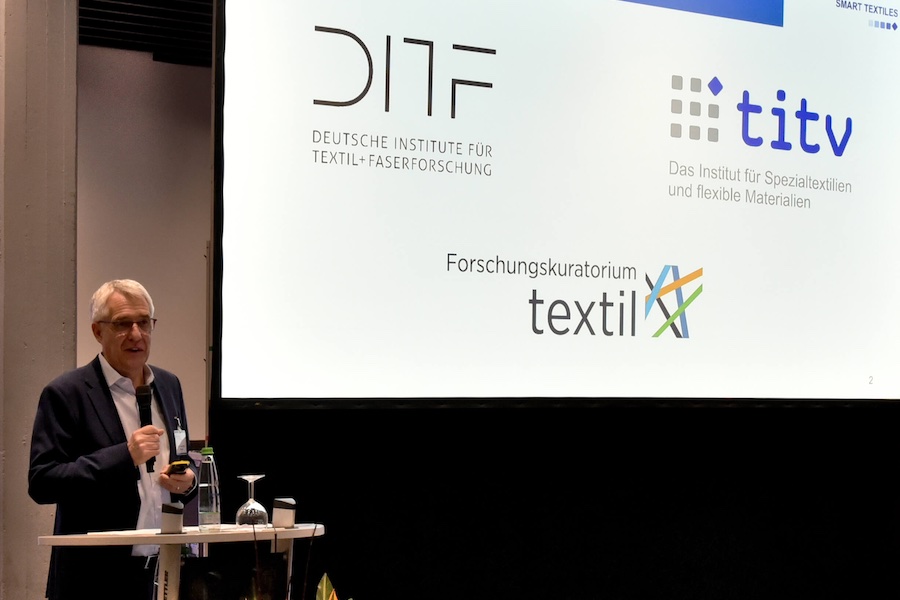
DITF Executive Board member Professor Götz T. Gresser welcomes the participants. © 2025 Photo: DITF


In keeping with the themes of the event, participants were able to take a look behind the construction fence of the Stuttgart 21 rail project on the first day. After the tour, DITF board member Götz T. Gresser drew parallels with the market for smart textiles. Just like the completion of the underground station, the market potential for smart textiles is developing more slowly than predicted.

One important reason for this is that there is still a lot to be regulated. Standardization was therefore a key topic in the presentations on the second day of the event. Norms and standards create trust among users. They reduce the error rate in design and therefore development costs, helping to bring innovations and new technological developments into use. Kristina Müller from the German Institute for Standardization explained that consistent compliance with standards can reduce error costs in construction, for example, from the current estimated eleven percent to five percent per year. Jan Beringer from the Hohenstein Group used the example of actively illuminated high-visibility clothing to show the hurdles that need to be overcome on the way to standardization.

In addition to high-visibility equipment, workwear offers many opportunities for smart functions. Despite all safety precautions, accidents at work cannot always be avoided, explained Silke Rehm from Adresys. Smart clothing can then automatically make an emergency call and trigger an emergency shutdown of the machine.

There are suitable testing devices for monitoring and quality assurance of materials and textile surfaces. Stefan Fliescher from Textechno presented a device that has so far been exclusively used at the DITF.
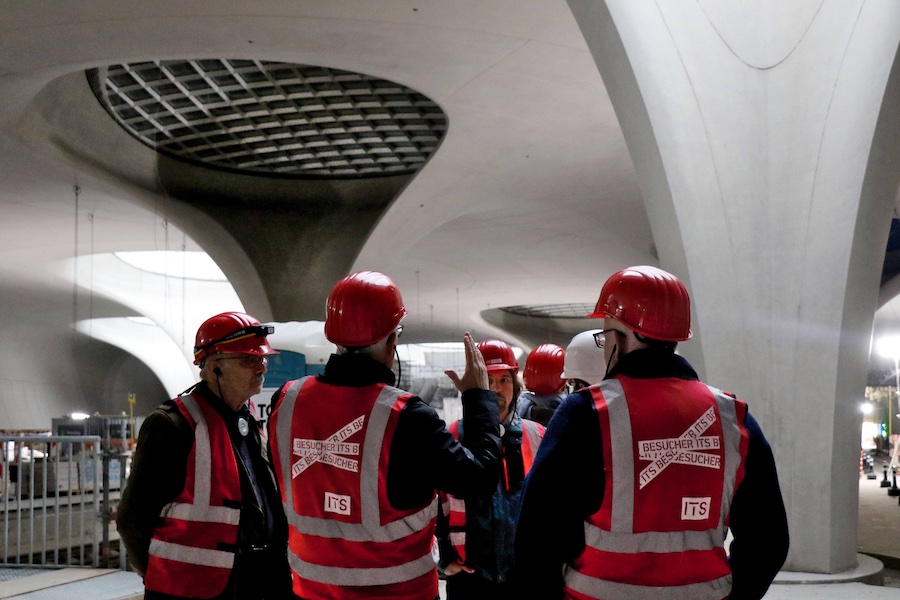
The event started on the first day with a guided tour of the construction site of the Stuttgart 21 rail project. © 2025 Photo: DITF


The second block of presentations focused on mobility: examples included textile ideas for flight cabins of the future from Diehl Aviation, precise and therefore energy-saving heating systems for vehicles from Köstler and contactless sensor technology from Rotec, which detects when fiber ropes need to be replaced. Erhardt manufactures flexible, customized bodies for commercial vehicles They are particularly suitable for logistics in city centers and are equipped with textile sensors, for example for measuring temperature or determining the optimum load. The textile superstructures not only offer a textile surface for design, they can also communicate with their surroundings. Digital lettering shows when the vehicle is giving way or warns cyclists of blind spots when turning. Modules that are not required can be folded or rolled up to save space.

In the construction and architecture application area, solutions for climate change are in demand. TEC KNIT has developed smart shading systems made from “shape memory” polymer fibers that close or reopen depending on the temperature. Optigrün relies on smart rainwater management for greening buildings. Textile sensor technology ensures that the water is optimally distributed over the surface - digitally controlled according to the weather forecast. Michael Schneider from the Smart Textiles Hub showed how intelligent knitted fabrics installed on flat roofs detect moisture and temperature by contracting or expanding accordingly. This can also prevent damage caused by icing, for example. Christoph Riethmüller from the DITF explained that the actual state of buildings is constantly changing due to events. The charm of smart textiles is that they can adapt to these changes. In this way, it is possible to intervene before negative consequences become noticeable. This saves a lot of energy. For example, the targeted heating of walls depending on the relative humidity prevents the occurrence of mold with low energy consumption. Intelligent shading systems also ensure that rooms remain at a pleasant temperature in summer without air conditioning and that the heat remains in the room in winter.

“In many industries, it is not known where textiles can offer new ways and solutions. And even less is known that these textiles are also smart,” emphasized Professor Götz T. Gresser in his closing remarks.

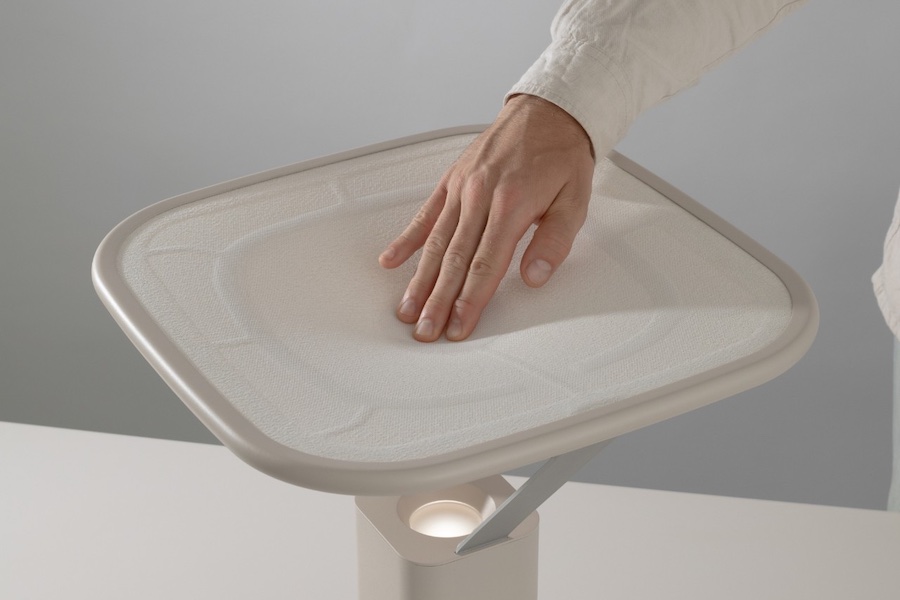
The event was accompanied by an exhibition where participants were able to try out numerous smart products.
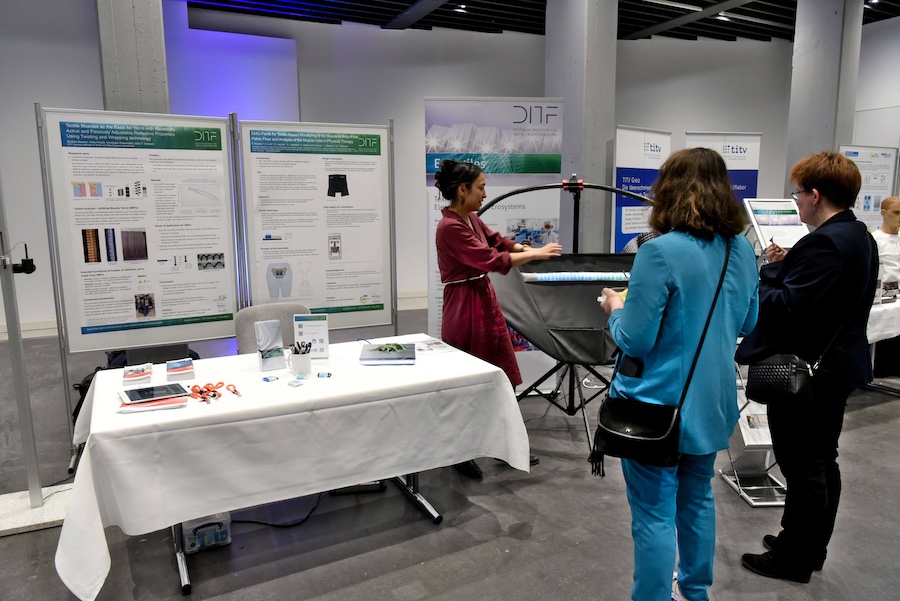
Smart textiles you can actually touch: the lectures were complemented by an exhibition. © 2025 Photo: DITF


The annual User Forum is organized by the German Institutes of Textile and Fiber Research Denkendorf (DITF), the Textile Research Institute Thuringia-Vogtland e.V. (TITV Greiz) and the Forschungskuratorium Textil e. V. (FKT).

The next SMART TEXTILES User Forum will take place on March 4-5, 2026 in Zeulenroda.


More News from Deutsche Institute für Textil- und Faserforschung Denkendorf

#Research & Development

Fabolose: Fabricating vegan and circular leather alternatives from bio-tech-derived cellulose

Fabulose is an EU funded project coordinated by the German Institutes of Textile and Fiber Research (DITF). Its consortium consists of leading research institutes, biotech innovators, and industry stakeholders who aim to create high-performance, biobased and recyclable leather-like fabrics, using efficient biotech production routes for bacterial cellulose, cyanophycin and bacterial pigments

#Research & Development

More safety and comfort for protective clothing thanks to auxetic fabrics

When everyday materials are pulled, they stretch or elongate in the direction of the pull and become narrower in cross-section. We can also observe this property in two-dimensional textiles. Auxetic structures behave differently here. They have the striking property of not changing under tensile stress or even increasing their width or thickness. These properties are advantageous, for example, in protective textiles or textile filter media. The DITF are researching auxetic fabrics for various applications.

#Research & Development

Panty liners prevent bacterial vaginosis

Worldwide, almost one third of women of childbearing age suffer from bacterial vaginosis. This is when the sensitive microbiome of the vagina becomes unbalanced. Such a disorder of the vaginal flora can cause urogenital infections, abscesses on the ovaries or fallopian tubes or premature births. This significantly increases the risk of infertility in women and of contracting a sexually transmitted disease or HIV.

#Research & Development

DITF send a signal for climate protection

The German Institutes of Textile and Fiber Research Denkendorf (DITF) have successfully implemented extensive investments in photovoltaic systems at their site in Denkendorf. The systems installed on the roofs of the buildings and covered parking lots have a total installed capacity of 840 kilowatt peak (kWp). The DITF invested 1.6 million euros in this with the support of the state of Baden-Württemberg. The system was ceremonially put into operation on September 17, 2025.

More News on Smart Textiles

#Research & Development

Catching heart disease early with AI-based sensor system

It slips on like a normal vest: Fraunhofer IZM has created a smart sensor system in cooperation with the Charité and the Technical University of Berlin. The vest records a vast array of cardiovascular parameters, which an AI-based system uses to support medical diagnostics and spot potentially dangerous developments.

#Research & Development

Soft interfaces: Textile-integrated light switches, made possible by printable Liquid Metal Ink

A gentle tap on the knitted lampshade is enough to switch on the light. The lamp developed by Fraunhofer IZM in cooperation with WINT Design Lab works with a revolutionary conductive ink. Visitors can find out more and try the lamp themselves at the Berlin Science Week on November 1st and 2nd.

#Smart Textiles

Innovations with smart textiles

The second free online masterclass of the AddTex project will take place on March 5 from 15:30 to approx. 17:00. Industry partners and textile researchers will present the latest innovations in the field of functional and smart textiles.

#Smart Textiles

SmartX Innovation Hub: European Community of smart and high performance textile innovators

The Textile ETP, in partnership with Titera, AEI Tèxtils, CeNTi, and IVGT, proudly announces the evolution of the SmartX Community into the SmartX Innovation Hub. The Hub follows the conclusion of the SmartX Europe project, a Horizon2020 initiative dedicated to boosting e-textiles and wearables into the market. One of the most notable achievements of the project was the realization that learning, sharing, and cross-sector collaboration can play a significant role in innovation.

Latest News

#Textiles & Apparel / Garment

Connecting the ASEAN textile sector: sustainability, trends, and technology take centre stage at this week’s VIATT 2026

Opening this week Thursday, the Vietnam International Trade Fair for Apparel, Textiles, and Textile Technologies (VIATT) is set to welcome visitors from ASEAN’s dynamic textile market and beyond. From 26 to 28 February, VIATT 2026 – the fair’s third editions – will reinforce its strategic proposition with an integrated showcase of the three core sectors of the entire textile value chain. Beyond new sourcing opportunities in Apparel Fabrics & Fashion, Home & Contract Textiles, and Technical Textiles & Technologies, the fair will present an expanded fringe programme.

#Spinning

Measure and control the fiber – optimize yarn quality

Producing consistent yarn quality is an everyday challenge – and a very difficult one. Detailed knowledge and understanding of the fiber raw material is absolutely critical to achieving the best possible quality in the yarn. To help spinners, Uster experts have put together guidelines for avoiding yarn irregularity claims, in a special edition of the Uster News Bulletin.

#Software

Coats Digital appoints Himanshu Mehrotra as Managing Director to lead next phase of cloud and AI-driven innovation

Coats Digital is delighted to announce the appointment of Himanshu Mehrotra as Managing Director to lead the company’s strategic direction, innovation agenda, and global growth as it accelerates the development of its cloud-native, AI-powered software solutions for the global apparel and footwear supply chain.

#Techtextil 2026

Over 1,500 exhibitors: Techtextil 2026 grows in key future sectors

Techtextil 2026 continues to grow: more than 1,500 exhibitors from 49 countries present their products and innovations in Frankfurt am Main from 21 to 24 April 2026. Over 120 of them are first-time exhibitors. Texprocess is taking place at the same time, remaining stable with around 200 exhibitors – despite challenging market conditions. Together, the two events bring more than 1,700 exhibitors to the Frankfurt exhibition grounds.

TOP