[pageLogInLogOut]
techtextil 21.-24.4.2026 FRANKFURT/MAIN Peter Chance. The most important guest at the fair - besides you.

#Techtextil 2026

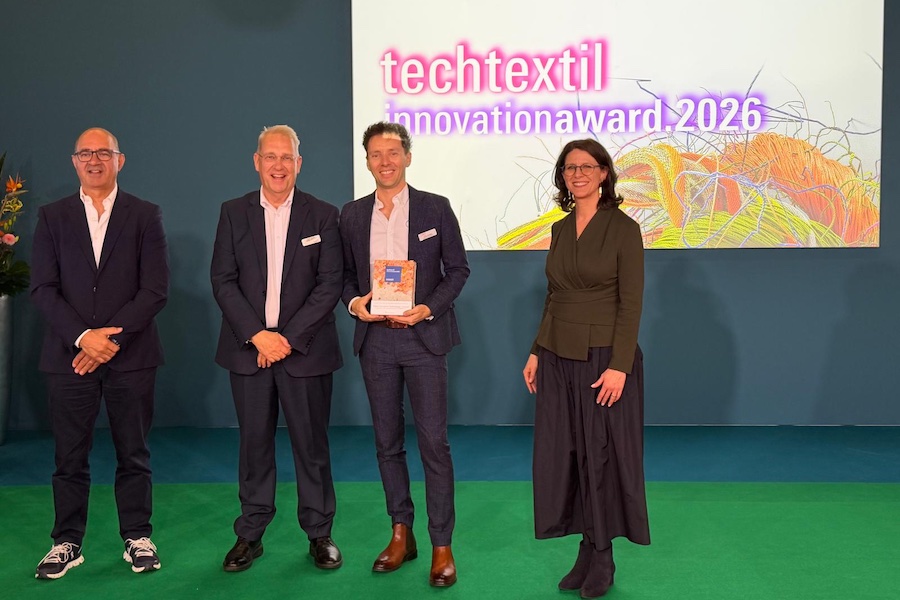
Stylish design made from sustainable materials – two DITF research projects receive Techtextil Innovation Awards
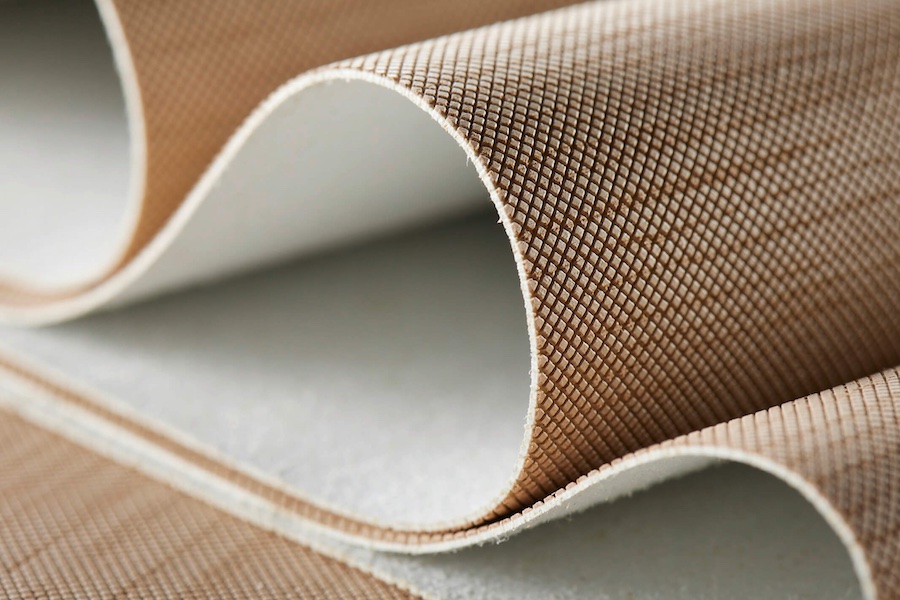
The highly flexible composite material NUO © 2026 Photo: DITF
Materials made from domestic, renewable raw materials reduce CO₂ emissions, prevent microplastics from entering the environment, and close the material cycle. The German Institutes for Textile and Fiber Research Denkendorf (DITF) are developing nature-based alternatives to synthetically produced and predominantly petroleum-based materials. Two research projects have received a prestigious Techtextil Innovation Award. NUO Flexholz and the lignin-coated material FormLig demonstrate that sustainable concepts can meet high standards of functionality and design. Both projects were carried out in close collaboration with industry.

NUO FlexHolz

Schorn&Groh GmbH, NUO GmbH, and DITF have developed the decorative composite material NUO FlexHolz. This highly flexible material consists of real wood veneer, hemp or cellulose fabric, and a newly developed lignin-based adhesive layer. It is made entirely from renewable raw materials and is biodegradable. By eliminating synthetic adhesives, CO₂ emissions and microplastics are further reduced.

The material combines the natural look and feel of wood with the flexibility of textiles. The technical basis is precise laser microsegmentation: after lamination, only the veneer layer is finely structured, while the textile substrate and lignin layer remain intact. This allows the material to be bent and shaped while remaining permanently dimensionally stable. NUO FlexHolz can be used in a variety of applications, such as in automotive interiors, interior design, furniture manufacturing, or the apparel industry.


FormLig

During the FormLig project, cellulose yarns were coated with lignin-containing compounds. The material is then knitted into semi-finished products and thermally shaped. The knitting process produces a semi-flexible knit fabric that fuses into an open-cell composite material through the targeted melting of the lignin coating. The material can be shaped almost freely in three dimensions, enabling a wide variety of geometries.

FormLig consists exclusively of biodegradable raw materials. Cellulose and lignin can be sourced from regional value chains. Lignin is produced in large quantities as a byproduct of the paper industry. Neither microplastics nor landfill waste are generated.
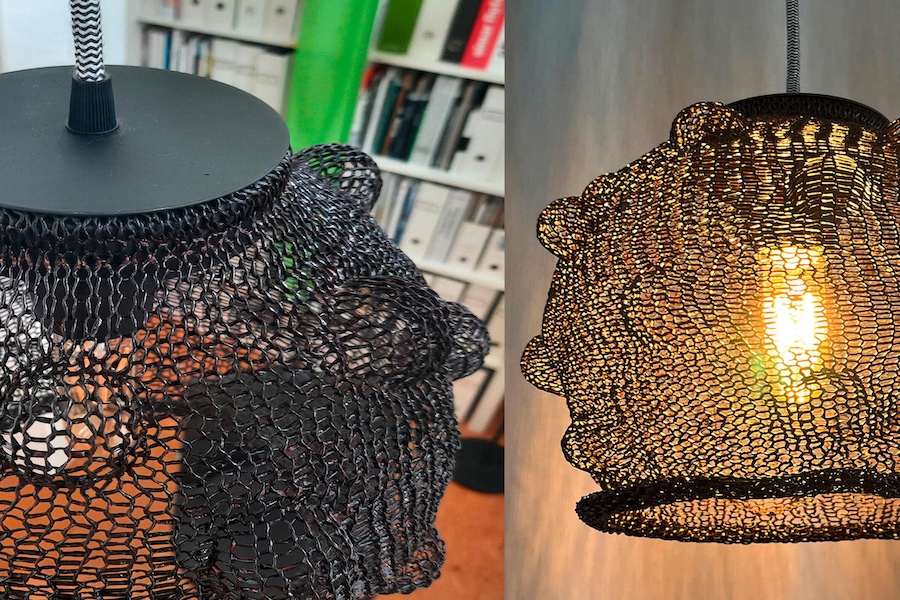
Self-supporting lampshade made of FormLig. © 2026 Photo: DITF


The composite combines renewable resources with functional material properties and opens up a wide range of design and application possibilities. DITF’s project partners are the Spek DESIGN studio and the companies Buck and TECNARO.

The awards will be presented at a ceremony on April 21 in Frankfurt am Main at Techtextil, the leading international trade fair for technical textiles and nonwovens.
More News from Deutsche Institute für Textil- und Faserforschung Denkendorf

#Research & Development

Textile cascade filter for removing microplastics from wastewater

Microplastics are now found almost everywhere, even in remote regions of Antarctica. They enter the human body through the food chain. Studies indicate that microplastics may have negative effects on the human health.

#Research & Development

Fabolose: Fabricating vegan and circular leather alternatives from bio-tech-derived cellulose

Fabulose is an EU funded project coordinated by the German Institutes of Textile and Fiber Research (DITF). Its consortium consists of leading research institutes, biotech innovators, and industry stakeholders who aim to create high-performance, biobased and recyclable leather-like fabrics, using efficient biotech production routes for bacterial cellulose, cyanophycin and bacterial pigments

#Research & Development

More safety and comfort for protective clothing thanks to auxetic fabrics

When everyday materials are pulled, they stretch or elongate in the direction of the pull and become narrower in cross-section. We can also observe this property in two-dimensional textiles. Auxetic structures behave differently here. They have the striking property of not changing under tensile stress or even increasing their width or thickness. These properties are advantageous, for example, in protective textiles or textile filter media. The DITF are researching auxetic fabrics for various applications.

#Research & Development

Panty liners prevent bacterial vaginosis

Worldwide, almost one third of women of childbearing age suffer from bacterial vaginosis. This is when the sensitive microbiome of the vagina becomes unbalanced. Such a disorder of the vaginal flora can cause urogenital infections, abscesses on the ovaries or fallopian tubes or premature births. This significantly increases the risk of infertility in women and of contracting a sexually transmitted disease or HIV.

More News on Techtextil 2026

#Techtextil 2026

Lenzing unveils three-tier cellulosic fiber portfolio for next generation protective wear

The Lenzing Group, a leading supplier of regenerated cellulosic fibers for the textile and nonwovens industries, today introduces Lenzing Solutions for Protective Wear. This integrated three-tier portfolio is anchored by LENZING™ FR fibers at the highest protection tier for inherent flame resistance and brings together complementary solutions including TENCEL™ Lyocell fibers, both EU Ecolabel-certified² and derived from certified or controlled wood sources³, within a unified protective wear architecture for the first time. The launch marks the most significant expansion of Lenzing’s protective wear business since the company pioneered inherently flame-resistant cellulosic fiber in 1977, and comes as the global personal protective equipment (PPE) market accelerates toward an estimated USD 130 billion by 2033⁴.

#Techtextil 2026

Innovation as the answer: Techtextil and Texprocess honour solutions to global challenges with the 2026 Innovation Awards

The winners of the Techtextil and Texprocess Innovation Awards 2026 have been announced. Across ten categories, 17 international winners are being recognised for pioneering research, innovative products and materials, as well as new processes and technologies. These innovations provide solutions far beyond the textile industry – including sectors such as automotive, aerospace, medical, architecture, construction and robotics. The awards ceremony takes place on 21 April at Techtextil and Texprocess in Frankfurt. From 21 to 24 April, there is a winners’ exhibition as well as guided tours.

#Techtextil 2026

From carbon to canvas: DORNIER presents flexible and reliable weaving technologies for 3D weaving and dynamic markets at Techtextil

At Techtextil from 21 to 24 April 2026 in Frankfurt am Main (Hall 12.0, Stand D95), Lindauer DORNIER will be showcasing reliable and flexible weaving technologies for ever-changing market requirements. The machine and plant manufacturer will present retrofits for existing machines, the new TRITOS® FLEX 3D weaving technology, intuitive automation concepts and software solutions for data-sovereign networking of the weaving machine fleet.

Latest News

#Digital Printing

Kornit Digital redefines apparel production for the on-demand era unveiling Atlas MATRIX at Konnections 2026

Kornit Digital Ltd. (NASDAQ: KRNT, “Kornit Digital”, “Kornit”, or the “Company”), a global pioneer in sustainable, on-demand digital fashion and textile production, today unveiled its Atlas MATRIX at Konnections 2026, redefining apparel production in the on-demand era.

#Recycled Fibers

Recover™ and Prosperity Textile announce strategic denim partnership

Recover™, a global producer of low-impact, high-quality recycled cotton fiber at scale, has announced a strategic partnership with Prosperity Textile, a vertically integrated denim fabric manufacturer operating at industrial scale.

#Nonwovens

Award‑nominated LENZING™ DualWipe supports Europe’s shift to bio‑based materials

The Lenzing Group, a leading global producer of regenerated cellulose fibers for the textile and nonwovens industries, introduces LENZING™ DualWipe, its latest plastic‑free wipe innovation and a nominee for the prestigious INDEX™26 Awards in the “Nonwovens Roll Goods” category. The nomination underlines Lenzing’s continued commitment to developing scalable, cellulose‑based solutions for applications that have traditionally relied on fossil‑based materials.

#Techtextil 2026

SAHM Winding Solutions and Vandewiele Automation present integrated automation solution for winding processes

For the first time at the Techtextil trade fair in Frankfurt am Main, Germany (21 - 26 April), SAHM Winding Solutions (Hallo 12.0. / Booth 95) and Vandewiele Automation will be showcasing their combined automation expertise for industrial winding processes. Under the motto “Combining Automation. Maximizing Flow”, the two companies will demonstrate how automated package handling and robot-assisted yarn knotting can be integrated into a continuous production flow.

HEBERLEIN TECHNOLOGY FOR PROFESSIONALS  - Techtextil Hall 12.0 Booth B01!
TOP