[pageLogInLogOut]

#Research & Development

Hohenstein releases 2023 sustainability report

Hohenstein has been prioritizing sustainability for decades. To demonstrate these efforts transparently, the company has decided to take several additional actions. © Hohenstein
With the publication of its sustainability report for 2023, testing provider Hohenstein is providing greater transparency. The report details sustainability efforts at its Boennigheim headquarters and targets for 2024.

Hohenstein has replaced previous environmental guidelines with strategic development in accordance with Environmental, Social and Corporate Governance (ESG) and adopted a sustainability roadmap for the future.

Example highlights in the report include:

  • Environmental: Overall, energy consumption was actively reduced, and renewable energy use promoted. Hohenstein also collected rail and air travel data to be used in CO2 accounting in 2024.
  • Social: Hohenstein actively involved its employees in sustainability activities based on a survey and internal education. Further measures, for example yoga sessions and health care training, complement the goals. In future, Hohenstein will improve the ratio of female managers and implement a training campaign on the company values for employees.
  • Governance: Hohenstein management has prioritized good communication through regular colloquia for employees and access to human resources consultation. They intend to intensify the dialogue with employees through further events.

Hohenstein has been implementing environmental and social measures for decades. As the first neutral assessment of these measures in 2019, Hohenstein participated in the ECOfit programme in Baden-Württemberg, Germany. A regular external assessment is to be introduced in 2024.


In 2022, the company hired a Manager for Sustainable Development to oversee Hohenstein's own sustainability implementation and advise customers on theirs. "At Hohenstein, there is so much potential for resource-conserving and environmentally conscious work - and this is already very much a reality. Our goal is to maintain this high level and further optimise wherever possible. I am confident that we will achieve a lot in the coming years and influence results we can be proud of," emphasises Marie Oldopp, Manager for Sustainable Development at Hohenstein.

Marie Oldopp has been Manager for Sustainable Development at Hohenstein since 2022. © Hohenstein


CEO Dr Stefan Droste also prioritizes further development of sustainability at Hohenstein: "Our commitment in this area is not only a responsibility to future generations, but also the solid foundation and prerequisite for our own global activities. We will continue to expand and refine our sustainability strategies to ensure that our practices meet internal requirements and external standards and expectations."

(c) Hohenstein
(c) Hohenstein


Visit www.hohenstein.com to read the full report.



More News from Hohenstein Institute

#Sustainability

A new standard to combat plastic waste in forests

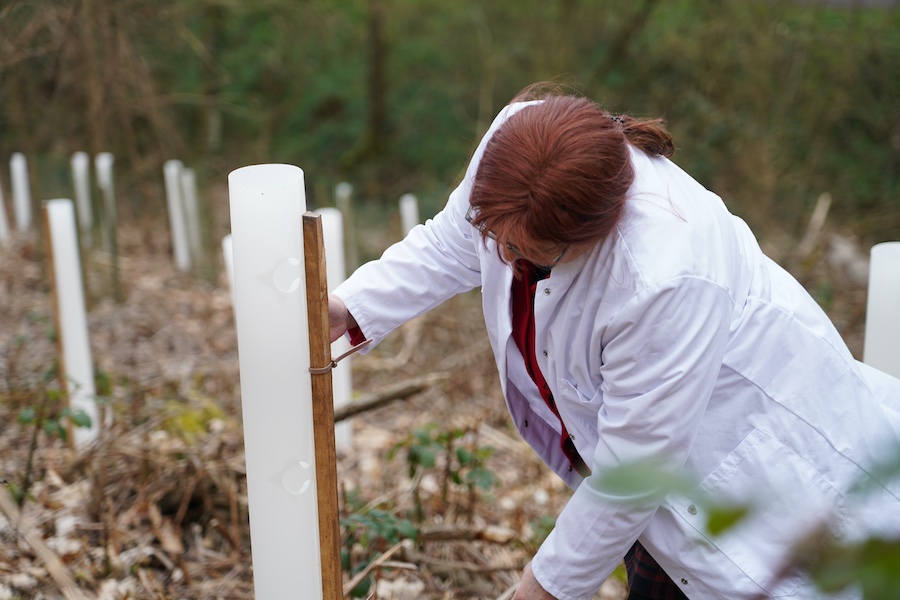
With DIN SPEC 35808 “Tree Shelter for Forestry Applications,” the testing and research service provider Hohenstein, in collaboration with Rottenburg University of Forestry, as well as forestry authorities and industry partners, has established a clear framework for bio-based and fully biodegradable tree shelters. The pre-standard defines requirements and practical testing methods designed to reduce plastic waste in forests and strengthen the long-term protection of soil and the environment.

#Research & Development

Hohenstein publishes 2025 Sustainability Report

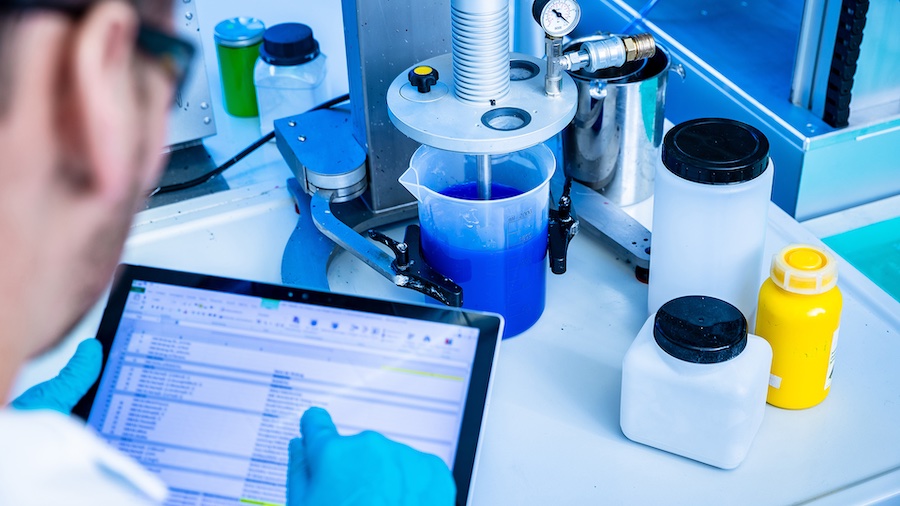
The testing and research service provider Hohenstein has published its latest sustainability report, outlining key progress and strategic initiatives. The report focuses on ambitious CO₂ reduction targets, the company’s new mission statement and the systematic expansion of sustainable services for customers worldwide.

#Research & Development

New DIN SPEC assesses environmental impact of textile fragments in soil

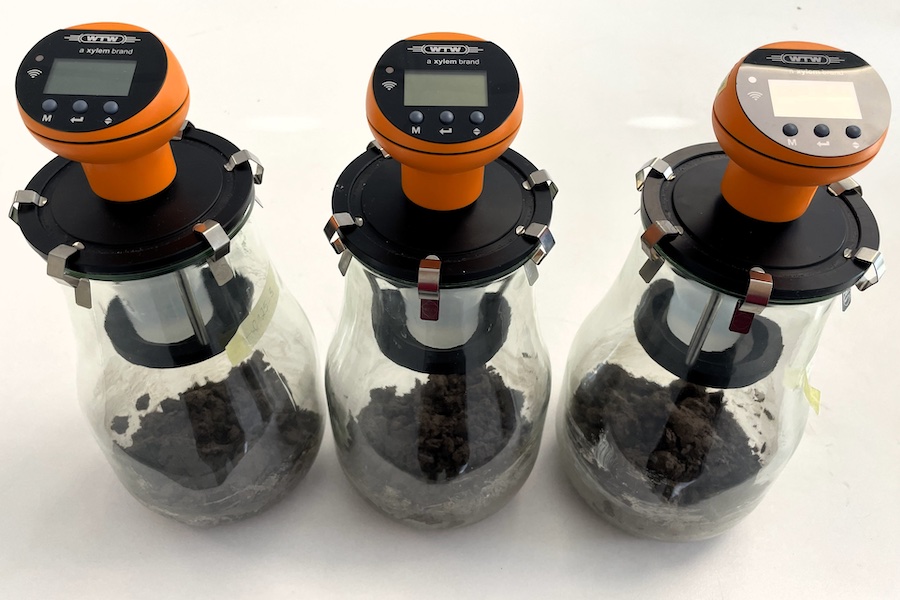
Textile products made from synthetic fibres, finished fabrics or dyed materials release fibre fragments into the environment at every stage of their life cycle. With the new DIN SPEC 19296, Hohenstein has developed a standardised testing method to analyse how these fragments behave in soil under natural conditions. Until now, little was known about their environmental behaviour or potential ecological effects once released.

#Research & Development

Testing and research laboratory ensures safe and more sustainable products worldwide

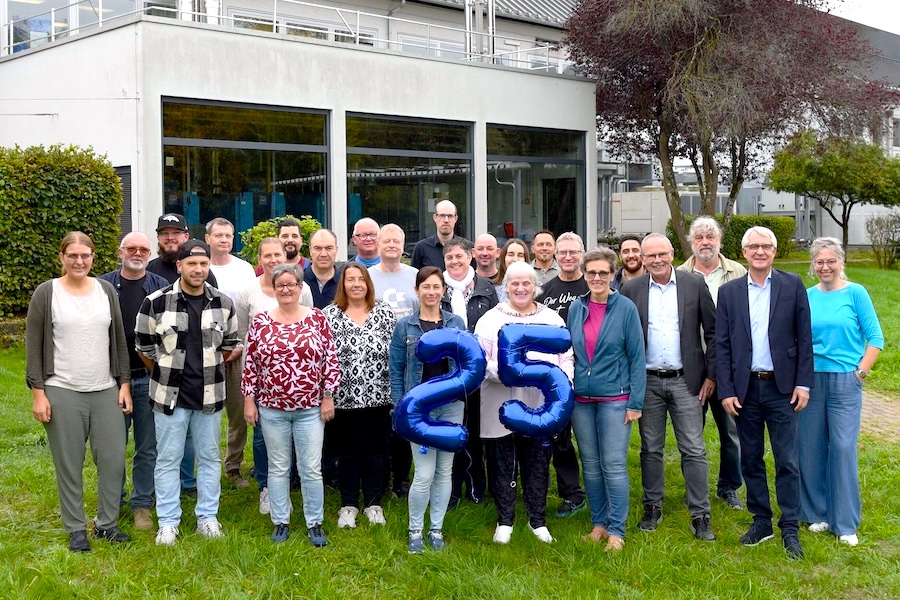
For 80 years, Hohenstein has stood for independent testing, scientific expertise and practical solutions. Today, the testing and research service provider supports manufacturers and brands worldwide in making textiles, hardlines and medical devices safe, more sustainable and market-ready – thereby building trust among consumers. With an international presence and interdisciplinary expertise, Hohenstein supports its customers from production through to market launch, helping them navigate an environment of growing regulatory and societal demands.

More News on Research & Development

#Research & Development

Textile climate control system in workwear – exhibition at the 2026 SME Innovation Day!

Conventional protective workwear often reaches its limits during strenuous physical activity. In particular, the transport of sweat and excess body heat poses a problem. The German Institutes of Textile and Fiber Research (DITF) conducted research on flow-optimized, air-conducting textile structures that enable targeted climate control directly on the body. These structures can be integrated straight into protective work garments. The textile climate control system supports the body’s natural thermoregulation. This contributes to improved workplace safety and comfort.

#Research & Development

Elastic yarns to become more recyclable and environmentally friendly in future

On 29 April 2026, ITA student Tobias Dickmeiß was awarded a sponsorship prize by the Wilhelm Lorch-Stiftung for his innovative approach, to replacing conventional elastane with elastic yarns made from thermoplastic copolyester elastomers (TPC). Thanks to their thermoplastic nature and compatibility with typical polyesters used in the textile industry, elastic TPC yarns offer improved recyclability. Furthermore, the use of the melt-spinning process in yarn production eliminates the need for solvents that are harmful to the environment and human health.

#Research & Development

Walter Reiners Foundation Prize awarded to three ITA graduates

Sabina Dann, Lukas Balon and Annegret Storm from the Institut für Textiltechnik (ITA) of RWTH Aachen University were awarded the Walter Reiners Foundation Prize by the German Engineering Federation (VDMA) for their master’s and bachelor’s theses. Peter Dornier, Chairman of the Walter Reiners Foundation, presented the awards during Techtextil at the VDMA stand in Frankfurt am Main, Germany.

#Techtextil 2026

Young talents honoured – 60 years Walter Reiners Foundation

At the Techtextil trade fair in Frankfurt at the end of April, Peter D. Dornier, chairman of the VDMA’s Walter Reiners Foundation, presented awards to five successful young engineers. Promotion and sustainability awards were presented in the categories of bachelor’s/project theses and diploma/master’s theses. Academic theses are eligible for the sustainability awards if, for example, they develop solutions for resource-efficient products and technologies.

Latest News

#INDEX 2026

“We clearly see that reliability, flexibility, service and total cost of ownership are becoming increasingly important again.”

The nonwovens industry continues to face a challenging market environment. Nevertheless, AUTEFA Solutions reports successful projects, new line sales and growing demand for energy-efficient and flexible solutions. In this interview, André Imhof of AUTEFA Solutions talks about competitiveness against Chinese suppliers, new service and recycling concepts, the growing importance of application development and the opportunities created by countercyclical investments.

#INDEX 2026

“Needle punching technology is more universal and sustainable than ever!”

Needle punching technology was long regarded as a rather traditional and comparatively slow technology within the nonwovens industry. In this interview, Johann Philipp Dilo explains why needle punching is more relevant than ever today – ranging from energy efficiency and resource conservation to hygiene applications, new machine concepts and design-oriented nonwoven solutions.

#Nonwovens

PET spunbond from China – EDANA welcomes imposition of provisional anti-dumping measures

On 13 May 2026, after eight months of investigation, the European Commission imposed provisional anti-dumping duties of 45.6-50.0% on imports of PET spunbond from China. EDANA welcomes this expression of the Commission’s clear determination to protect EU industries from the unfair trade practices of Chinese producers.

#INDEX 2026

ANDRITZ at INDEX ’26: Driving sustainability with next-generation nonwoven technologies

From May 19-22, ANDRITZ Nonwoven & Textile is presenting its innovative solutions for the nonwoven & textile industry in Geneva, Switzerland. ANDRITZ will focus on technologies for sustainable and durable nonwovens, converting, sustainable fiber processes, textile recycling, and life-cycle services on booth 2114 in hall 02.

TOP