[pageLogInLogOut]

#Recycling / Circular Economy

Circulose restarts commercial-scale production at Ortviken plant in Sundsvall
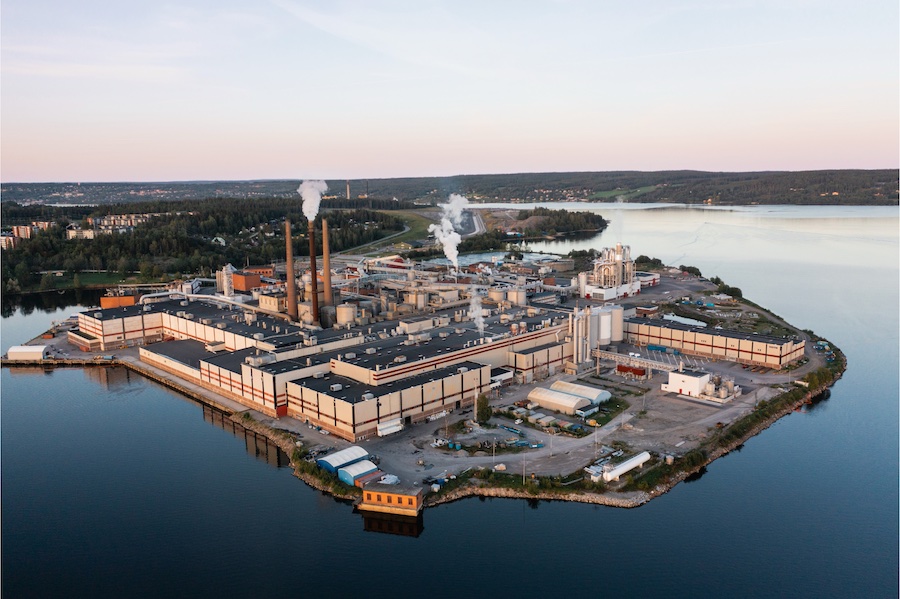
© 2026 Circulose
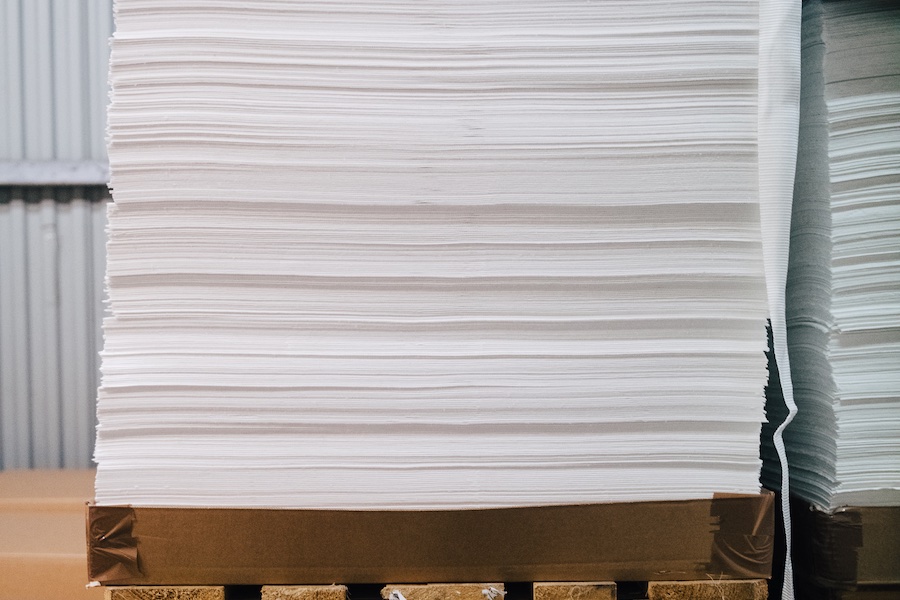
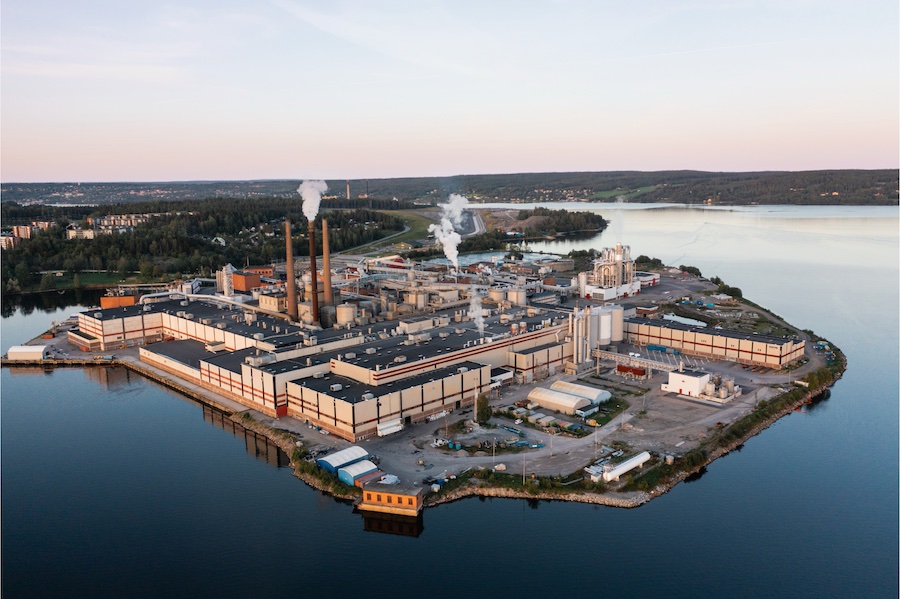
Circulose today announced the restart of its commercial-scale production plant at Ortviken in Sundsvall, Sweden, marking a significant step in scaling next-generation materials for the global fashion industry. The company plans to resume production of CIRCULOSE®, a recycled pulp made entirely from discarded cotton textiles, in the fourth quarter of 2026.

“The preparations are in full swing, and new pulp is expected to roll out of the factory by the end of the year, ensuring there is no gap in supply,” said Jonatan Janmark, CEO of Circulose.

In 2024, under new ownership by private equity firm Altor, Circulose set a renewed strategic direction focused on securing volume commitments from partner brands to bring CIRCULOSE® back to market at scale.

“Our plan was to align the production restart with confirmed demand, and with commitments from 11 brands, we are now moving forward with confidence,” Janmark said. He added that the company has also signed strategic partnerships with fiber producers Tangshan Sanyou, Aditya Birla, and Jilin Chemicals.

With the Ortviken plant back in operation, Circulose will be able to continue supplying fashion brands and fiber producers with high-quality recycled raw material at commercial scale, supporting industry efforts to divert textile waste from landfills and incineration. Currently, orders are being fulfilled with existing inventory produced by Renewcell, prior to its bankruptcy.

“Restarting Ortviken is a major milestone for Circulose and for scaling next-generation materials,” Janmark added. “The fashion industry needs solutions that work at industrial scale and integrate seamlessly into existing supply chains. CIRCULOSE® is designed to do exactly that.”

The Ortviken plant is the world’s first commercial-scale chemical textile recycling facility. Its restart demonstrates that, despite past challenges, the fashion industry is seeking ways to scale proven, real-world solutions that move beyond pilots and into sustained commercial production.

More News from Circulose

#Recycled Fibers

Circulose and CTA announce collaboration to enable lyocell fibers using CIRCULOSE® pulp

Circulose has announced an agreement with China Textile Academy Green Fibre (CTA) to offer lyocell fibers produced using CIRCULOSE® pulp. Producing lyocell from recycled pulp at commercial scale is an important step in making textile-to-textile recycled materials available across a wider range of textile applications.

#Recycled Fibers

Circulose and Birla Cellulose announce partnership agreement to advance circular textiles

Circulose, a leading producer of recycled textile pulp for the fashion and textile industry, and Birla Cellulose, a global leader in sustainable viscose fiber, have signed a strategic partnership agreement to jointly accelerate textile recycling.

#Recycled Fibers

Leading fashion brands step up to unlock the next chapter of Circulose

Since 2024, under new ownership and leadership, Circulose has set a renewed strategic direction focused on securing long-term commitments with partner brands to bring CIRCULOSE® back to market at scale. This strategy has proven successful.

#Recycled Fibers

Circulose partners with Marks & Spencer to accelerate circular fashion

Circulose has announced a partnership with Marks & Spencer (M&S), making the iconic British retailer the first UK brand to join Circulose as a Scaling Partner. This milestone collaboration marks a powerful step forward in transforming how fashion is made, driving circularity from concept to scale.

More News on Recycling / Circular Economy

#Research & Development

ALADIN paves the way for circular and demand-driven textile production in Europe

Textile production can be organized sustainably by utilizing short supply chains and preventing overproduction. This can already be achieved today by intelligently connecting and efficiently utilizing existing infrastructure. At the same time, production becomes circular when innovative technologies and materials are used that enable high-quality recycling. The ALADIN research project, launched in May 2026 and co-funded with five million euros under the EU Horizon Europe program, is creating the conditions for this.

#Recycling / Circular Economy

Ence and ShareTex begin initial testing of the ATENEA innovation project to promote textile recycling in Spain

Ence and ShareTex are making progress on the Atenea R&D project, which aims to develop a complete value chain for textile recycling in Spain. Specifically, the goal of the ATENEA project—which is funded by the Center for Technological Development and Innovation (CDTI)—is to connect all the necessary stages for the recovery of textile waste, from collection and management, through recycling and transformation into new raw materials, to their incorporation into new textile products.

#Recycling / Circular Economy

DePoly Inaugurates its Showcase Plant in Monthey Switzerland

What if used plastic bottles, PET packaging material and polyester textiles could become raw materials just as high performing as virgin resources? That is the ambition of DePoly, a circular materials company based in Sion, Switzerland which inaugurated its Showcase Plant in Monthey on July 6th & 7th. The first depolymerization facility of its kind and scale in Switzerland, this industrial Showcase Plant represents a major milestone in the company's growth and its journey toward commercialization.

#Recycling / Circular Economy

Commission clarifies rules on plastic bottles recycling

The European Commission today adopted new rules on recycling of single-use plastic beverage bottles made primarily of polyethylene terephthalate (PET bottles). These rules establish, for the first time, a methodology to calculate, verify and report chemically recycled content. This is part of the Commission’s December 2025 plastics package.

Latest News

#Nonwovens

Katharina Obergruber appointed to the Management Board of Sandler AG

The Supervisory Board of Sandler AG has appointed Katharina Obergruber to the company’s Management Board. Effective September 1, 2026, the Board will consist of Philipp Ebbinghaus (CEO), Dr. Ulrich Hornfeck (currently CCO, future COO), and Katharina Obergruber (CCO). Katharina Obergruber, currently Chief Sales Officer Hygiene and member of the Management Team of Sandler AG, will assume responsibility for all sales activities as Chief Commercial Officer. She will assume this role from Dr. Ulrich Hornfeck, who will focus primarily on production and supply chain topics.

#Sustainability

Global Standards establishes new non-profit foundation to strengthen governance

Global Standards gGmbH, the nonprofit organisation behind the globally recognised Global Organic Textile Standard (GOTS), announced a new governance structure designed to support its long-term mission and reinforce organisational autonomy of its Voluntary Sustainability Standards and programmes.

#Textile chemistry

DyStar releases FY2025 sustainability report, marking a new milestone towards its 2030 targets

DyStar, a leading specialty chemicals company with more than a century of expertise in product development and innovation, today announced the release of its FY2025 Sustainability Report, marking a significant milestone in its sustainability journey and reinforcing its commitment to long-term value creation.

#Research & Development

TERIS reaches milestone: Fraunhofer consortium develops new standards for tire analysis

In the “TERIS” project, the Fraunhofer institutes ICT, IGD, and IWM—led by the Fraunhofer Institute for Structural Durability and System Reliability LBF—have reached a decisive milestone. For the first time, the teams aim to generate, analyse, and predict tire wear in the laboratory in a standardized and practical manner. As part of this milestone, results are now available on reference abrasion, particle analysis, tribological models, AI-based surface analysis, a test bench concept, and methods for accelerated aging and VOC detection. The tire industry, testing services, and environmental agencies will in future benefit from reliable, rapid laboratory procedures for emissions assessment.

TOP