[pageLogInLogOut]

#Recycled Fibers

Circulose and Birla Cellulose announce partnership agreement to advance circular textiles
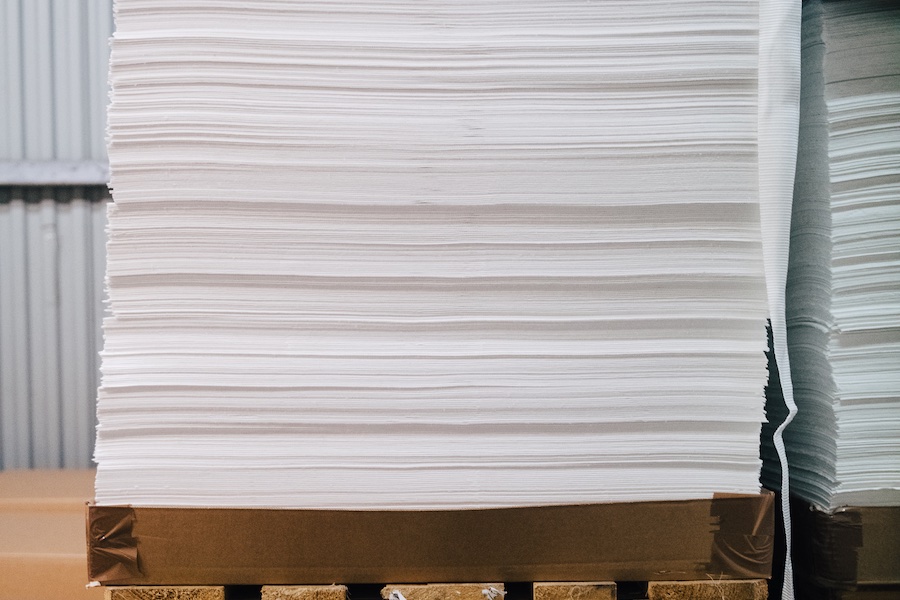
Circulose, a leading producer of recycled textile pulp for the fashion and textile industry, and Birla Cellulose, a global leader in sustainable viscose fiber, have signed a strategic partnership agreement to jointly accelerate textile recycling.


This partnership supports Circulose’s renewed strategy, which focuses on deeper brand collaborations and providing end-to-end solutions across the value chain. Under the agreement, Circulose will supply pulp made with 100% recycled textile waste to Birla Cellulose, and Birla will produce viscose staple fiber made with CIRCULOSE® pulp and make it available to Circulose's brand partners.

“Over the past year, we’ve refined our approach to put brands at the center, with a clear focus on creating offerings that enable mainstream adoption. Achieving this requires closer collaboration with key partners across the value chain. Our partnership with Birla Cellulose is a cornerstone of our strategy, and we’re very excited to have them onboard,” says Jonatan Janmark, CEO of Circulose.

Recognized as a top-tier company in Canopy’s Hot Button Report, Birla Cellulose has earned international recognition for its sustainability and circularity achievements. Circulose and Birla Cellulose have collaborated since the founding of Renewcell and today, Birla Cellulose continues to lead in advancing large-scale circularity, setting benchmarks in India and across the global textile industry.

“Our partnership with Circulose marks a significant step forward in advancing sustainable and responsible sourcing. Through this collaboration, we reaffirm our commitment to delivering high-quality, sustainability-conscious fiber solutions that empower our customers and contribute to a circular future” says Vadiraj Kulkarni, Business Head, Birla Cellulose.

This agreement reflects a shared vision to help drive meaningful progress toward a circular textile value chain designed for the long term.

More News from Circulose

#Recycled Fibers

Circulose and CTA announce collaboration to enable lyocell fibers using CIRCULOSE® pulp

Circulose has announced an agreement with China Textile Academy Green Fibre (CTA) to offer lyocell fibers produced using CIRCULOSE® pulp. Producing lyocell from recycled pulp at commercial scale is an important step in making textile-to-textile recycled materials available across a wider range of textile applications.

#Recycling / Circular Economy

Circulose restarts commercial-scale production at Ortviken plant in Sundsvall

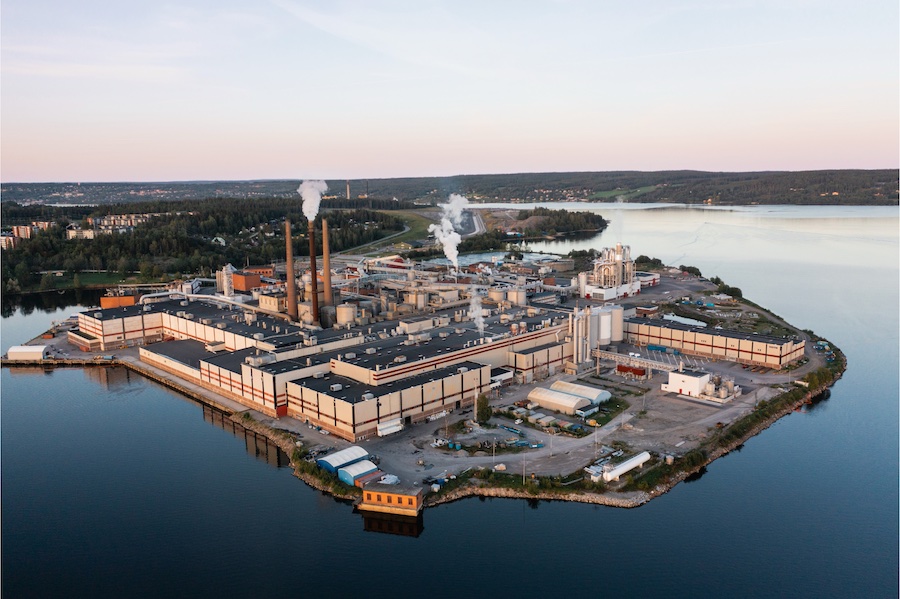
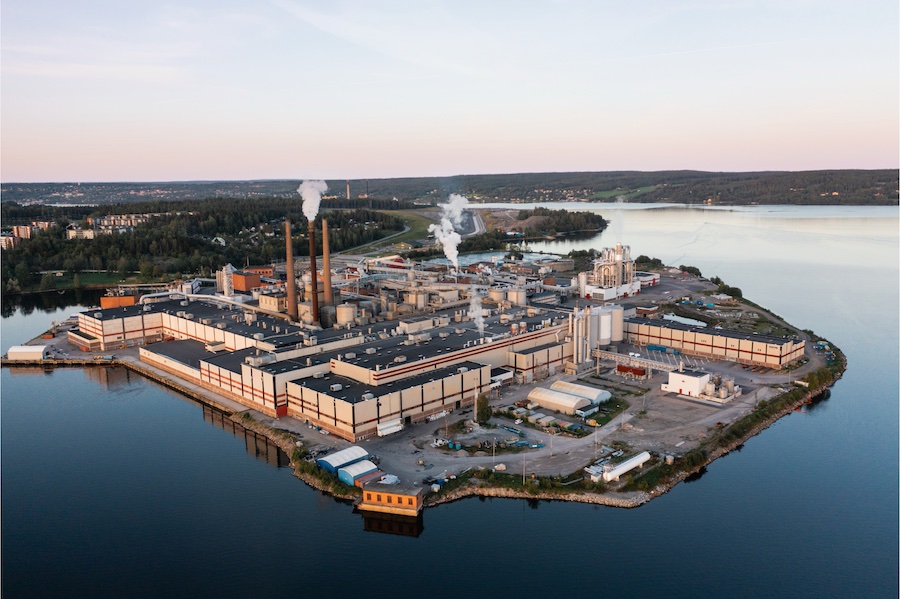
Circulose today announced the restart of its commercial-scale production plant at Ortviken in Sundsvall, Sweden, marking a significant step in scaling next-generation materials for the global fashion industry. The company plans to resume production of CIRCULOSE®, a recycled pulp made entirely from discarded cotton textiles, in the fourth quarter of 2026.

#Recycled Fibers

Leading fashion brands step up to unlock the next chapter of Circulose

Since 2024, under new ownership and leadership, Circulose has set a renewed strategic direction focused on securing long-term commitments with partner brands to bring CIRCULOSE® back to market at scale. This strategy has proven successful.

#Recycled Fibers

Circulose partners with Marks & Spencer to accelerate circular fashion

Circulose has announced a partnership with Marks & Spencer (M&S), making the iconic British retailer the first UK brand to join Circulose as a Scaling Partner. This milestone collaboration marks a powerful step forward in transforming how fashion is made, driving circularity from concept to scale.

More News on Recycled Fibers

#Recycling / Circular Economy

Ence and ShareTex begin initial testing of the ATENEA innovation project to promote textile recycling in Spain

Ence and ShareTex are making progress on the Atenea R&D project, which aims to develop a complete value chain for textile recycling in Spain. Specifically, the goal of the ATENEA project—which is funded by the Center for Technological Development and Innovation (CDTI)—is to connect all the necessary stages for the recovery of textile waste, from collection and management, through recycling and transformation into new raw materials, to their incorporation into new textile products.

#Recycling / Circular Economy

DePoly Inaugurates its Showcase Plant in Monthey Switzerland

What if used plastic bottles, PET packaging material and polyester textiles could become raw materials just as high performing as virgin resources? That is the ambition of DePoly, a circular materials company based in Sion, Switzerland which inaugurated its Showcase Plant in Monthey on July 6th & 7th. The first depolymerization facility of its kind and scale in Switzerland, this industrial Showcase Plant represents a major milestone in the company's growth and its journey toward commercialization.

#Recycling / Circular Economy

Recyc'Elit presents progress in chemical recycling of polycotton waste

French recycling technology company Recyc'Elit showcased the latest progress in its chemical recycling technology during the second National Polymer Recycling Conference, organised by AXELERA and POLYMERIS in Clermont-Ferrand, France, on 30 June and 1 July 2026.

#Recycling / Circular Economy

ReHubs elects new Board of Directors to lead the next phase of ReHubs’ strategy to recycle 2.7 million tonnes of textile waste annually by 2035

ReHubs has elected its new Board of Directors, marking an important milestone as the industry alliance continues to accelerate the industrial scale-up of textile-to-textile recycling across Europe. The election took place during the ReHubs Annual Event in Brussels on June 23rd, held alongside the Textile Recycling Expo and Future Fabrics Expo. The newly elected Board combines expertise from across the textile value chain, reflecting ReHubs' collaborative approach to solving the industry’s textile waste crises.

Latest News

#Textile processing

Dedicated car seat model of SHIMA SEIKI’s P-CAM® R Cutting Machine unveiled

Leading Japanese textile solutions provider SHIMA SEIKI MFG., LTD. of Wakayama, Japan, showed a special version of its P-CAM® R multi-ply computerized cutting machine dedicated to the production of car seats for the first time, at a private exhibition held over two days on Thursday, July 2nd and Friday, July 3rd at the Kariya City Industrial Promotion Center in Aichi Prefecture.

#Research & Development

ALADIN paves the way for circular and demand-driven textile production in Europe

Textile production can be organized sustainably by utilizing short supply chains and preventing overproduction. This can already be achieved today by intelligently connecting and efficiently utilizing existing infrastructure. At the same time, production becomes circular when innovative technologies and materials are used that enable high-quality recycling. The ALADIN research project, launched in May 2026 and co-funded with five million euros under the EU Horizon Europe program, is creating the conditions for this.

#Nonwovens

Katharina Obergruber appointed to the Management Board of Sandler AG

The Supervisory Board of Sandler AG has appointed Katharina Obergruber to the company’s Management Board. Effective September 1, 2026, the Board will consist of Philipp Ebbinghaus (CEO), Dr. Ulrich Hornfeck (currently CCO, future COO), and Katharina Obergruber (CCO). Katharina Obergruber, currently Chief Sales Officer Hygiene and member of the Management Team of Sandler AG, will assume responsibility for all sales activities as Chief Commercial Officer. She will assume this role from Dr. Ulrich Hornfeck, who will focus primarily on production and supply chain topics.

#Recycling / Circular Economy

Commission clarifies rules on plastic bottles recycling

The European Commission today adopted new rules on recycling of single-use plastic beverage bottles made primarily of polyethylene terephthalate (PET bottles). These rules establish, for the first time, a methodology to calculate, verify and report chemically recycled content. This is part of the Commission’s December 2025 plastics package.

TOP