[pageLogInLogOut]

#Recycled Fibers

Circulose and CTA announce collaboration to enable lyocell fibers using CIRCULOSE® pulp

Circulose has announced an agreement with China Textile Academy Green Fibre (CTA) to offer lyocell fibers produced using CIRCULOSE® pulp. Producing lyocell from recycled pulp at commercial scale is an important step in making textile-to-textile recycled materials available across a wider range of textile applications.


Lyocell fibers are produced through a solvent-based spinning process and are valued for their strength, softness, and sustainability profile. The lyocell process operates in a largely closed-loop system, where the solvent is recovered and reused, making it one of the most environmentally favorable fiber production methods in the industry – even more so when produced from recycled raw material instead of virgin wood.

Through the collaboration, CTA and Circulose will offer brand partners lyocell fibers of both standard and non-fibrillating grades, both produced using CIRCULOSE® pulp.

Supply will be limited in 2026, with the ambition to scale capacity to meet demand during 2027. Commercial volumes in 2026 will be available only to selected brands, while those seeking access in 2027 are invited to engage in product development already now.

In addition to commercializing lyocell made with CIRCULOSE® under Circulose's license model, CTA has committed to purchase a set volume of CIRCULOSE® pulp over the coming years. Leveraging close collaboration between both parties, Circulose will achieve steady enhancements in CIRCULOSE® pulp performance and quality, while CTA will scale up the production capacity of recycled lyocell fibers through optimized manufacturing processes. By ensuring demand certainty for recyclers like Circulose, this kind of commitment enables the investment and scale needed to reduce costs and accelerate the mainstream adoption of circular textile fibers across the industry.

"Lyocell is a more sensitive process than viscose, making the use of recycled pulp more challenging," said Jonatan Janmark, CEO of Circulose. “CTA's ability to produce lyocell from CIRCULOSE® is a strong testament to their technical capabilities, as well as the performance of our pulp. We are very pleased to work with CTA to bring this opportunity to our brand partners and are excited by what it means for the broader adoption of circular materials."

CTA Green Fibre is a producer of lyocell fibers and part of the China General Technology (Group) Holding Co. Ltd., one of China's leading research and industrial platforms for textile innovation. CTA operates commercial-scale lyocell production facilities and has developed proprietary technologies for advanced lyocell fiber variants.
More News from Circulose

#Recycling / Circular Economy

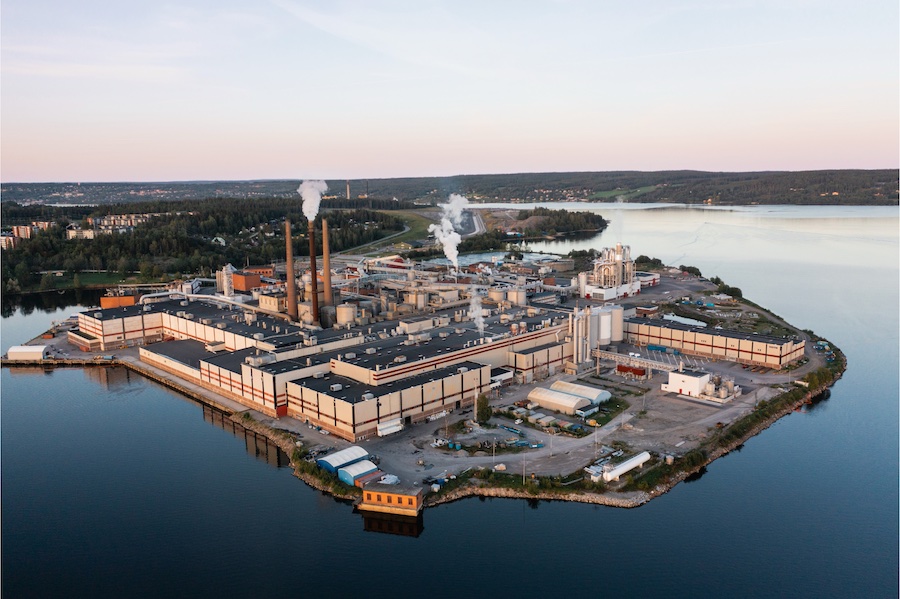
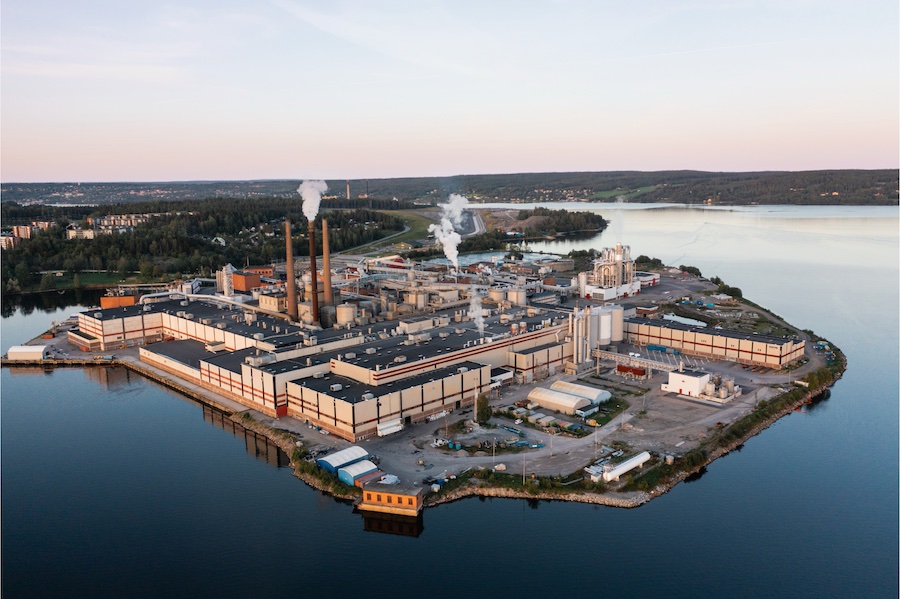
Circulose restarts commercial-scale production at Ortviken plant in Sundsvall

Circulose today announced the restart of its commercial-scale production plant at Ortviken in Sundsvall, Sweden, marking a significant step in scaling next-generation materials for the global fashion industry. The company plans to resume production of CIRCULOSE®, a recycled pulp made entirely from discarded cotton textiles, in the fourth quarter of 2026.

#Recycled Fibers

Circulose and Birla Cellulose announce partnership agreement to advance circular textiles

Circulose, a leading producer of recycled textile pulp for the fashion and textile industry, and Birla Cellulose, a global leader in sustainable viscose fiber, have signed a strategic partnership agreement to jointly accelerate textile recycling.

#Recycled Fibers

Leading fashion brands step up to unlock the next chapter of Circulose

Since 2024, under new ownership and leadership, Circulose has set a renewed strategic direction focused on securing long-term commitments with partner brands to bring CIRCULOSE® back to market at scale. This strategy has proven successful.

#Recycled Fibers

Circulose partners with Marks & Spencer to accelerate circular fashion

Circulose has announced a partnership with Marks & Spencer (M&S), making the iconic British retailer the first UK brand to join Circulose as a Scaling Partner. This milestone collaboration marks a powerful step forward in transforming how fashion is made, driving circularity from concept to scale.

More News on Recycled Fibers

#Recycling / Circular Economy

Textiles Recycling Expo 2026 to spotlight the companies turning textile circularity into industrial reality

As the textile industry faces mounting pressure to scale circular solutions, improve recycling infrastructure, and respond to evolving regulation, Textiles Recycling Expo 2026 will bring together the organisations leading that transformation in practice.

#Recycled Fibers

Lindex and BASF partner to bring textile-­to­-textile recycled polyamide to lingerie sector

Lindex has partnered with BASF’s loopamid® to accelerate textile-­to-­textile recycling and advance the shift towards more circular material solutions in the fashion industry. Together they introduce loopamid to the lingerie sector.

#ITM 2026

Uster FiberQ excels for recycled raw materials too

Uster FiberQ is a complete solution for raw material utilization, supporting spinners to achieve consistent quality and profitability every day, building further growth for the future. The Turkish company ORTA relies on FiberQ with recycled yarn for its denim production. Data-driven knowledge puts the producer in control of raw material utilization – ready to make the correct decisions for process efficiency, quality and productivity.

#Yarns

From advanced fibres to eco‑focused yarns: Yarn Expo Autumn 2026 set to welcome global industry to Shanghai

From 25 – 27 August, Yarn Expo Autumn 2026 will return to the National Exhibition and Convention Center (Shanghai) to reinforce its role as a key meeting point for the global yarn and fibre industry. With over 22,000 visitors, the previous edition gathered nearly 580 leading exhibitors from 16 countries and regions, showcasing advanced developments and creative applications that support innovative, sustainable textile design. The upcoming edition will not only present an extensive range of fibre and yarn products, but will also feature a comprehensive fringe programme, including industry forums and trend display areas, providing innovative upstream enterprises with a stage to introduce next‑generation materials and sustainable concepts.

Latest News

#ITM 2026

New Monforts systems deliver round-the-clock production for Kipaş

As a valued Monforts customer for many years, Türkiye’s Kipaş Textile has just installed a new Thermex dyeing range and a Monfortex sanforizer at its new dyeing and finishing plant in Kahramanmaraş.

#ITM 2026

SHIMA SEIKI to show complete knitting and cutting workflow at ITM 2026

Leading computerized flat knitting technology provider SHIMA SEIKI MFG., LTD. of Wakayama, Japan, together with its Turkish representative TETAS IC VE DIS TICARET A.S., will participate in the ITM 2026 International Textile Machinery Exhibition in Istanbul, Türkiye this month with a full product lineup. In addition to flat knitting machines and design software, visitors will also have the opportunity to experience the full range of SHIMA SEIKI textile machinery with its automatic cutting machine exhibit, all geared toward the fashion apparel market as well as non-apparel related businesses.

#Raw Materials

Global Cotton area and production are projected to decline in the 2026/27 Season

The June 2026 issue of Cotton This Month projects a modest contraction in global cotton area, production, and trade during the 2026/27 season, reflecting weaker demand sentiment, rising production costs, and shifting environmental factors across major producing nations.

#Natural Fibers

European Flax-Linen & Hemp step into advanced manufacturing: Enabling filament winding, 3D printing and high-performance composite processes

The Alliance for European Flax-Linen & Hemp announces a new wave of technological advancements demonstrating how flax-linen and hemp fibres are now being successfully integrated into advanced composite manufacturing processes. These developments mark a transition beyond traditional hand lay-up techniques, positioning natural fibres as credible, scalable solutions for high-performance industrial applications.

TOP