[pageLogInLogOut]

#Recycling / Circular Economy

Advanced Recycling Conference 2025 fuels innovation across key waste streams

220 global experts unite to drive breakthroughs in advanced recycling technology, infrastructure, and industry trust
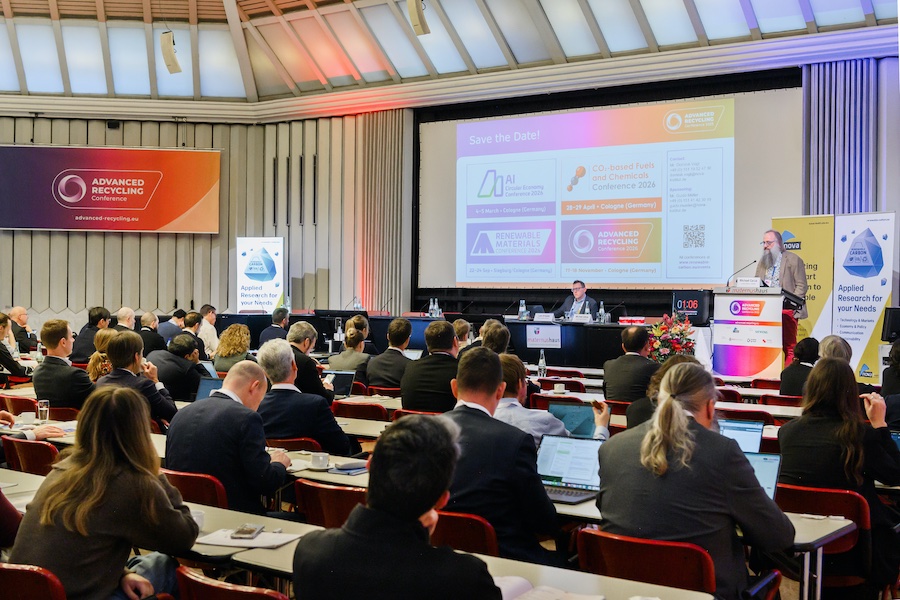
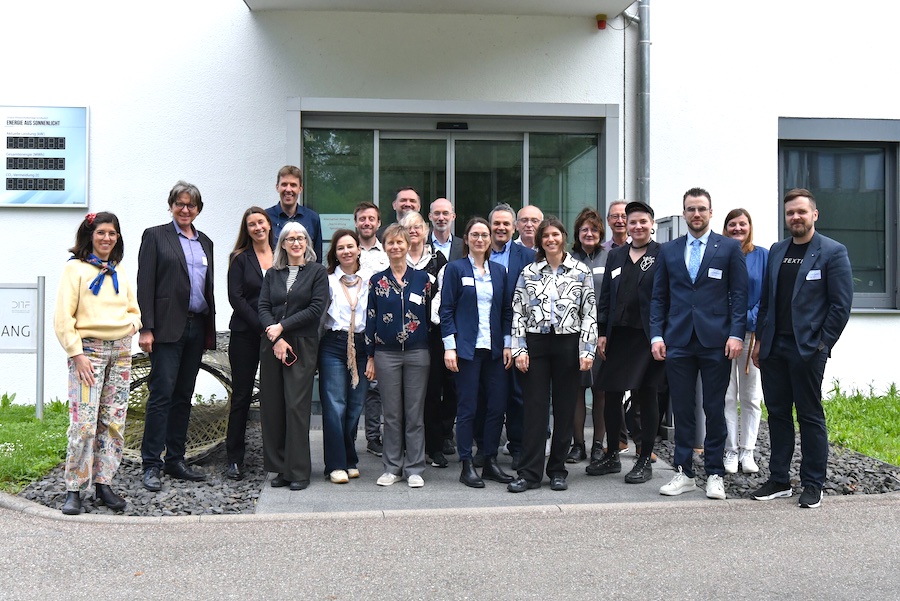
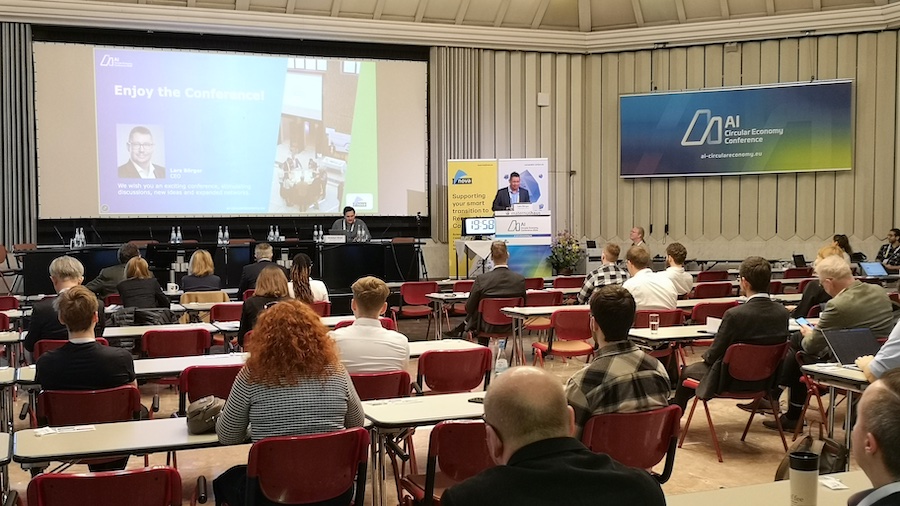
Advanced Recycling Conference 2025 audience © 2025 nova-Institut
The Advanced Recycling Conference (ARC) 2025 brought together nearly 220 experts from 28 countries to spotlight pioneering advancements and foster industry collaboration in recycling across diverse waste streams including plastics, textiles, automotive and other materials.

This year’s program emphasized how continuous improvements in core technologies, such as physical recycling through extrusion and dissolution, chemical solvolysis, biochemical enzymolysis, and thermochemical treatments like pyrolysis and gasification, are being steadily optimized. A key factor are cutting-edge digital solutions including AI-driven sorting and blockchain traceability, enabling more reliable feedstock quality and scalable circular systems amid fluctuating waste volumes and mixed material challenges.

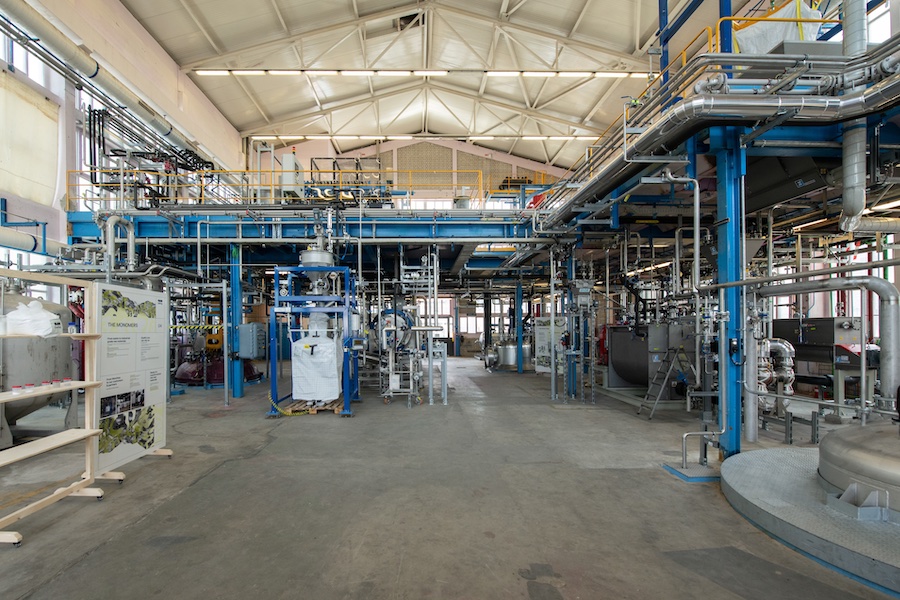
ARC 2025 also addressed the critical need for chemical recycling to regain credibility by demonstrating tangible advancements in process efficiency and transparency along the value chain. Innovative approaches in textile and automotive recycling were explored to overcome complex material blends and regulatory pressures, while integration of carbon capture and utilisation (CCU) highlighted the shift towards truly sustainable circular business models. A significant theme was the urgent need to expand recycling infrastructure to support the deployment of advanced technologies and meet regulatory targets. Extensive networking resulted in strengthened partnerships, further bolstered by a site visit to Chemiepark Knapsack, where participants witnessed industrial-scale deployment of these technologies in action

Pathway to EU targets and renewable carbon growth

By bringing together stakeholders across technology, policy, and investment spheres, ARC 2025 laid out a clear pathway for meeting ambitious EU targets, such as increasing post-consumer recycled plastics in packaging to 10-35 % by 2030 and embedding 25 % recycled content in new vehicles. These cooperative efforts aim to overcome feedstock availability, variability and infrastructure challenges, fueling growth in renewable carbon value chains and advancing the defossilisation of the chemical industry. More details and updates on future events are available at https://advanced-recycling.eu.

Partners and sponsors

The Advanced Recycling Conference is supported by visionary sponsors dedicated to advancing recycling solutions. Siemens supported the event as a gold sponsor. Buss ChemTech, Erema Group and Starlinger contributed as bronze sponsors. 

The Advanced Recycling Conference is supported by industry and trade associations, non-profit organisations, research institutions and interest groups that are thematically linked to the conference: BCNP Consultants (DE), C.A.R.M.E.N. (DE), ChemCologne (DE), Chemical Recycling Europe (EU), Chemie-Cluster Bayern (DE), CLIB (DE), IBB Netzwerk (DE), ITA - International Centre for Sustainable Textiles (DE), kunststoffland.NRW (DE), Plastics Europe (DE), Renewable Carbon Initiative (International), VinylPlus(DE).

More News from nova-Institut für politische und ökologische Innovation GmbH

More News on Recycling / Circular Economy

#Recycling / Circular Economy

Reju announces site selection for first U.S. industrial sized facility regeneration hub in Rochester, New York

Reju, the textile-to-textile regeneration company, today announced it has selected the site for its first U.S.-based industrial facility marking a significant milestone in its efforts to scale globally. This future Regeneration Hub will be in Rochester, New York, reinforcing Reju’s commitment to the adoption of circular textile system across key regions worldwide.

#Business

Canopy introduces a first-of-its-kind $2 billion USD investment blueprint to decarbonize global materials supply chains

Today, the global, solutions-driven not-for-profit Canopy joined partners at Davos to introduce a new finance model designed to accelerate the growth of low-carbon materials and transform the paper, packaging, and textile supply chains. The event was anchored by a keynote speech from Sri A Revanth Reddy, Hon’ble Chief Minister of Telangana, with India set to host the first iteration of the new investment blueprint.

#Recycled_Fibers

Borealis invests EUR 49 million in Burghausen, Germany to accelerate design for circularity

Borealis announces a EUR 49 million strategic investment to scale up production of Borstar® Nextension polypropylene (PP) at its manufacturing site in Burghausen, Germany. This will expand commercial production of next-generation single-site polypropylene (ssPP) grades that deliver enhanced purity, processability, and performance - supporting customers in key sectors including packaging, healthcare, mobility, and fibers, to meet evolving market and regulatory demands.

#Recycling / Circular Economy

From local actions to industrial innovations: SOLSTICE shares mid-project results

Since its launch in May 2024, the SOLSTICE project is accelerating the transition from linear models to circular regional ecosystems in the textile industry, focusing on four key territories: Grenoble-Alpes Métropole (France), Berlin (Germany), Prato (Italy), and Catalonia (Spain). By mid-project, SOLSTICE has already revealed both regional disparities and promising solutions to strengthen textile repair, reuse, and recycling infrastructure.

Latest News

#Fabrics

MUNICH FABRIC START: Between Attitude and Sensuality

The future begins where we reimagine it. After seasons of restraint, Spring.Summer 27 marks a conscious counter-trend: optimism, sensuality, and creative freedom are replacing pragmatism and neutrality. Physical presence and individuality are regaining importance – as a response to uncertainty, exhaustion, and algorithmic predictability. The overarching theme of PLEASURE stands for fashion as an emotional space, as an expression of attitude and cultural reflection. Colours, surfaces, and materials become vehicles for self-confidence and joie de vivre.

#Denim

organIQ seek: smart alternative to potassium permanganate

CHT Group announces new technical findings within its organIQ seek platform that significantly advance the transition toward permanganate-free denim bleaching. Through extensive industrial testing and application research, CHT confirms that organIQ seek can now be used with remarkable effectiveness as a substitute for potassium permanganate in spray bleach, while remaining aligned with sustainability expectations and cost realities in the European market. At the COLOMBIATEX in Medellín as well as at the Exintex in Puebla and the Kingpins Show in Amsterdam the CHT Group will present organIQ seek as an alternative to potassium permanganate.

#Functional Fabrics

PERFORMANCE DAYS: Focus topic shifts to the beginning of the value chain

Following the last Focus Topic in October 2025, which placed Textile-to-Textile Recycling at its core, PERFORMANCE DAYS continues to drive the conversation around circularity – this time with an expanded and more upstream perspective. The upcoming Focus Topic, “Textile to Textile: The Role of Collectors and Sorters,” presented during the spring edition on March 18–19, will spotlight one of the most essential yet often overlooked components of a functioning circular textile system: the efficient collection and sorting of post-consumer textiles.

#Knitting & Hosiery

Proven performance, optimised costs – the new RE 6 EL

Nowadays textile companies increasingly need to produce small production runs and respond to market changes with instantaneous pattern changes in order to operate profitably – meaning they require machines that offer maximum flexibility, reliability and cost efficiency. KARL MAYER understands the challenges of the market and is launching its new RE 6 EL. The Raschel machine offers the core strengths of the classic RSE 6 EL and essentially the same performance parameters, but has been further cost-optimised largely due to local production advantages. This makes the newcomer an efficiency champion in production, especially when it comes to frequent pattern changes.

TOP