[pageLogInLogOut]

#Recycling / Circular Economy

Advanced Recycling Conference 2025: From industry crossroads to circularity
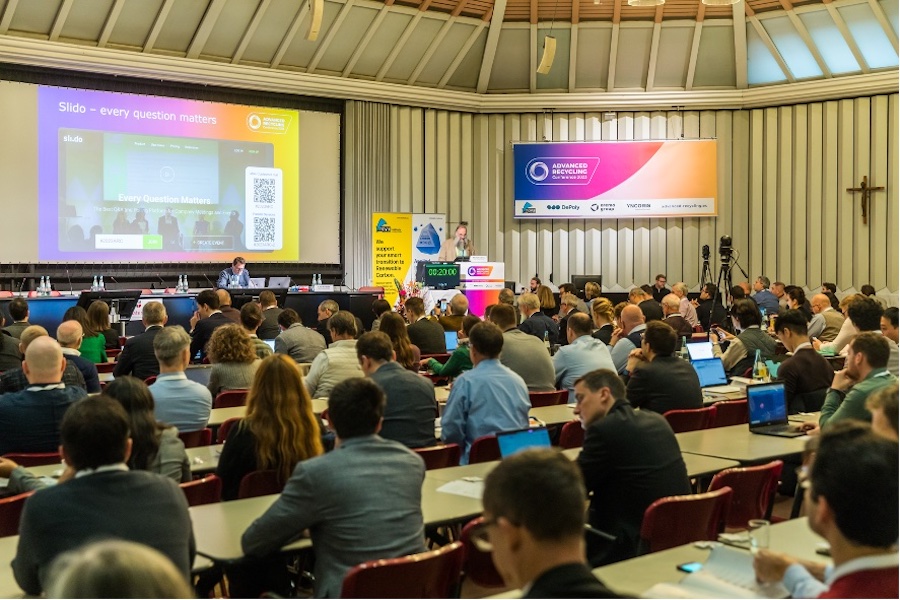
Alongside core-topics like plastics and polymer recycling, this year’s program explores new developments in biochemical, textile and automotive recycling, plus digital tools supporting scalable solutions for circular systems.
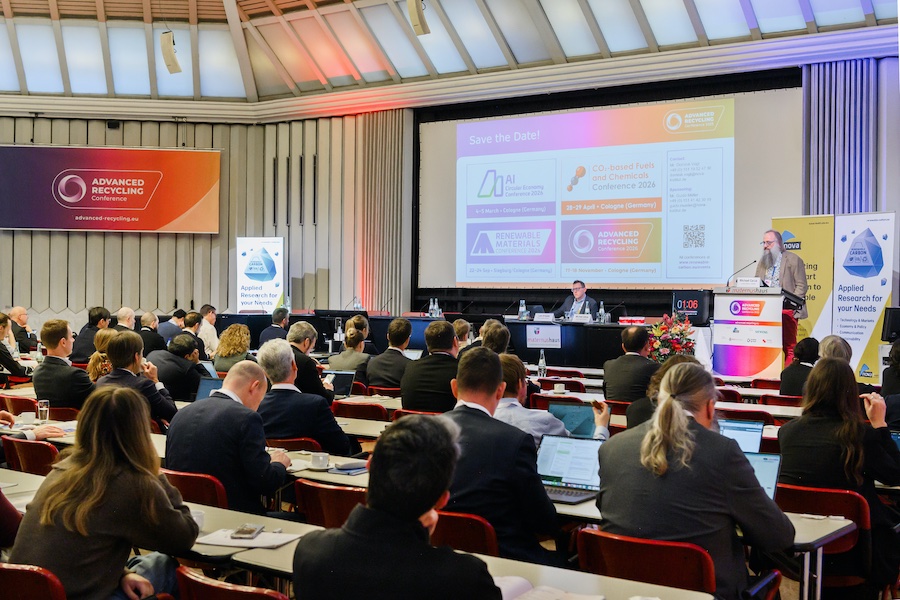
Advanced Recycling Conference audience © 2025 nova-Institut


On 19-20 November 2025, the Advanced Recycling Conference (ARC) in Cologne, Germany, once more unites industry leaders, technology providers, researchers, innovators, and policy-makers to address urgent recycling challenges in various waste-streams. Alongside core-topics like plastics and polymer recycling, this year’s event places strong emphasis on pollution-intensive sectors like textile and automotive, that pose significant environmental problems due to their complex material streams. While textile recycling rates in the EU remain below 20 %, hindered by difficult fibre blends, automotive plastics und rubbers face regulatory pressure and material complexity under the End-of-Life Vehicle Directive.

To address these challenges, ARC 2025 spotlights four new focus areas: biochemical recycling, textile and automotive recycling, and advanced digital tools such as AI-enabled sorting, traceability systems, and process optimisation for scale up. These solutions complement established recycling methods across physical processes (extrusion, dissolution), chemical recycling (solvolysis), and thermochemical techniques (pyrolysis, thermal depolymerisation, gasification), as well as carbon capture and utilisation (CCU), that remain key-elements of the ARC program.

At ARC 2025, attendees will gain valuable insights into the latest technological developments, regulatory frameworks, and market conditions shaping the future of advanced recycling and the circular economy. Putting partnership at centre, the event facilitates collaboration and informed decision-making across sectors and industries, proving that sometimes success is only a handshake away.

Responding to EU recycling targets and industry needs

The conference comes at a critical time when significant changes in recycling target across several legislations are taking place. For example, the Packaging and Packaging Waste Regulation introduced quotas for 2030 of recycled post-consumer plastic ranging from 10% to 35% for different packaging plastics which should be increased by 2040. Moreover, the End-of-Life Vehicle Proposal includes a mandate for a minimum of 25% recycled plastic in new vehicles, which, if approved, can considerably increase the demand of recycled post-consumer plastic. Meeting these targets demands the deployment and implementation of innovative recycling technologies and expansion of necessary infrastructure. The event will therefore also address regulatory impacts, market dynamics, and environmental considerations.

Full conference programme now available

Packed with international expertise, ARC 2025 features experts from a broad range of sectors and industries, e.g., BASF, Covestro, Evonik, Fluor, Green Dot, ISCC, LEGO, LyondellBasell, NFIA, Siemens, Sulzer, Trinseo, Vaude, but also research and academic institutions like Chalmers University of Technology, Fraunhofer IVV, Research Centre Jülich, Recycario Data Science – Institut for Economic Plastics Recycling and TU Bergakademie Freiberg (Institute of Energy Process Engineering and Chemical Engineering). 

While putting a focus on plastics and polymers, the programme provides a comprehensive overview in different focus-sessions:

+ Advanced Recycling as a Pillar of Renewable Carbon and its Challenges

+ Thermochemical Recycling

+ Biochemical Recycling

+ Textile Sorting and Recycling

+ From Py-Oil Quality to Valuable Resources and the Chain of Custody in Advanced Recycling

+ Recycling Solutions for End-of-Life Vehicles (ELV)

+ Sustainable Polymers

+ Thermochemical Solutions for the Recovery of Valuable Resources and Energy

+ Physical Recycling via Dissolution

The full conference program is available at https://advanced-recycling.eu/program/ 
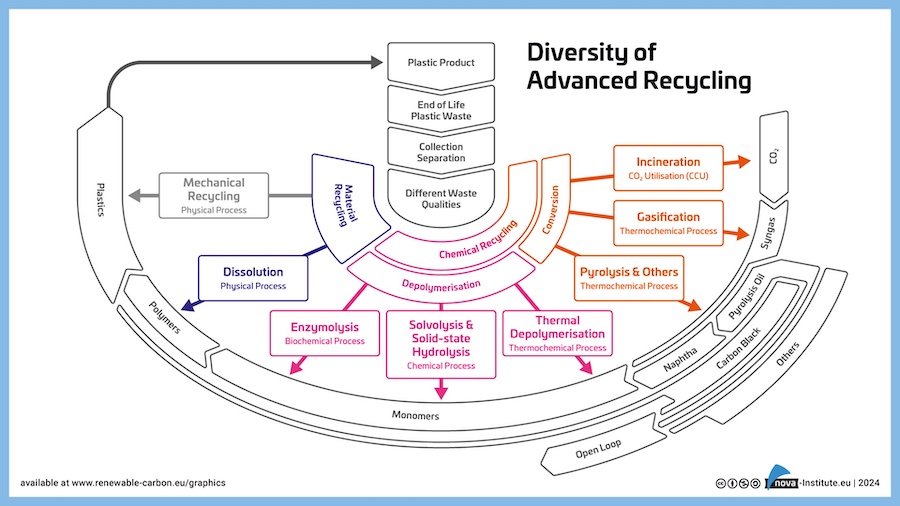
© 2025 nova-Institut


The Advanced Recycling Conference provides a unique platform for technology providers, waste management companies, brands, investors, policymakers, and scientists to exchange knowledge, build partnerships, and advance towards circular value chains.

ARC 2025 is supported by visionary sponsors, dedicated to advancing circular solutions. nova-Institute thanks Gold Sponsor Siemens and Bronze sponsors BUSS ChemTech, Erema Group and Starlinger. 

The Advanced Recycling Conference is supported by industry and trade associations, non- profit organisations, research institutions and interest groups that are thematically linked to the conference: BCNP Consultants (DE), C.A.R.M.E.N. (DE), ChemCologne (DE), Chemical Recycling Europe (EU), Chemie-Cluster Bayern (DE), CLIB (DE), IBB Netzwerk (DE), ITA - International Centre for Sustainable Textiles (DE), kunststoffland.NRW (DE), Plastics Europe (DE), Renewable Carbon Initiative (International). 

For detailed information and registration, visit https://advanced-recycling.eu/ 


More News from nova-Institut für politische und ökologische Innovation GmbH

#Man-Made Fibers

The updated poster on biodegradable Polymers in various environments has been released

As part of the PerPlacsBio project, nova-Institute has updated its popular poster on the biodegradability of polymers in different environments. The updated version reflects current standards, certifications and the latest scientific findings. The poster can be used to assess biodegradable alternatives for use in agriculture and forestry, and it is now available in German for the first time.

#Recycling / Circular Economy

Advanced Recycling Conference 2026 to showcase innovations – Call for abstracts

The call for abstracts is now open for the Advanced Recycling Conference (ARC) 2026, taking place on 17–18 November 2026 in Cologne, Germany, and online. Europe’s leading platform for advanced recycling brings together hands-on solutions and cutting-edge research on recycling technologies for various waste streams like plastics, polymers, textiles or automotive, highlighting progress towards a circular renewable carbon economy.

#Recycling / Circular Economy

AI Circular Economy Conference 2026 fuels innovation at the intersection of AI and Circular Economy

The AI Circular Economy Conference 2026, organised by nova-Institute, brought together 116 participants from 15 countries in Cologne and online to explore the transformation of the chemical and materials industry supported and accelerated by artificial intelligence. During the two-day event, leading experts from industry, research, start-ups and the investment community discussed how AI can maximise the potential of renewable carbon creating efficient circular value chains. The conference featured 24 presentations and multiple panel discussions, highlighting the growing convergence of digital technologies and circular material systems. It demonstrated how artificial intelligence is progressing from the experimental stage to real industrial implementation within the circular economy.

#Research & Development

Pioneer of the first hour: Michael Carus steps down after more than 30 years from nova-Institute’s Management

After more than three decades at the helm, founder and CEO Michael Carus is set to step down as head of the Renewable Carbon division on 1 March 2026. Lars Börger as the new CEO, will take over this key position of the nova-Institute together with COO Linda Engel, while Carus will remain with the research and consulting company as a senior advisor and shareholder. This change takes place after a one-year transition phase, as planned.

More News on Recycling / Circular Economy

#Recycling / Circular Economy

Managed workwear services are providing a blueprint for the circular textile economy

Managed workwear service providers are demonstrating how commercial success and circularity can go hand in hand by extending garment lifespans through repair, laundering, reuse and recycling, according to “Managed workwear services—a circular textile economy ahead of the game”, a new 14‑page report from the global business information company Textiles Intelligence.

#Recycling / Circular Economy

Eco-design as the foundation of circular textiles

Based on the results of an extensive European analysis, the Erasmus+ project Skills4Circularity is currently developing three practice-based training modules covering recycling technologies, eco-design for the circular economy and sustainable manufacturing. This was preceded by a comprehensive company survey and a joint analysis conducted by the project partners under the leadership of IVGT. The results show that the greatest challenges lie not so much in a lack of technology as in skills gaps.

#Recycled Fibers

Usha Yarns secures growth equity investment from Fullerton Carbon Action Fund

Usha Yarns Limited (“Usha Yarns”), a producer of high-quality recycled yarns with advanced, well established production processes, announced a growth equity investment from the Fullerton Carbon Action Fund (“Fullerton”), a private equity strategy managed by Fullerton Fund Management that backs established mid-market companies across Emerging Asia to accelerate decarbonisation.

#Recycling / Circular Economy

German 'ZOLL' turns end-of-life uniforms into valuable raw materials

Together with CWS Workwear, the German Customs Administration is extending the life cycle of service uniforms through reuse, recycling and material recovery, demonstrating how circular economy principles can be successfully implemented in the public sector while delivering significant savings.

Latest News

#Weaving

More patterns, less effort: the MULTI-MATIC® at Rohleder

Rohleder is one of Europe’s most modern weaving mills. For over 80 years, the family-owned company has been developing and manufacturing premium fabrics for brands, retailers and private customers – 100% Made in Germany. This success is made possible by a consistent focus on design, quality, and functionality, as well as by continuous investment in state-of-the-art production facilities. Rohleder also relies on innovative technologies in warp preparation and has been collaborating with KARL MAYER for many years. As recently as 2023, a MULTI-MATIC® was delivered to the company’s headquarters in Konradsreuth.

#Nonwovens

BASF opens global diaper and superabsorbents performance lab in Mumbai

BASF has officially inaugurated its new Performance Lab for diapers and superabsorbents (SAP) in Mumbai on August 18, 2026, which will provide technical and application services to superabsorbent customers globally. The new lab of BASF’s Hygiene Solutions business has been established in less than a year and is part of BASF’s Innovation Campus Asia Pacific in Mumbai, BASF’s second largest R&D site in Asia Pacific established in 2017 under BASF Chemicals India Private Limited.

#Recycled Fibers

Naia™ from Eastman strengthens western hemisphere textile connections at Apparel Sourcing Show Guatemala

As brands and retailers explore more diversified and responsive sourcing networks, the Naia™ brand from Eastman is strengthening its engagement with the textile and apparel value chain across the western hemisphere. From August 18–20, the company will participate for the first time in Apparel Sourcing Show Guatemala, a regional meeting point for apparel sourcing, manufacturing and nearshoring.

#Man-Made Fibers

Dornbirn GFC 2026 expands conference program with new thematic sessions

For 65 years, Dornbirn GFC has stood for innovation and is one of the world’s leading conferences in the fiber industry. From September 16 to 18, 2026, the international fiber community will meet in Dornbirn, Austria, to discuss current trends, technological developments, and forward-looking solutions. More than 600 experts from industry and academia from over 30 countries are expected to attend. With around 100 presentations by renowned speakers, a 2,5-day conference program, and three parallel presentation rooms with moderated sessions, Dornbirn GFC provides a first-class platform for knowledge exchange, networking, and international collaboration. Together, participants will generate ideas and impulses that will sustainably shape the future of the global fiber industry.

TOP