[pageLogInLogOut]

#Natural Fibers

Cotton made in Africa launches public consultation for standard revision
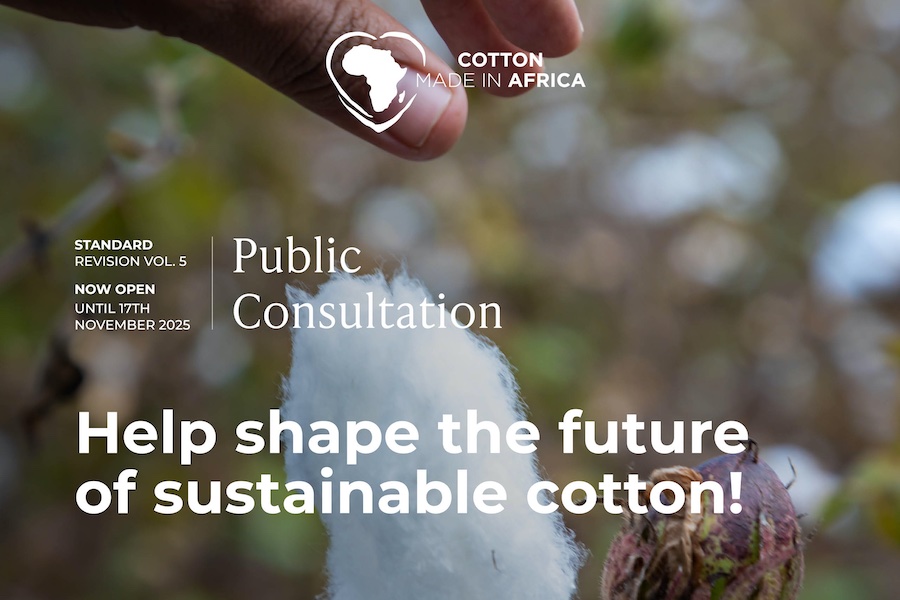
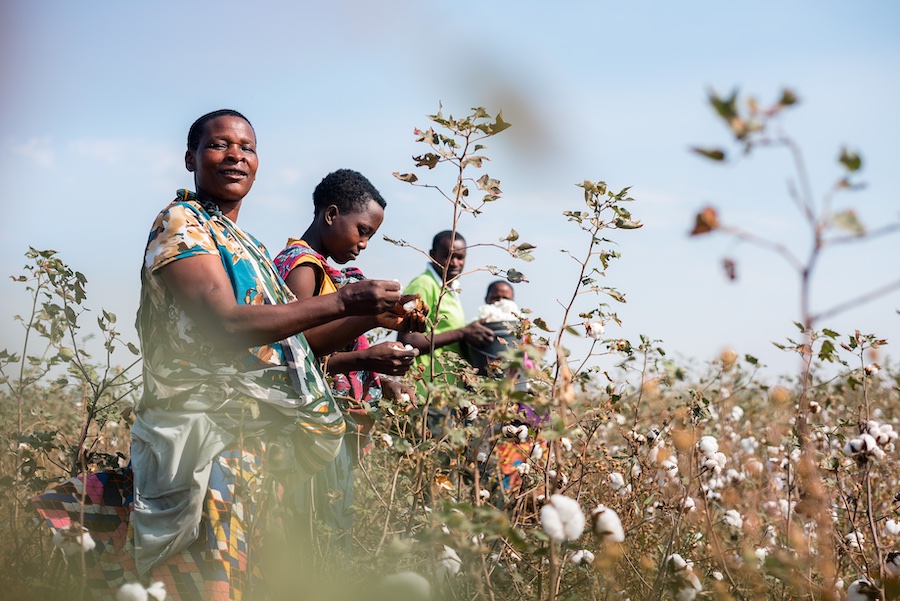
The Aid by Trade Foundation (AbTF) is opening public consultation on its Cotton made in Africa standard today. Interested parties will have 60 days to provide feedback, helping shape the future of one of the world’s largest standards for sustainable cotton. The latest update to the standard, Version 5.0, focusses on increasing Cotton made in Africa’s effectiveness and adapting its criteria and indicators to external factors, which currently include biodiversity loss and a growing set of reporting requirements for companies.
© 2025 Cotton made in Afrika


Public consultation launched on revision of the Cotton made in Africa standard

The public consultation on the draft of CmiA Standard Vol. 5.0 will run from 19 September to 17 November 2025. This revision revolves around three elements in particular. The first is precision, with indicators being reduced in number and reformulated to be more concise and easier to understand. Secondly, the standard’s objectives are being reprioritised, for instance, through new or reformulated indicators that strengthen biodiversity, climate change resilience, or cooperation between cotton companies and farmers. The third point of focus is to ensure that indicators for human rights and risk management meet the increasingly strict requirements regarding due diligence and corporate sustainability reporting. 

“Having received valuable feedback on CmiA Standard Version 4.0 from partners and stakeholders in recent months, we look forward to hearing the public response to our draft of Version 5.0,” says Alexandra Perschau, the head of the Standards & Outreach Department of AbTF, adding, “If this topic interests you, this is an excellent opportunity to actively participate in shaping our approach to supporting small-scale farmers producing cotton in Africa, to protecting biodiversity, and to giving companies access to the sustainable resources they need to fulfil their due diligence obligations.”

How the revision process works

The revision of the standard started in the spring of this year, with a two-day workshop in which partners and stakeholders in Côte d’Ivoire provided important input. Also taken into account were verification results from the last few years as well as additional findings from monitoring and evaluation processes and from innovations in sustainable cotton cultivation. After receiving feedback from the public consultation and from the technical advisory group, the approval of the AbTF Board of Trustees will be sought; if granted, Version 5.0 will enter into force in 2026.

How to participate

Public interest groups are invited to provide online feedback on the draft of CmiA Standard Vol. 5.0 between 19 September and 17 November 2025. A copy of the draft can be downloaded here. General feedback can be sent to standards@abt-foundation.org. To provide detailed feedback on specific standard requirements, an Excel version of CmiA Standard Vol. 5 is available through the online platform indicated above.

https://cottonmadeinafrica.org/en/standard-revision/

More News from Cotton made in Africa (CmiA)

#Natural Fibers

Human Rights Day: Cotton made in Africa reinforces its commitment to ensuring respect for human rights in cotton production

The sustainable cotton standard Cotton made in Africa (CmiA) has always focussed on respect for human rights, including by prohibiting child labour and discrimination. With the new version of the CmiA standard coming into force, AbTF raises requirements for due diligence in the areas of human rights and risk management.

#Raw Materials

EUR 2.8 million project for climate-resilient agriculture in Africa

Healthy soils, responsible water use, and biodiversity conservation are central to the efforts of the Aid by Trade Foundation (AbTF) to make African cotton production more resilient to climate change. AbTF has opened new doors for small-scale farming families in Africa through a EUR 2.8 million project for climate-resilient cotton cultivation. Over the last three years, more than 100,000 farmers in Africa were involved in testing various soil improvement measures, with encouraging results: yields on demonstration sites increased significantly, despite the effects of climate change.

#Raw Materials

Cotton farmers in Benin benefit from organic cotton cultivation

Launched three years ago with EUR 1 million in total volume, a project called “Growing Benin’s Organic Cotton Sector” aimed to support small-scale farmers in transitioning to organic cotton cultivation in accordance with the Cotton made in Africa Organic standard, to avoid the use of synthetic pesticides, and to further develop the organic cotton sector, thereby securing the future of farming communities. The project has proved a success as participating cotton farmers are benefiting from higher incomes.

#Raw Materials

Cotton made in Africa supports the development of West African textile production in Benin

The West African country of Benin is well on its way to establishing itself as a new procurement and production hub for textiles and clothing; these efforts include having locally produced cotton made into textiles for the global market. The Aid by Trade Foundation (AbTF) is supporting this development through Cotton made in Africa (CmiA), one of its sustainability standards, which not only provides a sustainable and local basis for textile production but also facilitates access to international markets. Recently, a delegation of AbTF visited the CmiA project country of Benin for a first-hand look at the progress being made.

More News on Natural Fibers

#Raw Materials

Beyond the wardrobe – innovative cotton takes the spotlight

Cotton can do more – a lot more. Cutting-edge textiles and high-tech products made from 100% cotton prove just how powerfully performance and sustainability can come together. That very surge of innovation is front and centre at the 38th Bremen Cotton Conference, taking place March 25–27, 2026, at Bremen’s Parliament on the historic market square – culminating in a bold and dedicated closing session on Friday. In the spotlight: performance upgrades for pure cotton, smart strategies for circular textile waste solutions, and pioneering concepts for demanding technical applications. From natural fibre–reinforced composites to highly effective flame-retardant solutions, cotton steps out of the closet and shows the future potential woven into every fibre.

#Spinning

Measure and control the fiber – optimize yarn quality

Producing consistent yarn quality is an everyday challenge – and a very difficult one. Detailed knowledge and understanding of the fiber raw material is absolutely critical to achieving the best possible quality in the yarn. To help spinners, Uster experts have put together guidelines for avoiding yarn irregularity claims, in a special edition of the Uster News Bulletin.

#Raw Materials

Esquel Group adds two new extra-long staple cotton varieties approved

Esquel Group’s Xinjiang Research & Development Center has successfully developed two new Sea Island cotton (Extra-Long-Staple cotton, ELS cotton) varieties named “Yuan Loong 37” and “Yuan Loong 42,” which have been officially approved and granted registration numbers. Both varieties have also obtained Plant Variety Rights certificates, marking another significant breakthrough for the Group in cotton breeding and commercial application.

#Raw Materials

Aid by Trade Foundation reaches new milestones in supply chain transparency

The Aid by Trade Foundation (AbTF) is reaching new milestones as it leads the way towards greater physical traceability for Cotton made in Africa® (CmiA) cotton. With around 700 suppliers and producers in a total of 25 countries, the Aid by Trade Foundation has reached a new record number of partners who can trace CmiA cotton from the product back to its origin. This is more than double the previous year’s figure.

Latest News

#Composites

JEC World 2026 returns with an unprecedented content program

Recognized worldwide as the leading trade exhibition for composite materials and their applications, JEC World returns on March 10-12, 2026, at Paris Nord Villepinte as the most ambitious edition to date, in line with its motto “Pushing the limits”. As the must-attend event for the composites industry, JEC World will offer an unprecedented program, blending conferences, markets insights, technical sessions, awards, and above all, a unique experience and invaluable connections.

#Digital Printing

Keeping print inclusive: Empowering women in the print industry

Across all industries, cultivating a diverse and inclusive workplace is increasingly recognised as valuable and essential to long-term success. However, despite the print industry’s significant advancements in technology and innovation, visible representation of women remains limited. As the sector grapples with low recruitment, it’s important to challenge outdated perceptions. Creating real change, however, requires collective effort - no single company can do it alone.

#Texprocess 2026

Texprocess 2026: market overview for strategic future investments

At Texprocess 2026, 200 exhibitors from 28 countries will be represented. In a challenging market environment, the leading trade fair is a constant and reflects progress in textile processing – driven by automation, digitalisation and AI. In addition, international start-ups present their ideas and meet partners from industry and research. Techtextil takes place in parallel with an optimised hall layout.

#Associations

European Business Coalition welcomes provisional application of EU–Mercosur Agreement and calls for Swift and full implementation

With the European Commission’s decision to provisionally apply the EU–Mercosur Interim Trade Agreement, a process spanning more than 25 years now moves decisively into its implementation phase.

TOP