[pageLogInLogOut]

#Raw Materials

Aid by Trade Foundation reaches new milestones in supply chain transparency
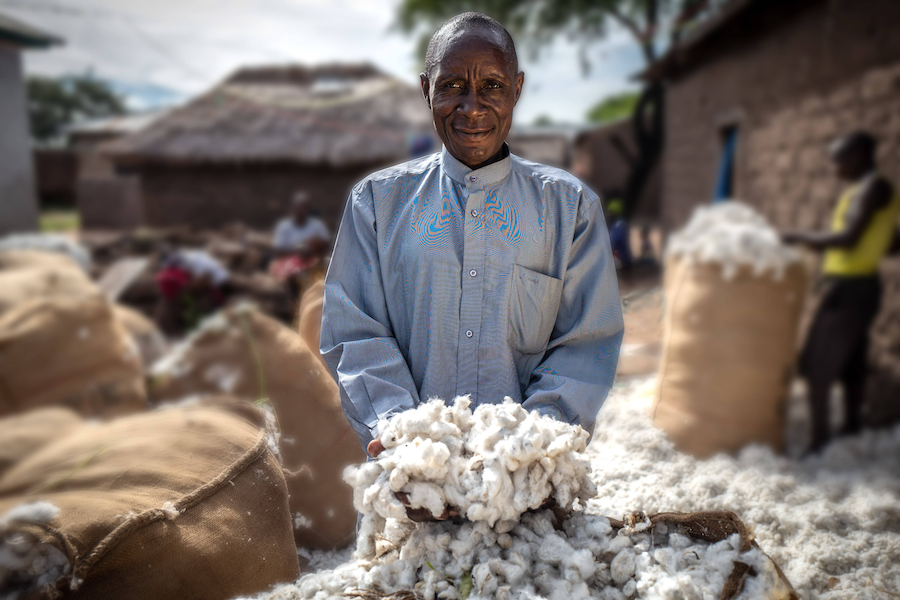
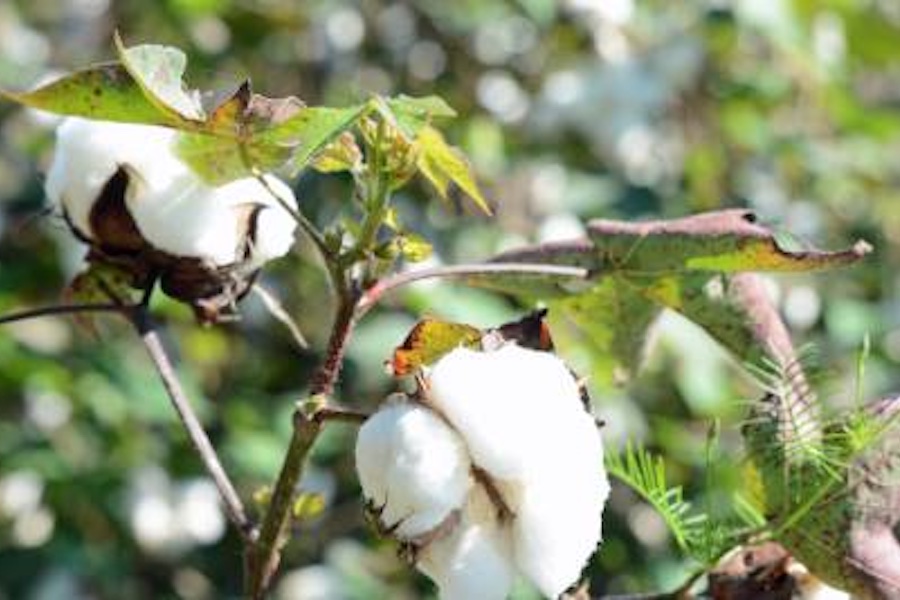
With around 700 suppliers and producers in a total of 25 countries, the Aid by Trade Foundation has reached a new record number of partners who can trace Cotton made in Africa® (CmiA) cotton from the product back to its origin. This is more than double the previous year’s figure. CmiA cotton; Credit_Martin J. Kielmann for CmiA
The Aid by Trade Foundation (AbTF) is reaching new milestones as it leads the way towards greater physical traceability for Cotton made in Africa® (CmiA) cotton. With around 700 suppliers and producers in a total of 25 countries, the Aid by Trade Foundation has reached a new record number of partners who can trace CmiA cotton from the product back to its origin. This is more than double the previous year’s figure.


“As a standards organisation, our mission is to ensure transparency throughout global supply chains,” says Tina Stridde, the managing director of the Aid by Trade Foundation, explaining, “The physical traceability of Cotton made in Africa cotton, one of the world’s leadings standards for verified cotton that respects human rights and biodiversity, is very important for textile companies and fashion brands. It ensures that social and environmental criteria are adhered to during cotton production and that their customers can make informed purchasing decisions. It also prevents greenwashing because audits create full transparency that the verified cotton is used.”

Partners—such as Bestseller, the Otto Group, OVS, Primark, and the Rewe Group—are already using the system today.

By working with the Aid by Trade Foundation, textile companies of all sizes—from fashion brands to retailers—can bring products to market with the assurance that only cotton verified under Cotton made in Africa or Cotton made in Africa Organic was used from field to shelf; the cotton can be traced from bale to yarn to fabric to textile product. This is also a way for them to meet increasing regulatory and due diligence requirements without taking legal risks.

A long-term partner, the REWE Group, sets a milestone in this respect. “We have reached our goal and were able to fully trace the Cotton made in Africa cotton used in our private label products back to its origin by the end of 2025," says Torsten Stau, Executive Buying Director Non Food / Indirect Spend REWE Group. "The transparency system of the Aid by Trade Foundation enables us to clearly prove the origin and ensure that the cotton comes from African small-scale farmers who produce under recognized social and environmental standards. In this way, we are further increasing transparency along the entire supply chain, strengthen customer trust, and at the same time make a direct contribution to supporting the people in cultivation.”

Working closely with supply chain partners is key to credibility.

To ensure physical traceability, the Aid by Trade Foundation works closely with suppliers and producers worldwide. This collaboration is built on a solid foundation: the Hard Identity Preserved (HIP) chain of custody model, which has proved its worth since its introduction in 2008. The HIP system allows cotton to be consistently and reliably traced back from the finished textile to its origin. Because it applies in all cotton-producing countries in which AbTF is active, rather than just in a limited selection of regions, the system achieves attractive figures. To date, around 33,000 tonnes of physically traceable CmiA cotton have been processed worldwide into some 190 million textile items. Around 700 spinning mills as well as fabric and textile producers from a total of 25 countries are currently operating in accordance with its requirements—and these numbers continue to grow. These companies can reliably ensure traceability for Cotton made in Africa and Cotton made in Africa Organic verified cotton.

As of March 2026, the Transparency Standard is mandatory.

For all partners who want to prove that their products contain CmiA cotton, the Transparency Standard will be mandatory starting in March 2026. Introduced in the spring of last year, it offers an extended security portfolio that encompasses digital transaction documents (DTDs) as well as risk-based desktop audits, which are carried out by independent and ISO-accredited audit companies. Thanks to the Transparency Standard’s successful introduction, the Aid by Trade Foundation plans to make it available for cashmere fibres verified under The Good Cashmere Standard® starting in 2027.



More News from Aid by Trade Foundation (AbTF)

#Natural Fibers

Cashmere producers stress the importance of The Good Cashmere Standard®

At the invitation of the Aid by Trade Foundation (AbTF), over 70 experts from the cashmere production and supply chain, as well as other specialists, met at the GCS Unit Meeting in Shanghai, China to discuss the progress and new objectives of The Good Cashmere Standard (GCS). The meeting focused on implementation and verification of the standard, important aspects of animal welfare and the importance of the standard in the global textile market.

#Natural Fibers

Aid by Trade Foundation publishes 2024 annual report: Growing impact for environment and people

The Aid by Trade Foundation (AbTF) is on a growth track. Despite a challenging global economy, AbTF increased its income by six percent from 2023 to 2024, reaching a total of EUR 8.6 million. This revenue has been invested in comprehensive measures for the sustainable production of cotton and cashmere as well as for expanded measures to ensure transparency in global value chains. In addition to gaining new partners in 2024—including big names like Mango, Nordstrom, and CWS Workwear—AbTF was able to expand its global stakeholder network active in the production of raw materials or textiles.

#Raw Materials

Aid by Trade Foundation receives Honorary Award of the German Africa Foundation 2025

On the evening of 25 June, the Hamburg-based Aid by Trade Foundation (AbTF) received the Honorary Award of the German Africa Foundation 2025. Prof. Dr Michael Otto, the foundation’s founder and a prominent entrepreneur, accepted the award at a ceremony held at the German Bundestag. The Parliamentary State Secretary to the Federal Minister for Economic Cooperation and Development (BMZ), Dr Bärbel Kofler, presented the award in the presence of guests from politics, business and civil society as well as representatives of African embassies.

#Sustainability

Aid by Trade Foundation turns 20, invests half a million Euros in new biodiversity fund

To effectively promote nature conservation and biodiversity, the Aid by Trade Foundation (AbTF) announced at the second Hamburg Sustainability Conference (HSC) that it would be investing 500,000 euros in the ‘AbTF Biodiversity Fund’ to mark the foundation's 20th anniversary. Since it was established in 2005 by the entrepreneur Prof. Dr Michael Otto, AbTF has been committed to transforming the textile and fashion industries.

More News on Raw Materials

#Raw Materials

Textile Exchange publishes cotton Life Cycle Assessment study to strengthen impact data

Textile Exchange has published the first in a series of seven Life Cycle Assessment (LCA) studies designed to improve the quality and robustness of environmental impact data for raw material production across the fashion, textile, and apparel industry. The first LCA study focuses on cotton and addresses critical data gaps and methodology variability through new high-quality data across key producing countries. The study includes organic, regenerative, recycled, and country averages for conventional cotton production systems, providing a clearer picture of the associated environmental impact.

#Raw Materials

Fashion for Good mobilises industry to adopt mass balance attribution and accelerate decarbonisation

Fashion for Good launches today the Mass Balance Demonstrator project, a collaborative industry initiative to implement and scale the mass balance attribution (MBA) chain-of-custody model for biomass-attributed PET in textile applications. The project represents a concrete step toward accelerating brand-driven decarbonisation across the apparel value chain.

#Raw Materials

The 83rd Plenary Meeting: Reports from the ICAC Secretariat

Every year, one of the most anticipated sessions at the International Cotton Advisory Committee's (ICAC) Plenary Meeting is the Reports from the Secretariat — and the 83rd edition in Bremen, Germany, did not disappoint.

#Raw Materials

A Powerful Opening: Global thought leaders launch the International Cotton Conference Bremen

The International Cotton Conference Bremen will open on 25 March 2026 in the Parliament building of the Free Hanseatic City of Bremen with a keynote session of exceptional calibre. Distinguished international experts will set the stage for the conference by offering incisive perspectives on the most pressing challenges and the defining trends shaping the future of the global cotton trade. Their insights will span a broad spectrum — from geopolitically driven disruptions affecting global supply chains to the opportunities emerging from innovation-led agriculture capable of supporting a growing world population. Together, these opening keynotes will frame the dialogue of the conference, highlighting both the complexity of today’s market environment and the pathways toward a resilient and forward-looking cotton sector.

Latest News

#Techtextil 2026

Modernizing Needling – DiloGroup at Techtextil & INDEX 2026

With the theme “Modernizing Needling”, the DiloGroup presents a comprehensively enhanced portfolio for needling technology. The objective is to further increase the performance and application range of needlefelt production lines in terms of productivity, flexibility, and the development of new products, thereby meeting the growing demands of modern technical textiles.

#Advertorial

New Gravimax MMX-R X-ray sensor platform opens up new application fields

The demands placed on quality control in web-based production processes are increasing: materials are becoming more complex, basis weights are varying more widely, and at the same time, pressure is growing to make processes more efficient and transparent. Precise measurement data across the entire web width has therefore become a key factor in ensuring stable production processes. With its new Gravimax MMX-R sensor platform, Mahlo introduces a radiometric measurement solution designed to set new standards in determining basis weight and material composition. The platform combines advanced X-ray technology with newly developed signal processing, enabling measurement tasks that previously often required multiple sensor technologies.

#Recycling / Circular Economy

Carbios confirms Longlaville plant in France following financing progress

Carbios has reaffirmed its plans to build its Longlaville plant in France within a project financing framework, targeting the start of production in the first half of 2028. The company also reports a solid cash position of around €60 million at the end of 2025 and has appointed Benoît Grenot as Deputy Chief Executive Officer to support the execution of its strategic projects.

#Composites

KARL MAYER strengthens partnerships in the composites industry at JEC World 2026

KARL MAYER further strengthened its role as a reliable and competent partner to the composites industry at JEC World 2026. The global market leader in textile machinery manufacturing used the trade show to meet key customers, establish numerous new contacts, and engage in in-depth technical discussions.

TOP