[pageLogInLogOut]

#Natural Fibers

Better Cotton joins policy hub coalition to contribute to regulatory discussions

Better Cotton, the world’s largest cotton sustainability initiative, has joined the Policy Hub, a Brussels-based coalition, to contribute to key EU policy discussions.
(c) 2025 Better Cotton


Launched in 2019, the Policy Hub fosters technical debates on emerging regulations and convenes its network to develop collaborative, consensus-based positions to influence and align on key EU policies such as the Empowering Consumers and Green Claims Directives, the Omnibus proposal, and the Eco-design for Sustainable Products Regulation.

Hélène Bohyn, Policy & Advocacy Manager at Better Cotton, said: “Amidst the current deregulation trend, the Policy Hub is a great vehicle for industry stakeholders to come together to demonstrate and keep the momentum of all the efforts that are being invested in driving the sector towards sustainability.”

As part of the coalition, Better Cotton will offer its perspective on farm-level realities, enhancing the recognition of cotton and the role of standards in supporting the transition of the textile industry towards sustainability and circularity.

Marina Prados Espínola and?Antoine?Demarche, Co-Directors at the Policy Hub, said: “We are delighted to start a new chapter of collaboration with Better Cotton, whose broad expertise in agricultural practices and?on-the-ground farm?realities will strengthen our policy efforts at the European level.”

By adding its voice to this coalition of 40+ members, Better Cotton aims to support the representation of the broader spectrum of the textile supply chain, bringing context-specific realities to the table of EU policy discussions, whilst promoting the environmental and social sustainability attributes of cotton as a natural fibre.

As part of the Policy Hub’s Advisory Group, Better Cotton will work alongside other members such as Textile Exchange, Fashion for Good, the Social and Labor Convergence Program, the Organic Cotton Accelerator and Fair Labor Association.
More News from Better Cotton

#Raw Materials

Better Cotton Initiative strengthens regenerative focus in standard update

The Better Cotton Initiative (BCI) has strengthened the regenerative focus of its field-level standard with the launch of a new version of its Principles & Criteria (P&C), which marks the next step in the organisation’s journey to becoming a regenerative standards system.

#Raw Materials

Better Cotton Initiative marks certification anniversary with progress update and accreditation

One year since becoming a certification scheme, the Better Cotton Initiative (BCI) has announced that more than 3,000 supply chain actors have been certified. At farm level, more than 30% of farms and producer units supplying BCI Cotton have received a positive audit outcome.

#Raw Materials

Better Cotton Initiative opens enrollment in the US with promising opportunities for producers

Producer enrollment for the US Program of the Better Cotton Initiative (BCI) is open until May 15 for the 2026-2027 season. With over 2,600 members spanning the cotton supply chain and more than 11,000 users of its Better Cotton Platform (BCP) as of 2025, BCI’s standard is implemented in 15 countries and covers one fifth of global cotton production.

#Natural Fibers

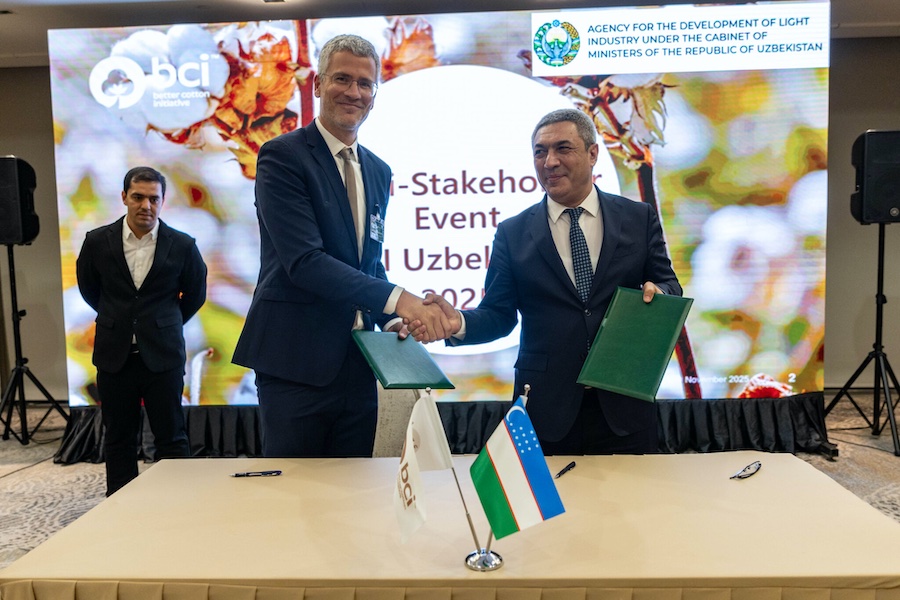
Better Cotton Initiative partners with Uzbek government agency to offset certification costs

The Better Cotton Initiative (BCI) has today announced a strategic agreement with Uzbekistan’s Light Industry Agency to increase financial support for cotton farming clusters adopting sustainable agricultural practices.

More News on Natural Fibers

#Raw Materials

New study shows low environmental impact by Cotton made in Africa Organic Cotton from Tanzania

Today, the Aid by Trade Foundation (AbTF) is announcing the results of a comprehensive life-cycle analysis (LCA) for cotton produced in Tanzania under the Cotton made in Africa Organic (CmiA Organic) standard. The study emphasises the small ecological footprint of CmiA Organic verified cotton. This can largely be traced back to the absence of synthetic pesticides, artificial fertilisers, and artificial irrigation. Consequently, CmiA Organic cotton can help the textile industry meet regulatory requirements as well as science-based targets. The results also show that the consequences of climate change threaten the livelihoods of these cotton farmers, even though the type of agriculture they practise barely contributes to climate change.

#Natural Fibers

Global Standard gGmbH launches second public consultation for GRTS Draft 2 for the textile industry (1–30 April 2026)

Global Standard gGmbH is pleased to announce the release of Draft 2 of the Global Responsible Textile Standard (GRTS) for its second public consultation. The consultation will be open from 1 April 2026 to 30 April 2026, inviting stakeholders across the textile and apparel value chain to provide input and contribute to the further development of this new Standard.

#Raw Materials

Global production expected to decline in 2026/27 as policy shifts and weak demand reshape trade

Early projections for the 2026/27 season indicate that global cotton lint production will decline by 4% to 24.9 million tonnes, while world consumption is expected to remain stable at approximately 25 million tonnes, according to the April 2026 issue of Cotton This Month.

#Raw Materials

Textile Exchange publishes cotton Life Cycle Assessment study to strengthen impact data

Textile Exchange has published the first in a series of seven Life Cycle Assessment (LCA) studies designed to improve the quality and robustness of environmental impact data for raw material production across the fashion, textile, and apparel industry. The first LCA study focuses on cotton and addresses critical data gaps and methodology variability through new high-quality data across key producing countries. The study includes organic, regenerative, recycled, and country averages for conventional cotton production systems, providing a clearer picture of the associated environmental impact.

Latest News

#Denim

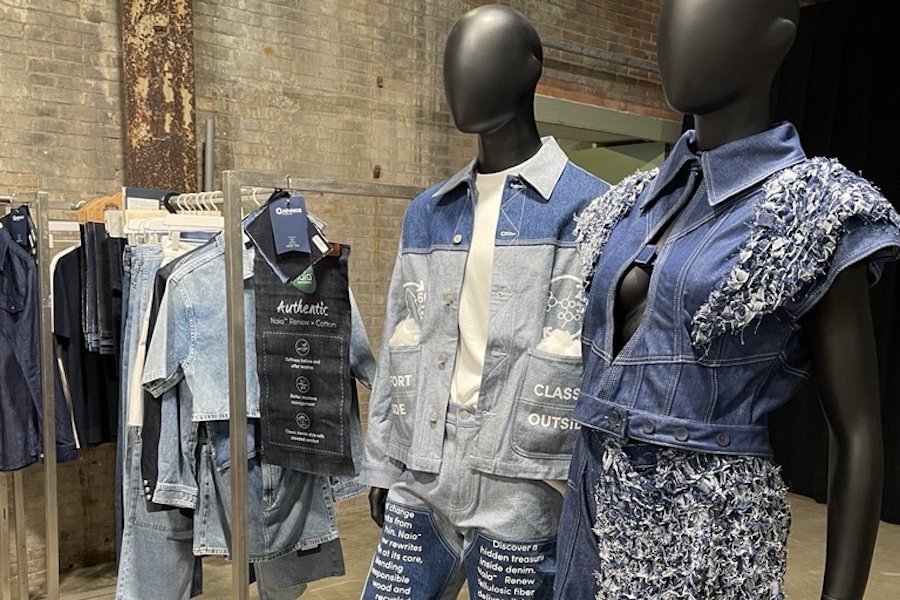
Eastman Naia™ debuts at Kingpins Amsterdam, transforming Denim from the inside out

At Kingpins Amsterdam (April 15–16, 2026), Naia™ by Eastman Chemical Company makes its debut, presenting its approach to circularity and comfort in denim at Stand 1, Ground Level (Blue Area). The brand also highlights its growing global ecosystem, connecting mill partners, designers and brands working to expand denim possibilities through fiber innovation.

#Denim

ISKO introduces a new chapter of denim innovation at Kingpins Amsterdam with FW 27/28

At Kingpins Amsterdam, ISKO presents its latest FW27/28 collection, a forward-looking exploration of denim that merges advanced color technologies, innovative fabric engineering, and contemporary finishing techniques. Designed to meet the evolving demands of the industry, the collection reflects ISKO’s commitment to pushing the boundaries of authenticity, performance, and responsible innovation, while also embracing a strong lifestyle perspective.

#Techtextil 2026

Asahi Kasei Advance to showcase high-performance non-woven and fibers at Techtextil 2026

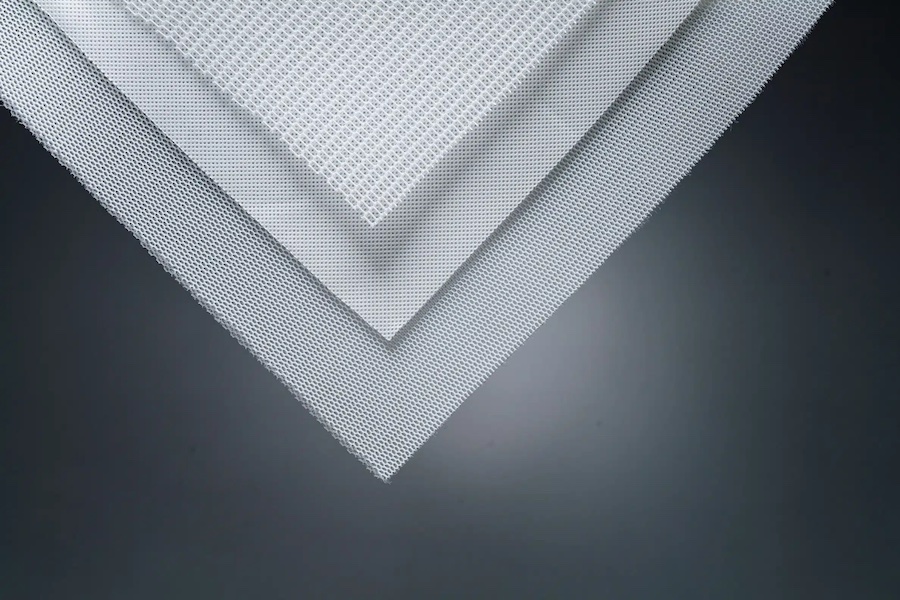
Asahi Kasei Advance will present its portfolio of high-performance nonwovens, flame-retardant fabrics, and advanced textile and fiber solutions designed for various industries during its first-ever exhibition at Techtextil 2026. Techtextil is the leading international trade show for technical textiles and nonwovens, taking place from April 21-24, 2026, in Frankfurt, Germany. Asahi Kasei Advance will highlight 14 brands, with special focus on four key materials as its debut at the exhibition in Hall 12.1 at booth C35.

#Texprocess 2026

VEIT Group presents product highlights and innovations at Texprocess 2026

At Texprocess 2026 in Frankfurt am Main (April 21–24, Hall 8.0, Stand A18), the VEIT Group presents its latest solutions and product highlights for the industrial production of clothing and the processing of technical textiles. The focus is on efficient technologies for ironing, pressing, fusing, laminating and textile refinishing processes, covering applications from the apparel industry through to technical textiles as well as interior and automotive sectors.

TOP