[pageLogInLogOut]

#Europe

Level playing field at stake: Europe’s textile industry demands decisive action
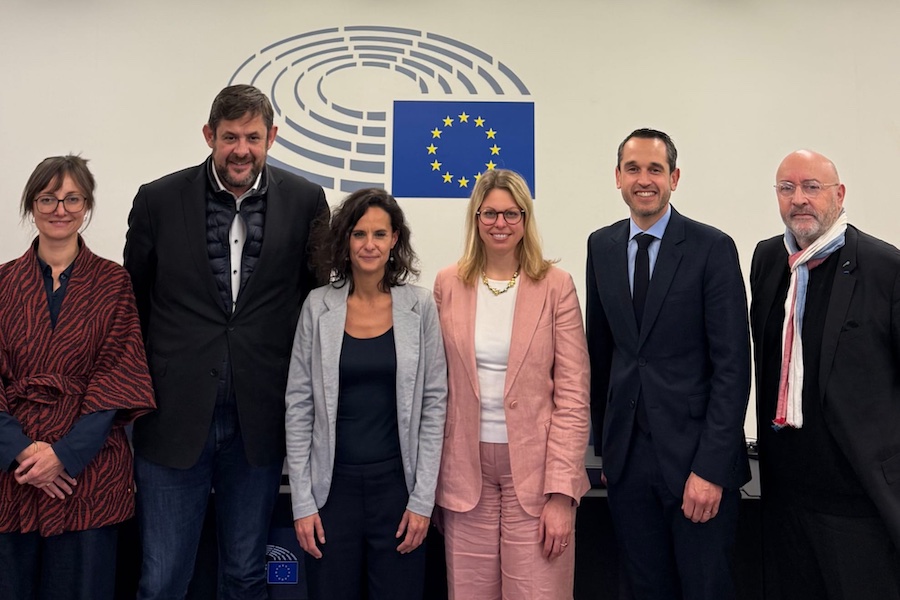
Yesterday’s event in the European Parliament, hosted by MEPs Pierre Jouvet and François Kalfon. © 2025 EURATEX
Yesterday, the European Parliament took a welcomed and necessary step by voting a resolution calling for stronger market surveillance, reinforced customs controls and faster enforcement of the Digital Services Act in case of infringements. For Europe’s textile and clothing manufacturers, this is the first political acknowledgement that the system is broken — and that enforcement must finally match the scale of the problem.


This breakthrough follows months of intense mobilisation by EURATEX and its members: the Declaration against ultra fast-fashion in Paris during Première Vision, the joint industry call for a fair and safe e-commerce environment, and various high-level meetings with Commission officials (joined by consumers, trade unions and retailers). Awareness has risen sharply — in the media, in national capitals, in Brussels. 

But even as momentum builds, we are witnessing developments that risk undoing everything. National postal operators in countries such as Poland, France and Italy are now entering into partnerships with platforms like Temu, pledging to accelerate the delivery of precisely those parcels that escape EU rules and undermine compliant European businesses and put consumers at risk by undermining well established rules to protect exactly those customers from harm. 

These moves do not just contradict the political direction set by the Parliament — they actively widen the loopholes that Europe is trying to close. EURATEX warns that Europe is reaching a point of no return. In the first half of 2025, textile production fell by 1.9%, clothing production by 5%. Employment is shrinking — down 4–5% in textiles, 3% in clothing — while imports are surging: +7.7% for textiles, +12.3% for clothing. European exports, meanwhile, are in decline. This competitive imbalance is not a trend; it is a structural threat. 

If Member States and EU institutions do not act now — decisively and coherently — Europe’s own standards will become meaningless, and a vital industrial ecosystem will fade. The solution is straightforward and overdue: we expect to end the de minimis exemption, the application of customs, VAT and safety rules to all, the enforcement of the DSA with speed to stop giving foreign ultra-fast fashion players a free pass. The forthcoming ECOFIN meeting of 12 December should be an important milestone in this process. 

This was also EURATEX’ message at yesterday’s event in the European Parliament, hosted by MEPs Pierre Jouvet and François Kalfon: the absence of a level playing field, exploding imports from ultra-fast fashion platforms, unsafe and non-compliant products circulating freely, and the loopholes — especially the de minimis exemption — that allow millions of parcels to enter the EU every day without any meaningful customs or VAT controls. 

EURATEX’ President Mario Jorge Machado stated: “We welcome the European Parliament’s vote, but the real test starts today. Member states and the EU need to accelerate the adoption of necessary tools and legislation, to restore a level playing field and maintain a competitive European textile industry.” 


More News from European Apparel and Textile Confederation (EURATEX)

#Recycling / Circular Economy

EURATEX calls for a competitive and harmonised Circular Economy Act For Textiles

EURATEX, representing Europe’s textile and clothing industry with over 200,000 companies and 1.3 million workers, has submitted its official position paper to the European Commission’s consultation on the upcoming Circular Economy Act (CEA). The association welcomes the Commission’s initiative to shape a framework that strengthens Europe’s circular economy while maintaining industrial competitiveness.

#Associations

European textile and clothing federations mobilize against ultra-fast fashion

On the occasion of the Première Vision trade fair in Villepinte, the leading European textile and clothing federations issued a solemn call for urgent action against the rapid rise of ultra fast fashion. This model, driven by major non-European e-commerce platforms, already accounted for 4.5 billion imported parcels in the European Union in 2024—representing 5% of clothing sales (20% online)—and continues to grow at a staggering pace.

#Associations

Joint statement by EURATEX and Danish Fashion and Textiles

EURATEX and its Danish member Dansk Mode & Textil are calling upon the Danish Presidency of the EU to bring back stability and transparency to the European agenda. These last few months we have seen major upheavals and turbulence in global markets, as well as uncertainty surrounding a number of regulatory initiatives. All this creates a climate of uncertainty for European industry and anxiety with the consumers. As a result, demand for textile and garments is low, and entrepreneurs are hesitant to make any further investment decisions.

#Associations

StitchTogether project - Turkish social partners present the Istanbul Declaration

On 8-9 April 2025, social partners from the Turkish textile industry met in Istanbul to discuss different topics such as the green and digital transition, due diligence and brand responsibility, skills and training in the textile sector, as well as the next steps in their efforts to achieve broader and more effective social dialogue.

More News on Europe

#Europe

EU aims to advance global clean transition and implementation of the Paris Agreement at UN's COP30

At the COP30 UN Climate Change Conference in Belém, Brazil, from 10-21 November, the European Union will reaffirm its strong commitment to climate action. The EU is dedicated to paving the way toward a global transition that is clean, fair, and resilient. This transition aims to provide clean and affordable energy, create business opportunities, stimulate growth, enhance industrial competitiveness, and leave no one behind.

#Nonwovens

EDANA calls for clarity and consistency on the EU Deforestation Regulation (EUDR)

EDANA, the international association representing the nonwovens and related industries, considers the European Commission’s recent U-turn on the EU Deforestation Regulation (EUDR) a missed opportunity to deliver a clear and effective framework to help effectively fight global deforestation.

#Europe

State of Europe’s environment not good: threats to nature and impacts of climate change top challenges

State of Europe’s environment not good: threats to nature and impacts of climate change top challenges Significant progress has been made in reducing greenhouse gas emissions and air pollution, but the overall state of Europe’s environment is not good, especially its nature which continues to face degradation, overexploitation and biodiversity loss. The impacts of accelerating climate change are also an urgent challenge, according to the European Environment Agency’s (EEA) most comprehensive, ‘state of environment’ report, published today. The outlook for most environmental trends is concerning and poses major risks to Europe’s economic prosperity, security and quality of life.

#Recycling / Circular Economy

EU to make textile producers pay for collection and recycling

On Tuesday, Parliament gave its final green light to new measures to prevent and reduce waste from food and textiles across the EU.

Latest News

#Heimtextil 2026

Mimaki demonstrates versatile, simple TRAPIS textile printing at Heimtextil 2026

Mimaki’s textile pigment transfer printing system, TRAPIS, is able to print on a diverse range of fabrics - unlike traditional processes - including natural fibres and synthetic fabrics. The full solution will be shown on Mimaki’s booth (Hall 3.0 Stand A97), as the company returns to Heimtextil to showcase its advancements in sustainable, high quality and efficient textile printing.

#ITM 2026

The Technology Hub for global denim trends: ITM 2026

The ITM 2026 International Textile Machinery Exhibition, to be held at the Tüyap Fair and Congress Center in Istanbul from June 9–13, 2026, brings together groundbreaking technologies in denim production. From smart production systems to eco-friendly raw materials, from digital washing solutions to laser effect technologies, innovations that will shape the future of denim will be showcased for the first time at ITM 2026.

#Natural Fibers

38th International Cotton Conference Bremen: Let´s Talk about Cotton!

The 38th International Cotton Conference Bremen, to be held on 25-27 March 2026 in Bremen’s parliament building on market square, once again sends a powerful signal for professional excellence and international dialogue. The focus is on the latest market trends and technical innovations throughout the entire value chain – from agriculture and quality assurance to processing and the circular economy. With its high-calibre speakers, the conference remains an indispensable forum for anyone involved in shaping the cotton industry scientifically, technically, or economically.

#Recycled_Fibers

Leading fashion brands step up to unlock the next chapter of Circulose

Since 2024, under new ownership and leadership, Circulose has set a renewed strategic direction focused on securing long-term commitments with partner brands to bring CIRCULOSE® back to market at scale. This strategy has proven successful.

TOP