#Europe
An EU Compass to regain competitiveness and secure sustainable prosperity
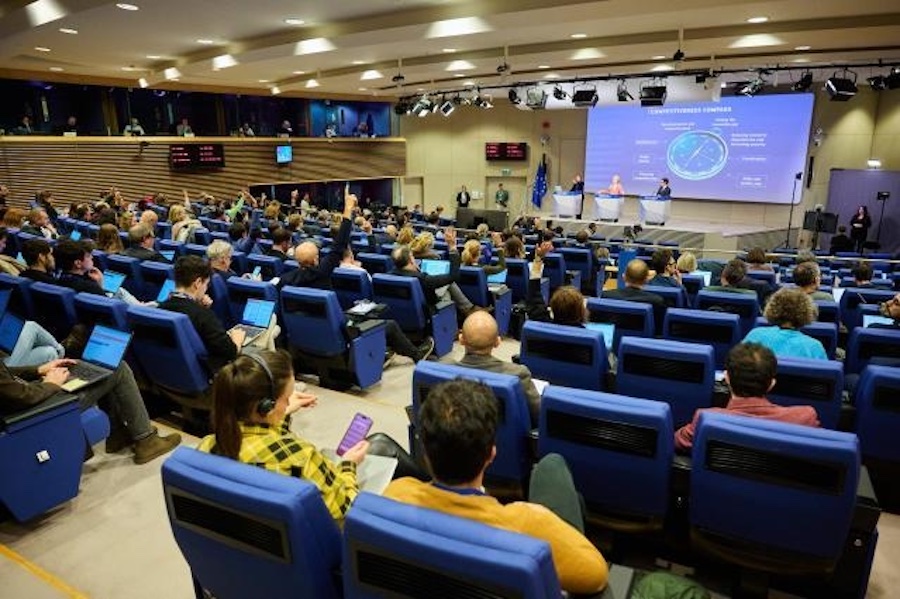
Over the last two decades, Europe has not kept pace with other major economies due to a persistent gap in productivity growth. The EU has what is needed to reverse this trend with its talented and educated workforce, capital, savings, Single Market, unique social infrastructure, provided it acts urgently to tackle longstanding barriers and structural weaknesses that hold it back.
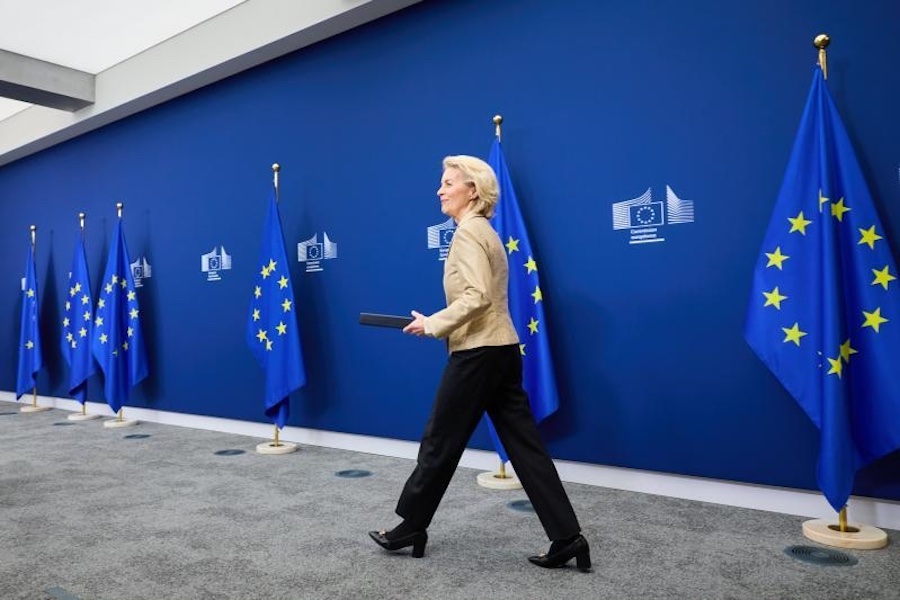
President of the European Commission, Ursula von der Leyen, said: “Europe has everything it needs to succeed in the race to the top. But, at the same time, we must fix our weaknesses to regain competitiveness. The Competitiveness Compass transforms the excellent recommendations of the Draghi report into a roadmap. So now we have a plan. We have the political will. What matters is speed and unity. The world is not waiting for us. All Member States agree on this. So, let's turn this consensus into action.”
Three core areas for action: innovation, decarbonisation and security
The Draghi Report identified three transformational imperatives to boost competitiveness, and the Compass sets out an approach and a selection of flagship measures to translate each of these imperatives into reality:
Closing the innovation gap: The EU must reignite its innovation engine. We want to create a habitat for young innovative start-ups, promote industrial leadership in high growth sectors based on deep technologies and promote the diffusion of technologies across established companies and SMEs. In this respect, the Commission will propose ‘AI Gigafactories' and ‘Apply AI' initiatives to drive development and industrial adoption of AI in key sectors. It will table action plans for advanced materials, quantum, biotech, robotics and space technologies. A dedicated EU Start-up and Scale-up Strategy will address the obstacles that are preventing new companies from emerging and scaling up. A proposal for a 28th legal regime will simplify applicable rules, including relevant aspects of corporate law, insolvency, labour and tax law, and reduce the costs of failure. This will make it possible for innovative companies to benefit from one single set of rules wherever they invest and operate in the Single Market.
A joint roadmap for decarbonisation and competitiveness: The Compass identifies high and volatile energy prices as a key challenge and sets out areas for intervention to facilitate access to clean, affordable energy. The upcoming Clean Industrial Deal will set out a competitiveness-driven approach to decarbonisation, aimed at securing the EU as an attractive location for manufacturing, including for energy intensive industries, and promoting clean tech and new circular business models. An Affordable Energy Action Plan will help bring down energy prices and costs, while an Industrial Decarbonisation Accelerator Act will extend accelerated permitting to sectors in transition. In addition, the Compass foresees tailor-made action plans for energy intensive sectors, such as steel, metals, and chemicals, sectors which are the backbone of the European manufacturing system, but are the most vulnerable in this phase of the transition.
Reducing excessive dependencies and increasing security. The EU's ability to diversify and reduce dependencies will hinge on effective partnerships. The EU already has the largest and fastest growing network of trade agreements in the world covering 76 countries that account for almost half of the EU's trade. To keep diversifying and strengthening our supply chains, the Compass refers to a new range of Clean Trade and Investment Partnerships to help secure supply of raw materials, clean energy, sustainable transport fuels, and clean tech from across the world. Within the internal market, the review of the Public Procurement rules will allow for the introduction of a European preference in public procurement for critical sectors and technologies.
"Europe has everything it needs to succeed in the race to the top. But, at the same time, we must fix our weaknesses to regain competitiveness. The Competitiveness Compass transforms the excellent recommendations of the Draghi report into a roadmap. So now we have a plan. We have the political will. What matters is speed and unity. The world is not waiting for us. All Member States agree on this. So, let’s turn this consensus into action", said Ursula von der Leyen, President of the European Commission.
Five horizontal enablers for competitiveness
The three pillars are complemented by five horizontal enablers, which are essential to underpin competitiveness across all sectors:
Simplification: This enabler aims at reducing drastically the regulatory and administrative burden. It also involves a systematic effort to make procedures for accessing EU funds and getting EU administrative decisions simpler, faster, and lighter. The upcoming Omnibus proposal will simplify sustainability reporting, due diligence, and taxonomy. Furthermore, the Commission will facilitate doing business for thousands of small mid-cap companies. The Compass sets a target of cutting by at least 25% the administrative burden for firms and by at least 35% for SMEs.
Lowering barriers to the Single Market: For 30 years, the Single Market has been Europe's tried and tested engine for competitiveness. To improve its functioning across all industries, a Horizontal Single Market Strategy will modernise the governance framework, removing intra-EU barriers and preventing the creation of new ones. In addition, the Commission will take the opportunity to make standard-setting processes faster and more accessible, in particular for SMEs and start-ups.
Financing competitiveness. The EU lacks an efficient capital market that turns savings into investments. The Commission will present a European Savings and Investments Union to create new savings and investment products, provide incentives for risk capital, and ensure investments flow seamlessly across the EU. A refocused EU budget will streamline access to EU funds in line with EU priorities.
Promoting skills and quality jobs. The foundation of Europe's competitiveness is its people. To ensure a good match between skills and labour market demands, the Commission will present an initiative to build a Union of Skills focusing on investment, adult and lifelong learning, future-proof skills creation, skill retention, fair mobility, attracting and integrating qualified talent from abroad and the recognition of different types of training to enable people to work across our Union.
Better coordination of policies at EU and national level. The Commission will introduce a Competitiveness Coordination Tool, which will work with Member States to ensure implementation at EU and national level of shared EU policy objectives, identify cross-border projects of European interest, and pursue related reforms and investments. In the next Multiannual Financial Framework, a Competitiveness Fund will replace multiple existing EU financial instruments with similar objectives, providing financial support to the implementation of actions under the Competitiveness Coordination Tool.
Background
On 27 November 2024, President von der Leyen announced a Competitiveness Compass as the first major initiative of the Commission in this mandate, building on the Draghi report and providing the framework for the Commission's work on competitiveness in this mandate.
In her State of the European Union Speech of 2023, President von der Leyen announced to have asked former Italian Prime Minister Mario Draghi to prepare a report on the future of European Competitiveness. The Report warns that Europe will no longer be able to rely on many of the factors that have supported growth in the past. It lays out a clear diagnosis and provides concrete recommendations to put Europe onto a different trajectory. Many of the recommendations are already reflected in the Political Guidelines and mission letters by the President to the members of the College.