#Yarn & Fiber
Details of the “Cellulose Fibres Conference 2025" have been announced
The well-established annual “Cellulose Fibres Conference”, organised by nova-Institute, is preparing for a new round in 2025 with a broader focus.
The textile industry is constantly on the lookout for sustainable solutions, as they are urgently needed to meet the EU’s climate change targets. The fashion industry has a large CO2 footprint (10 % of total global emissions), which needs to be reduced in favour of the Green Deal requirements. Textile waste management and microplastic pollution caused by washing synthetic clothes (originating from fossil-based fibres such as polyester) are particularly affected by this. A (re)turn to more sustainable solutions is needed. The proportion of renewable fibres must be increased. How can this be achieved? By using carbon above the ground derived by biomass, CO2 and recycling.
Cellulose Fibres
For cellulose fibres in textiles, this means that the raw materials can be originated from wood from sustainable forest management as well as all types of cellulosic waste streams from agriculture, cotton processing waste, textile waste and paper waste (biomass). Even carbon emissions from the air offer raw material for the next generation of circular fibres.
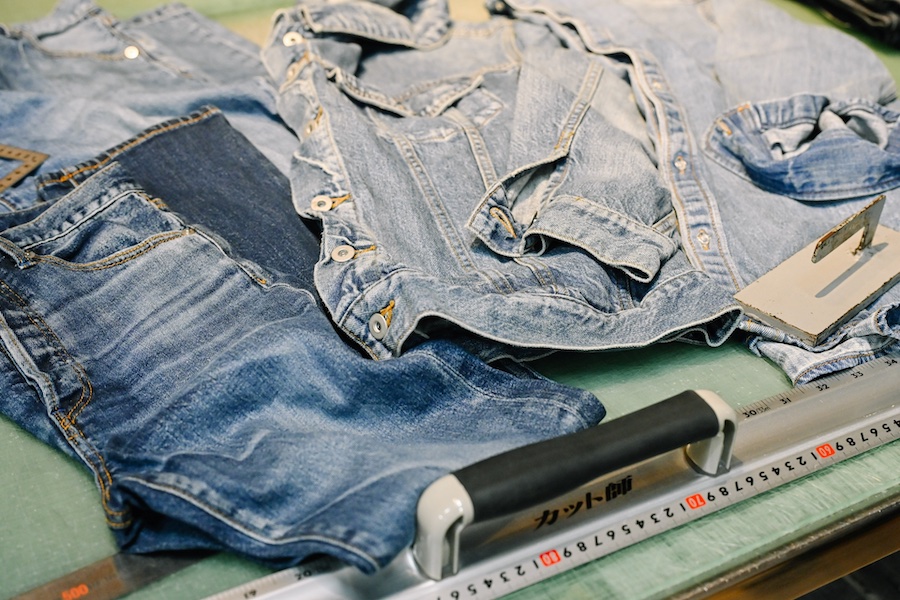
The challenge of textile recycling is constantly changing due to the frequent use of mixed fibres. The new technologies for production of new fibres from the cellulosic part of the textile waste offers a "fibre-to-fibre" solution for the industry in line with the EU textile strategy.
The challenge of recycling textiles
The recycling of textiles to new cellulose fibres is an important factor to be enhanced at a broader level: utilising existing resources is an intelligent strategy. However, the textile industry currently uses only 1 % for so-called fibre-to-fibre recycling, due to several obstacles that need to be overcome. The share of recycled fibres in textiles will increase due to new regulations from Brussels and the necessary logistics and technologies need to be in place to recycle textiles on a large scale. The inadequate regulation of textile waste management is a significant factor contributing to the loss of much of this material due to incineration. Another critical aspect is the challenge of recycling of blended-fibre textiles. This prompts the question of what new and advanced technologies are available for processing blended textile waste.
Biosynthetics – a new topic on the rise
The increase in textile demand in recent decades is significant, with an increase of 460 % between 1960 and 2020. To meet this demand, and at the same time offer the industry sustainable solutions, it is necessary to consider all sustainable man-made fibres that can be scaled up in near future. This area can be the biosynthetics. This category includes bio-based polymer as well as CO2-based polymer fibres for textiles. There are numerous options for this, including polyester fibres (such as PLA, PEF or PHA) and polyolefin fibres (bio-based or CO2-based PE/PP) and bio-based PA fibres from castor oil. These also include several carbon capture innovations emerging within the fashion, apparel, and textile industry. While the current share is small (1 %), it is expected to grow significantly in the future.
Technologies are being developed continuously and there is great interest in this new facet of the conference. This promising area is being explored and discussed with leading experts.
The nova-institute, organiser of the conference, is introducing the new thematic branch on biosynthetics in response to the growing demand for sustainable textile fibres. In light of this, the conference will host its first sessions on biosynthetics in 2025.
What does policy have to do with this?
As every year, the conference will also focus on current political developments. In 2022, the EU Commission has published the "EU Strategy for Sustainable and Circular Textiles", but the proposal for the "Green Claims Directive" (2023) is also relevant for the textile industry. The conference program will focus on the impact of the regulations on the day-to-day business of the industry.
Solutions and visions
The sustainable textile industry of the future will ideally be based on a foundation of cotton fibres and fast-growing cellulose fibres, which will be strongly supported by bio- and CO2-based synthetic fibres – so called biosynthetics – and high recycling rates for all types of fibres. This combination can eventually replace most fossil-based synthetic fibres. Industry collaboration is key to achieve this. The “Cellulose Fibres Conference 2025” provides a unique opportunity for key players to foster networks, collaboration and innovation.
The conference in a nutshell
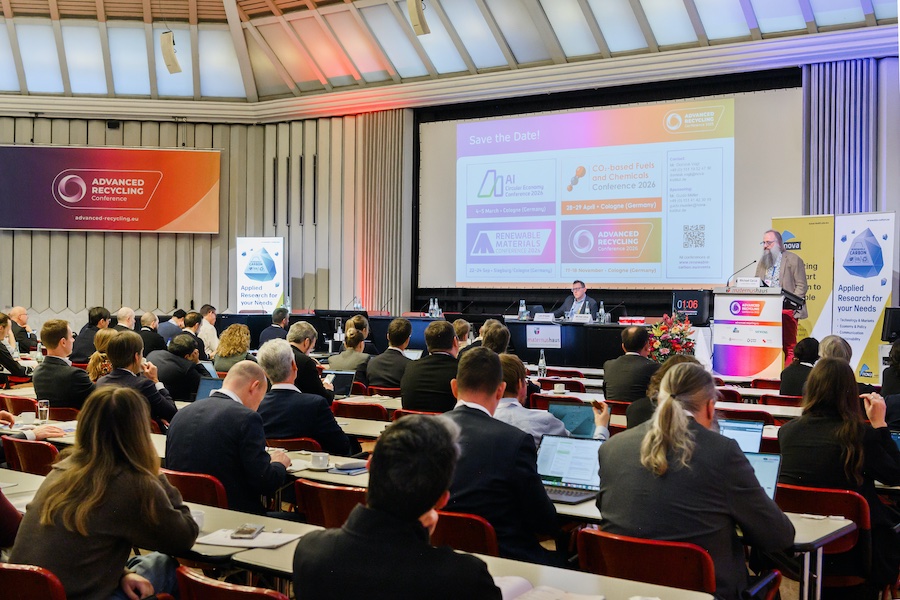
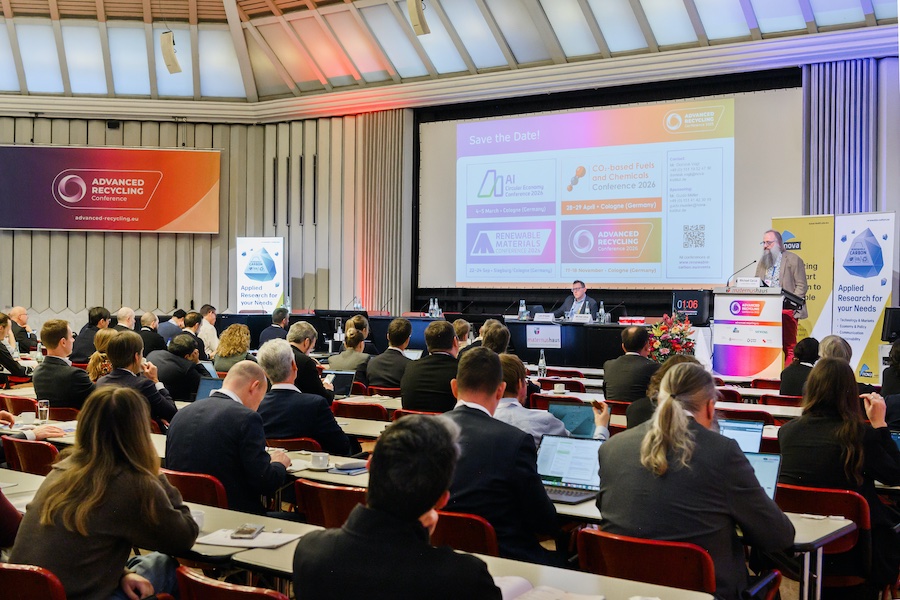
In 2024, 214 participants enjoyed two conference days in Cologne or online. The highlights were 40 presentations with lively panel discussions afterwards, the innovation award “Cellulose Fibre Innovation of the Year”, an exhibition, the poster session and plenty of networking possibilities. All of this will be repeated in 2025, including new topics, new speakers and new inputs. The “Cellulose Fibres Conference 2025” will again cover the entire value chain, from lignocellulose, chemical pulp, cellulose fibres such as rayon, viscose, modal or lyocell and new developments to a wide range of applications, e.g. textiles from renewable fibres, nonwovens such as wet wipes and composites, hygiene and packaging. The conference will further address topics like circular economy, fibre-to-fibre recycling and sustainable carbon cycles, biosynthetics, new technologies and feedstocks.
Call for Abstracts
Enterprises and research institutes are invited to contribute to the program and present their innovative products, technologies or developments. Deadline for submission is 30 September 2024.
cellulose-fibres.eu/call-for-abstracts
Call for Innovations
The conference will conclude with the innovation award “Cellulose Fibre Innovation 2025” whose winner can join the ranks of amazing innovations. The deadline for innovation submissions is 30 November 2024. The innovation award “Cellulose Fibre Innovation of the Year 2025” is sponsored by GIG Karasek.
cellulose-fibres.eu/award-application
Call for posters
The poster exhibition is highly anticipated event at the conference. Poster submissions are open until 31 January 2025.
cellulose-fibres.eu/call-for-posters
Sponsorship – Exhibition – Advertisement: Service Packages
The conference will be accompanied by a trade exhibition and offers companies a wide range of sponsorship opportunities to maximise visibility and impact at the conference.
Further information on sponsoring is available at cellulose-fibres.eu/sponsoring
Key Account Management
Guido Müller
guido.mueller@nova-institut.de
Conference registration
The registration fee is 1095 EUR (excl. 19 % VAT) for both days and 745 EUR (excl. 19 % VAT) for the virtual option.
Registration options are available via cellulose-fibres.eu/registration