[pageLogInLogOut]

#Raw Materials

Lenzing Group positions bio‑based materials as a strategic asset for Europe’s economic security

Georg Kasperkovitz, Member of the Management Board of Lenzing Group, at NW Round Table Brussels © 2026 Lenzing
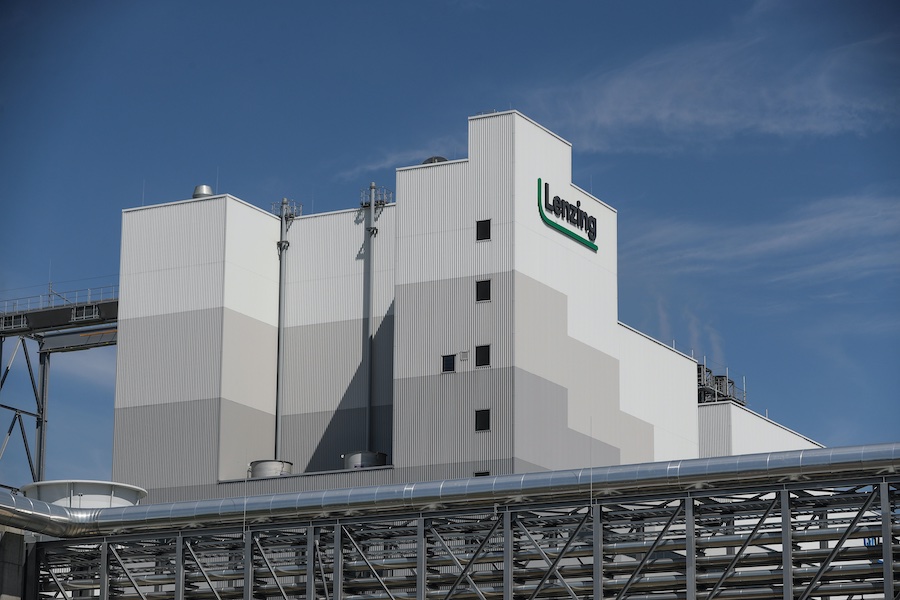
The Lenzing Group, a leading supplier of regenerated cellulose fibers for the textile and nonwovens industries, hosted a high‑level roundtable in Brussels to discuss how bio‑based materials can strengthen Europe’s economic security and support the shift toward a fossil‑free future. Organized in cooperation with Euractiv, the event brought together representatives of the European Commission, the UK Mission to the EU, academia, civil society, and industry.

Speakers included Aurel Ciobanu‑Dordea, Director for Competitive Circular Economy and Clean Industrial Policy at the European Commission’s DG Environment, Dr. Daniel Bradley, Deputy Counsellor & Head of Climate and Environment at the UK Mission to the EU, and Patricia A. Sargeant, Executive Vice President Nonwovens Commercial at the Lenzing Group.

A key topic of discussion was the potential of cellulosic fibers[1] as fully bio‑based, biodegradable alternatives in nonwoven applications such as wet wipes. While Europe has the industrial foundation to scale these fossil‑free materials, competitiveness is constrained by global regulatory and cost asymmetries. Clear, coherent policy signals – Including possible updates to the Single Use Plastics Directive (SUPD) – were identified as essential for investment certainty and broader market uptake.

“Europe has set ambitious goals for a clean‑industry transition. Our roundtable in Brussels showed that bio‑based materials are not a future vision – they are a practical, scalable reality today. As an integrated cellulosic fiber producer with deep European roots, Lenzing helps strengthen industrial resilience while accelerating the shift away from fossil‑based synthetic fibers,” said Georg Kasperkovitz, Member of the Management Board of Lenzing Group.

Lenzing reaffirmed that industrial competitiveness and climate ambition can reinforce each other. Its specialty fibers, produced from renewable wood, offer lower greenhouse gas emissions compared to generic alternatives and are certified biodegradable and compostable. The company’s climate targets align with the 1.5‑degree pathway and have been validated by the Science Based Targets initiative.

“Maintaining and expanding European production capacity is essential for supply‑chain resilience and strategic autonomy. Lenzing operates major integrated pulp and fiber sites in Austria, Czechia, and the UK, with Europe‑based R&D supporting jobs, innovation, and technological know‑how within the region. Cellulosic fibers play a critical role in single-use products for hygiene applications – underscoring the need to redesign products toward biodegradable material solutions that address SUPD concerns and microplastic pollution,” emphasized Patricia A. Sargeant.

With its longstanding commitment to climate leadership, innovation, and European manufacturing, the Lenzing Group will continue to work closely with policymakers and industry partners to advance a resilient, fossil‑free materials economy.

[1] LENZING™ fibers which are TÜV certified biodegradable (soil, fresh water & marine) and compostable (home & industrial) include the following products: LENZING™ Viscose Standard textile/ nonwovens, LENZING™ Lyocell Standard textile/nonwovens, LENZING™ Modal Standard textile, LENZING™ Lyocell Filament, LENZING™ Lyocell Dry and LENZING™ Web Technology. An exception in certification applies for the fibers LENZING™ Lyocell Filament and LENZING™ Lyocell Dry, for which the necessary tests for confirming biodegradability in marine environment were not yet done or finalized.
More News from Lenzing

#Denim

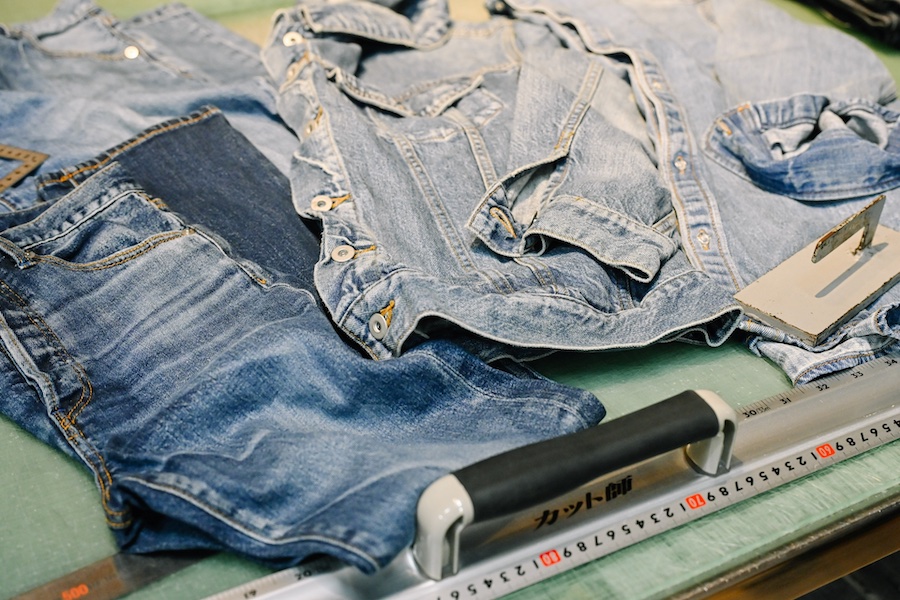
TENCEL™ Lyocell - HV100 achieves global denim availability in six months; Vol. 2 debuts at Kingpins Amsterdam

When TENCEL™ Lyocell - HV100 debuted at last year’s Kingpins Amsterdam in October, 17 mill partners across five countries presented fabrics featuring the new fiber. Just six months on, participation has more than doubled, evolving into a global network that spans nine countries and four continents, signaling both strong industry momentum and growing demand.

#Techtextil 2026

Lenzing unveils three-tier cellulosic fiber portfolio for next generation protective wear

The Lenzing Group, a leading supplier of regenerated cellulosic fibers for the textile and nonwovens industries, today introduces Lenzing Solutions for Protective Wear. This integrated three-tier portfolio is anchored by LENZING™ FR fibers at the highest protection tier for inherent flame resistance and brings together complementary solutions including TENCEL™ Lyocell fibers, both EU Ecolabel-certified² and derived from certified or controlled wood sources³, within a unified protective wear architecture for the first time. The launch marks the most significant expansion of Lenzing’s protective wear business since the company pioneered inherently flame-resistant cellulosic fiber in 1977, and comes as the global personal protective equipment (PPE) market accelerates toward an estimated USD 130 billion by 2033⁴.

#Man-Made Fibers

Lenzing commissions 14 MW power‑to‑heat facility, strengthening grid stability and heat management

The Lenzing Group has successfully commissioned a new power‑to‑heat (P2H) facility with an electrical capacity of 14 megawatts. The installation converts renewable electricity directly into process heat, is fully integrated into the existing heat network at the industrial site, and represents a key building block for a fossil‑free heat supply. As project partner, VERBUND was responsible for the energy‑market integration and will operate the facility for balancing energy marketing, enabling it to respond flexibly to short‑term fluctuations in the power grid.

#Nonwovens

VEOCEL™ Lyocell production expands to Asia – Launching a new chapter for nonwovens in the region

VEOCEL™, Lenzing's flagship specialty nonwovens brand, expands production at its Thai plant in Prachinburi. This is the first-ever production of its nonwoven-grade lyocell fibers in Asia. Built in 2022 with a 100,000-ton annual production capacity, the facility - previously focused on fibers for textile applications - now can directly meet the demand for VEOCEL™’s biodegradable¹, wood-based lyocell fibers for nonwovens products. These fibers are an essential ingredient for high-quality nonwovens products, ranging from baby wipes to facial sheet masks and everyday personal hygiene items.

More News on Raw Materials

#Raw Materials

Global Cotton area and production are projected to decline in the 2026/27 Season

The June 2026 issue of Cotton This Month projects a modest contraction in global cotton area, production, and trade during the 2026/27 season, reflecting weaker demand sentiment, rising production costs, and shifting environmental factors across major producing nations.

#Raw Materials

New U.S. cotton study uses real-world grower data to reveal where fiber impacts occur

Cotton Incorporated has released a critically reviewed life cycle assessment (LCA) of U.S. cotton fiber production that examines how cotton’s environmental impacts are measured and where meaningful improvements can be made across the value chain. The new data, grounded in real‑world grower inputs, measures what drives U.S. cotton’s environmental footprint from field to gin.

#Raw Materials

China projected to increase cotton production, yields, and imports in 2026/27

World cotton production in the 2026/27 season is projected at 25.9 million tonnes, exceeding global consumption of 25.2 million tonnes, according to the May 2026 issue of Cotton This Month. That means both production and consumption are expected to remain close to current season levels, while global cotton trade is projected to decline by 2.7% to approximately 9.6-9.7 million tonnes.

#Raw Materials

ICAC launches Carbon Credits Initiative to deliver new income streams to cotton farmers

The International Cotton Advisory Committee (ICAC) has announced a new initiative designed to unlock additional income streams for cotton farmers through participation in carbon credit markets, linking sustainable production practices directly to financial returns.

Latest News

#ITM 2026

SHIMA SEIKI to show complete knitting and cutting workflow at ITM 2026

Leading computerized flat knitting technology provider SHIMA SEIKI MFG., LTD. of Wakayama, Japan, together with its Turkish representative TETAS IC VE DIS TICARET A.S., will participate in the ITM 2026 International Textile Machinery Exhibition in Istanbul, Türkiye this month with a full product lineup. In addition to flat knitting machines and design software, visitors will also have the opportunity to experience the full range of SHIMA SEIKI textile machinery with its automatic cutting machine exhibit, all geared toward the fashion apparel market as well as non-apparel related businesses.

#Natural Fibers

European Flax-Linen & Hemp step into advanced manufacturing: Enabling filament winding, 3D printing and high-performance composite processes

The Alliance for European Flax-Linen & Hemp announces a new wave of technological advancements demonstrating how flax-linen and hemp fibres are now being successfully integrated into advanced composite manufacturing processes. These developments mark a transition beyond traditional hand lay-up techniques, positioning natural fibres as credible, scalable solutions for high-performance industrial applications.

#ITM 2026

SETEX turns dyeing and finishing data into daily production control

At ITM 2026, SETEX will show how textile mills can use machine, recipe, quality and energy data for more reliable daily production decisions — not as another reporting layer, but as part of the running dyeing and finishing process. With OrgaTEX X3 MES, E390x/C390x controllers, CamCOUNT and FabricInspector Portable, SETEX connects planning, machine execution and fabric-related quality insight within existing mill structures.

#Technical Textiles

Fifteen years of Autoneum – From spin off to global technology leader

What started as a strategic carve‑out has since become the success story of a global technology leader in acoustic and thermal management solutions for vehicles. Headquartered in Winterthur, Switzerland, Autoneum supplies leading automobile manufacturers worldwide with innovative, lightweight and increasingly sustainable solutions.

TOP