[pageLogInLogOut]

#Sustainability

The nova-Institute establishes new Renewable Feedstock Department to lay the groundwork for industrial defossilisation

The transition from fossil-based to renewable carbon – sourced from biomass, CO₂ utilisation and recycling – is the cornerstone of a climate-neutral chemical industry. The nova-Institute’s new department is dedicated to providing the essential data, analyses and strategic roadmaps required to secure a reliable future feedstock supply and make this transition a commercial and ecological reality.


A holistic approach to the carbon feedstock revolution

The Renewable Feedstock department will offer comprehensive services covering the entire value chain, including:

Feedstock Supply & Analysis: Assessing the global and regional availability of all renewable carbon streams to build a robust foundation for the industry. This includes detailed potential analyses of biomass (sugar crops, starch crops, plant oils, lignocellulose, organic waste), CO₂ sources (biogenic and fossil point sources, Direct Air Capture), and recycled carbon (plastic waste, biogenic waste, municipal solid waste).

Market and system transformation: Conducting Material & Carbon Flow Analysis (MFA) to map the carbon economy, alongside market and cost analysis for renewable feedstocks and derived chemicals. A key service are feedstock transition & transformation pathways from specific feedstocks to key chemicals and polymers, supported by technology and innovation scouting for emerging conversion processes.

Strategic advisory services for supply chain resilience: Providing actionable insights on feedstock demand & competition, strategic sourcing, and comprehensive carbon footprint and sustainability assessments for feedstocks. To complete the holistic picture, additional support in regards to policy & regulatory impact analysis and guidance on certification of feedstocks to navigate the evolving legislative landscape.

“The mission of the renewable feedstock department is to shift the focus from ‘why’ to ‘how’, providing the concrete feedstock intelligence that businesses and policymakers urgently require to make significant strides towards defossilisation.” says Christopher vom Berg, Head of the Renewable Feedstock department.

The new department brings together a multidisciplinary team that combines deep scientific and economic expertise. It consists of physicist and nova-Institute founder Michael Carus, biologist Anke Schwarzenberger, agricultural economist Olaf Porc, and psychologist Verena Roberts, ensuring that the department’s work is rooted in both technical rigour and an understanding of market dynamics.

For more information, please contact Christopher vom Berg, Head of Renewable Feedstock Department: christopher.vomberg@nova-institut.de
More News from nova-Institut für politische und ökologische Innovation GmbH

#Research & Development

Pioneer of the first hour: Michael Carus steps down after more than 30 years from nova-Institute’s Management

After more than three decades at the helm, founder and CEO Michael Carus is set to step down as head of the Renewable Carbon division on 1 March 2026. Lars Börger as the new CEO, will take over this key position of the nova-Institute together with COO Linda Engel, while Carus will remain with the research and consulting company as a senior advisor and shareholder. This change takes place after a one-year transition phase, as planned.

#Recycling / Circular Economy

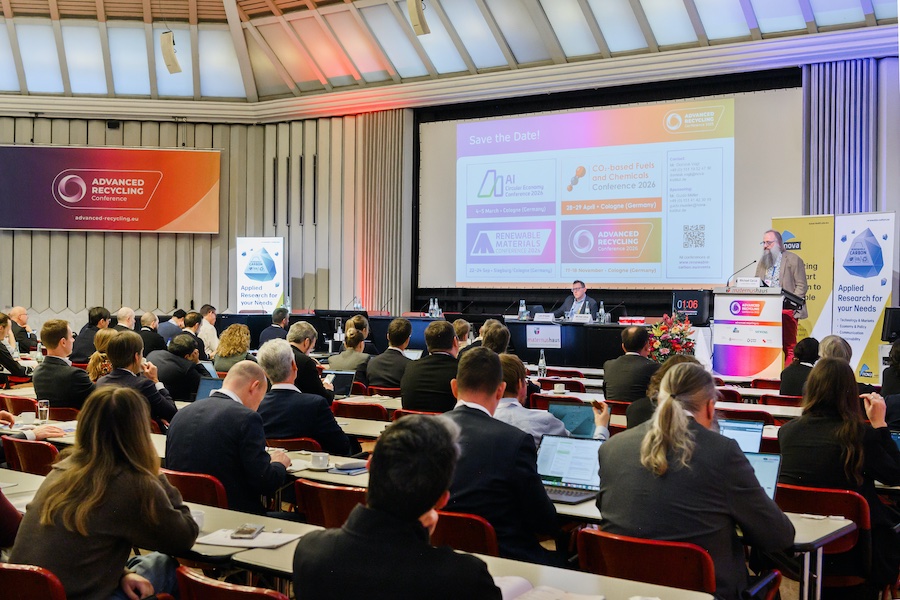
Advanced Recycling Conference 2025 fuels innovation across key waste streams

The Advanced Recycling Conference (ARC) 2025 brought together nearly 220 experts from 28 countries to spotlight pioneering advancements and foster industry collaboration in recycling across diverse waste streams including plastics, textiles, automotive and other materials.

#Recycling / Circular Economy

Advanced Recycling Conference 2025: From industry crossroads to circularity

Alongside core-topics like plastics and polymer recycling, this year’s program explores new developments in biochemical, textile and automotive recycling, plus digital tools supporting scalable solutions for circular systems.

#Textile chemistry

How to defossilise the chemical industry: RCI’s new policy proposals for a renewable carbon future

A new report presents policy proposals to facilitate the transition from fossil carbon to renewable carbon from biomass, CO2 and recycling in Europe.

More News on Sustainability

#Sustainability

GOTS version 8.0 released: advanced supply chain accountability, from fibre to finished product

Global Standard is pleased to announce the release of GOTS Version 8.0, the latest update to the world's leading processing standard for organic textiles. The updated Standard strengthens requirements for air emissions and waste management, as well as criteria for product safety. It introduces new provisions on circularity, microfibre management and updates in residue testing. Version 8.0 also elevates due diligence obligations and formalises governance requirements, including ESG disclosure, anti-corruption policies and conflict-of-interest safeguards, to support credible, responsible business conduct.

#Sustainability

Textile Exchange unveils commitment-based pathway for members to accelerate responsible raw material production

Textile Exchange has unveiled further details about its new membership structure, designed to guide the fashion, textile, and apparel industry in a collective course of action toward preferred production systems for raw materials and fibers.

#Textile chemistry

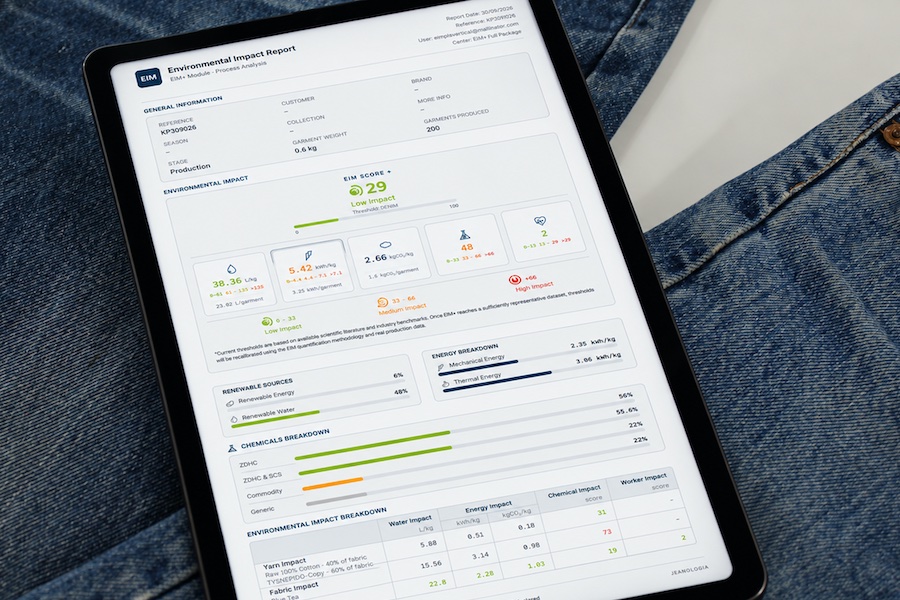
Jeanologia urges industry to accelerate PP Spray phase-out following ZDHC Watchlist update

Potassium permanganate has officially entered the Chemical Watchlist of the ZDHC Foundation, signaling increased scrutiny and potential phase-out of one of the most hazardous chemicals still used in denim finishing. The inclusion confirms an industry shift that Jeanologia anticipated more than a decade ago.

#Textiles & Apparel / Garment

Global Standard strengthens presence in Southeast Asia at VIATT 2026

Global Standard will participate in the Vietnam International Trade Fair for Apparel, Textiles and Textile Technologies (VIATT) 2026, organized by Messe Frankfurt, the first textile trade show in the APAC region this year. Global Standard will host a booth and Felica Shi will lead a seminar on Global Organic Textile Standard (GOTS). The trade fair will take place from February 26 to 28, 2026, in Ho Chi Minh City, Vietnam.

Latest News

#Textile chemistry

DyStar Group Announces Board Transition to Drive Innovation

DyStar, a leading specialty chemical company with a heritage of more than a century in product development and innovation, announced today the appointment of Ruan Cunfan to its Board of Directors, effective 20 February 2026.

#Recycling / Circular Economy

Textile‑to‑textile recycling leader Circulose joins Spinnova’s ecosystem to accelerate technology scale‑up

Textile‑to‑textile recycling leader Circulose joins Spinnova’s ecosystem (consortium) to help advance the scale‑up of Spinnova’s technology. Spinnova has actively sought partners to accelerate commercial scale‑up, and Circulose, as a key player in textile recycling, strengthens the ecosystem by providing a raw material that is in high demand across the industry.

#Yarns

UNIFI® introduces Luxel™: A Linen-inspired, easy-care performance yarn

Unifi, Inc. (NYSE: UFI), the makers of REPREVE® and one of the world’s leading innovators in recycled and synthetic yarns, today announced the launch of Luxel™, a groundbreaking yarn technology that combines the luxurious look and feel of linen with high-performance, easy-care, and textile-to-textile recycled materials.

#Composites

Teijin Carbon advances sustainability leadership with EcoVadis, CDP reporting and expanding Tenax Next™ sustainable carbon fiber portfolio

As the composites industry intensifies its focus on measurable environmental, social and governance (ESG) progress, Teijin Carbon announces significant milestones that advance its position among the sector’s most sustainability-driven material suppliers. Teijin Carbon Europe achieved an EcoVadis score of 72/100 in the 2025 assessment, ranking among the top 15% of evaluated companies in its industry.

TOP