[pageLogInLogOut]

#Yarn & Fiber

Dr Maryam Naebe wins 2021 DNFI Award

Dr. Maryam Naebe from Deakin University, Institute for Frontier Materials (IFM), Victoria, Australia has won the 2021 Discover Natural Fibres Initiative Innovation Award. Together with her team at IFM she created a special light-weight nonwoven textile fabric that can be used as an insulator in automobiles. The fabric is made from a blend of virgin and waste wool fibres.

Most insulation currently used in automotive applications is made from petroleum-based polyester, polyethylene, and polystyrene molecules, but leading car manufacturers are moving towards replacing interior materials with lighter-weight and biodegradable natural fibre options. Wool insulation exhibits the same sound absorption, thermal resistance, and air permeability performance characteristics of materials currently in use. In addition, wool is naturally odour-resistant, flame retardant and antibacterial.
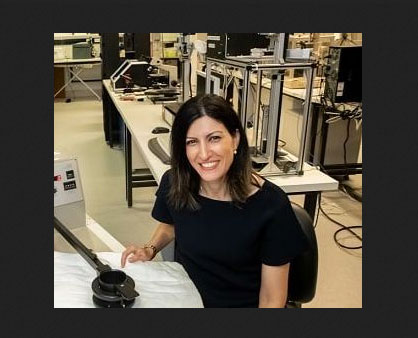
Dr Maryam Naebe © 2021 DNFI


Dr. Naebe noted that as a natural fibre, wool has a unique chemical and physical structure that gives it inherent thermal and acoustic insulation properties, making it a very promising candidate for sustainable insulation. The wool insulator material qualifies for Reuse-Recycle and Reuse–Recover purposes at the end-of-life of vehicles.


Dr Maryam Naebe, is currently a Senior Research Fellow at the Institute for Frontier Materials (IFM), Deakin University, Australia. She received her Ph.D. from Deakin University in 2009 in materials science and since then has worked in the area of fiber science and functional materials. Her research now focuses on sustainability inspired innovation using waste materials and adding value to natural fibers and biomass for sustainable industrial applications. She has actively supervised more than 25 visiting academics, research assistants, and HDR students and has published more than 100 scientific articles, conference papers, reports, and patent.

More News from Bremer Baumwollbörse

#Natural Fibers

Bremen Cotton Exchange: Fritz A. Grobien re-elected as President

The members of the Bremen Cotton Exchange have re-elected Fritz A. Grobien as President during the association’s 152nd General Assembly on June 18, 2026. The election confirms the organization’s commitment to maintaining its role as a leading international platform for the cotton and fiber industry amid a period of geopolitical and economic uncertainty.

#Raw Materials

Fiber traceability - A vehicle to ensure sustainability or injustice?

The Bremen Cotton Exchange is making a new paper available for download. In this paper, analyst Veronica Bates Kassatly and statistician Terry Townsend examine the justifications behind this approach and assess the consequences for textile and apparel sustainability claims and global legislation.

#Raw Materials

A Powerful Opening: Global thought leaders launch the International Cotton Conference Bremen

The International Cotton Conference Bremen will open on 25 March 2026 in the Parliament building of the Free Hanseatic City of Bremen with a keynote session of exceptional calibre. Distinguished international experts will set the stage for the conference by offering incisive perspectives on the most pressing challenges and the defining trends shaping the future of the global cotton trade. Their insights will span a broad spectrum — from geopolitically driven disruptions affecting global supply chains to the opportunities emerging from innovation-led agriculture capable of supporting a growing world population. Together, these opening keynotes will frame the dialogue of the conference, highlighting both the complexity of today’s market environment and the pathways toward a resilient and forward-looking cotton sector.

#Natural Fibers

Beyond Cotton: Natural Fibres in the Spotlight at the Bremen Cotton Conference - Branded by DNFI

Climate targets, fragile supply chains, and rising regulatory requirements are fundamentally changing the perspective of the textile industry - the focus is increasingly shifting toward the base material. Not only cotton, but natural fibres are gaining significant importance: they stand out not only because of their outstanding functional properties, but also because they make a valuable contribution to the bioeconomy and responsible product development.

More News on Yarn & Fiber

#Man-Made Fibers

Ministry of Industry Delegation visits NatureWorks’ second global manufacturing site at Nakhon Sawan Biocomplex

NatureWorks Asia Pacific Limited welcomed a high-level delegation led by Mr. Varawut Silpa-archa, Minister of Industry, to its manufacturing site at the Nakhon Sawan Biocomplex (NBC). The visit follows the successful inauguration of the site on April 29, 2026, and highlights the role of public-private collaboration in advancing Thailand’s sustainable industrial development and bioeconomy ambitions.

#Man-Made Fibers

Sorona® and WGSN announce top bio-based material trends of 2027

Sorona®, the partially bio-based polymer from Covation Biomaterials (CovationBio™), and global trend forecasting authority WGSN today release the material trends shaping the textile industry through 2027 and beyond following a comprehensive examination of bio-based functional fiber applications and global data.

#Sustainability

The first widely accessible Life Cycle Assessment study for cashmere production published by Textile Exchange.

Crucial new data to better understand, measure, and address the impacts of cashmere production has been made available to the fashion, textile, and apparel industry through a new Life Cycle Assessment (LCA) published by Textile Exchange.

#Yarn & Fiber

R-Evenge chooses Q-NOVA® yarn by Fulgar for its line of technical socks dedicated to wellness

Q-NOVA®, Fulgar’s sustainable polyamide 6.6 yarn, has been selected by R-Evenge for the development of its collection of technical socks dedicated to wellness, fitness, and water-based activities.

Latest News

#Recycling / Circular Economy

Indorama Ventures advances circularity tthrough PETValue Philippines' “Zero Waste to Landfill Partnership” with Republic Cement

Indorama Ventures Public Company Limited, a global sustainable chemical company, is advancing the circular economy through a new Zero Waste to Landfill initiative at its recycling site PETValue Philippines, further demonstrating how collaboration across industries can maximize resource efficiency and reduce waste.

#Associations

IVGT membership: expertise that pays off

For energy-intensive textile companies, government compensation mechanisms are an important economic factor. The IVGT successfully supports its member companies in applying for state aid and thereby regularly contributes to significant financial relief.

#Research & Development

Networking Day 2026: Industry stakeholders unite around textile recycling

In 2026, the Industry Research Group (IRG) Polymer Recycling once again brought together some of the key stakeholders in textile recycling for its annual Networking Day. This year, the event took place at EREMA’s premises in Ansfelden, Austria. It brought together key players from across the textile recycling value chain for a day of structured exchange and in-depth discussions.

#Knitting & Hosiery

The new RDJ 7/3 defines the design footprint of modern athletic shoes

Stylish, functional, and efficient to produce – spacer fabrics are the all-arounders among textile materials. These versatile fabrics are particularly in demand in the sports and casual footwear sector, as they combine comfort, breathability, and design freedom. At the same time, this industry is trend-driven, dynamic, and price-sensitive like few others. Innovations are therefore a decisive factor for success. With the RDJ 7/3, KARL MAYER offers a solution specifically tailored to these requirements. The particular strength of the new double raschel machine: its exceptional flexibility, thanks to its three jacquard bars.

TOP