[pageLogInLogOut]

#Weaving

Paris Arc de Triomphe to be wrapped: Fabric is made in Germany by SETEX
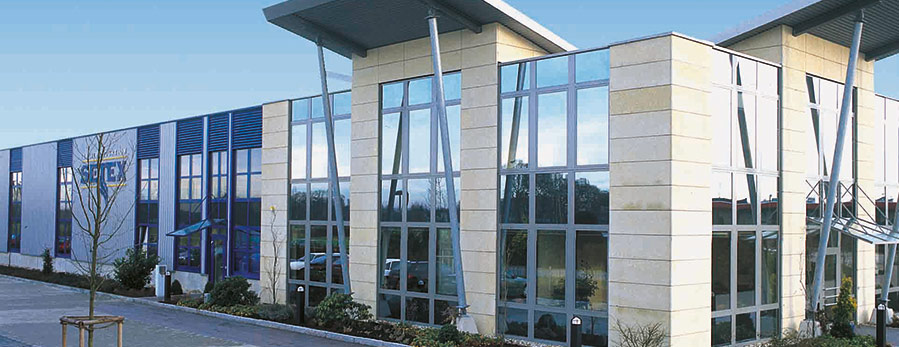
© 2021 SETEX
It all started in the mid-1990s in the reunified Berlin: SETEX-Textil GmbH supplied the fabric for the wrapping of the German Reichstag. For what was probably the last project of the artist couple Christo and Jeanne-Claude, the weaving machines were running at full speed again. For the wrapping of the Arc de Triomphe in Paris, the world-famous artists relied on the expertise of the textile specialist for the fifth time. Blue and grey polypropylene fabrics were produced at the Greven production site, which will completely cover the Arc de Triomphe in Paris from 18 September.
  • SETEX supplies more than 25,000 square metres of fabric
  • First collaboration with Christo in 1994
  • Company has been involved in five works created by Christo

It is Christo's last gift to the city of Paris; he has been planning this project for 60 years. After his death last year, Christo cannot witness the wrapping of the Arc de Triomphe at the weekend. In North Rhine-Westphalia the eyes are also on the French capital: SETEX-Textil GmbH, headquartered in Dingden, has supplied the fabric for the fifth time – but it was produced at the Greven site. "The relationship with Christo has grown over a long period of time - a very friendly cooperation, by the way," says Stefan Ott from the sales department for technical textiles of SETEX.

The cooperation began in the 1990s. The contact came about through Stefan Schilgen and his company of the same name, which was bought by SETEX in 2012. The company boss was an art lover and met Christo by chance when the artist was looking for a textile to cover the Reichstag. Schilgen was able to help - and the friendly conversations eventually turned into a partnership. Now, for the fifth time, the textile company has supplied the textiles for a project by the artist.

Stricter fire safety regulations after Notre Dame

Since Christo could no longer travel personally from his home in New York to Germany to plan the wrapping of the Arc de Triomphe due to his age, the coordination was done through confidants and mutual friends, as Ott explains. There were a few challenges to overcome. In addition to the restrictions imposed by the coronavirus pandemic, the Notre Dame fire in 2019 led to fire regulations being tightened. "We had to re-sample everything again," Ott says. The fabric had to be coated accordingly to make it non-flammable.

The colour design also caused smoking heads at SETEX. "We are an industrial company that produces technical fabrics for technical applications, for example for the automotive industry. To us, for example, the colour of the textiles hardly plays a role.


It took a long time until the colour was finally right and until we had exactly the right feel," says Ott. "For Christo, visuals and haptics were naturally more important than technical properties. That's why we had to constantly make new designs. Until the final product was in the right colour and yarn thickness, there were several trials and numerous meetings." Even a new weaving machine was purchased for the project.

Fabric can be recycled – just as Christo intended

At the Arc de Triomphe, the substructure for the fabric panels is now completely finished, and on Saturday the approximately 25,000 square metres of fabric – a pure polypropylene fabric in the colours grey and blue – will be completely unrolled. The material used for the artwork is normally used for the filtration of food. "By changing the structure and colour, however, we were able to transform the fabric optimally for this project," says Ott. The material also has the advantage of being 100 percent recyclable. "That was always in Christo's mind: he wanted to create works of art that everyone could look at. But in the end, no one can take anything away from it. That's why this fabric will be recycled and can then be used for another purpose," the textile expert explains.

At SETEX, anticipation is growing more and more. "It is an exciting thing to know that you are working for a world-famous artist. It's not an everyday thing," says Ott. "I have my heart set on going to Paris to see the artwork, and I think some of our staff are planning to do the same."

More information:

http://www.setex-textil.de/en

http://www.setex.de/en/


More News from TEXDATA International

#Texprocess 2026

Texprocess 2026: Automation, digitalisation and AI redefine textile processing

Making investment decisions in textile processing has become significantly more demanding. Increasing energy costs, a shortage of skilled labour and ongoing geopolitical uncertainties are compelling companies to focus on technologies that deliver clear gains in efficiency and process reliability. This applies equally to apparel manufacturing and to the processing of technical textiles and high-performance materials. As a result, modernisation initiatives are assessed more carefully – even as the need to upgrade production systems continues to intensify.

#Techtextil 2026

Techtextil 2026: Between innovation pressure & market reality

From 21 to 24 April 2026, Techtextil in Frankfurt am Main will once again become the central meeting point for the international technical textiles and nonwovens industry. Running in parallel, Texprocess will focus on the industrial implementation of textile processing technologies as the leading platform in this field. Together, the two trade fairs form a closely integrated presentation and working platform along the entire textile value chain – from material development to finished applications.

#Techtextil 2026

Between geopolitical pressure and industrial resilience

In this interview, Dr. Janpeter Horn (VDMA) discusses the current challenges facing textile machinery manufacturers, shaped by geopolitical tensions, regulatory developments and subdued investment. He also outlines why innovation strength, integrated solutions and strategic positioning remain key to global competitiveness.

#Texprocess 2026

Between investment restraint and modernization pressure

Texprocess 2026 takes place in a complex market environment shaped by uncertainty and innovation pressure. In this interview, Elgar Straub (VDMA) explains why the trade fair is particularly relevant this year and which technologies are driving efficiency and competitiveness.

More News on Weaving

Latest News

#INDEX 2026

“We clearly see that reliability, flexibility, service and total cost of ownership are becoming increasingly important again.”

The nonwovens industry continues to face a challenging market environment. Nevertheless, AUTEFA Solutions reports successful projects, new line sales and growing demand for energy-efficient and flexible solutions. In this interview, André Imhof of AUTEFA Solutions talks about competitiveness against Chinese suppliers, new service and recycling concepts, the growing importance of application development and the opportunities created by countercyclical investments.

#INDEX 2026

“Needle punching technology is more universal and sustainable than ever!”

Needle punching technology was long regarded as a rather traditional and comparatively slow technology within the nonwovens industry. In this interview, Johann Philipp Dilo explains why needle punching is more relevant than ever today – ranging from energy efficiency and resource conservation to hygiene applications, new machine concepts and design-oriented nonwoven solutions.

#Research & Development

Textile climate control system in workwear – exhibition at the 2026 SME Innovation Day!

Conventional protective workwear often reaches its limits during strenuous physical activity. In particular, the transport of sweat and excess body heat poses a problem. The German Institutes of Textile and Fiber Research (DITF) conducted research on flow-optimized, air-conducting textile structures that enable targeted climate control directly on the body. These structures can be integrated straight into protective work garments. The textile climate control system supports the body’s natural thermoregulation. This contributes to improved workplace safety and comfort.

#Nonwovens

PET spunbond from China – EDANA welcomes imposition of provisional anti-dumping measures

On 13 May 2026, after eight months of investigation, the European Commission imposed provisional anti-dumping duties of 45.6-50.0% on imports of PET spunbond from China. EDANA welcomes this expression of the Commission’s clear determination to protect EU industries from the unfair trade practices of Chinese producers.

TOP