[pageLogInLogOut]

#Textile chemistry

Covestro receives ISCC Plus certification for its Leverkusen and Dormagen sites

Covestro has now received the internationally recognized ISCC Plus mass balance certification for its Leverkusen and Dormagen sites. Together with the Krefeld-Uerdingen site, which was already certified a year ago, the company can now supply its customers with large product volumes from renewably attributed raw materials from all three Lower Rhine sites in Germany.

Conversion of production to renewable attributed raw materials makes progress

These are selected polycarbonates, components for polyurethane (PU) rigid and flexible foams, PU coating and adhesive raw materials, thermoplastic polyurethanes (TPUs) and specialty films. They are characterized by equally good quality and properties as their fossil-based counterparts.

  • Lower Rhine plants offer certified mass-balanced products
  • Drop-in solution for customers with constant product quality

"I am very pleased that we can now offer our customers even more certified mass-balanced products and thus help them even better to achieve their sustainability goals and drive the transition to a circular economy," says Sucheta Govil, Chief Commercial Officer of Covestro. "In doing so, we are also supporting the use of alternative raw materials and reducing CO2 emissions along the value chains."

At its ISCC Plus certified site in Leverkusen, Covestro produces polyurethane coating and adhesive raw materials. © Covestro


Dr. Klaus Schäfer, Chief Technology Officer at Covestro, adds, "The raw materials we use for these products meet the high sustainability requirements of the ISCC Plus standard all the way back through the supply chain. That's why we want to make greater use of alternative raw materials such as these renewably attributed precursors in our production. In addition to the three German sites, also our plants in Antwerp and Shanghai are already ISCC Plus certified, with more sites to follow."


In the mass balance approach, bio-based or recycled raw materials – in this case reprocessed residual materials – are fed in at an early stage of raw material extraction and mathematically attributed to the finished products. This saves fossil raw materials and reduces greenhouse gas emissions, while the quality of the mass-balanced products remains the same compared to purely fossil-based ones. Manufacturers can continue to use their proven formulations, equipment and processes.

Covestro also received the ISCC Plus certification for its Dormagen site, where polyurethane raw materials for foams, coatings and adhesives are manufactured, as well as thermoplastic polyurethanes (TPUs). © Covestro


ISCC ("International Sustainability and Carbon Certification") is an internationally recognized system for sustainability certification of biomass and bioenergy, among others. The standard covers all stages of the value chain and is widely used worldwide. ISCC Plus includes further certification options for technical-chemical applications, among others, including plastics from biomass.

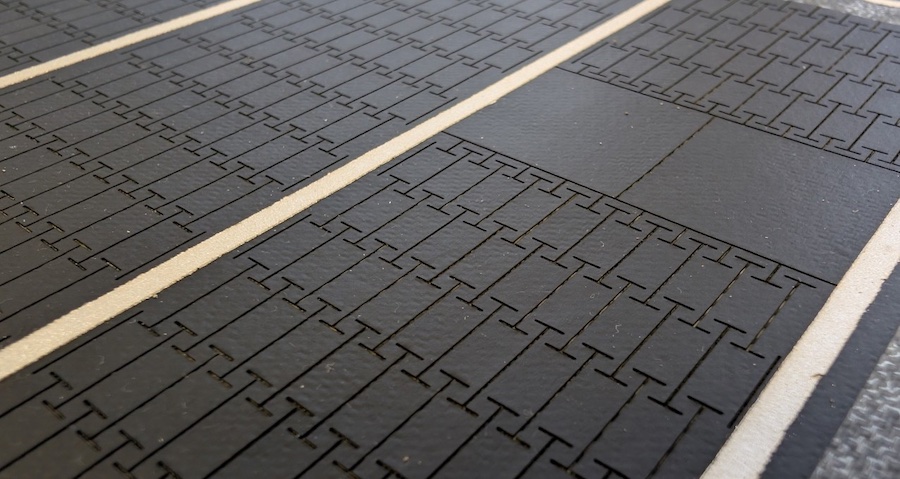
Mass-balanced raw materials for the production of flexible polyurethane foam for mattresses will be supplied from Dormagen in the future, among other items. © Covestro


More News from Covestro AG

#Technical Textiles

Covestro showcases monomaterial concept in autonomous SUE People Mover

UE | STUDIOS has unveiled the fully autonomous electric minibus “Self-driving Urban E-Shuttle” (SUE), placing strong emphasis on sustainable material design. Developed within a project funded by the Federal Ministry for Economic Affairs and Energy (BMWE) and the European Union, the vehicle will begin public road testing this year. At the core of the concept is the consistent use of recyclable monomaterials to improve circularity at end of life.

#Textile chemistry

Covestro and Heraeus Precious Metals collaborate to enable safer, more sustainable antimicrobial textile coatings

Laboratory tests reveal that AGXX antimicrobial surface technology from Heraeus Precious Metals is fully compatible with Impranil® PU dispersions which are part of the waterborne INSQIN® textile coating technology from Covestro, paving the way for more sustainable antimicrobial textile coatings. This discovery comes at a key moment for the textile coatings industry. As the sharing economy continues to grow, more people are coming into regular contact with high-use surfaces, creating ideal conditions for bacteria, viruses, and other microorganisms to thrive.

#Textile chemistry

Covestro celebrates decade of innovation and sustainable growth

Covestro celebrates its 10-year anniversary today. Since its carve-out from Bayer in 2015, the company has developed into a global leader in high-performance polymer materials and a pioneer in circular economy solutions. With a strong focus on innovation and sustainability, Covestro’s materials are now embedded in countless applications worldwide – from mobility and construction to electronics, healthcare, and consumer goods.

#Textile chemistry

Covestro extends contract with CTO Dr. Thorsten Dreier ahead of schedule until 2031

Dr. Thorsten Dreier will remain Chief Technology Officer of Covestro for a further five years. The Supervisory Board has extended his contract, which runs until June 2026, ahead of schedule from July 1, 2026 to June 30, 2031.

More News on Textile chemistry

#Textile chemistry

A flagship for chemical production: BASF inaugurates world-scale Verbund site in China

BASF today (March 26, 2026) celebrated the official inauguration of its newly built, world-scale Verbund site in Zhanjiang, Guangdong Province in southern China. Covering an area of around four square kilometers, it is more than a major BASF project in the chemical growth market of China. “Zhanjiang shows what the future of chemistry looks like: efficient, digital and sustainable by design. The site showcases a smart integrated Verbund structure on an industrial scale,” said Dr. Markus Kamieth, CEO of BASF, at the ceremony attended by representatives from government, customers, business partners and employees.

#Research & Development

Hof University develops sustainable textile coating for the fashion of tomorrow from mushrooms

Clothing is often treated as disposable: T-shirts for events, general merchandise, or short-term campaigns frequently end up in the trash after only a few uses. This is particularly problematic given that their production still largely relies on fossil-based materials. This is precisely where a new research project at Hof University of Applied Sciences comes in.

#Textile chemistry

DyStar Group announces Board transition to drive innovation

DyStar, a leading specialty chemical company with a heritage of more than a century in product development and innovation, announced today the appointment of Ruan Cunfan to its Board of Directors, effective 20 February 2026.

#Textile chemistry

Jeanologia urges industry to accelerate PP Spray phase-out following ZDHC Watchlist update

Potassium permanganate has officially entered the Chemical Watchlist of the ZDHC Foundation, signaling increased scrutiny and potential phase-out of one of the most hazardous chemicals still used in denim finishing. The inclusion confirms an industry shift that Jeanologia anticipated more than a decade ago.

Latest News

#Techtextil 2026

Modernizing Needling – DiloGroup at Techtextil & INDEX 2026

With the theme “Modernizing Needling”, the DiloGroup presents a comprehensively enhanced portfolio for needling technology. The objective is to further increase the performance and application range of needlefelt production lines in terms of productivity, flexibility, and the development of new products, thereby meeting the growing demands of modern technical textiles.

#Advertorial

New Gravimax MMX-R X-ray sensor platform opens up new application fields

The demands placed on quality control in web-based production processes are increasing: materials are becoming more complex, basis weights are varying more widely, and at the same time, pressure is growing to make processes more efficient and transparent. Precise measurement data across the entire web width has therefore become a key factor in ensuring stable production processes. With its new Gravimax MMX-R sensor platform, Mahlo introduces a radiometric measurement solution designed to set new standards in determining basis weight and material composition. The platform combines advanced X-ray technology with newly developed signal processing, enabling measurement tasks that previously often required multiple sensor technologies.

#Recycling / Circular Economy

Carbios confirms Longlaville plant in France following financing progress

Carbios has reaffirmed its plans to build its Longlaville plant in France within a project financing framework, targeting the start of production in the first half of 2028. The company also reports a solid cash position of around €60 million at the end of 2025 and has appointed Benoît Grenot as Deputy Chief Executive Officer to support the execution of its strategic projects.

#Composites

KARL MAYER strengthens partnerships in the composites industry at JEC World 2026

KARL MAYER further strengthened its role as a reliable and competent partner to the composites industry at JEC World 2026. The global market leader in textile machinery manufacturing used the trade show to meet key customers, establish numerous new contacts, and engage in in-depth technical discussions.

TOP