#Techtextil 2026
Lenzing unveils three-tier cellulosic fiber portfolio for next generation protective wear
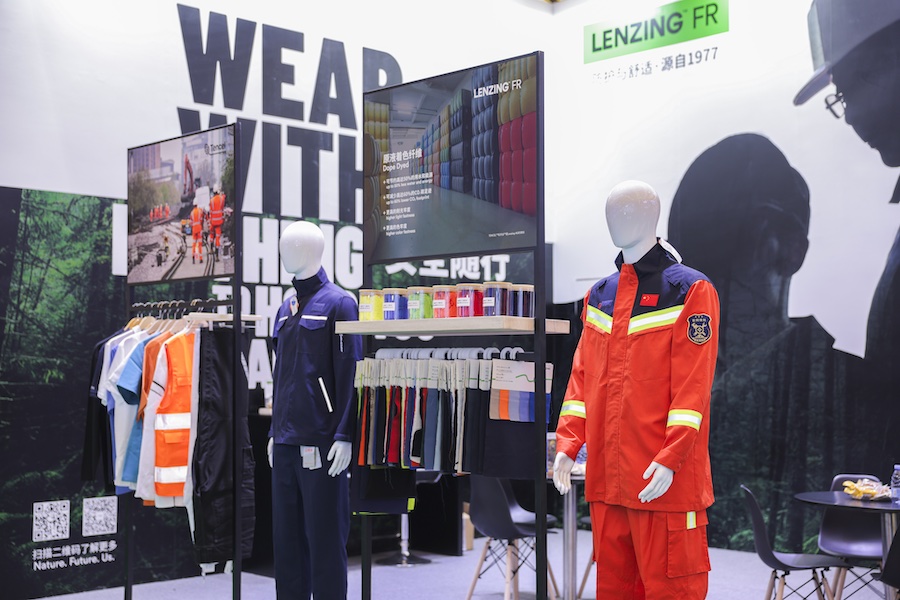
Following the portfolio’s Asia-Pacific introduction at CIOSH Shanghai (7–9 April), Kevin Sun, Commercial Manager of FR China team shared, “CIOSH brings together over 90% of the Chinese industry partners for FR. We took this opportunity to engage in many productive exchanges with our partners, enhancing confidence and trust under the complex geopolitical situation. At this event, we debuted our refreshed brand image in China for the first time. Customers generally commented that our new design is clear and elegant, creating a strong visual impact, while the new slogan conveys a strong sense of security.”
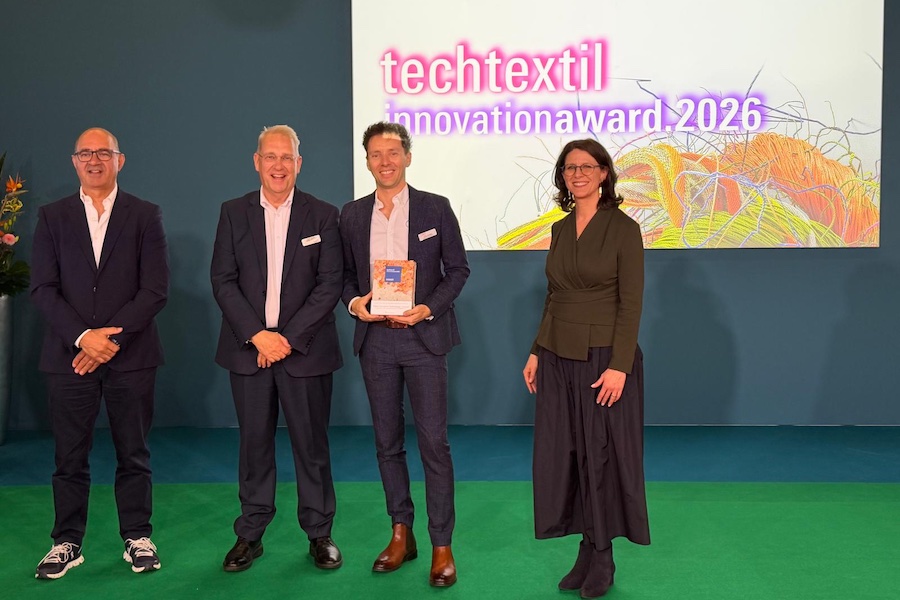
The full range of Lenzing Solutions for Protective Wear will receive its European and Global showcase at Techtextil Frankfurt (21–24 April) at Hall 12.1 / Stand D33 marking the European premiere of the three-tier concept.
A system designed for the reality of protection
From the firefighter entering a structure to the welder on a production line, no single protective clothing solution can address every risk and hazard. Effective protection requires solutions customized to specific applications and backed by fiber science that addresses not only hazard resistance but physiological comfort, mobility, and heat stress at every protection tier.
Since 1977, LENZING™ FR has been trusted in inherently flame-resistant cellulosic fibers for protective clothing. Today, Lenzing becomes the first cellulosic fiber manufacturer to offer a holistic protective wear concept spanning three distinct solution tiers from a single source. Beyond garments, protective wear serves as a full system designed to let people perform at their best under extreme conditions.
This heritage of innovation is further protected through European patent No. 2473657 B1, covering innovative high performance FR fiber (LENZING™ FR). This patent claims not only the FR fibers but also their use for the production of a yarn and a fabric representing decades of verified intellectual property in flame-resistant cellulosic fiber technology. In an unwavering pursuit of maintaining the highest product quality standards, Lenzing is committed to safeguarding these patent rights against any potential infringements. This dedication not only benefits Lenzing but also plays an important role in supporting all partners by preserving and strengthening their respective market positions.
Inherent protection: LENZING™ FR fibers, blended with aramid, deliver inherent flame resistance built into the fiber itself. The protection does not diminish over time or with washing, removing the need for wash-cycle tracking in garment fleet management. Produced using Lenzing’s Modal fiber process, LENZING™ FR fibers achieve over 70 percent higher wet tenacity than conventional FR viscose⁵, and are commonly specified for FR protective clothing that meets ISO⁶ standards – safe even for sensitive skin⁷.
Hybrid protection: TENCEL™ Lyocell – A100 fibers, blended with modacrylic, bring comfort science and resource efficiency⁸ to flame-resistant textiles. The resulting FR blends come with a non-fibrillating surface and high-visibility color capability.
FR-finished protection: TENCEL™ Lyocell Standard fibers with FR finishing technology offer reliable, cost-effective basic protection for steel, welding, and metal industry applications, with significantly lower water consumption per kilogram of fiber compared to conventional cotton⁸. FR finishing partners are selected in alignment with Lenzing’s commitment to responsible production⁸.
The inherent tier, enabled by LENZING™ FR fibers, addresses the highest-risk environments including structural firefighting, military operations, and electrical utilities. Hybrid solutions serve oil and gas, industrial and high-visibility applications. FR-finished protection is engineered for heavy metal, steel and welding operations where cost-efficiency is critical.
Performance that keeps people working safely
Independent physiological testing at 35°C has demonstrated that protective clothing incorporating LENZING™ FR fibers in blends with aramid recorded a 29 percent lower increase in core body temperature than FR-treated cotton (0.75°C vs 1.05°C), outperforming 100 percent aramid (1.05°C) and modacrylic-cotton blends (1.1°C). Test subjects wearing garments with more than 50 percent LENZING™ FR fiber content sustained physical performance longer at defined exercise intensity levels¹. With the right fiber, protection is elevated with confidence to perform without hesitation.
Dope-dyed LENZING™ FR fibers eliminate additional dyeing processes, enabling up to 50 percent reductions in energy and water use and up to 60 percent lower carbon footprint compared to conventional dyeing⁹.
“For too long, the protective wear industry has relied on a one-size-fits-all fiber approach, yet a structural firefighter and a welding technician face fundamentally different risks,” Alexander Gstettner, Global Commercial Director, FR fibers at Lenzing. “With PFAS regulations accelerating and workers operating in increasingly demanding thermal environments, we see a clear need for a more structured approach. Lenzing Solutions for Protective Wear brings together nearly five decades of flame resistance expertise with three distinct cellulosic fiber tiers; each proven in its category, all backed by credentials² ³ ⁶ ⁷ ⁸ and established trust in the industry.”
Lenzing Solutions for Protective Wear will be presented at the Lenzing Hall 12.1 / Stand D33 at Techtextil Frankfurt, 21–24 April 2026. For product information, technical datasheets, fiber samples, and application support, visit the booth or Lenzing Pro (LenzingPro.com).
---
Heritage: Inherently flame-resistant cellulosic fibers since 1977
Full credentials¹⁰: CDP Triple “A” – 4th consecutive year, one of only 23 companies worldwide (2025); EcoVadis Platinum (top 1%); Canopy Dark Green Shirt; SBTi; USDA Certified Biobased (100%); ZDHC; ISO 9001/14001/45001
Traceability: Lenzing Fiber Identification technology for supply chain authenticity
¹ Physiological performance study: 18 volunteers tested four material combinations (LENZING™ FR/aramid blend, FR-treated cotton, 100% aramid, modacrylic/cotton) at 35°C under standardised work-load protocol. Measured parameters: core body temperature, skin temperature, lactate concentration, heart rate.
² EU Ecolabel for textile products (licence no. AT/016/001).
³ Lenzing procures wood and pulp only from certified or controlled sustainable sources. In its Wood and Pulp Policy, Lenzing is committed to procuring wood and pulp exclusively from non-controversial sources.
⁴ Global PPE market projection: Fortune Business Insights, 2025.
⁵ Wet tenacity: LENZING™ FR 14.5 cN/tex vs conventional FR viscose 8.5 cN/tex (wet). Source: Lenzing product data.
⁶ LENZING™ FR and TENCEL™ fiber production is certified under leading international standards: ISO 9001:2015 (Quality management), ISO 14001:2015 (Environmental management), and ISO 45001:2018 (Occupational health & safety).
⁷ LENZING™ FR and TENCEL™ fibers have been certified as harmless to human health, having passed tests for numerous regulated and nonregulated harmful substances under OEKO-TEX® STANDARD 100.
⁸ LENZING™ Lyocell and Modal fibers are made with at least 50 percent less carbon emissions and water consumption, compared to generic (unbranded) lyocell and modal. The results were calculated according to LCA standards (ISO 14040/44) and are made available via the Higg Materials Sustainability Index (MSI) v3.11 (November 2025).
⁹ Results based on “Terinte et al., 2014: Terinte, N., Manda, B.M.K., Taylor, J., Schuster, K.C., and Patel, M. (2014). Environmental assessment of coloured fabrics and opportunities for value creation: spin-dyeing versus conventional dyeing. Journal of Cleaner Production, Vol. 72: 127–138.”; Textile processing steps being similar for Modal and Viscose, therefore savings are based on calculations of fabric production and dyeing via jet dyeing excl. fiber impact.
¹⁰ https://www.lenzing.com/people-planet/certificates-evaluations