[pageLogInLogOut]

#Sustainability

OEKO-TEX® launches ORGANIC COTTON certification
© 2023 OEKO-TEX®
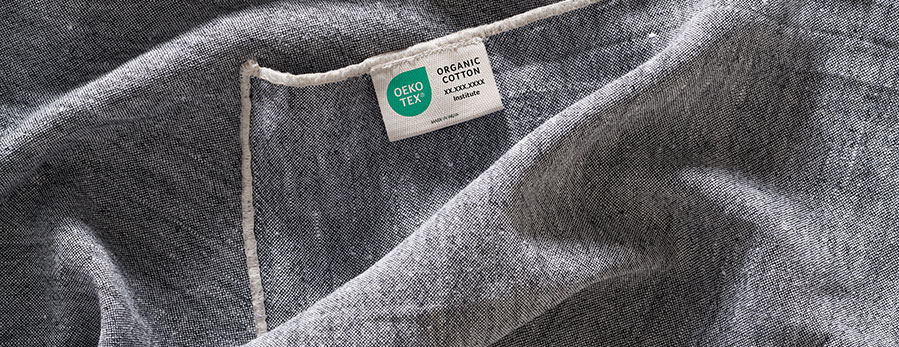
Starting April 2023, the OEKO-TEX® ORGANIC COTTON certification is offering a comprehensive and objective testing system for organic cotton products with a fully verified chain of custody. The focus is product and consumer safety as well as traceability. Fashion and textile products bearing this label were made with organic cotton, grown without GMOs (genetically modified organisms) or pesticides, and were tested for other harmful substances.

For verification of organic origin, OEKO-TEX®’s GMO quantification method differentiates between contamination and purposeful mixing of conventional cotton. The new certification works in compliance with several global regulations including EU REACH Annex XIV and XVII, US CPSIA (lead), EU POP regulation.

OEKO-TEX® has been testing and certifying organic cotton since the launch of OEKO-TEX® STANDARD 100 over 30 years ago. As the use of organic cotton in fashion and textiles has increased, so have the requests to call out organic cotton in OEKO-TEX® STANDARD 100 certificates. “Our response to this development is a comprehensive, independent and objective testing and certification system for textile products made of organic cotton throughout the whole production chain”, says Georg Dieners, OEKO- TEX® General Secretary. “Our goal is to enable everyone to make responsible decisions and protect natural resources. Therefore, OEKO-TEX® ORGANIC COTTON offers targeted support for companies along the supply chain. It allows them to protect human health based on a scientifically proven criteria catalogue and neutral laboratory tests. End consumers receive a reliable, manufacturer-independent product label. This means safer, organic cotton products that have been tested along the whole chain of custody - a valuable contribution to effective consumer protection.” 

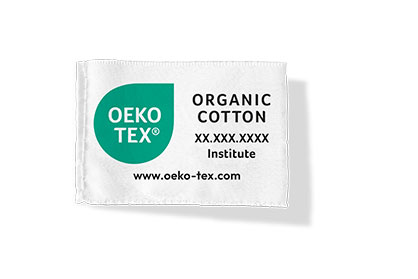
To ensure clear consumer communication, OEKO-TEX® has created a label and sub label: “ORGANIC COTTON” certifies articles and materials made of 100% organic cotton, whereas “ORGANIC COTTON Blended” certified articles must be made of at least 70% organic cotton. With proof of origin, any article containing organic cotton can still be tested for harmful substances and certified with OEKO-TEX® STANDARD 100. The certification can be communicated with the OEKO-TEX® STANDARD 100 label, with organic cotton stated in the certificate text. Mixtures of organic and conventional cotton are forbidden in all three certificates. 
© 2023 OEKO-TEX®
© 2023 OEKO-TEX®


The OEKO-TEX® quantitative GMO testing method is the first method able to differentiate between intentional mixing versus unavoidable contamination (e.g. from fibre flight) with conventional cotton. For the launch of ORGANIC COTTON, OEKO-TEX® has set a limit of <10% GMOs. The intention is to gather knowledge and experience through incoming data, then adapt the limit value to further develop and improve the certification.

To ensure organic farming practices at the farm level, OEKO-TEX® ORGANIC COTTON requires a certification according to the IFOAM (International Federation of Organic Agriculture Movements) family of standards. The full test program of the OEKO-TEX® STANDARD 100 is carried out to ensure product safety. Additional tests for GMOs and pesticides are carried out to prove organic farming. In case of a failed qualitative GMO test, the quantitative GMO test checks if the failure was due to contamination or intentional mixing. In addition to verification of all documents and laboratory testing of samples, the responsible OEKO-TEX® testing institutes conduct on-site visits prior to issuing the certificate.


Starting with the ginning phase, each change of ownership requires an OEKO-TEX® ORGANIC COTTON transaction certificate. Along with the transaction certificate, documentation proving the transaction, such as relevant invoices and delivery slips, plus all ORGANIC COTTON certificates, must be submitted. These steps are repeated annually with a focus on traceability. To prevent fraud, OEKO-TEX® maintains a secure database with all transactions.
© 2023 OEKO-TEX®
© 2023 OEKO-TEX®


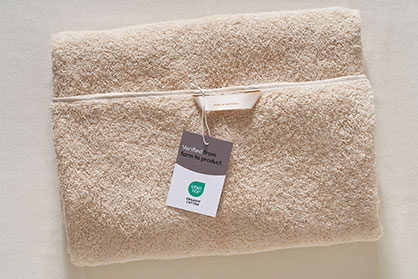
The OEKO-TEX® modular system offers multiple synergies for manufactures and brands, e.g., using OEKO-TEX® ECO PASSPORT certified chemicals can reduce the testing effort for an OEKO-TEX® ORGANIC COTTON certification. The focus of ORGANIC COTTON is to ensure organic origin via GMO and pesticide testing, as well as the chain-of-custody through transaction certificates and consumer safety via testing for harmful substances. All OEKO-TEX® customers must comply with fundamental social criteria as part of the OEKO-TEX® Code of Conduct. To cover social criteria in the full extent, OEKO-TEX® ORGANIC COTTON can be combined with OEKO-TEX® STeP facility certification, which is also part of OEKO-TEX® MADE IN GREEN product label. The latter enables full supply chain transparency for end-consumers via QR code, which guides consumers to the OEKO-TEX® label check.



More News from Oeko-Tex® Association

#Sustainability

OEKO-TEX® - New regulations 2025

Fostering trust within the textile and leather industry remains the mission of OEKO-TEX®. Since trust relies on consistently high standards, the OEKO-TEX® Association has released the updated testing criteria, limit values and guidelines for its certifications, based on the latest scientific research and legal developments.

#Sustainability

OEKO-TEX® Annual Report 2023/2024 mentions 50,000+ valid certifications

The international OEKO-TEX® association has continued to demonstrate positive business growth, highlighting the critical role of close collaboration and shared commitment in accelerating sustainable change. More than 35,000 textile and leather companies depend on the certificates and product labels issued by OEKO-TEX®’s independent testing institutes. OEKO-TEX® issued more than 50,000 certificates and labels between July 1, 2023, and June 30, 2024 – an increase of 22% over the previous financial year.

#Sustainability

OEKO-TEX® New regulations 2024

Creating trust within the textile and leather industry and for its customers is the mission of OEKO-TEX®. Since trust is based on consistently high quality, the OEKO-TEX® Association is again publishing updates to the applicable test criteria, limit values and guidelines for its certifications. Based on new scientific findings and legal developments, the OEKO-TEX® Association has published the annual updates to its test criteria, limit values and guidelines.

#Sustainability

Change in the OEKO-TEX® Management Board

OEKO-TEX® announces the departure of Georg Dieners. The Association’s Secretary General is leaving the organisation after 8 years in office. OEKO-TEX® expresses appreciation to Georg Dieners for his work and wishes him all the best for his future.

More News on Sustainability

#Research & Development

The region of renewable raw materials: Central German Alliance for Bioplastics

The development of sustainable plastic solutions is rapidly gaining importance in light of global environ- mental pollution, dwindling fossil resources and ambitious climate protection targets. As part of the re- gional alliance RUBIO, which brings together 18 partners from central Germany and the Berlin-Branden- burg area, the bio-based and biodegradable plastic polybutylene succinate (PBS) was comprehensively investigated, starting with the raw material, through the manufacturing process, to industrial application.

#Textile chemistry

Archroma funds development of sustainable textile laboratory at Mumbai’s Institute of Chemical Technology

Archroma, a global leader in specialty chemicals focused on sustainable solutions, has supported the Institute of Chemical Technology (ICT), Mumbai, India in the renovation and development of a sustainable laboratory facility as part of its Corporate Social Responsibility (CSR) program.

#Sustainability

Peak Sustainability Ventures & Arvind launch India’s first industrial-scale cotton-stalk torrefaction project, decarbonizing textile manufacturing in Gujarat

Arvind Limited, one of India’s leading textile-to-retail conglomerates, and Peak Sustainability Ventures, a Mumbai-based global climate investment firm, have entered into a partnership to build a large-scale cotton stalk torrefaction plant in Gujarat, with a capacity of 40,000+ tonnes per year, to accelerate Arvind’s decarbonization goals and promote torrefaction at scale in India.

#Sustainability

Textile Exchange evolves its membership structure to unlock the next stage of collective action for climate and nature

Textile Exchange is excited to announce that it is evolving its membership structure to a more action-oriented, impact-driven model designed to provide clearly defined pathways that help organizations respond to the climate and nature crisis.

Latest News

#Recycling / Circular Economy

Advanced Recycling Conference 2025 fuels innovation across key waste streams

The Advanced Recycling Conference (ARC) 2025 brought together nearly 220 experts from 28 countries to spotlight pioneering advancements and foster industry collaboration in recycling across diverse waste streams including plastics, textiles, automotive and other materials.

#Dyeing, Drying, Finishing

Navis TubeTex announces U.S. partnership with Icomatex

Navis TubeTex, a global leader in advanced dyeing and finishing machinery solutions, is pleased to announce a new partnership with Icomatex (www.icomatex.com), a respected European manufacturer of high-quality stenters and textile finishing equipment. Under this agreement, Navis TubeTex will exclusively represent the Icomatex stenter line in the United States.

#Recycling / Circular Economy

ADVANSA launches ADVA®tex: A new step toward textile-to-textile recycling

ADVANSA has introduced ADVA®tex, a new filling fibre made entirely from recycled pre-consumer textile waste, positioning the material as a significant step forward in textile-to-textile (T2T) recycling. The fibre is designed for use in duvets, pillows, mattresses, and furniture applications and is available in three versions.

#Knitting & Hosiery

KARL MAYER celebrates 35 years of EL pattern drive

KARL MAYER is celebrating an anniversary this year: on 30 November 1990, the first warp knitting machine with electronic guide bar control, the KS 4 EL, was delivered – another milestone for patterning. As early as 1980, the SU gearbox with the MRS42SU had initiated the transition from mechanical chains to digital data.

TOP