[pageLogInLogOut]

#Research & Development

The region of renewable raw materials: Central German Alliance for Bioplastics
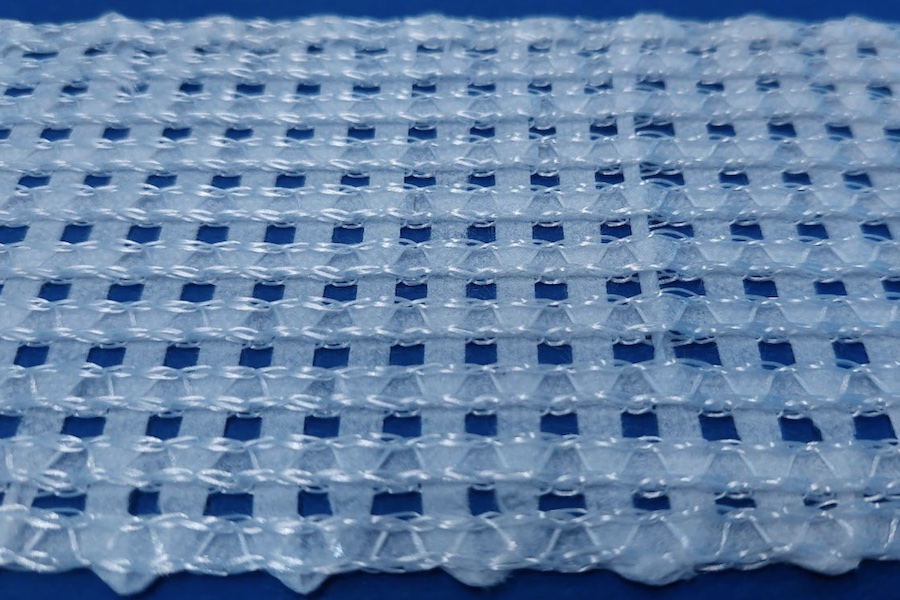
Polybutylene succinate (PBS) film tape © 2025 STFI
The development of sustainable plastic solutions is rapidly gaining importance in light of global environ- mental pollution, dwindling fossil resources and ambitious climate protection targets. As part of the re- gional alliance RUBIO, which brings together 18 partners from central Germany and the Berlin-Branden- burg area, the bio-based and biodegradable plastic polybutylene succinate (PBS) was comprehensively investigated, starting with the raw material, through the manufacturing process, to industrial application.

The aim was to evaluate the potential of PBS as an environmentally friendly alternative to polyethylene and to create the technological basis for new sustainable value chains. As a partner in the alliance, STFI was able to demonstrate that the bioplastic PBS is suitable for textile processing using the example of a net for straw bales.

The starting point: bioplastics sought as a substitute for PE

Increasing reports of macro and microplastics everywhere on earth, the finite nature of fossil re-sources, EU climate protection targets, and the call for CO2 reduction compel all stakeholders, especially the plas- tics industry, to act promptly. Bio-based and simultaneously biodegradable plastics ap-pear to be valua- ble raw materials for many applications, ranging from the packaging industry to the textile sector and agriculture. The aim of this project was comprehensive investigation of polybutylene succinate (PBS) from raw material to its industrial applicability. In order to qualify the biopolymer as a substitute for polyethylene (PE), its material properties were tested and evaluated with regard to their suitability for a wide range of applications.

The textile processing of the bioplastic PBS

During project work, STFI main task was to explore opportunities and limits of technological pro-cessing of PBS materials (resins, film, nonwoven fabric, ribbons) into textile end products. Investiga-tions were carried out on processing behavior of resins to nonwoven fabrics, followed by cutting processes into narrow ribbons, as well as studies on cutting and stretching PBS films and resins into ribbons. Subse- quently, these ribbons were used to produce surfaces on knitting and weaving ma-chines. As a result, nonwoven fabrics, ribbons, and textile structures are available, which will be fur-ther optimized in subse- quent projects. It has been possible to develop a knitted straw bale net that meets the requirements regarding mechanical properties of DLG (German Agricultural Society) for novel bio-based plastics.
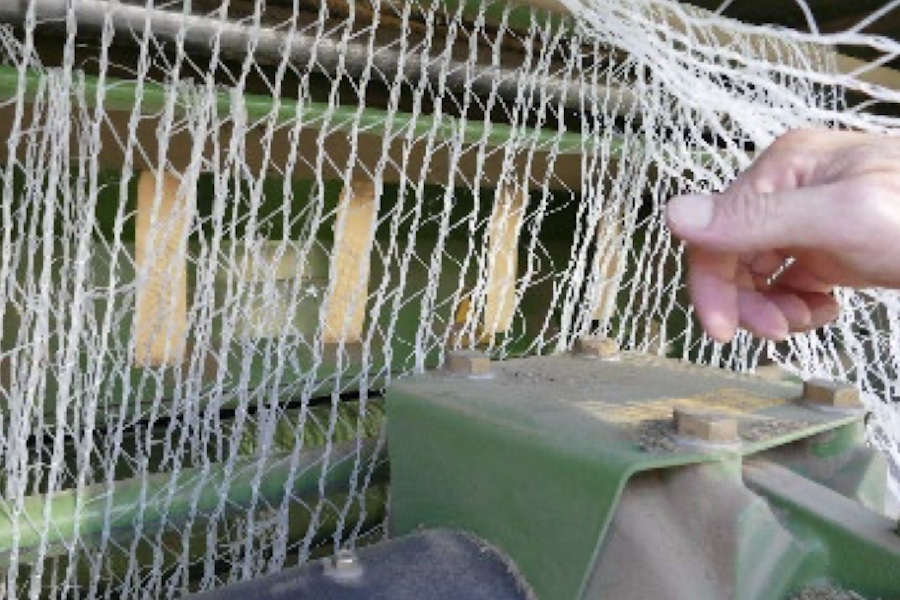
Processing of PBS nets on site © 2025 STFI


Success and outlook

The results include spunbonded fabrics, ribbons and textile structures. A knitted straw bale net has been successfully developed that meets the requirements of the DLG (German Agricultural Society) for inno- vative bio-based plastics in terms of mechanical properties.

The focus for the future is on optimising textile production processes for the bioplastic PBS. The RU- BIO2Value project was launched in December and will focus on applications such as injection-moulded reusable packaging, textiles and geotextiles, but also disposable packaging in upcoming studies by the consortium. At STFI, established textile processes are being converted to sustainable and renewable raw materials in order to use recycled or biodegradable materials for sustainable production.
More News from Sächsisches Textilforschungsinstitut e.V. (STFI)

#Recycling / Circular Economy

17th Colloquium on Recycling for Textiles with accompanying trade exhibition in Chemnitz

On 3 and 4 December 2025, the 17th colloquium on recycling for textiles will take place at the Hotel Chemnitzer Hof. The event brings together experts from industry, science and research to present and discuss current developments, technologies and business models for a sustainable circular economy in the textile industry.

#Research & Development

Kendyr as a climate-friendly cotton alternative: STFI explores new value chains for salinised land in Central Asia

In large parts of Central Asia, decades of cotton irrigation have led to severe soil salinisation, with serious consequences for soil fertility and the future of cotton cultivation. An international research consortium, including the Saxon Textile Research Institute (STFI), has therefore investigated the potential of alternative fibre plants. The focus was on Apocynum spp. (kendyr), a bast fibre plant that can thrive on saline soils. The aim: to restore the agricultural use of former cotton fields and establish new textile value chains in the region.

#Research & Development

Tour de LOOP Exclusive specialist trip to Chemnitz – textile art and design in the European Capital of Culture 2025

The European Capital of Culture 2025, Chemnitz, opened its doors to textile designers, textile artists and experts from the fields of fashion, art and textiles: the Tour de LOOP on 26 and 27 May 2025 took participants on an exclusive professional tour of one of Europe's most traditional and innovative textile regions. 19 visitors from Europe explored Chemnitz and its textile region. They came from the Nether- lands, Austria, the Czech Republic, Great Britain and Germany.

#Research & Development

STFI is investigating textile applications for PU casting compounds

Polyurethane (PU) casting compounds are classically used as protective and insulating material in electronics and electrical engineering, e.g. in battery modules or on circuits or for embedding LEDs. In addition to their electrical insulating properties, they are heat resistant and mechanically flexible . In addition, the transition from liquid to solid aggregate state is so favorable that these PU masses can be applied with a precise fit.

More News on Research & Development

#Nonwoven machines

Cooperation in the field of meltblown laboratory technology

The Nonwoven Institute (NWI) at North Carolina State University and Oerlikon Nonwoven will be collaborating in the field of meltblown laboratory technology in the future. This was announced by Professor Raoul Farer, Executive Deputy Director of the NWI and Professor at the Wilson College of Textiles at North Carolina State University, and Dr. Ingo Mählmann, Sales Director Nonwoven at Oerlikon Neumag, during this year's ITMA Asia and CITME in Singapore.

#Recycling / Circular Economy

European research project addresses textile waste through integrated recycling technologies

A major European research initiative coordinated by Fraunhofer UMSICHT has been launched to develop integrated solutions for textile waste recycling. The AUTOLOOP project aims to create a comprehensive system that could process 1.24 million tonnes of textile waste annually by 2050, whilst potentially creating over 130,000 green jobs across the EU. This project aims to develop, test and integrate automated sorting, tracing, and closed-loop recycling technologies for polyester-based textiles (NRT), addressing the pressing challenge of textile waste management.

#Research & Development

Feasibility study shows potential to convert textile waste into PHB bioplastic

Textile waste could serve as a valuable source of raw materials for sustainable plastics in the future, according to the joint TexPHB feasibility study conducted by the Fraunhofer Institute for Applied Polymer Research IAP, Beneficial Design Institute GmbH and matterr GmbH. The study will be presented to the public for the first time at a network meeting on 25 November 2025 at the State Chancellery in Potsdam.

#Research & Development

IRG Polymer Recycling wraps up productive 2025 project cycle

The Industry Research Group (IRG) Polymer Recycling has completed another successful project year. Last week, partners from across the textile value chain met at the Institute for Textile Technology (ITA) at RWTH Aachen University for the full-term project meeting.

Latest News

#Knitting & Hosiery

KARL MAYER celebrates 35 years of EL pattern drive

KARL MAYER is celebrating an anniversary this year: on 30 November 1990, the first warp knitting machine with electronic guide bar control, the KS 4 EL, was delivered – another milestone for patterning. As early as 1980, the SU gearbox with the MRS42SU had initiated the transition from mechanical chains to digital data.

#Textile processing

YKK receives ISPO Textrends Awards for circular innovations

YKK Corporation (Headquarters: Chiyoda-ku, Tokyo; President: Koichi Matsushima; hereafter, YKK) is pleased to announce that the ISPO Textrends judges have selected YKK's 3D Composite Puller as the Best Product in the Accessories category. They also selected YKK’s NATULON Plus® Fiber Sourced™ zipper with Recycled PET Open Parts as a Top 5 item in the same category. The competition, held twice a year in conjunction with the ISPO trade show, recognizes the most innovative performance textiles, components, and apparel.

#Heimtextil 2026

Global market overview: Carpets & Rugs strengthens the carpet industry with trends, expertise and an expanded portfolio

Heimtextil 2026 rolls out Carpets & Rugs more extensively than ever before: With a new structure and an expanded offering, the leading trade fair for home and contract textiles and textile design brings together leading suppliers and relevant product categories under one roof. For the first time, premium unique pieces round off the global range.

#Textile chemistry

Archroma funds development of sustainable textile laboratory at Mumbai’s Institute of Chemical Technology

Archroma, a global leader in specialty chemicals focused on sustainable solutions, has supported the Institute of Chemical Technology (ICT), Mumbai, India in the renovation and development of a sustainable laboratory facility as part of its Corporate Social Responsibility (CSR) program.

TOP