[pageLogInLogOut]

#Sustainability

The Foundation will collaborate with WRAP and WEF to tackle plastic pollution

The Foundation’s Plastics Initiative is joining forces with the World Economic Forum’s Global Plastic Action Partnership (GPAP) and international climate action NGO WRAP, to ensure more efficient knowledge sharing across their combined network.

The three organisations have been individually running national level initiatives to tackle plastic pollution since 2018, which today collectively span more than twenty countries. Now, to help accelerate their shared vision for a circular economy for plastics, the organisations are looking to collaborate more closely, by sharing learnings and best practices across their entire network on a regular basis.

This pre-competitive mindset will allow those coordinating action on the ground to have access to best practices from different initiatives across the world.

It will also help nations prepare the groundwork for the seismic shift in the way plastic is produced and used, which is expected to occur with the ratification of the International legally binding instrument to end plastic pollution by mid-2025.

Negotiations for the Global Plastics Treaty started last November, and are expected to create unprecedented pressure on country level public and private stakeholders to assess their plastic use and design pathways for addressing pollution.

There are currently thirteen Plastics Pacts around the world – ANZPAC (Australia, New Zealand and Pacific Island), Canada, Chile, Europe, France, India, Kenya, the Netherlands, Poland, Portugal, South Africa, the UK and the US - and a new Pact in development in Colombia. In addition, there are National Plastic Action Partnerships, (developed by the World Economic Forum under the GPAP project) in Indonesia, Vietnam, Pakistan, Maharashtra (India), Nigeria, Ghana, Ecuador, South Africa and Mexico City (Mexico).

Each of these initiatives convenes key stakeholders across sectors to implement solutions towards a circular economy for plastics, tailored to their specific geography. Stakeholders include businesses, government institutions and civil society, NGOs, and citizens.

Specific actions that national initiatives have been working on include, for example, private-sector action to meet reduction, reuse

and recyclability targets and for national baseline assessment and scenario modelling tools - as well as support for the development of national action plans and financing roadmaps.


“These three organisations are leading global efforts to create plastics systems that work, and which eliminate plastics pollution. As policymakers work towards designing a global treaty to bring plastics into the circular economy, collaboration of like-minded stakeholders is more important than ever. The creation of this new platform allows further exchange of best practices at a local level and the demonstration of real change on the ground, which can be critical to support an ambitious treaty development."

- Andrew Morlet, CEO, Ellen MacArthur Foundation.

More News from TEXDATA International

#Recycling / Circular Economy

textile.4U publishes special edition “Top 100 Textile Recycling Companies 2025”

With a comprehensive 176-page special edition, textile.4U is dedicating its latest issue entirely to one of the most dynamic and influential topics in today’s textile industry: textile recycling. The new issue, published exclusively in high-quality print, presents the Top 100 textile recycling companies researched and selected by TexData – organizations that already play a key role in the transition to circular textiles or are expected to have a significant impact in the near future.

#Recycling / Circular Economy

Responsible Textile Recovery Act of 2024 signed by Governor

Senator Josh Newman (D-Fullerton) is proud to announce that Senate Bill 707 (SB 707), the Responsible Textile Recovery Act of 2024, has been signed into law by the Governor of California, Gavin Newsom. This groundbreaking legislation establishes the country’s first Extended Producer Responsibility (EPR) textile recycling program, marking a significant step forward in the state’s efforts to combat waste and promote sustainability.

#Textiles & Apparel / Garment

Modtissimo promotes sustainability with 28 coordinates in the Green Circle

Modtissimo is proving more and more to be a textile and clothing show that delivers the latest innovations in the area of sustainability, with the iTechStyle Green Circle being the main showcase for companies' creations. In this 60+4 edition, taking place on 12 and 13 September, 28 coordinates will be exhibited in a section organised by CITEVE and curated by Paulo Gomes.

#Europe

The EU and Egypt team up to mobilise private sector investments at Investment Conference and sign a Memorandum of Understanding underpinning €1 billion in macro-financial assistance for Egypt

At the EU-Egypt Investment Conference, co-organised by the EU and the Government of Egypt on 29-30 June, the EU and Egypt are teaming up to intensify private sector investments in Egypt. They are also signing a Memorandum of Understanding (MoU) for the disbursement to Egypt of up to €1 billion in Macro-Financial Assistance.

More News on Sustainability

#Sustainability

GOTS version 8.0 released: advanced supply chain accountability, from fibre to finished product

Global Standard is pleased to announce the release of GOTS Version 8.0, the latest update to the world's leading processing standard for organic textiles. The updated Standard strengthens requirements for air emissions and waste management, as well as criteria for product safety. It introduces new provisions on circularity, microfibre management and updates in residue testing. Version 8.0 also elevates due diligence obligations and formalises governance requirements, including ESG disclosure, anti-corruption policies and conflict-of-interest safeguards, to support credible, responsible business conduct.

#Sustainability

The nova-Institute establishes new Renewable Feedstock Department to lay the groundwork for industrial defossilisation

The transition from fossil-based to renewable carbon – sourced from biomass, CO₂ utilisation and recycling – is the cornerstone of a climate-neutral chemical industry. The nova-Institute’s new department is dedicated to providing the essential data, analyses and strategic roadmaps required to secure a reliable future feedstock supply and make this transition a commercial and ecological reality.

#Sustainability

Textile Exchange unveils commitment-based pathway for members to accelerate responsible raw material production

Textile Exchange has unveiled further details about its new membership structure, designed to guide the fashion, textile, and apparel industry in a collective course of action toward preferred production systems for raw materials and fibers.

#Textile chemistry

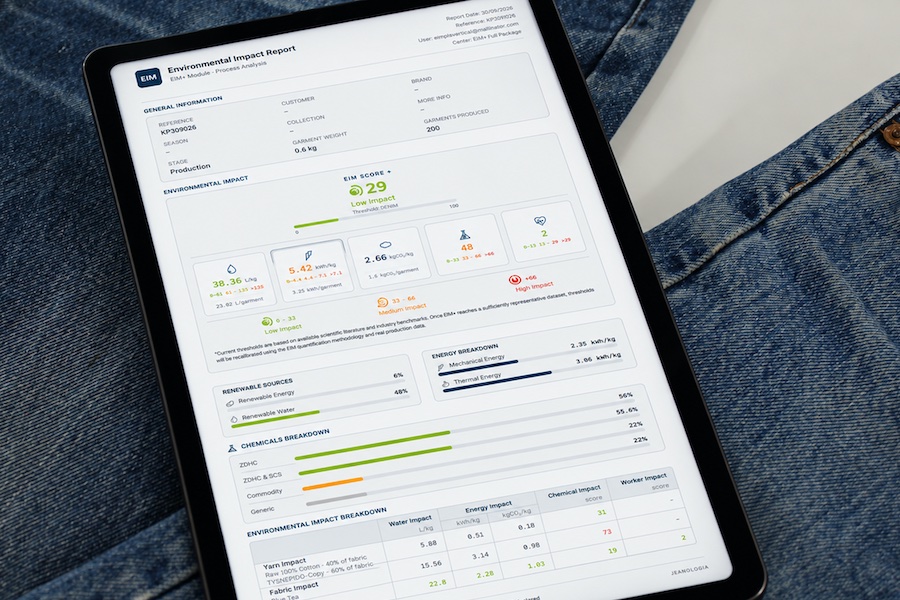
Jeanologia urges industry to accelerate PP Spray phase-out following ZDHC Watchlist update

Potassium permanganate has officially entered the Chemical Watchlist of the ZDHC Foundation, signaling increased scrutiny and potential phase-out of one of the most hazardous chemicals still used in denim finishing. The inclusion confirms an industry shift that Jeanologia anticipated more than a decade ago.

Latest News

#Spinning

Barmag presents the next generation of POY production – energy-efficient and partial-automated

With POY 2.0, Barmag is introducing a completely redesigned spinning concept that takes the production of partially oriented yarn (POY) to a new level in terms of technology and economy. The solution, which was presented to a selected audience of experts for the first time at ITMA Asia + CITME 2025, was met with great enthusiasm: several yarn producers worldwide immediately expressed their interest in a pilot plant.

#Composites

More affordable, environmentally friendly hydrogen pressure tanks at ITA-JEC booth

As a highlight of the JEC, the Institut für Textiltechnik (ITA) of RWTH Aachen University will be presenting hydrogen pressure tanks manufactured using multifilament winding processes at the NRW joint booth in Hall 5, Stand G65.

#Textile chemistry

DyStar Group Announces Board Transition to Drive Innovation

DyStar, a leading specialty chemical company with a heritage of more than a century in product development and innovation, announced today the appointment of Ruan Cunfan to its Board of Directors, effective 20 February 2026.

#Recycling / Circular Economy

Textile‑to‑textile recycling leader Circulose joins Spinnova’s ecosystem to accelerate technology scale‑up

Textile‑to‑textile recycling leader Circulose joins Spinnova’s ecosystem (consortium) to help advance the scale‑up of Spinnova’s technology. Spinnova has actively sought partners to accelerate commercial scale‑up, and Circulose, as a key player in textile recycling, strengthens the ecosystem by providing a raw material that is in high demand across the industry.

TOP