[pageLogInLogOut]

#Texprocess 2026

Texprocess 2026: Automation, digitalisation and AI redefine textile processing
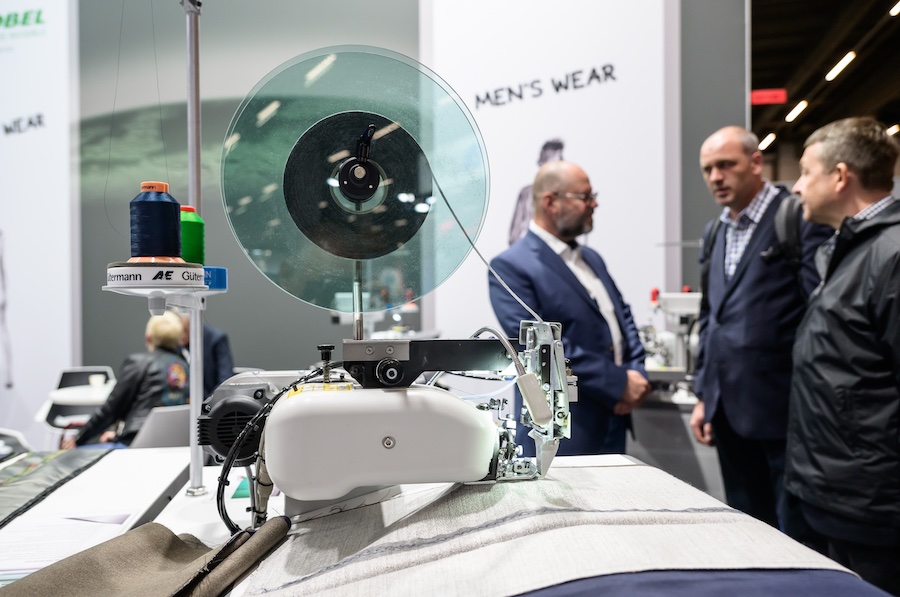
© 2026 Messe Frankfurt GmbH / Pietro Sutera
Making investment decisions in textile processing has become significantly more demanding. Increasing energy costs, a shortage of skilled labour and ongoing geopolitical uncertainties are compelling companies to focus on technologies that deliver clear gains in efficiency and process reliability. This applies equally to apparel manufacturing and to the processing of technical textiles and high-performance materials. As a result, modernisation initiatives are assessed more carefully – even as the need to upgrade production systems continues to intensify.

Within this context, Texprocess 2026 offers a structured overview of available technologies for future-oriented investment decisions. Taking place from 21 to 24 April 2026 in Frankfurt, the leading international trade fair for the processing of textile and flexible materials will host around 200 exhibitors from 28 countries. The event reflects current developments across the sector, particularly in the fields of automation, digital integration and artificial intelligence.

Spanning 15 product groups, the exhibition covers the entire processing chain – from CAD/CAM and digital product development through to cutting, sewing, embroidery and finishing. Alongside established industry players, new exhibitors and international start-ups are contributing fresh perspectives. In dedicated areas, companies such as Prodactive Solutions, Qsee.ai and White Pattern present emerging solutions while engaging with partners from industry and research.

Held in parallel, the co-located Techtextil broadens the scope to include materials, nonwovens and application-oriented developments. Together, both exhibitions represent the full textile value chain and bring more than 1,700 exhibitors to the Frankfurt exhibition grounds. An optimised hall layout, including a closer alignment of apparel-related segments, further strengthens the connection between material innovation and processing technologies.

Texprocess thus mirrors a market situation defined by both restraint and necessity: while companies are becoming more selective in their investments, the demand for efficient, interconnected and scalable production technologies continues to rise.

Investment strategies between caution and transformation

Beyond technological developments, Texprocess also reflects a shift in how companies approach investment decisions. Rather than large-scale modernisation projects, many manufacturers are increasingly prioritising targeted upgrades that deliver measurable improvements within existing production environments.

This includes modular automation solutions, scalable software platforms and technologies that can be integrated step by step without disrupting ongoing operations. Flexibility and interoperability are becoming key criteria, particularly in view of uncertain market conditions and fluctuating demand.

At the same time, delaying investment is becoming increasingly difficult. Rising labour costs, energy prices and quality requirements are placing pressure on manufacturers to improve productivity and resource efficiency. As a result, companies are navigating a narrow corridor between cautious spending and the need to remain competitive.

Texprocess provides a framework for these decisions by enabling direct comparison of technologies and offering insights into practical implementation strategies across different segments of the industry.

Automation stabilising production processes

Automation continues to be one of the most prominent drivers of change in textile processing.

Technologies designed to automate material handling, cutting or sewing operations aim to minimise manual intervention while improving consistency and output. Companies such as bullmer demonstrate how cutting room solutions are evolving into integrated systems that combine spreading, cutting and sorting within a single workflow, capable of handling a wide variety of textiles and technical materials. Automation is also making significant progress in material handling – traditionally one of the most labour-intensive areas. Robotextile, for example, develops systems that automatically separate and position individual fabric layers for subsequent steps such as sewing, printing or laminating.

The sewing stage is likewise becoming increasingly automated. Dürkopp Adler focuses on CNC-controlled and automated sewing technologies for diverse applications, while specialised providers such as RSG Automation Technics develop tailored solutions for narrow fabrics like belts and tapes, combining machinery with integrated monitoring systems.

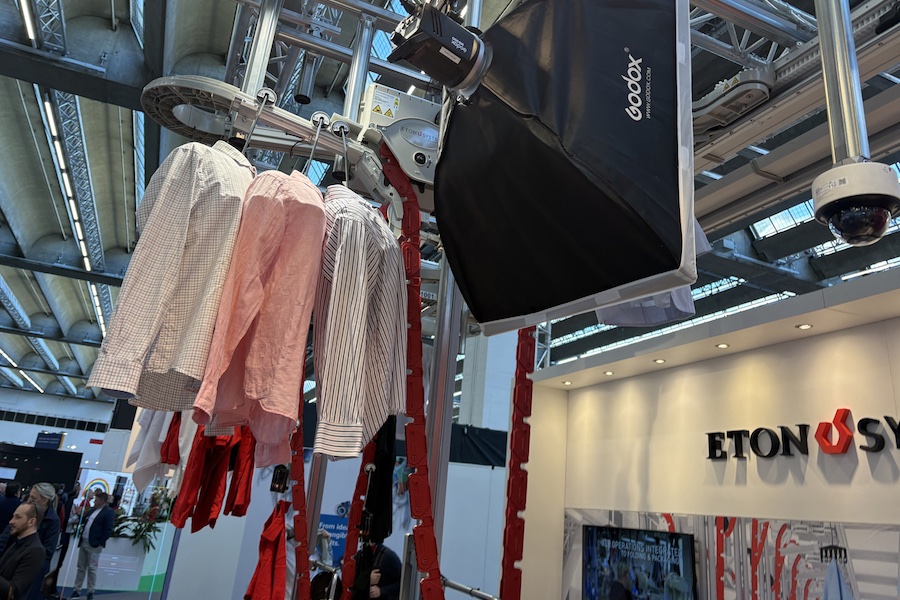
Efficient transport between production stages represents another key component of automated manufacturing. Eton Systems offers unit production systems in which individually controlled carriers move materials through the production process, reducing manual handling and increasing machine utilisation.

The full article can be read in the latest issue of textile.4U, available for free download here:



More News from TEXDATA International

#Techtextil 2026

Techtextil 2026: Between innovation pressure & market reality

From 21 to 24 April 2026, Techtextil in Frankfurt am Main will once again become the central meeting point for the international technical textiles and nonwovens industry. Running in parallel, Texprocess will focus on the industrial implementation of textile processing technologies as the leading platform in this field. Together, the two trade fairs form a closely integrated presentation and working platform along the entire textile value chain – from material development to finished applications.

#Techtextil 2026

Between geopolitical pressure and industrial resilience

In this interview, Dr. Janpeter Horn (VDMA) discusses the current challenges facing textile machinery manufacturers, shaped by geopolitical tensions, regulatory developments and subdued investment. He also outlines why innovation strength, integrated solutions and strategic positioning remain key to global competitiveness.

#Texprocess 2026

Between investment restraint and modernization pressure

Texprocess 2026 takes place in a complex market environment shaped by uncertainty and innovation pressure. In this interview, Elgar Straub (VDMA) explains why the trade fair is particularly relevant this year and which technologies are driving efficiency and competitiveness.

#Techtextil 2026

Performance Apparels: Functional textiles drive innovation at Techtextil 2026

From high-performance fibres and advanced membranes to smart textiles and sustainable material concepts – functional apparel is becoming one of the most dynamic innovation fields in technical textiles. At Techtextil 2026, exhibitors demonstrate how new materials, finishing technologies and digital functions are shaping the next generation of protective, workwear and outdoor systems.

More News on Texprocess 2026

#Texprocess 2026

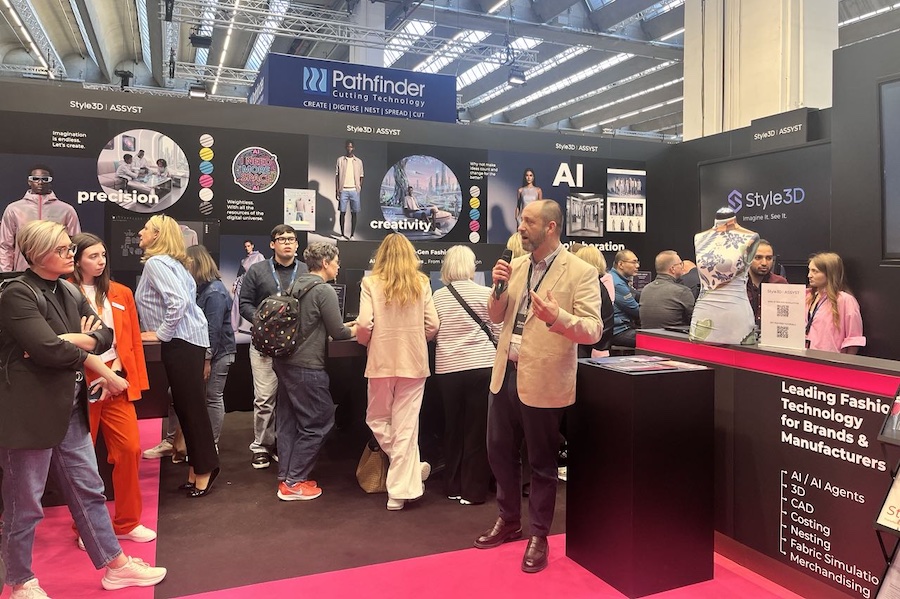
Texprocess 2026: Style3D | ASSYST showcases AI, 3D, 2D and automation and meets strong industry response

Four days, countless discussions and a clear signal from the industry: the future of fashion is digital and AI-driven. At Texprocess 2026, Style3D | ASSYST demonstrated how AI, 3D and automation are already fundamentally transforming processes from design to production.

#Techtextil 2026

Speed and connectivity: Techtextil and Texprocess provided market-ready solutions for industries under pressure

With more than 36,000 visitors and 1,700 exhibitors from a total of 112 countries, Techtextil and Texprocess 2026 demonstrated how innovation comes into industrial use. The convergence of research, industry and application proved to be a breeding ground for new material solutions, manufacturing and processing technologies. Natural fibres, performance apparel, connected systems and AI-driven processing technologies emerged as key growth and future markets.

#Techtextil 2026

Techtextil & Texprocess 2026: Global benchmark for textile innovation – Performance Apparel Textiles takes centre stage at the opening

With 1,700 exhibitors from 54 countries, Techtextil and Texprocess 2026 showcase the full range of innovation within the international textile industry – from new materials and recycling technologies to finishing solutions and high-performance textile manufacturing and processing technologies. The opening press conference centred on a key theme where innovation is especially strong: Performance Apparel Textiles.

#Texprocess 2026

Kornit Digital expands digital production into footwear and technical textiles with Presto MAX PLUS

Kornit Digital (NASDAQ: KRNT) (“Kornit” or the “Company”), a global pioneer in sustainable, on-demand digital fashion and textile production, today unveiled the Kornit Presto MAX PLUS, a new roll-to-roll system expanding digital manufacturing into footwear, automotive interiors, military camouflage, high-performance sportswear, and high-end furnishings. Debuting at Texprocess 2026 in Frankfurt, Presto MAX PLUS enables entirely new applications for on-demand textile production.

Latest News

#Recycling / Circular Economy

Europe’s textile future at a turning point: New 2030 Circularity Blueprint aims to scale recycling and unlock investment opportunities

The EU textile system is at a critical crossroads. Today, less than 1% of discarded garments are recycled into new garments, despite EU-wide obligations for separate collection. In response, Global Fashion Agenda (GFA) is launching the 2030 Circularity Blueprint, in partnership with ReHubs. This ambitious initiative is designed to support the transformation of the EU textile ecosystem to advance textile-to-textile recycling and drive the transition to a circular economy.

#Research & Development

Regional hemp bast for lightweight construction profiles

The cultivation of fibre hemp for the production of ropes and clothing has a long tradition in Saxony. Due to its excellent fibre properties, it is also suitable as a renewable raw material for reinforcement in fibre composites. At the STFI and IWU in Chemnitz, the CannaPul project is cur- rently investigating how a regional value chain for hemp-based lightweight construction profiles can be established. To this end, the technical processing of hemp fibres into continuous fibre strands and their embedding in a suitable bio-based matrix are being investigated.

#Digital Printing

Kornit Digital launches Konnections 365

Kornit Digital (NASDAQ: KRNT) (“Kornit” or the “Company”), a global pioneer in sustainable, on-demand digital fashion and textile production today announced the launch of Konnections 365 - a year-round movement designed for the people moving the apparel, print, and retail industries forward. The strategy is built on the overwhelming success of Konnections 2026 held in Hollywood, Florida, featuring more than 500 customers, partners, and collaborators who together are driving the future of apparel and textiles.

#Techtextil 2026

Techtextil 2026: KARL MAYER impresses as an innovative sector partner

KARL MAYER looks back with satisfaction on its participation in Techtextil 2026. From April 21 to 24, the international industry leader used the trade show in Frankfurt to meet with numerous key customers at its booth and, at the same time, establish many new contacts. Most visitors came from Germany, followed by major markets such as Poland, the United Kingdom, Turkey, France, and Portugal.

TOP