[pageLogInLogOut]

#Technical Textiles

Fifteen years of Autoneum – From spin off to global technology leader

Autoneum began its journey as an independent company on May 13, 2011, when it was listed on the SIX Swiss Exchange under the ticker symbol AUTN.
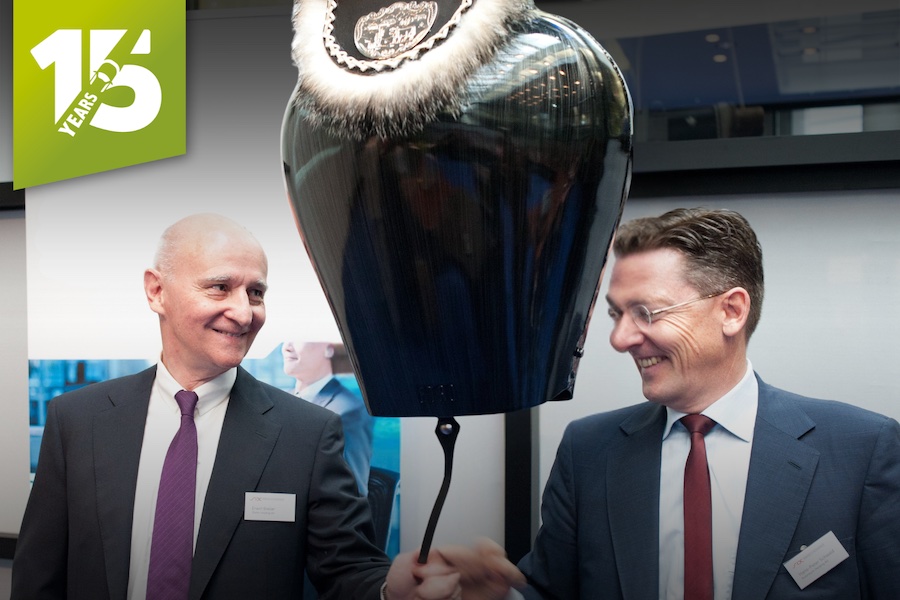
What started as a strategic carve‑out has since become the success story of a global technology leader in acoustic and thermal management solutions for vehicles. Headquartered in Winterthur, Switzerland, Autoneum supplies leading automobile manufacturers worldwide with innovative, lightweight and increasingly sustainable solutions.


A strategic separation with a clear purpose

Autoneum’s first trading day was not a traditional IPO. It marked the completion of a strategic separation from the Rieter Group, approved by shareholders in April 2011. From that point on, two fundamentally different businesses followed their own paths: textile machinery under the Rieter name, and automotive systems as Autoneum.

The listing gave Autoneum the strategic flexibility, market visibility and focus needed to thrive as a pure play automotive supplier in a highly dynamic global industry.

Built on strong industrial roots

Although Autoneum became an independent company in 2011, its expertise is rooted in decades of industrial experience. From the 1980s onwards, Rieter systematically built up competencies in noise reduction, thermal insulation and interior systems through a series of targeted acquisitions and partnerships in Europe, North America and Asia.

Key foundations were laid with the acquisition of Unikeller (Switzerland) in 1984, followed by further companies such as CHG Group (Germany), AGFK (Switzerland) and Sipavel (Portugal). In the 1990s, the portfolio was expanded through the takeover of Firth Furnishings (UK), a specialist in automotive carpets, and a joint venture UGN with the Japanese supplier Nihon Tokushu Toryo (Nittoku). Additional acquisitions in Italy and Brazil, as well as joint ventures in the United States and China, further strengthened the global footprint and technological depth of the business.

Under the name Rieter Automotive Systems, these activities grew into a globally leading automotive supplier. By the time of the spin off, Autoneum entered independence with extensive engineering know how, long standing customer relationships and a worldwide production and development network already in place.

Growing with the automotive industry

Since becoming independent, Autoneum has continuously strengthened its market position. The company expanded in growth markets, invested in innovation and adapted its portfolio to major industry trends such as electrification, lightweight design and sustainability.

Over the past fifteen years, Autoneum has successfully navigated structural changes in the automotive industry while further expanding its global presence through new production sites and selected acquisitions.

Autoneum today

Today, Autoneum operates more than 70 production facilities worldwide and employs over 16,000 people. The company is a globally recognized technology and market leader in acoustic and thermal management, known for transforming complex challenges into efficient solutions for modern mobility.

Fifteen years after its first trading day, Autoneum stands firmly on its industrial heritage – and is well prepared for the future of the automotive industry.

More News from Autoneum

#Technical Textiles

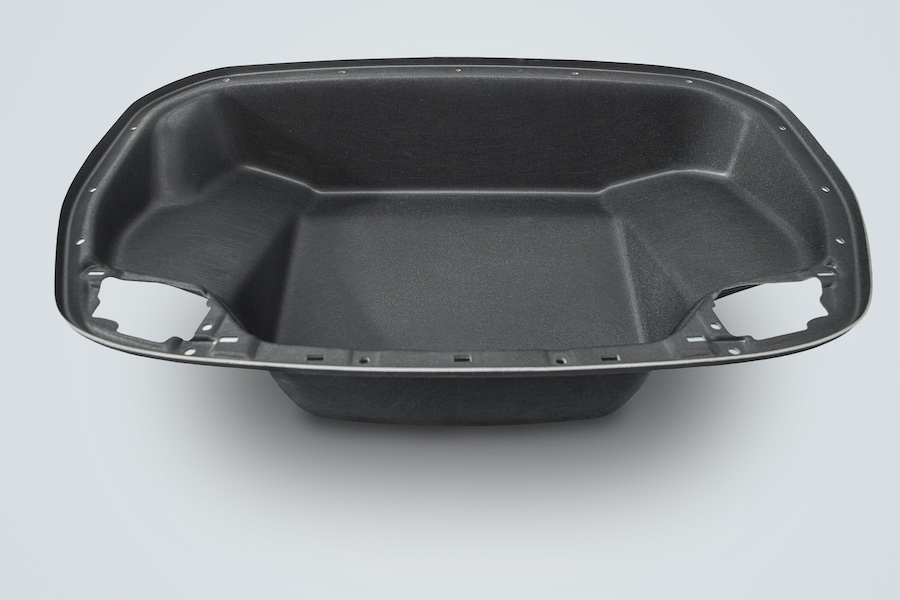
Sustainable, lightweight, and sound absorbing: Polyester-based front trunk solution for BEVs

As car manufacturers look to further reduce their carbon footprint, Autoneum has developed an innovative front trunk solution for battery electric vehicles (BEVs), made entirely from polyester-based textile. The Ultra-Silent Frunk offers significant weight reduction, improved acoustic and thermal insulation, and uses up to 70 percent recycled material, supporting sustainable and efficient vehicle design. Autoneum, global technology leader in acoustic and thermal management for vehicles, has already received orders for the new frunk from three major OEMs in Asia and Europe to be built in three BEV models. Series production for two BEVs has been underway in China and Germany since last year.

#Technical Textiles

Autoneum reports solid revenue, achieves strong EBIT margin of well above 5 percent in fiscal year 2025

Despite a challenging market environment, Autoneum reached key strategic milestones in fiscal year 2025. With two acquisitions in China, the Group significantly strengthened its position in the strategic growth market of Asia. Revenue consolidated in Swiss francs totaled CHF 2’290.6 million (2024: CHF 2’338.7 million). In local currencies, revenue increased to CHF 2’393.3 million.

#Technical Textiles

Autoneum and Polestar set new benchmarks for passenger experience and sustainability

As the global market leader in sustainable acoustic and thermal management, Autoneum is a key supplier of interior and exterior components for the highly anticipated Polestar 5 model. The successful collaboration between Autoneum and Polestar marks a significant milestone in sustainable automotive engineering: the electric grand tourer sports car features several innovations in lightweight, fully recyclable polyester-based components that ensure a superior driving experience. Polestar 5 was revealed at the IAA Mobility 2025 in Munich and is available in 24 markets.

#Nonwovens / Technical Textiles

N-Join1: an innovative, adhesive-free carpet that supports the circular economy

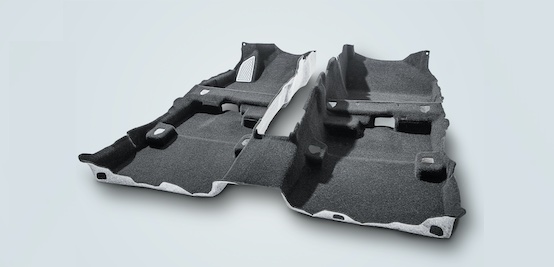
Vehicle manufacturers are increasingly looking for recycling solutions for end-of-life vehicles to meet sustainability targets and comply with new regulations that are accelerating the automotive industry’s transition toward a circular economy. In response, Autoneum has developed the N-Join1 carpet. This innovative, monomaterial carpet system, made from recycled materials, eliminates the need for latex and adhesives, thereby offering an eco-friendly solution for vehicle interiors.

More News on Technical Textiles

#Man-Made Fibers

DYNEEMA® and NP Aerospace advance personal protection for military servicewomen

Dyneema®, owned by Avient Corporation, an innovator of materials solutions, is supplying its high-performance unidirectional (UD) materials to world-leading armor manufacturer NP Aerospace, enabling the production of armor systems designed specifically to fit the female body. With 2,000 new armor systems, including 4,000 plates, made in the United Kingdom (UK) and delivered in June 2026, this collaboration addresses a long-standing lack of high-quality personal protection specially built for female defense and security personnel.

#Associations

Keeping products moving with Swedish automation at FILTECH 2026

At FILTECH 2026, taking place in Cologne from June 30th to July 2nd, members of TMAS – the Swedish textile machinery association – will highlight how the country’s engineering expertise is enabling filtration manufacturers to increase productivity, improve traceability and reduce dependence on labour-intensive manual processes.

#Weaving

Itema manufactures the first Projectile Weaving Machines “Made in Italy” at its Colzate Headquarters.

Itema proudly announces an important industrial milestone: in early May, the first Itema projectile weaving machines manufactured in Italy were successfully produced at the Group’s headquarters in Colzate.

#Technical Textiles

Trelleborg celebrates grand opening of advanced manufacturing facility in North Carolina

Trelleborg Engineered Coated Fabrics proudly celebrated the grand opening of its new, state-of-the-art extrusion coating manufacturing facility in Forest City, North Carolina, US on May 6, 2026. The event brought together community leaders, customers, partners and Trelleborg leadership to mark a significant milestone in the company’s continued investment in innovation, capacity and sustainable operations. The new facility represents a significant investment and reinforces Trelleborg’s long-term commitment to advancing high-performance engineered coated fabric solutions for critical applications across aerospace, healthcare & medical, safety & protection and industrial markets.

Latest News

#Spinning

"We will become a recycling powerhouse"

The textile industry is now in its fourth consecutive year of crisis, while automation, artificial intelligence and recycling are reshaping the rules of the game. In this interview, Rieter CEO Thomas Oetterli discusses the first signs of a market recovery, reflects on his first three years at the helm of the company, explains the integration of Barmag, outlines Rieter’s vision of the fully automated spinning mill and highlights the strategic importance of recycling. In doing so, he explains why the new Rieter Group aims to play a leading role in transforming the textile value chain into a circular economy.

#Man-Made Fibers

ROICA™ launches new global brand identity and digital experience

ROICA™, the premium stretch fiber developed by Asahi Kasei, today announced the launch of its new global brand identity, including a new key visual and a fully redesigned website. This milestone initiative marks the beginning of a new phase in ROICA™’s evolution as a global brand.

#Nonwovens

EDANA launches landmark continence report to mark the start of the World Continence Week

Today marks the official commencement of the World Continence Week. To honour this global awareness initiative, EDANA has published a comprehensive report titled "The Central Role of Absorbent Hygiene Products in the Management of Adult Urinary Incontinence: Benefits, Costs and Environmental Impact." The World Continence Week (WCW) is an annual global initiative dedicated to raising public awareness about incontinence and bladder or bowel health issues. Traditionally held in June, this awareness week aims to shed light on a condition that affects millions of people worldwide but is frequently kept secret due to widespread social stigma, embarrassment, and taboo.

#Associations

Mario Jorge Machado re-elected President of EURATEX

The EURATEX General Assembly has re-elected Mario Jorge Machado as President of EURATEX, renewing its confidence in his leadership at a crucial moment for the European textile and clothing industry. The sector is facing rising costs, global competitive pressure and an increasingly challenging transition towards sustainability and digitalisation.

TOP