[pageLogInLogOut]

#Man-Made Fibers

The updated poster on biodegradable Polymers in various environments has been released
© 2026 nova-Institute
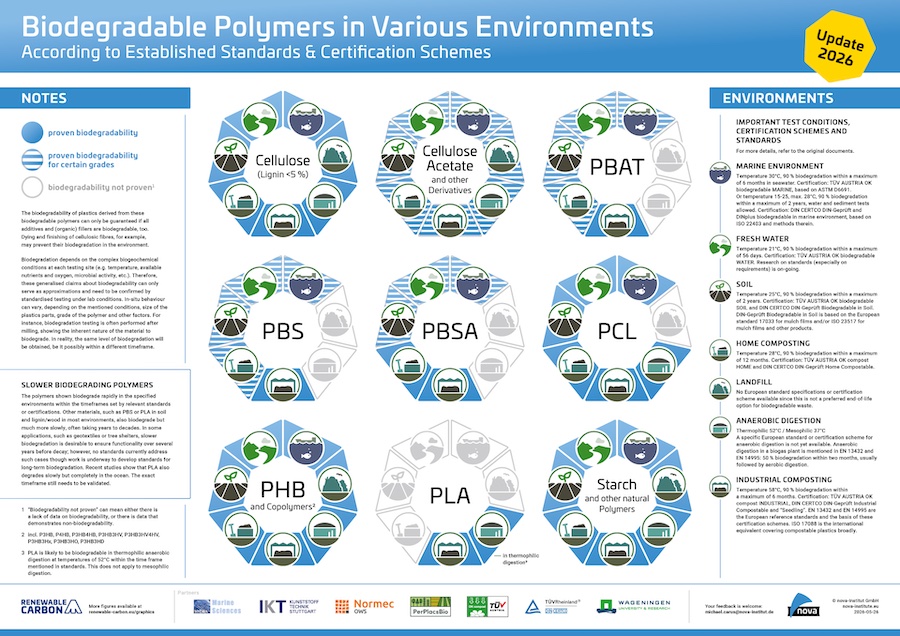
As part of the PerPlacsBio project, nova-Institute has updated its popular poster on the biodegradability of polymers in different environments. The updated version reflects current standards, certifications and the latest scientific findings. The poster can be used to assess biodegradable alternatives for use in agriculture and forestry, and it is now available in German for the first time.

    The nova-Institute has published an updated version of its popular poster, 'Biodegradable Polymers in Various Environments'. This updated version provides a more detailed and comprehensive overview of the biodegradability of polymers in different environments according to various standards. This practical reference tool remains invaluable for industry professionals, policymakers, and researchers working on sustainable plastics and end-of-life solutions in various environments

    The new version introduces several significant updates that reflect the latest scientific and regulatory developments. Notably, PBSA, PBS and PBAT are now classified as having 'proven biodegradability' in soil, marine and freshwater environments, and in home composting for PBS. This acknowledges advances in material-specific data and testing.

    The 2026 update also expands and clarifies the standards landscape. Additional references have been included, such as ISO 17088 (industrial compostability), ISO 23517 (soil biodegradability) and NF T 51-800 (home composting), alongside corrections to the descriptions of EN 17033, ISO 23517, and the available marine biodegradation standards and certifications. These updates improve alignment with current certification schemes and international testing frameworks.

    Further refinements have been made to enhance the scientific accuracy and usability of the poster:

    • A new explanatory footnote clarifies the meaning of 'biodegradability not proven'.
    • Revised content on slower-biodegrading polymers, including updated insights on PLA degradation in marine environments.
    • Integration of the PerPlacsBio project logo to reflect project continuity.
    • Availability of the poster in German, increasing accessibility for a broader audience.

    The poster summarises the biodegradation behaviour of materials in various environments, including marine, freshwater, soil and composting, based on established standards and certification schemes. It emphasises that biodegradability is highly dependent on environmental conditions and material-specific properties, and must be verified through standardised testing.

    With this update, nova-Institute and its partners continue their efforts to provide clear, science-based guidance on when biodegradability is a meaningful and appropriate end-of-life option. These partners include nova-Institute experts from Germany, as well as leading experts from Normec OWS (Belgium), Hydra Marine Science (Italy/Germany), IKT Stuttgart (Germany), Wageningen University & Research (the Netherlands), DIN CERTCO (Germany), and TÜV AUSTRIA (Austria/Belgium).

    The University of Münster, the University of Applied Forest Sciences Rottenburg, and nova-Institute launched the two-year PerPlacsBio project at the end of 2025. Funded by the Agency for Renewable Resources (FNR) under the Sustainable Renewable Resources programme, the project aims to explore the prospects for bio-based and biodegradable plastics in agriculture and forestry.

    The poster is available to download in English in both PNG and PDF formats here:

    https://renewable-carbon.eu/publications/product/biodegradable-polymers-in-various-environments-according-to-established-standards-and-certification-schemes-graphic-pdf-current-version/ (PDF)

    https://renewable-carbon.eu/publications/product/biodegradable-polymers-in-various-environments-according-to-established-standards-and-certification-schemes-graphic-png-current-version/ (PNG)

    The poster is available to download in German in both PNG and PDF formats here:

    https://renewable-carbon.eu/publications/product/biologisch-abbaubare-polymere-in-versch-umgebungen-gemas-anerkannten-normen-und-zertifizierungssystemen-graphik-pdf-aktuelle-version/ (PDF)

    https://renewable-carbon.eu/publications/product/biologisch-abbaubare-polymere-in-versch-umgebungen-gemas-anerkannten-normen-und-zertifizierungssystemen-graphik-png-aktuelle-version/ (PNG)
    More News from nova-Institut für politische und ökologische Innovation GmbH

    #Recycling / Circular Economy

    Advanced Recycling Conference 2026 to showcase innovations – Call for abstracts

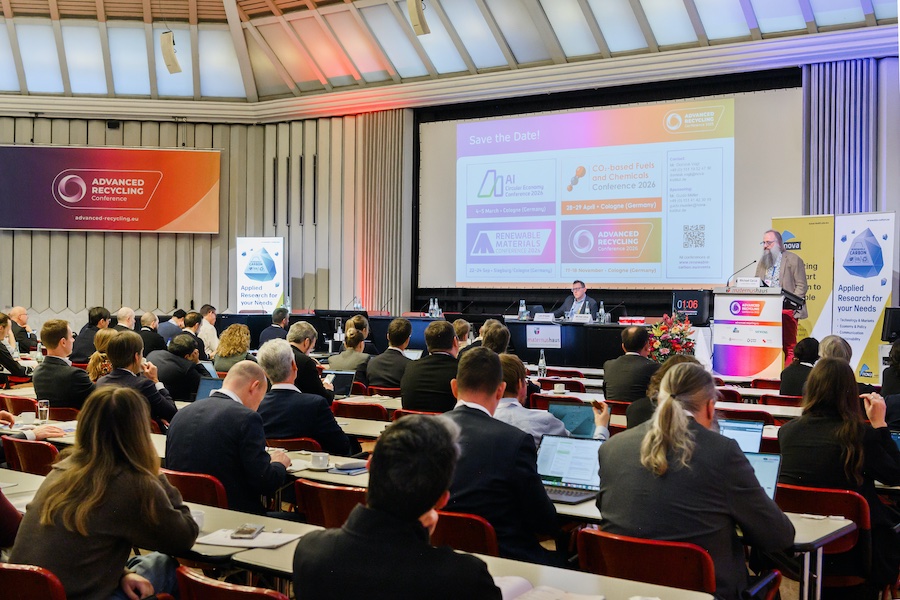
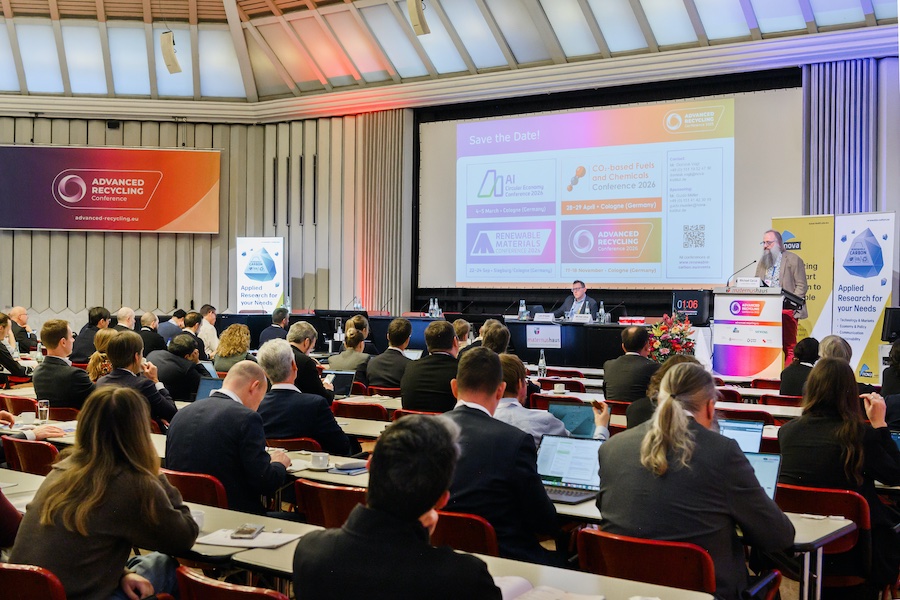
    The call for abstracts is now open for the Advanced Recycling Conference (ARC) 2026, taking place on 17–18 November 2026 in Cologne, Germany, and online. Europe’s leading platform for advanced recycling brings together hands-on solutions and cutting-edge research on recycling technologies for various waste streams like plastics, polymers, textiles or automotive, highlighting progress towards a circular renewable carbon economy.

    #Recycling / Circular Economy

    AI Circular Economy Conference 2026 fuels innovation at the intersection of AI and Circular Economy

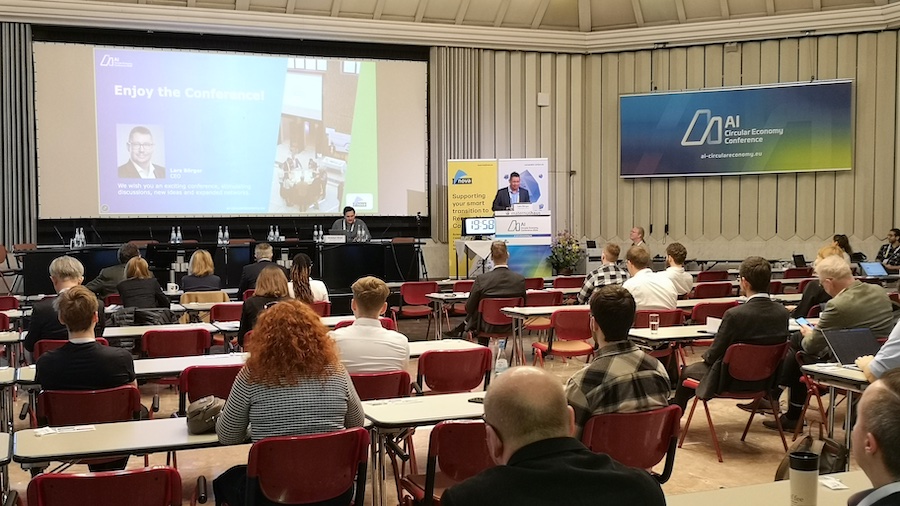
    The AI Circular Economy Conference 2026, organised by nova-Institute, brought together 116 participants from 15 countries in Cologne and online to explore the transformation of the chemical and materials industry supported and accelerated by artificial intelligence. During the two-day event, leading experts from industry, research, start-ups and the investment community discussed how AI can maximise the potential of renewable carbon creating efficient circular value chains. The conference featured 24 presentations and multiple panel discussions, highlighting the growing convergence of digital technologies and circular material systems. It demonstrated how artificial intelligence is progressing from the experimental stage to real industrial implementation within the circular economy.

    #Research & Development

    Pioneer of the first hour: Michael Carus steps down after more than 30 years from nova-Institute’s Management

    After more than three decades at the helm, founder and CEO Michael Carus is set to step down as head of the Renewable Carbon division on 1 March 2026. Lars Börger as the new CEO, will take over this key position of the nova-Institute together with COO Linda Engel, while Carus will remain with the research and consulting company as a senior advisor and shareholder. This change takes place after a one-year transition phase, as planned.

    #Sustainability

    The nova-Institute establishes new Renewable Feedstock Department to lay the groundwork for industrial defossilisation

    The transition from fossil-based to renewable carbon – sourced from biomass, CO₂ utilisation and recycling – is the cornerstone of a climate-neutral chemical industry. The nova-Institute’s new department is dedicated to providing the essential data, analyses and strategic roadmaps required to secure a reliable future feedstock supply and make this transition a commercial and ecological reality.

    More News on Man-Made Fibers

    #Spinning

    Greater efficiency for tomorrow’s textile industry

    From September 24 to 27, 2026, Barmag, together with BB Engineering (BBE), will present innovative solutions for the efficient and sustainable production of synthetic yarns at the Egy Stitch & Tex Expo in Cairo, Egypt. Under the motto “A New Era. Powered by Innovation.,” experts from Barmag and BBE will present technologies spanning the entire textile value chain — from melt to yarn — at the ATAG Ltd. booth (Hall 1, Booth C1).

    #Man-Made Fibers

    The LYCRA Company expands its co-creation vision through an immersive Lifestyle District at Intertextile Shanghai.

    The LYCRA Company, a global leader in fiber and technology solutions for the apparel industry, is reimagining the trade show experience at Intertextile Shanghai Apparel Fabrics Autumn Edition, which opened today in China. Building on the success of last year's ALL IN concept, the company has expanded its co-creation vision into a 356-square-meter Lifestyle District featuring partners Jingzili New Material, JYT Textile, Lianxingfa Knitting, and Trend Textile. The district is part of a larger 895-square-meter pavilion showcasing a total of 19 co-exhibitors. Together, they demonstrate how innovations in fiber, fabric, and garments can be combined to create compelling solutions for both work and play.

    #Man-Made Fibers

    Bemberg and Anita Dongre collaborate once again to launch “BREATH” collection

    BembergTM and Anita Dongre present BREATH, a ready to wear collection of 18 key silhouettes, shaped by a common belief that true beauty is inseparable from caring for the environment.

    #Man-Made Fibers

    Lenzing shareholders approve €300 million capital increase

    Shareholders of Lenzing AG have approved a capital increase of approximately €300 million, providing financial support for the company's recently announced "Grow Nonwovens, Reset Textiles" strategy.

    Latest News

    #Recycled Fibers

    RE&UP’s Next-Gen Cotton fibers power Zalando private label t-shirt collection crafted from innovative recycled textiles

    RE&UP Recycling Technologies’ Next-Gen Cotton powers a new collection from Zalando’s private labels, marking a step forward in bringing textile-to-textile recycled fibers into commercial fashion production. Launching on Zalando in August, the collection comprises five t-shirts across YOURTURN by Zalando and Even&Odd by Zalando, made from a circular-knit fabric blending 80% organic cotton with 20% RE&UP Next-Gen Cotton — textile-to-textile recycled fiber produced from textile waste. This is the first time RE&UP's recycled fibers feature in Zalando's private label assortment.

    #Heimtextil 2027

    Heimtextil Trends 27/28: ‘Home-Maxxing’ between performance and respite

    Sleep better, recover faster, live more efficiently: the desire for optimisation has long since reached our homes. Under the title ‘Home-Maxxing – The Performance of Everyday Living’, Heimtextil Trends 27/28 show how our relationship with efficiency-driven thinking and technology is influencing the design of spaces and textiles. The more sleep, wellness, routines, materials and spaces are optimised, the stronger the desire for a home that does not demand even more of us.

    #Recycled Fibers

    Driving circularity with Uster Recycled Fiber Matrix

    The textile industry’s commitment to circularity continues to accelerate, and mechanical recycling is viewed as a targeted approach to cutting textile waste and its environmental impact. At the forefront of this drive, Uster has developed the Recycled Fiber Matrix, a two-dimensional assessment of mechanically recycled fibers to guide optimum processing and end-uses.

    #Digital Printing

    Mimaki advances DTF productivity and stability with new TxF330-800

    Mimaki Europe, a leading manufacturer of industrial inkjet printers and cutting plotters, announces the TxF330-800, its new direct-to-film (DTF) printer. Designed to support stable, high-quality garment decoration in demanding print environments, the system combines automated maintenance, expanded white ink capacity and advanced production capabilities to streamline workflow.

    TOP