[pageLogInLogOut]

#Sustainability

Public procurement of database development

GOTS is preparing a new database which will include traceability at product level. We have initiated a public procurement, addressing vendors of configurable supply chain solutions and software development companies alike. The procurement follows a formal, two-staged process.

Stage 1: Candidates’ procedure

Selection of up to five suitable candidates which will be invited to submit their tenders. In the selection process GOTS will apply objective, non-discriminating criteria, which are part of the published procurement documents.


Stage 2: Tenderers’ procedure

Companies selected as bidders/tenderers will receive the database specification document and may then submit an initial tender. All tenders will be evaluated according to objective criteria. Bidders with promising tenders will be invited for a presentation of their solution and negotiation talks. After the presentation and possible negotiation they may submit their final tenders or confirm their initial tender. This stage ends with a contract of works awarded to the bidder with the most economical tender.

Companies interested in participating in the competition are referred to the eProcurement platform holding the documents. 

https://www.dtvp.de/Satellite/public/company/project/CXP4YVXR5PG/en/documents

Application deadline is 6 August 2021.

More News from TEXDATA International

#ITM 2026

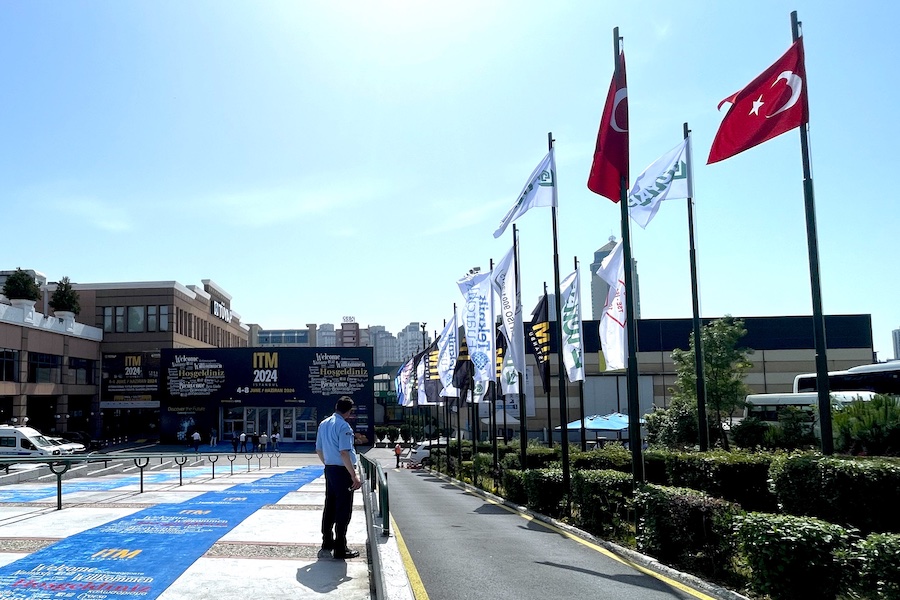
ITM 2026: The new geography of textile production

New production hubs are emerging across North Africa and Central Asia, while Türkiye is accelerating its transformation toward higher-value, technology-driven and more sustainable textile manufacturing.

#Research & Development

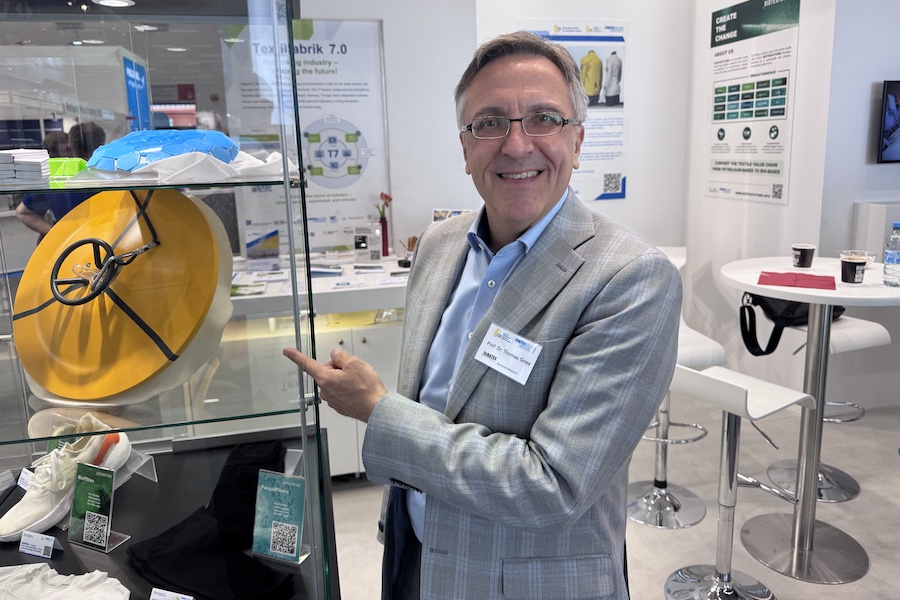
“Production is a product”

From technical textiles and AI-driven robotics to the limitations of textile circularity: Professor Dr Thomas Gries looks back on more than two decades of development at ITA Aachen. In the interview, he explains why production technology remains a decisive success factor, discusses international collaborations and innovation ecosystems, and shares his views on the transformation of production landscapes and the challenges facing an increasingly regulated industry.

#Knitting & Hosiery

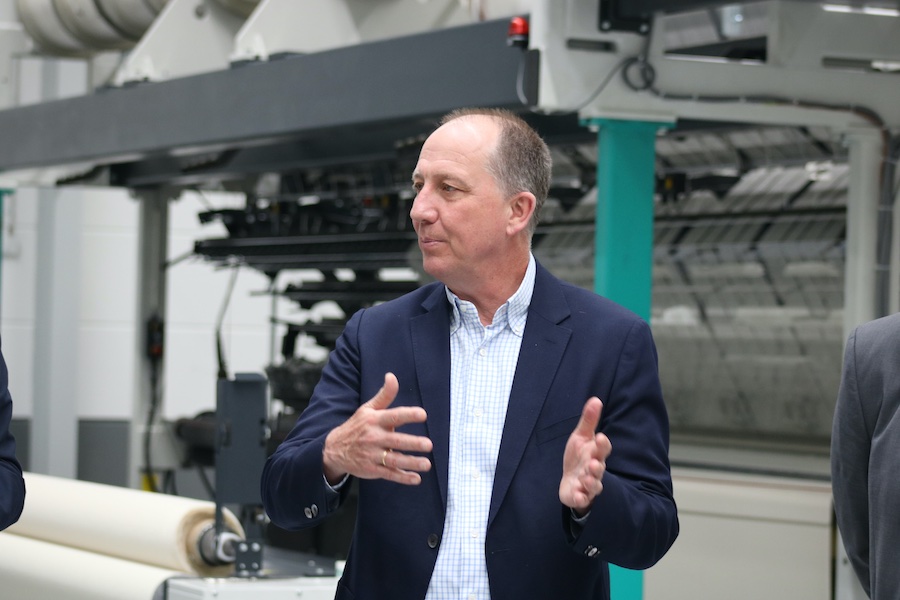
“We need to move away from the price trap and return to a value-driven mindset.”

With its new Textile Innovation Center, KARL MAYER is sending a strong signal for innovation, collaboration, and the future of textile applications. In this interview, Karl Josef Mayer discusses new opportunities in warp knitting, the processing of staple fibres, recycling, the changing role of machinery manufacturers, and why the textile industry must once again focus more strongly on the value of textiles. by Oliver Schmidt

#Associations

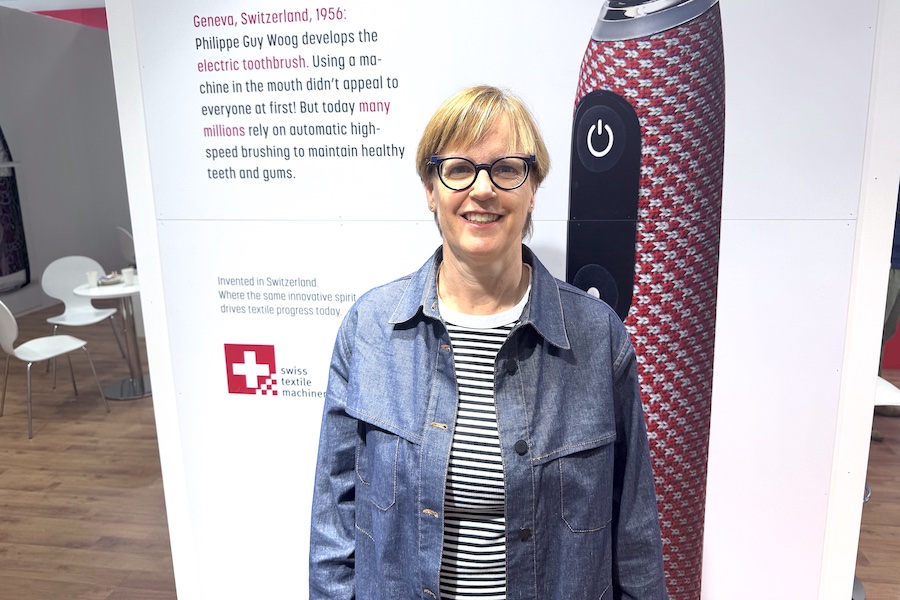
“Innovation, resilience and international experience remain the great strengths of the Swiss textile machinery industry”

Geopolitical uncertainty, growing competitive pressure from China, new free trade agreements and the shift towards a circular economy are currently reshaping the global textile industry. In this interview, Cornelia Buchwalder discusses the current mood within the Swiss textile machinery sector, the industry’s distinctive innovative strength, new market opportunities in India and Asia, and the technological trends that could shape the upcoming trade fair cycle leading up to ITMA 2027.

More News on Sustainability

#Sustainability

Textile Exchange unveils agenda for 2026 conference in Vancouver

Textile Exchange has released the agenda for its 2026 Conference, which will take place from October 12–16 in Vancouver, Canada. Under the theme “The Implementation Era,” the event will focus on translating sustainability commitments into practical action and scaling solutions across businesses, supply systems, and landscapes.

#Associations

Textile PRO Forum calls for greater harmonisation of textile EPR systems across Europe

The Textile PRO Forum has published a new analysis highlighting the need for greater harmonisation of textile Extended Producer Responsibility systems across Europe. The document, Toward harmonised Textile EPR Systems in Europe: analysis and recommendations, presents the results of work carried out by Workstream 1 of the Textile PRO Forum, led by Dr. Eng. Viola Corbellini, Strategic Development and Innovation Expert at Erion Textiles, and Eng. Luca Campadello, General Director at Erion Textiles. The workstream focused on reducing administrative burden for textile producers by identifying areas where procedures could be better aligned across countries.

#Associations

Results of the 38th ITMF Global Textile Industry Survey

The global textile industry appears to be turning a corner, but this is more likely a fragile and possibly temporary improvement than the start of a durable recovery. According to the 38th ITMF Global Textile Industry Survey, conducted worldwide during the second half of May 2026, business sentiment, order intake, order backlogs and capacity utilization all improved versus March — yet every indicator remains weak by historical standards, and rising costs cast doubt on how long the upturn can last.

#Sustainability

Closing the Footwear Loop reveals challenges and opportunities for circular footwear

The footwear industry faces one of the most complex circularity challenges in the fashion sector. A new Phase 1 report from the Fashion for Good initiative Closing the Footwear Loop, developed together with Circle Economy, provides new insights into the composition, condition and recycling potential of post-consumer footwear waste.

Latest News

#

Towards pragmatic and harmonised labelling in the EU

EDANA, alongside 14 European associations, urges the European Commission and Member States to adopt a pragmatic approach for the future harmonised packaging labels, in line with the EU’s agenda for the EU Single Market, simplification and competitiveness. The system should rely on text-free pictograms, available in achromatic or monochromatic versions matching the packaging palette, with the possibility of using digital labelling as a core element. Our associations represent manufacturers of consumer goods across Europe.

#Spinning

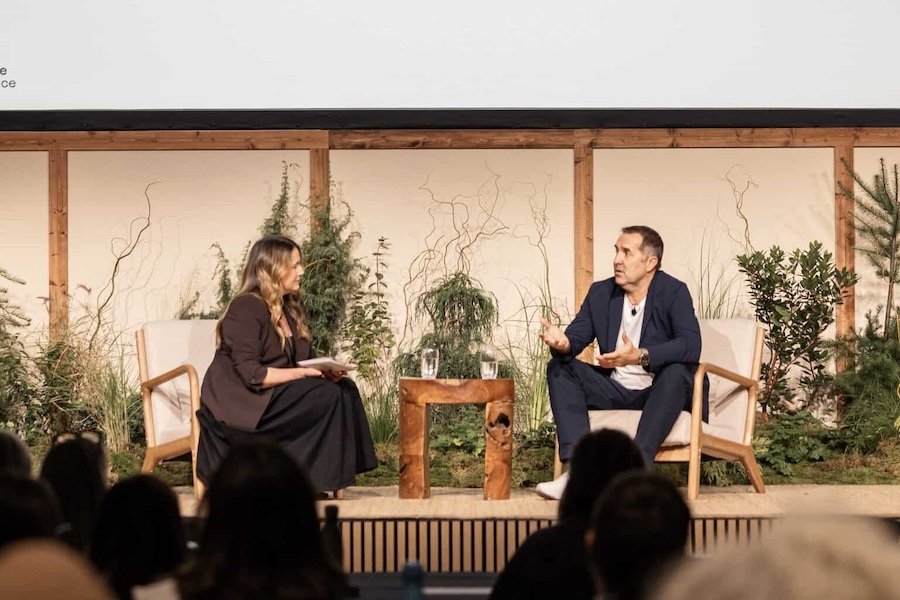
"We will become a recycling powerhouse"

The textile industry is now in its fourth consecutive year of crisis, while automation, artificial intelligence and recycling are reshaping the rules of the game. In this interview, Rieter CEO Thomas Oetterli discusses the first signs of a market recovery, reflects on his first three years at the helm of the company, explains the integration of Barmag, outlines Rieter’s vision of the fully automated spinning mill and highlights the strategic importance of recycling. In doing so, he explains why the new Rieter Group aims to play a leading role in transforming the textile value chain into a circular economy.

#ITM 2026

ITM 2026 concludes with strong visitor interest and robust trade volume despite global uncertainties

ITM 2026, one of the world's most prestigious organizations in the field of textile technologies, concluded with remarkable success. Held during a period of global economic fluctuations, regional uncertainties, and postponed investment decisions, ITM 2026 once again demonstrated the strength and future-oriented spirit of the textile technology sector. Welcoming 48,257 professional visitors and investors from 105 different countries, ITM 2026 provided momentum to the textile sector as an event where billions of euros worth of machinery sales and significant business collaborations were realized.

#Man-Made Fibers

ROICA™ launches new global brand identity and digital experience

ROICA™, the premium stretch fiber developed by Asahi Kasei, today announced the launch of its new global brand identity, including a new key visual and a fully redesigned website. This milestone initiative marks the beginning of a new phase in ROICA™’s evolution as a global brand.

TOP