[pageLogInLogOut]

#Sustainability

LEATHER STANDARD by OEKO-TEX® – One year of transparent consumer protection

From a young age, we use leather products in all areas of life – from baby play rugs made of sheepskin to footwear, sophisticated designer furniture, and seats in aeroplanes, trains and cars. Reliable verification that leather articles do not contain any harmful substances, such as the allergenic Chrom-VI, represents a valuable decision-making tool for all consumers.

At the same time, the LEATHER STANDARD offers manufacturers and suppliers of leather articles a practical system for supplementing their company quality assurance from human-ecological perspectives. Furthermore, the LEATHER STANDARD label is valued by companies as a transparent tool that they can use to communicate their product responsibility in leather goods retailers and online shops in a clear and credible way. 
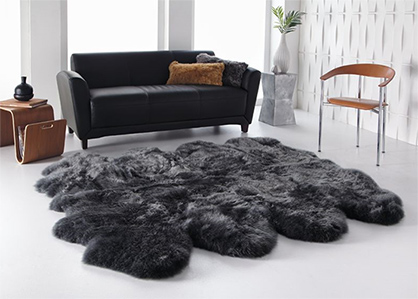
The Auskin Group with their head office on the Australian Gold Coast is one of the world’s leading suppliers of sheepskins. The company group has its own tannery and sewing facility in China and sells its products through its own offices and warehouses in Germany, the USA, New Zealand, Australia, Japan and China. The sheepskins come from New Zealand and Australia and are processed into a wide range of ready-made articles for consumers and the home textiles market as well as material components for the airline, furniture and car industries and for the manufacture of equestrian articles and shoes. © Auskin Group


Since the introduction of the LEATHER STANDARD in January 2017, almost 40 certificates have been issued around the world for a wide range of products – from goatskin rugs as an attractive lifestyle accessory for the bedroom to leather clothing to leather handbags from the elegant Italian brand Zanellato. “The positive response of the industry, including retailers and the end consumer, clarifies that the LEATHER STANDARD is meeting a real market need,” enthuses the OEKO-TEX® General Secretary Georg Dieners about the success of the product label. Demand: growing strongly.

Like the world-leading STANDARD 100 by OEKO-TEX® for textiles tested for harmful substances, the LEATHER STANDARD now also contributes to effective consumer protection in the broad market segment of leather goods. The test criteria and limit values are updated each year and are binding around the world. A LEATHER STANDARD certificate is only issued if all components of a sales product meet the valid requirements, including the leather as well as the accessory parts such as metal buttons and zips. An online directory with LEATHER STANDARD by OEKO-TEX® certified products is available at http://www.oeko-tex.com/products.


More detailed information on the LEATHER STANDARD: http://www.oeko-tex.com/leatherstandard.

To mark the one-year market anniversary, OEKO-TEX® asked several companies why they rely on the LEATHER STANDARD by OEKO-TEX®.

How did you learn about the LEATHER STANDARD certification?

“OEKO-TEX® is such a well know standard that we have always been aware of its use in the retail sectors that we sell products into,” says Leroy Parker, Technical Director of the Australian Auskin Group. “In 2017, however, we learned of the new LEATHER STANDARD which would replace the STANDARD 100 for our product category. With the same stringent testing criteria but modified to better suit the needs of the leather industry and ultimately our customers,” explains Parker with regard to the decision to use the LEATHER STANDARD.

What are the main advantages of the LEATHER STANDARD for your company?

“Independent certification according to the LEATHER STANDARD by OEKO-TEX® helps us to get more orders from our customers,” says Gongcheng Zhai, Sales Director at Henan Prosper Skins & Leather Enterprise, when summing up the benefits of the standard for the world’s largest tanner of lamb and sheep coats. Budi Purwoko, Director of the Indonesian manufacturer PT. Adi Satria Abadi ASA, also confirms the benefits of opening up new markets and for international export, “particularly in our priority segment of processed leather for gloves”.
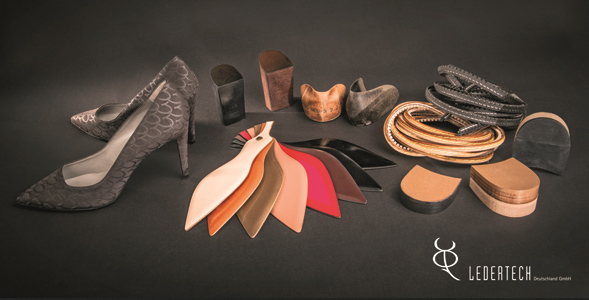
Ledertech Deutschland GmbH uses a specialised process to produce bonded leather materials from high quality leather offcuts for a range for applications such as the manufacture of shoes, belts, and bags, but also for binding books, for furniture or for use as a durable floor covering. ©Ledertech Deutschland GmbH


“The LEATHER STANDARD immediately reassures our customers that our products have had extensive testing that is directly relevant to our product sector,” adds Parker from the Auskin Group and continues: “Secondly, as a producer we know that our products are being measured to meet the highest industry standards. This fits well with our own in-house and independent QA and QC testing to give us the assurance that we need to sell our products into a wide range of countries around the world.”
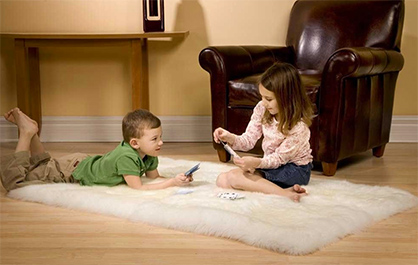
Henan Prosper Skins & Leather Enterprise Co. Ltd. with its head office in Zhengzhou, China is currently the world’s largest tannery specialising in unshaven lambskins and sheepskins. Only high-quality raw skins are processed using the latest production technologies. Henan Prosper sells its sheepskins through its own sales centres for applications such as shoes and shoe linings, home accessories, medical pads, baby products or vehicle seats. ©Henan Prosper Skins & Leather Enterprise


Which articles from your product range are already certified in accordance with the LEATHER STANDARD by OEKO-TEX®?

The articles from the Auskin Group, from Henan Prosper Skins & Leather and from PT. Adi Satria Abadi that have been certified in accordance with the LEATHER STANDARD include sheepskins and goatskins in different qualities and colours as well as those for the most diverse of applications such as babycare, rugs for living rooms and bedrooms, and for cushions and beanbags. Sheepskins for babies and small children under 36 months of age meet the most stringent harmful substance requirements of OEKO-TEX® product class I.

As a supplier of fashionable leather accessories, in May 2017, the Italian premium brand Zanellato also received the LEATHER STANDARD certificate for its cult handbags made of Postina® Pura®. 
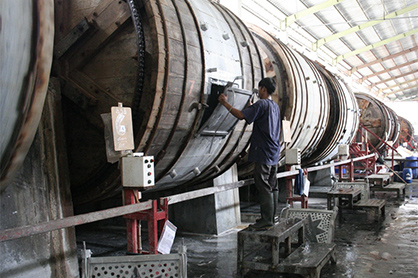
The Indonesian company PT. Adi Satria Abadi use a combination of traditional processes and the latest technologies to produce around 669,000 m2 of high-quality leather each year from raw sheep and goat skins for the manufacture of gloves and manufactures around 500,000 pairs of golf gloves themselves for export to the USA and Asia. ©PT. Adi Satria Abadi


The certified product range in line with LEATHER STANDARD by OEKO-TEX® currently extends to high quality bonded leather for shoes, belts and bags from Ledertech Deutschland GmbH. The company specialises in processing high quality leather materials made of production waste which is processed into materials for new products in a specialised production process.

Do you already use the LEATHER STANDARD label for your marketing activities?

Countless companies who have already certified their products in accordance with the LEATHER STANDARD actively use the label for their communication. This use ranges from product labelling and the design of information materials at the Point-of-Sale to advertising in online shops, catalogues and company websites. In the B2B sector too, many customers already actively request the LEATHER STANDARD certificate as verification of required product safety.

More News from Oeko-Tex® Association

#Sustainability

OEKO-TEX® chooses TextileGenesis to advance digital traceability for organic cotton

OEKO-TEX® today announced a full collaboration with TextileGenesis, a Lectra company, to digitally trace and authenticate organic cotton, strengthening fraud prevention across the supply chain. This announcement follows a successful pilot and brings together OEKO-TEX®’s certification expertise and closed testing system with TextileGenesis’ digital traceability platform to deliver a secure, end-to-end solution for managing certified organic cotton flows.

#Sustainability

OEKO-TEX® - New regulations 2025

Fostering trust within the textile and leather industry remains the mission of OEKO-TEX®. Since trust relies on consistently high standards, the OEKO-TEX® Association has released the updated testing criteria, limit values and guidelines for its certifications, based on the latest scientific research and legal developments.

#Sustainability

OEKO-TEX® Annual Report 2023/2024 mentions 50,000+ valid certifications

The international OEKO-TEX® association has continued to demonstrate positive business growth, highlighting the critical role of close collaboration and shared commitment in accelerating sustainable change. More than 35,000 textile and leather companies depend on the certificates and product labels issued by OEKO-TEX®’s independent testing institutes. OEKO-TEX® issued more than 50,000 certificates and labels between July 1, 2023, and June 30, 2024 – an increase of 22% over the previous financial year.

#Sustainability

OEKO-TEX® New regulations 2024

Creating trust within the textile and leather industry and for its customers is the mission of OEKO-TEX®. Since trust is based on consistently high quality, the OEKO-TEX® Association is again publishing updates to the applicable test criteria, limit values and guidelines for its certifications. Based on new scientific findings and legal developments, the OEKO-TEX® Association has published the annual updates to its test criteria, limit values and guidelines.

More News on Sustainability

#Research & Development

Hohenstein publishes 2025 Sustainability Report

The testing and research service provider Hohenstein has published its latest sustainability report, outlining key progress and strategic initiatives. The report focuses on ambitious CO₂ reduction targets, the company’s new mission statement and the systematic expansion of sustainable services for customers worldwide.

#Natural Fibers

Global Standard gGmbH launches second public consultation for GRTS Draft 2 for the textile industry (1–30 April 2026)

Global Standard gGmbH is pleased to announce the release of Draft 2 of the Global Responsible Textile Standard (GRTS) for its second public consultation. The consultation will be open from 1 April 2026 to 30 April 2026, inviting stakeholders across the textile and apparel value chain to provide input and contribute to the further development of this new Standard.

#Sustainability

Practical toolkit to drive coordinated climate action launched

An open-access workshop toolkit enables brands, suppliers, policymakers and investors across the textile industry to apply the System Map in their own work, identifying leverage points to halve emissions and enable a just transition.

#Raw Materials

Textile Exchange publishes cotton Life Cycle Assessment study to strengthen impact data

Textile Exchange has published the first in a series of seven Life Cycle Assessment (LCA) studies designed to improve the quality and robustness of environmental impact data for raw material production across the fashion, textile, and apparel industry. The first LCA study focuses on cotton and addresses critical data gaps and methodology variability through new high-quality data across key producing countries. The study includes organic, regenerative, recycled, and country averages for conventional cotton production systems, providing a clearer picture of the associated environmental impact.

Latest News

#Techtextil 2026

SAHM Winding Solutions and Vandewiele Automation present integrated automation solution for winding processes

For the first time at the Techtextil trade fair in Frankfurt am Main, Germany (21 - 26 April), SAHM Winding Solutions (Hallo 12.0. / Booth 95) and Vandewiele Automation will be showcasing their combined automation expertise for industrial winding processes. Under the motto “Combining Automation. Maximizing Flow”, the two companies will demonstrate how automated package handling and robot-assisted yarn knotting can be integrated into a continuous production flow.

#Recycled Fibers

UNIFI celebrates recycled and circular Innovation with ninth annual REPREVE® Champions of Sustainability Awards

Unifi, Inc. (NYSE: UFI), the makers of REPREVE® and one of the world’s leading innovators in recycled and synthetic yarns, today announced the winners of its ninth annual REPREVE Champions of Sustainability Awards, recognizing brands and mills that are advancing circularity and responsible manufacturing across the global textile industry.

#Man-Made Fibers

Teijin Frontier announces new Stretch Polyester yarn offering exceptional compatibility with high-performance Polyester materials

Teijin Frontier Co., Ltd. announced today that it has developed a new stretch polyester yarn that offers new opportunities to create comfortable, all- polyester fabrics for sports and outdoor wear. The new polyester yarn demonstrates exceptional compatibility with high-performance polyester materials. Further, Teijin Frontier’s proprietary polymer design and spinning technology impart excellent elasticity to the new yarn. In turn, this yarn adds stretchability and recovery to the advanced functionality and excellent texture of high-performance polyester materials.

#Man-Made Fibers

Lenzing commissions 14 MW power‑to‑heat facility, strengthening grid stability and heat management

The Lenzing Group has successfully commissioned a new power‑to‑heat (P2H) facility with an electrical capacity of 14 megawatts. The installation converts renewable electricity directly into process heat, is fully integrated into the existing heat network at the industrial site, and represents a key building block for a fossil‑free heat supply. As project partner, VERBUND was responsible for the energy‑market integration and will operate the facility for balancing energy marketing, enabling it to respond flexibly to short‑term fluctuations in the power grid.

TOP